
缝纫线

Search documents
中国经济样本观察·“镇”了不起|一根细线,“缝”出200亿元大产业
Xin Hua Wang· 2025-12-28 09:00
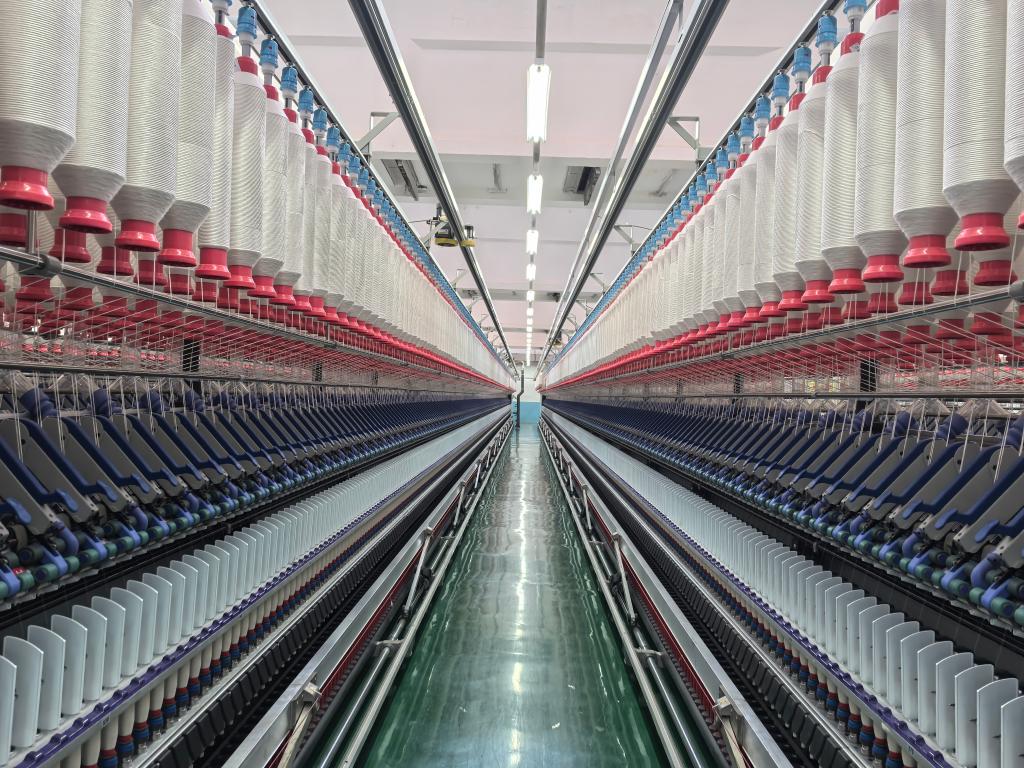
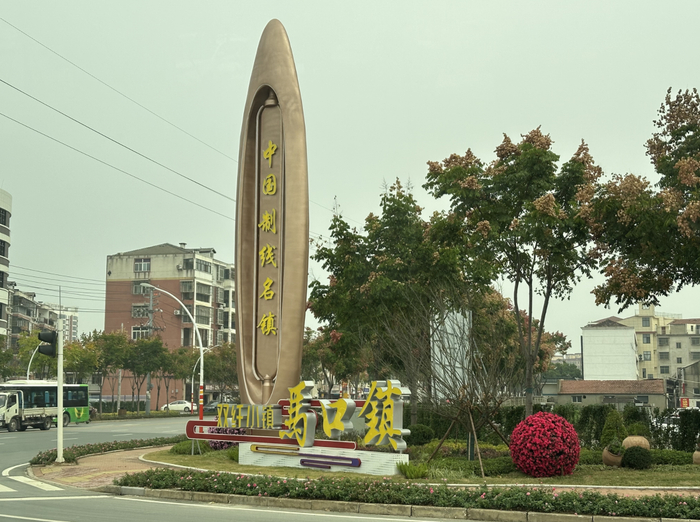
新华社武汉12月28日电(记者田中全)一件衣服的袖子、领子等怎么连在一起?这少不了一根叫"缝纫线"的功劳。这根隐藏起来的缝纫线, 以涤纶纤维为原料,强度高、耐水洗,能保障多块布料缝合后的牢固度。 你也许不知道的是,这种用于服装制作核心辅料的缝纫线,不少产自江汉平原腹地的一座小镇——湖北省汉川市马口镇。 马口镇被称为"中国制线名镇",共有50余家纺织企业,其中规模以上纺织企业达40家,凭借105万锭的生产规模、30万吨的产能和200亿元的 综合产值,占据了国内缝纫线市场的六成份额,远销东南亚、中东、欧美等海外市场。 图为湖北名仁纺织科技有限公司生产车间。新华社记者 田中全 摄 在生产车间,往复式抓棉机正在"吞吐"物料。新华社记者 田中全 摄 困境倒逼变革,马口镇的创业者们不断"求生",引进先进技术、更新智能设备、加大研发投入,向技术要效率、向创新要竞争力,掀起一场 技改扩能风潮。 "我们投资1.2亿元,引进络筒机、倍捻机等自动化生产设备,建成智慧工厂。"湖北名仁纺织科技有限公司副总经理王琦说,"如今产能提升 了45%,客户回头率也提升了。" 马口镇落后的生产模式逐渐成为"过去式"。今天,穿镇而过的105省道旁, ...

从1家“开枝散叶”到3000余家 湖北汉川纺织服装产业集群是如何“织”成的?
Zhong Guo Jing Ying Bao· 2025-11-04 06:55
Core Insights - The article highlights the transformation of the textile industry in Machou Town, Hanchuan City, which has been recognized as "China's Line Manufacturing Town" and is a significant player in the national textile sector [3][4]. Group 1: Industry Overview - Machou Town has 40 textile enterprises above designated size, accounting for 36% of the national capacity in the same category, and has established a production base for 15 million core kilometers of optical fiber and cable [3][4]. - Hanchuan City has over 3,000 textile and apparel companies, producing nearly 800 million garments annually, with sewing thread production capturing two-thirds of the national market share [3][4]. Group 2: Company Development - Jihua 3509 Textile Co., Ltd., established in 1950, has evolved from producing military socks and towels to becoming a national high-tech enterprise, showcasing a successful transition from traditional textile manufacturing [3][5]. - The company has invested 54 million yuan in advanced German technology, implementing smart production processes that significantly reduce labor requirements [5][7]. Group 3: Technological Advancements - Jihua 3509 has introduced advanced equipment from Japan, the USA, Belgium, and Germany, achieving a leading level in domestic technology and enhancing production efficiency [7][8]. - The company holds over 293 national patents, including 58 invention patents, and has been recognized as a national-level "green factory" and a specialized "little giant" enterprise [7][8]. Group 4: Economic Impact - Hanchuan City's GDP reached 94 billion yuan in 2024, with a goal to become a "trillion-level" county, supported by a modern industrial system that includes textiles, food processing, and equipment manufacturing [11][12]. - The textile and apparel industry generated 616 billion yuan in output value in 2023, accounting for nearly 40% of the city's industrial output, with a projected growth of 10% in 2024 [11][12]. Group 5: Future Goals - Hanchuan City aims to create a textile and apparel industry cluster worth 100 billion yuan within three years, alongside other significant industrial clusters [12].

外出打工的湖北人,正纷纷往回走
21世纪经济报道· 2025-09-07 12:14
Core Viewpoint - The article highlights the trend of returning workers in Hubei province, showcasing how individuals who previously sought employment in other regions are now returning to their hometowns to start businesses or find jobs, driven by local policies, industry foundations, and emotional ties to their roots [1][2][4]. Group 1: Return of Workers - Hubei province is experiencing a "returning geese" trend, with many former migrant workers coming back to their hometowns for employment and entrepreneurship [1][2]. - In 2024, Yichang is expected to see an increase of 15,400 returning workers, a year-on-year growth of 20.3% [1]. - The total number of new returning entrepreneurial entities in Hubei in the first half of 2025 exceeded 12,000, directly creating 83,000 jobs, with project revenues growing by 23% year-on-year [1]. Group 2: Employment Opportunities - Returning workers are engaging in various sectors, including manufacturing (automobiles, machinery, clothing) and agriculture (crawfish, mushrooms, livestock), as well as modern services like e-commerce and hospitality [2][5]. - The textile and clothing industry in Tianmen has attracted around 100,000 people back to employment and entrepreneurship over the past three years, creating 160,000 jobs [5]. - In the crawfish industry in Qianjiang, workers can earn over 100,000 yuan annually, while seasonal jobs in processing can yield around 40,000 yuan [6]. Group 3: Supportive Policies - Hubei has introduced a "six subsidies and one benefit" policy package to support returning entrepreneurs, covering rent, loans, social security, and entrepreneurship [10]. - The province aims to cultivate 100 "Jingchu Returning Geese" projects, each receiving 100,000 yuan in funding support [10]. - Local governments are also implementing measures to facilitate returning workers, such as job fairs and skills training programs to match local industry needs [11][12]. Group 4: Economic Impact - The return of workers is expected to create a multiplier effect, with 67.7% of returning entrepreneurs engaging in agriculture, tourism, and textile industries [7][8]. - The article emphasizes the need for Hubei to develop a long-term mechanism to sustain economic growth driven by returning workers, focusing on enhancing public services and creating a supportive environment for entrepreneurship [12][13].

“归雁经济”升温:湖北凭什么让人“往回走”?
2 1 Shi Ji Jing Ji Bao Dao· 2025-09-05 07:37
Core Viewpoint - The article highlights a significant trend of returning workers in Hubei province, transitioning from labor export to local entrepreneurship and employment, driven by favorable policies, industry foundations, and emotional ties to their hometowns [1][2][6]. Group 1: Employment and Entrepreneurship Trends - Hubei province is experiencing a "returning swan" trend, with many former migrant workers returning to start businesses or find jobs in local industries such as manufacturing, agriculture, and modern services [2][6]. - In 2024, Yichang is expected to see an increase of 15,400 returning workers, a 20.3% year-on-year growth, while Tianmen has attracted over 100,000 people to return for employment and entrepreneurship in the past three years [1][2]. - By mid-2025, Hubei is projected to have over 12,000 new returning entrepreneurial entities, directly creating 83,000 jobs, with a 23% year-on-year growth in revenue from these projects [1][5]. Group 2: Industry-Specific Developments - The textile and clothing industry in Tianmen has seen a resurgence, with many returning workers leveraging their experience from coastal regions to establish businesses, contributing to local economic growth [3][5]. - The small-scale aquaculture industry, particularly in Puyang, has created diverse job opportunities, with annual incomes for workers in shrimp farming exceeding 100,000 yuan, and seasonal work in processing yielding around 40,000 yuan [5][8]. - In Suizhou, the mushroom cultivation sector has become a vital source of employment, with monthly incomes ranging from 2,000 to 20,000 yuan depending on the role [5][8]. Group 3: Policy Support and Infrastructure - Hubei has introduced a comprehensive "six subsidies and one benefit" policy package to support returning entrepreneurs, including rent, loans, social security, and tax incentives [6][9]. - Local governments are actively promoting entrepreneurship through various initiatives, such as job fairs and skill training programs, to ensure returning workers can find suitable employment [7][8]. - The establishment of "home employment" service stations and the provision of substantial entrepreneurial loans are part of the efforts to facilitate local job creation and support returning workers [8][9].