
罗非鱼贷

Search documents
广东茂名:深耕普惠金改“试验田” 谱写乡村振兴新篇章
Zhong Guo Jing Ji Wang· 2026-02-24 13:47
Core Viewpoint - Guangdong Maoming City is actively promoting the establishment of a national-level inclusive finance reform pilot, officially launched in September 2025, marking a significant step in enhancing local financial services and supporting regional economic development [1][3]. Group 1: Policy and Framework - The inclusive finance reform in Maoming began in 2020, progressing through three phases: initiation, goal clarification, and application guidance [1]. - Maoming adheres to a proactive approach of "not waiting, not relying, building while applying, and promoting application through construction," focusing on high-quality innovation in inclusive finance [2]. - A robust policy support system has been established, including guidelines for financial support of local agricultural projects, which strengthens the policy foundation for inclusive finance [2]. Group 2: Financial Products and Services - Innovative credit products tailored to local agricultural resources have been launched, including 23 unique financial products such as "Lychee Loan" and "Tilapia Loan," enhancing the visibility of Maoming's agricultural sector [2]. - The introduction of a digital credit model and the establishment of a comprehensive financial service system integrating commerce, logistics, and information flow have been initiated [2]. - A comprehensive agricultural insurance system has been developed, covering over 70 types of insurance products, including innovative price insurance for various agricultural commodities [2]. Group 3: Implementation and Collaboration - Following the pilot's launch, Maoming has actively engaged with provincial and higher-level departments to secure policy support and develop implementation plans [3]. - Major banks, including Agricultural Bank of China and Bank of China, have introduced specific measures to support the inclusive finance reform in Maoming, demonstrating strong institutional backing [3]. - The launch of the world's first financial meteorological innovation project, which includes lychee weather index insurance, addresses risks associated with agricultural production [3].
新副行长上任即迎合规“大考” 广东化州农商行被罚60万元
Nan Fang Du Shi Bao· 2026-02-10 05:46
Core Viewpoint - The recent fine imposed on Huazhou Rural Commercial Bank highlights significant issues in post-loan management and non-performing loan responsibility recognition, reflecting broader challenges faced by rural commercial banks in China [2][4]. Group 1: Regulatory Actions - Huazhou Rural Commercial Bank was fined 600,000 yuan for serious violations of prudent management rules, particularly in post-loan management and non-performing loan responsibility recognition [2]. - The fine coincided with a management change, as Li Qiushen was approved as the new vice president of the bank [2]. Group 2: Financial Performance and Market Position - As of March 2025, Huazhou Rural Commercial Bank's total assets reached 23 billion yuan, maintaining the highest market share in deposits and loans in Huazhou City [3]. - The bank has been actively focusing on supporting the real economy, rural revitalization, and inclusive finance, launching various specialized loan products [3]. Group 3: Industry Challenges - The fine against Huazhou Rural Commercial Bank reflects common issues faced by rural commercial banks, including weak post-loan management and inadequate recognition of non-performing loans [4]. - In 2025, over 700 fines were issued to rural commercial banks, totaling approximately 577 million yuan, primarily due to violations in credit business, internal control deficiencies, and anti-money laundering issues [3]. Group 4: Compliance and Risk Management - The bank is working to enhance its environmental risk management by integrating it into its overall risk management framework, indicating a commitment to addressing environmental and social risks in its lending processes [4]. - Strengthening compliance management and risk control capabilities is essential for Huazhou Rural Commercial Bank and other rural commercial banks to achieve high-quality development amidst increasing regulatory scrutiny and competition [6].

坚持有效市场和有为政府更好结合,以重点领域改革突破带动整体发展跃升
Zhong Guo Fa Zhan Wang· 2026-01-27 13:55
Core Viewpoint - The city of Maoming is focusing on economic reforms and innovations to drive high-quality development, emphasizing the importance of reform and innovation as highlighted by General Secretary Xi Jinping [1] Group 1: Economic System Reforms - Maoming is deepening state-owned enterprise (SOE) reforms, with SOE asset scale increasing from 57.39 billion to 229.5 billion, an annual growth of 31.9%, and operating income rising from 14 billion to 30.69 billion, an annual growth of 17% [1] - The city aims to strengthen local SOEs by promoting resource revitalization, mergers, and transformations, targeting an asset scale of over 300 billion [1] Group 2: Fiscal Reforms - The city is optimizing fiscal management, with asset income exceeding 4 billion, enhancing fiscal strength and coordination [2] - Implementation of zero-based budgeting has led to a reduction of 10% in "three public" expenditures annually, saving 9.04 billion in fiscal funds over three years [2] Group 3: Inclusive Financial Reforms - Maoming is advancing inclusive finance, with micro-loan balances increasing from 16.5 billion to 58.7 billion, an annual growth of 28.9%, and agricultural loan balances rising from 63.8 billion to 111.4 billion, an annual growth of 11.8% [3] - The city is expanding the coverage of specialized credit products to support rural revitalization and small enterprises [3] Group 4: Business Environment Enhancements - The city has implemented 57 measures to optimize services for enterprises, resulting in a rise of 6 positions in provincial business environment rankings and the establishment of 225,000 new business entities, an annual growth of 11.4% [4] - Maoming is committed to improving both hard and soft support for businesses, including significant investment in industrial funds and land reserves [4]
金融激活乡村全面振兴内生动力
Jin Rong Shi Bao· 2026-01-13 01:30
Core Viewpoint - The revitalization of rural areas in China is a significant topic, with a focus on innovative financing mechanisms to enhance rural development momentum and vitality [1] Group 1: Financial Support and Mechanisms - Financial management departments have strengthened policy guidance, encouraging banks to increase credit investment in key agricultural areas, resulting in a notable increase in rural loans [1] - As of Q3 2025, the balance of inclusive agricultural loans from banking institutions reached 14.1 trillion yuan, an increase of 1.2 trillion yuan since the beginning of the year [1] Group 2: Financial Supply System - To activate rural development, a multi-layered, differentiated, and collaborative financial service system is necessary to meet diverse rural needs [2] - Policy-oriented financial institutions should focus on long-term funding for critical rural infrastructure, while large commercial banks should support agricultural industry upgrades [2] - Local financial institutions should leverage geographical advantages to serve farmers and small enterprises effectively [2] Group 3: Industrial Revitalization - Industrial revitalization is essential for rural development, with a focus on local specialties to drive farmer income and rural prosperity [3] - Financial institutions are encouraged to support the transformation of rural industries from small-scale to modernized operations, enhancing value chains and product quality [3] - Innovative financial products tailored to local agricultural needs have emerged, such as loans for specific crops and livestock [3] Group 4: Service Innovation - The banking sector must address challenges in rural financial services, such as credit difficulties and insufficient collateral, by optimizing service methods [4] - Innovations in credit models, such as flexible repayment options, are necessary to meet the seasonal and temporary funding needs of agriculture [4] - The use of technology, including big data and AI, is crucial for enhancing rural financial services and improving credit evaluation systems [5]
30个广东普惠金融优秀案例出炉!大咖共探高质量发展新路径
Nan Fang Du Shi Bao· 2025-12-24 02:51
Core Viewpoint - The article emphasizes the importance of developing inclusive finance in China, highlighting recent initiatives and conferences aimed at enhancing financial support for key sectors such as technology innovation and small and micro enterprises [1][2]. Group 1: Policy and Initiatives - The "14th Five-Year Plan" suggests a strong focus on inclusive finance, with the Central Economic Work Conference outlining financial support for expanding domestic demand and innovation [1]. - The People's Bank of China (PBOC) Guangdong Branch is actively implementing policies to improve financial services for small and micro enterprises, rural areas, and the private economy, aiming to enhance service coverage and satisfaction [1][2]. Group 2: Financial Data and Growth - By the end of October 2025, the balance of inclusive loans in Guangdong is projected to reach 4.9 trillion yuan, accounting for 16.4% of total loans, with a year-on-year growth of 7.9%, surpassing the overall loan growth rate by 2.3 percentage points [2]. - As of the third quarter of 2025, the balance of inclusive loans for small and micro enterprises in the banking sector is 36.5 trillion yuan, and inclusive agricultural loans stand at 14.1 trillion yuan, both showing an increase of approximately 1.2 trillion yuan since the beginning of the year [5]. Group 3: Innovations in Inclusive Finance - The report highlights various innovative models in inclusive finance, including digital product innovations by state-owned banks that enhance service delivery to small and micro enterprises and rural revitalization [5][6]. - Private banks are adopting unique strategies such as "Park Loans" targeting specific customer groups and supply chain finance that connects credit across the entire supply chain [6]. Group 4: Expert Insights and Recommendations - Experts suggest that the current phase of inclusive finance focuses on improving service effectiveness, with recommendations for large banks to deepen their outreach and for smaller banks to concentrate on local markets [7]. - The need for a robust risk management system and the integration of digital technologies into the inclusive finance ecosystem are emphasized as critical for sustainable development [7]. Group 5: Regional Practices and Case Studies - The city of Maoming is highlighted for its innovative financial practices that leverage local agricultural resources, offering tailored credit products for various agricultural cycles [9][10]. - The Guangdong Construction Bank's "All-Link Procurement Good Operation Loan Service Plan" exemplifies successful digital transformation in inclusive finance, achieving significant efficiency improvements in loan processing [11]. Group 6: Institutional Contributions and Collaborations - Various financial institutions, including the Industrial and Commercial Bank of China and local banks, are sharing their successful inclusive finance practices, focusing on supply chain financing and environmental sustainability [12][13].
2025年广东银行业普惠金融创新实践优秀案例公布 南都发布普惠金融深调研报告
Nan Fang Du Shi Bao· 2025-12-23 23:12
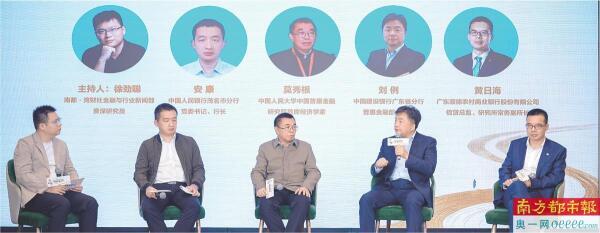
Core Viewpoint - The "China Inclusive Finance Tour" conference in Guangdong highlighted the new trends in inclusive finance 2.0, emphasizing the need for innovative practices and collaboration in the sector [6][7]. Group 1: Policy and Development - The "14th Five-Year Plan" emphasizes the development of inclusive finance, with recent central economic work meetings focusing on financial support for expanding domestic demand, technological innovation, and small and micro enterprises [6]. - The People's Bank of China (PBOC) Guangdong Branch has been actively implementing policies to enhance the financial service environment for small and micro enterprises, rural areas, and private economies, aiming to improve service coverage and satisfaction [8][9]. Group 2: Financial Performance - As of October 2025, the balance of inclusive loans in Guangdong reached 4.9 trillion yuan, accounting for 16.4% of total loans, with a year-on-year growth of 7.9%, surpassing the overall loan growth rate by 2.3 percentage points [9]. - The PBOC Guangdong Branch plans to continue implementing a moderately loose monetary policy and enhance the effectiveness of structural monetary policy tools to improve the level of inclusive financial services [9]. Group 3: Research and Reports - The "China Inclusive Finance Tour Innovation Deep Research Report (2025)" was released, indicating that by the end of Q3 2025, the balance of inclusive loans for small and micro enterprises reached 36.5 trillion yuan, and inclusive agricultural loans reached 14.1 trillion yuan, both showing significant growth [11]. - The report highlights that Guangdong, Zhejiang, and Jiangsu are leading in inclusive finance development, with Guangdong excelling in various metrics such as the balance of inclusive small micro loans and the number of credit accounts [11]. Group 4: Innovative Practices - The report identifies innovative models in inclusive finance, such as state-owned banks leveraging digital products and intelligent credit systems to support small micro enterprises and rural revitalization [12]. - Regional banks are exploring unique paths in inclusive finance by customizing products and collaborating with local governments to address financing challenges for small enterprises and agricultural entities [13][15]. Group 5: Roundtable Discussions - The roundtable discussion focused on the new trends in inclusive finance 2.0, emphasizing the need for comprehensive service offerings, digital upgrades, and collaborative mechanisms to enhance the effectiveness of financial services [14]. - The discussion also highlighted the importance of addressing the "last mile" issue in inclusive finance and the need for sustainable business models [12][14]. Group 6: Case Studies and Innovations - Various institutions shared their innovative practices, such as the "Smart Inclusive" ecosystem developed by Shanghai Pudong Development Bank, which utilizes data to enhance credit approval processes [18]. - Dongguan Rural Commercial Bank introduced a unique loan model linked to industrial wastewater management, showcasing a market-driven approach to environmental financing [19].
广东省唯一!茂名市跻身全国新一批五个深化普惠金融改革地市
Nan Fang Du Shi Bao· 2025-09-16 14:32
Core Viewpoint - The article highlights the emergence of various green brands in Maoming, Guangdong, which are significantly contributing to the local economy and employment through a robust agricultural industry supported by financial reforms aimed at enhancing inclusive finance [2][9]. Group 1: Agricultural Industry Development - Maoming has established a strong agricultural foundation, with a total agricultural output value projected to reach 120.89 billion yuan in 2024, making it the only city in Guangdong to exceed 100 billion yuan in agricultural output for five consecutive years [2][3]. - The city has developed a full industrial chain around its key products, including lychee and Huaju Hong, with the total output value of the specialty agricultural industry exceeding 53 billion yuan, creating job opportunities for over 600,000 people [3][6]. Group 2: Financial Support and Innovation - The introduction of various financial products such as "Lychee Loan," "Huaju Hong Loan," and "Tilapia Loan" has addressed the urgent financing needs of farmers and small businesses, enabling them to expand operations and improve productivity [3][5]. - The recent guidance from seven ministries emphasizes the need for financial institutions to enhance their services in rural areas, focusing on supporting Maoming's advantageous agricultural industries and new agricultural business models [6][9]. Group 3: Policy Framework and Implementation - The "Guiding Opinions" issued by the People's Bank of China and other ministries outline nine key tasks for deepening inclusive finance reforms in Maoming, providing a roadmap for enhancing financial services in agriculture and rural areas [6][7]. - The policy encourages the development of a comprehensive insurance product system and the inclusion of various agricultural assets as collateral to facilitate financing for farmers and agricultural enterprises [7][8]. Group 4: Future Prospects - Maoming's selection as one of the new pilot cities for inclusive finance reform signifies both an honor and a responsibility, aiming to enhance financial services and support the goal of common prosperity for all [9][10]. - The ongoing reforms are expected to provide new momentum for high-quality development in Guangdong's rural areas, positioning Maoming as a model for agricultural revitalization across the country [10].

让普惠金融的力量助茂名“土特产”腾飞
Jin Rong Shi Bao· 2025-05-15 06:27
Core Viewpoint - The financial institutions in Maoming, under the guidance of the People's Bank of China, are focusing on the "Five Trees and One Fish" initiative to create specialized branches that support local agricultural products, enhancing financial services for these industries [1][2][3] Group 1: Financial Initiatives and Support - Maoming's financial institutions have established specialized branches such as Lychee Branch, Huaju Hong Branch, and others to provide tailored financial services to local agricultural sectors [1][3] - The Huaju Hong Branch of Postal Savings Bank in Pingding Town is specifically designed to support the Huaju Hong industry, providing significant credit to local farmers [2][3] - As of February 2025, the loan balance for the "Five Trees and One Fish" initiative reached 10.889 billion yuan, with specific loans for Lychee at 3.144 billion yuan, Huaju Hong at 1.786 billion yuan, and Tilapia at 3.585 billion yuan [3] Group 2: Agricultural Industry Development - Maoming is recognized as the "Tilapia Capital of China," with an annual output value exceeding 10 billion yuan, and is a key player in the global tilapia market [4][5] - The local government is working on enhancing the tilapia industry's competitiveness by addressing issues such as the lack of leading enterprises and standardization in production [4][5] - A financial support framework has been established to assist the tilapia industry, including a collaboration between local governments and financial institutions to provide loans and insurance [5][6] Group 3: Innovative Financial Products - Financial institutions in Maoming have developed specialized loan products like "Lychee Loan," "Huaju Hong Loan," and others to meet the unique needs of local agricultural producers [13] - The introduction of government risk compensation mechanisms and agricultural insurance has helped reduce financing costs and barriers for farmers [13][14] - The establishment of the "Digital Chain Agricultural Industry Alliance" aims to integrate digital finance with agricultural services, facilitating loans and enhancing sales for local products [15] Group 4: Policy Framework and Collaboration - The People's Bank of China in Maoming has implemented a comprehensive policy framework to support local agricultural industries, including various financial support programs [9][10] - Collaborative efforts between local governments, financial institutions, and agricultural associations are focused on creating a multi-faceted financial support system for rural development [6][9] - The establishment of platforms for rural revitalization and loan support has led to significant funding being allocated to support local agricultural initiatives [9][10]
