
美元兑日元外汇交易

Search documents
日本当局“口头干预”显威
Jin Tou Wang· 2026-02-11 02:39
Core Viewpoint - The USD/JPY exchange rate has experienced a significant decline, breaking through the critical psychological level of 155, driven by disappointing U.S. retail sales data and heightened expectations for Federal Reserve interest rate cuts [1][2][3] Group 1: Market Reactions - The USD/JPY fell over 1% to a low of 154.06, with the market sentiment heavily influenced by fears of Japanese government intervention and extreme pessimism [1] - Following the release of U.S. retail sales data showing zero growth, market expectations shifted from moderate bets on rate cuts to a strong belief in a 50 basis point cut by the Federal Reserve, with a 90% probability priced in [1] - The Japanese government’s strong stance against excessive volatility has provided support for the yen, alleviating concerns over fiscal irresponsibility following the ruling party's electoral victory [2] Group 2: Technical Analysis - The USD/JPY has formed a standard "breakdown" pattern, breaking through multiple support levels and turning the previous support at 154.30 into a strong resistance [2] - If the upcoming U.S. non-farm payroll data is weak, the exchange rate may accelerate its decline towards the next key support level at 150.00 [2][3] - The current market is characterized as a "one-way market," where any counter-trend operations are deemed risky [2] Group 3: Economic Context - The upcoming U.S. non-farm payroll data is critical for determining the future of the dollar, with potential outcomes ranging from a free-fall towards the 150 intervention line to a technical rebound if the data is unexpectedly strong [3] - Amid increasing global economic uncertainty, the yen is reaffirming its status as a traditional safe-haven currency, with investors significantly increasing their yen asset holdings to hedge against risks [3] - The conflicting dynamics of a weakening U.S. economy and a strong Japanese government stance create a volatile environment in the forex market, indicating a potential reshaping of market dynamics [3]
日本散户逆势减码日元多头头寸 或为汇率反弹套上“隐形枷锁”
智通财经网· 2026-01-28 08:30
Group 1 - The core viewpoint of the articles highlights that Japanese retail investors are reducing their bullish positions on the yen, potentially setting an "invisible ceiling" on its recent strength amid expectations of intervention by Japanese authorities in the foreign exchange market [1] - Data from the Tokyo Financial Exchange (TFX) indicates that from last Friday to this Tuesday, individual investors cut their net short positions on USD/JPY by a total of 85.7 billion yen (approximately $561 million), marking the largest three-day reduction since October 2022 [1] - The recent changes in positions suggest that as the USD/JPY exchange rate experienced its largest three-day decline in over a year, these investors may have opted for profit-taking or stop-loss exits [1] Group 2 - As of the latest report, the yen has depreciated by 0.3% to 152.62 against the dollar, with the yen rising at least 1% each trading day over the past three days due to market speculation about potential coordinated intervention by Japanese and U.S. authorities to curb the yen's decline [2] - Takuya Kanda, head of Gaitame.com, noted that the 158 to 159 yen range poses a high risk for intervention, leading to expectations of more tactical trading strategies, where investors buy dollars around 153-154 and quickly sell once the exchange rate surpasses 155 [2]
美元兑日元早盘涨0.23%至152.53,前一交易日下跌1.3%
Mei Ri Jing Ji Xin Wen· 2026-01-28 04:27
Group 1 - The core point of the article is that the USD/JPY exchange rate increased by 0.23% to 152.53 in early trading on January 28, following a decline of 1.3% in the previous trading day [1] Group 2 - The article highlights the fluctuation in the USD/JPY exchange rate, indicating a recovery after a significant drop [1]
植田和男“鹰声”难改颓势 日元空头大军仍死守阵地
智通财经网· 2025-12-08 01:21
Core Viewpoint - The market is increasingly speculating that the Bank of Japan will raise interest rates this month, yet participants continue to bet on a weaker yen against the dollar [1][2]. Group 1: Market Sentiment and Positioning - Traders from Bank of America, Nomura Holdings, and Royal Bank of Canada indicate that investor positioning reflects a bearish sentiment towards the yen, as evidenced by Citigroup's yen "pain index" remaining well below zero [1]. - Despite the Bank of Japan Governor Ueda's hints at a potential rate hike, investors maintain bearish bets, reasoning that even if action is taken, Japanese yields are expected to remain significantly lower than those in the U.S., supporting the dollar [1]. - The positioning still leans towards a gradual increase in the dollar-yen exchange rate by year-end, unless there is a significant surprise from the Bank of Japan [1]. Group 2: Currency Trends and Predictions - Japanese Finance Minister Satsuki Katayama's efforts to curb the yen's weakness have had limited success, with the yen's decline partly fueled by speculation regarding the delay in rate hikes [2]. - Following Ueda's comments, hedge funds have gradually reduced their bets on the dollar-yen rise, but most still hold this position [2]. - The options market shows a similar trend, with a 40% higher trading volume in call options compared to put options after Ueda's speech [2]. - UBS has revised its year-end yen exchange rate forecast from 152 yen to 158 yen per dollar, while Bank of America predicts the yen will fall below 160 yen by early 2026 [3].
Vatee外汇:外汇大盘点 美元兑日元枢轴点在哪里?汇率走势转折?
Sou Hu Cai Jing· 2025-08-20 06:28
Core Viewpoint - The USD/JPY currency pair is a focal point for investors, reflecting economic conditions in the US and Japan, and influencing global capital flows. Recent performance has sparked widespread market discussion and predictions about its future trajectory [1]. Group 1: Market Dynamics - The USD/JPY exchange rate is influenced by multiple factors, including the Federal Reserve's monetary policy, Bank of Japan's policy adjustments, global economic growth, and geopolitical uncertainties. The Fed's commitment to combating inflation and reducing asset purchases supports a stronger dollar, pushing USD/JPY towards key resistance levels [1][4]. - The Japanese economy is experiencing mild inflation, leading to a continued loose monetary policy, which puts downward pressure on the yen [1]. Group 2: Technical Analysis - Key pivot points for USD/JPY are identified at 110.00 and 112.00, serving as strategic resistance and support levels. Market participants closely monitor trading volume and price behavior as the exchange rate approaches these levels [2]. - Technical indicators such as moving averages, RSI, and MACD can provide early warnings of potential price movements. For instance, a MACD crossover near resistance could indicate bullish momentum, while a rebound in RSI near support may signal a reversal [7]. Group 3: Economic Data Impact - Economic data, including US employment figures, inflation metrics, and GDP growth, play a crucial role in shaping market expectations. Positive data could lead to a rebound in the dollar, while disappointing figures may prompt a pullback [4][8]. - Future monetary policy directions will be a significant variable affecting market conditions. A faster tightening pace by the Fed could strengthen the dollar, while unexpected economic data or policy shifts could lead to adjustments in the USD/JPY exchange rate [8]. Group 4: Market Sentiment and Risk Factors - Market sentiment and risk appetite are critical, with global uncertainties such as geopolitical conflicts and pandemic developments potentially impacting the dollar's performance [5]. - The current market environment is characterized by a "box range" between 110.00 and 112.00, with potential for a breakout or reversal depending on economic indicators or unforeseen events [5][9]. Group 5: Strategic Considerations for Investors - Investors are advised to stay alert to market dynamics and prepare for potential pivot point changes. Understanding these points is essential for future investment strategies [6]. - Setting reasonable stop-loss levels is crucial for risk management, regardless of whether a breakout or reversal occurs. Observing market volume and price behavior near key pivot points can help assess the validity of breakouts [8].

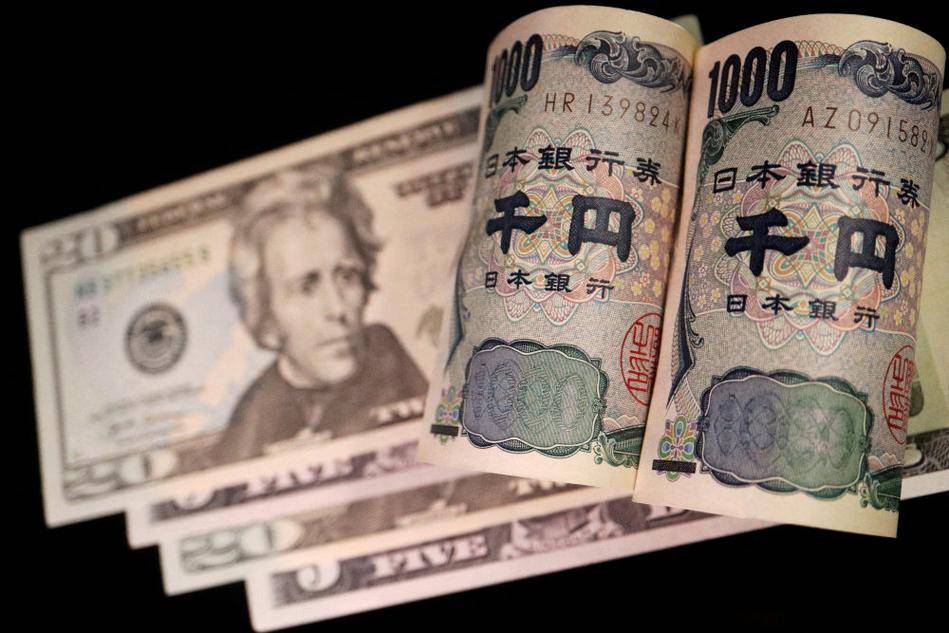
野村:日本参院选举后美/日走弱概率上升
news flash· 2025-07-22 01:49
Core Viewpoint - The likelihood of a weakening USD/JPY exchange rate is increasing following the Japanese Senate elections, influenced by various factors [1] Group 1: Economic Policies - The Japanese government may adopt more expansionary fiscal policies, with funding expected to come from the tax surplus of the 2024 fiscal year rather than new bond issuance, which should help alleviate downward pressure on the yen [1] - Market expectations for Bank of Japan interest rate hikes have been lowered to a cumulative increase of 16 basis points by the end of 2025, indicating limited further downside for the yen in the context of a dovish central bank stance [1] Group 2: Market Positioning - Nomura has re-established short positions on USD/JPY, targeting a decline to 142.00 by the end of October [1] - The current USD/JPY exchange rate is stable around 147.60 [1]