腰部按摩仪

Search documents
从“送好物”到“送心意” 年货“走心”成新趋势
Yang Shi Xin Wen· 2026-02-19 03:30
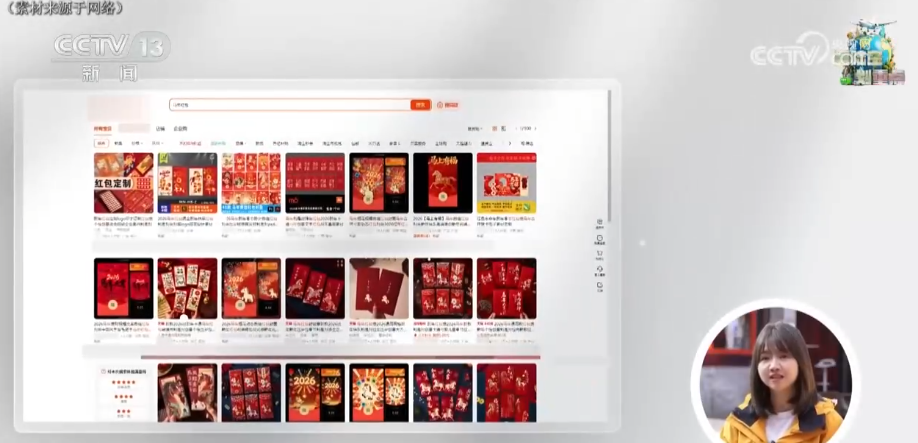
Core Insights - The trend of purchasing New Year gifts is shifting from "sending items" to "sending heartfelt intentions," with younger generations taking the lead in defining traditional customs in a lighter and more thoughtful manner [1][9] - The search volume for culturally themed red envelopes has increased by over 700%, while searches for "Year of the Horse cultural products" have surged nearly 1000% [1] - High-value home appliances, such as robotic vacuum cleaners and dishwashers, have seen sales in rural markets soar by over 100%, as younger consumers are using smart appliances to ease the burden on their parents [1] Purchasing Trends - There is a notable increase in the popularity of cultural gift boxes with "intangible cultural heritage" or "museum collaboration" labels, which are both culturally rich and suitable for sharing on social media [3] - Young consumers are increasingly utilizing large models (AI) to assist in purchasing New Year gifts, indicating a shift in buying methods [3] Personalized Recommendations - For a budget of 2000 yuan, a large model suggested a combination of practical gifts tailored to the parents' needs, such as a lumbar massager and a Bluetooth speaker for square dancing, along with a customized family calendar [5][7] - The large model can provide price comparison links and installation videos, allowing for one-click ordering and even generating voice messages to be sent to parents' phones [7] Emotional Value - The essence of New Year gifts has evolved from mere products to expressions of care and connection, emphasizing that parents value the thoughtfulness behind the gifts rather than their monetary worth [9]


年货从“送东西”转向“送心意” 用更“轻”更“走心”方式定义传统年俗
Yang Shi Wang· 2026-02-19 02:16
Core Insights - The article highlights a shift in the way consumers approach purchasing traditional New Year goods, moving from simply "sending items" to "sending heartfelt intentions" as younger generations take charge of holiday preparations [1] Group 1: Changing Consumer Behavior - The search volume for New Year-themed cultural red envelopes has increased by over 700%, while searches for "Year of the Horse cultural products" have surged nearly 1000% [1] - High-value home appliances, such as robotic vacuum cleaners and dishwashers, have seen sales in county markets surge by over 100%, indicating a trend where young people are using smart appliances to ease the burden on their parents [1] Group 2: New Purchasing Methods - An increasing number of young consumers are utilizing AI models to assist in selecting New Year gifts, providing specific details about their parents' needs and preferences to receive tailored recommendations [3][5] - The AI model suggests a combination of practical gifts, such as a back massager and a Bluetooth speaker for square dancing, along with personalized items like a family calendar, enhancing the emotional value of the gifts [5] Group 3: Emotional Significance of Gifts - The article emphasizes that New Year gifts are no longer just products on shelves but represent care and connection, highlighting that parents value the thoughtfulness behind the gifts rather than their monetary worth [8]
左手举债右手分红,SKG三闯IPO能摆脱网红品牌的增长魔咒吗?
Sou Hu Cai Jing· 2026-02-14 08:32
Core Viewpoint - SKG, a company specializing in wearable health technology, is making its third attempt to go public by submitting an application to the Hong Kong Stock Exchange after previous failures in the A-share and North Exchange markets. This move is seen as crucial for addressing its financial challenges and transitioning from a popular brand to a technology enterprise [1][4][24]. Financial Performance - SKG's revenue has shown stagnation, with figures of 904 million RMB, 1.046 billion RMB, and 1.045 billion RMB for the years 2022 to 2024, respectively. The revenue for the first three quarters of 2025 was 878 million RMB, reflecting a 16.2% year-on-year growth, but the core business did not experience explosive growth [3][5]. - The net profit attributable to the parent company for 2022, 2023, and 2024 was 119 million RMB, 127 million RMB, and 135 million RMB, respectively, with a net profit of 106 million RMB for the first three quarters of 2025 [7][19]. Business Challenges - SKG faces multiple challenges, including a heavy reliance on its core product, the neck massager, which accounts for 44%-50% of its revenue. The company has seen a decline in revenue from other product categories, such as waist and eye massagers [13][15]. - The company's marketing-heavy approach has led to a significant drop in R&D investment, from 9.1% of revenue in 2022 to 6.6% in 2024, raising concerns about its long-term sustainability as a technology company [12][19]. Governance and Market Perception - The company's governance structure is heavily family-controlled, with over 85% of voting rights held by the founders. This has raised questions about decision-making transparency, especially in light of a controversial dividend payout of 199.4 million RMB, which exceeded the net profit for the period [8][10][19]. - SKG's reliance on a single product and aggressive marketing strategies has led to a decline in product reputation, with over 600 complaints filed against the company for issues such as product defects and misleading advertising [19][23]. Market Position and Future Outlook - Despite its challenges, SKG holds a 21.5% market share in the smart wearable health device sector in China, positioning it as a market leader. However, the company must diversify its product offerings and enhance its R&D capabilities to maintain its competitive edge [3][18]. - The upcoming IPO is seen as a critical opportunity for SKG to alleviate financial pressures and transition into a technology-focused enterprise. Success in this endeavor will depend on addressing governance issues, improving product quality, and expanding its market presence [24].
网红按摩仪卖不动!SKG母公司冲刺港股:IPO前夕突击分红2个亿,被质疑重营销、轻研发
Sou Hu Cai Jing· 2025-12-22 14:57
Core Viewpoint - The company Future Health, the parent of the massage device brand SKG, has submitted a listing application to the Hong Kong Stock Exchange, marking its third attempt to enter the capital market after previous setbacks [1][6]. Company Overview - Future Health was established in 2007 by founder Liu Jie, who transitioned from the restaurant and coal mining industries to focus on small home appliances before pivoting to wearable health products in 2016 with the launch of a cervical massager [3][5]. - The company has successfully positioned its products as essential for urban consumers, particularly in office settings, leveraging microcurrent technology to simulate manual massage [5]. Market Position and Product Strategy - SKG has maintained the largest market share in China's smart wearable relaxation device sector, with a projected market share of 21.5% in 2024 [5]. - The product line includes various massage devices and health monitoring tools, targeting both everyday wellness and professional rehabilitation [5]. - The company employs a three-pronged strategy of technology-driven innovation, experiential marketing, and targeted product development to capture niche markets [5]. Financial Performance - Revenue figures from 2022 to 2024 show slight growth, with revenues of 904 million RMB, 1.046 billion RMB, and 1.045 billion RMB respectively, while profits increased from 119 million RMB to 135 million RMB [10]. - In the first three quarters of 2025, the company reported a revenue of 878 million RMB, a year-on-year increase of 16.22%, with profits rising by 24.92% to 106 million RMB [10]. Challenges and Strategic Concerns - The company has faced significant challenges in its IPO journey, including compliance issues that led to the withdrawal of its application in 2023 and a failed attempt to list on the Beijing Stock Exchange [6]. - Recent financial maneuvers, including aggressive dividend payouts totaling 280 million RMB, have raised questions about the company's long-term intentions and financial health [16]. - The company has been criticized for its heavy marketing expenditures, which significantly outpace its research and development investments, raising concerns about its commitment to innovation [21]. Industry Context - The global market for smart wearable health devices is projected to grow from 41.7 billion USD in 2024 to 79.5 billion USD by 2029, with a compound annual growth rate of 13.8% [22]. - The Chinese market for smart wearable health devices is expected to reach 128.3 billion RMB by 2029, growing at a compound annual growth rate of 15.9% from 2024 [22]. - The competitive landscape in the smart relaxation device market is fragmented, with increasing competition leading to product homogenization, necessitating continuous innovation and effective marketing strategies [22].
摆脱久坐 过半受访青年愿意尝试人体工学设备或站立办公
Zhong Guo Qing Nian Bao· 2025-12-18 00:53
Core Insights - A trend of "workplace wellness" is emerging, with 97.2% of surveyed youth having tried "light wellness" methods [1] - The survey indicates a significant interest in ergonomic equipment and standing desks, with 53.5% of respondents willing to try them [1] Group 1: Survey Findings - 45.4% of respondents are open to taking short breaks through walking or climbing stairs [3] - 43.5% are interested in keeping wellness tea bags and healthy snacks at their desks [3] - Other popular methods include stretching at the desk (41.8%) and setting reminders to stand up (35.9%) [3] Group 2: Individual Experiences - A wellness influencer from Guangxi has adopted various "workplace wellness" methods, leading to noticeable health improvements [1] - Another individual from Beijing has started incorporating stretching and hydration into her work routine to combat fatigue [2] - A university student from Hubei has also adopted alternating between sitting and standing while working to alleviate discomfort from prolonged sitting [2] Group 3: Expert Recommendations - Experts suggest simple desk exercises, such as jumping jacks and neck stretches, to improve physical health during long hours of sitting [4] - Recommendations include using ergonomic chairs and engaging in strength training to counteract the effects of aging and sedentary lifestyles [4]
SKG母公司未来健康叫停北交所上市
Nan Fang Du Shi Bao· 2025-08-12 23:10
Core Viewpoint - Future Health, the parent company of SKG, has officially terminated its IPO plans on the Beijing Stock Exchange due to strategic development needs, following a series of challenges in its previous IPO attempts [2][4]. Group 1: Company Overview - Future Health was established in 2007 and has evolved into a high-tech enterprise providing smart wearable health products, with its main brand being SKG, focusing on products like neck and eye massagers, and health watches [2][3]. - As of September 2023, over 80% of the company's revenue comes from wearable health products, with neck and waist massagers being the most significant product lines [3]. Group 2: Financial Performance - Future Health's revenue from 2021 to 2024 was as follows: 1.054 billion, 904 million, 1.046 billion, and 1.048 billion yuan, while net profits were 131 million, 119 million, 127 million, and 135 million yuan respectively [3]. - The company has faced scrutiny regarding its high cash dividends, which were 155 million and 160 million yuan in 2020 and 2021, exceeding its net profits for those years [5]. Group 3: IPO Journey - Future Health's IPO journey has been tumultuous, with multiple attempts and rejections, including a failed application for the ChiNext board in 2022 and a subsequent withdrawal of its application in July 2023 [4][6]. - The company had initially aimed to raise 1.6 billion yuan but later reduced its target to 1.29 billion yuan [4]. Group 4: International Expansion - In recent years, Future Health has focused on expanding its international presence, particularly through its SKG brand, which has increased investments in cross-border e-commerce platforms [7]. - The company signed a strategic investment agreement with Morgan Stanley, securing a significant investment to accelerate its overseas expansion [7]. - Despite increased marketing expenditures, the company's overseas revenue saw a decline of 14.18% in the first half of 2024, amounting to approximately 28.54 million yuan [8].