颈椎按摩仪

Search documents
左手举债右手分红,SKG三闯IPO能摆脱网红品牌的增长魔咒吗?
Sou Hu Cai Jing· 2026-02-14 08:32
Core Viewpoint - SKG, a company specializing in wearable health technology, is making its third attempt to go public by submitting an application to the Hong Kong Stock Exchange after previous failures in the A-share and North Exchange markets. This move is seen as crucial for addressing its financial challenges and transitioning from a popular brand to a technology enterprise [1][4][24]. Financial Performance - SKG's revenue has shown stagnation, with figures of 904 million RMB, 1.046 billion RMB, and 1.045 billion RMB for the years 2022 to 2024, respectively. The revenue for the first three quarters of 2025 was 878 million RMB, reflecting a 16.2% year-on-year growth, but the core business did not experience explosive growth [3][5]. - The net profit attributable to the parent company for 2022, 2023, and 2024 was 119 million RMB, 127 million RMB, and 135 million RMB, respectively, with a net profit of 106 million RMB for the first three quarters of 2025 [7][19]. Business Challenges - SKG faces multiple challenges, including a heavy reliance on its core product, the neck massager, which accounts for 44%-50% of its revenue. The company has seen a decline in revenue from other product categories, such as waist and eye massagers [13][15]. - The company's marketing-heavy approach has led to a significant drop in R&D investment, from 9.1% of revenue in 2022 to 6.6% in 2024, raising concerns about its long-term sustainability as a technology company [12][19]. Governance and Market Perception - The company's governance structure is heavily family-controlled, with over 85% of voting rights held by the founders. This has raised questions about decision-making transparency, especially in light of a controversial dividend payout of 199.4 million RMB, which exceeded the net profit for the period [8][10][19]. - SKG's reliance on a single product and aggressive marketing strategies has led to a decline in product reputation, with over 600 complaints filed against the company for issues such as product defects and misleading advertising [19][23]. Market Position and Future Outlook - Despite its challenges, SKG holds a 21.5% market share in the smart wearable health device sector in China, positioning it as a market leader. However, the company must diversify its product offerings and enhance its R&D capabilities to maintain its competitive edge [3][18]. - The upcoming IPO is seen as a critical opportunity for SKG to alleviate financial pressures and transition into a technology-focused enterprise. Success in this endeavor will depend on addressing governance issues, improving product quality, and expanding its market presence [24].

“赛博年味”拉满!春节消费的“科技范儿”
Zhong Guo Zheng Quan Bao· 2026-02-13 04:52
Core Insights - The integration of humanoid robots into daily life and festive activities is gaining traction, with significant consumer engagement and rental demand during the Spring Festival [1][2] Group 1: Humanoid Robots in Retail - The "7S store" in Wuhan showcases humanoid robots that provide services during the Spring Festival and offer daily companionship [1] - The store has expanded its services beyond traditional sales to include solutions, demonstrations, and training, enhancing customer interaction [1] Group 2: Consumer Engagement and Sales Growth - The demand for humanoid robot rentals and interactive experiences has led to over 600,000 yuan in revenue since the store's opening in November 2025 [2] - Hundreds of consumers visit the store daily for interactive experiences, with educational activities attracting over 80 students per session [2] Group 3: Broader Trends in Smart Product Consumption - The trend of incorporating technology into festive celebrations is reflected in the increased sales of smart home appliances, supported by government subsidies [2] - Sales of cleaning appliances like automatic window cleaners and air purifiers have surged by 55% year-on-year due to the demand for spring cleaning [3] Group 4: Family Experiences with Smart Technology - Families are increasingly adopting smart products, enhancing their daily lives and interactions, such as using smart TVs with voice assistants for easier navigation [3] - The convenience of smart feeding devices for pets reflects the broader integration of technology into household routines [3]
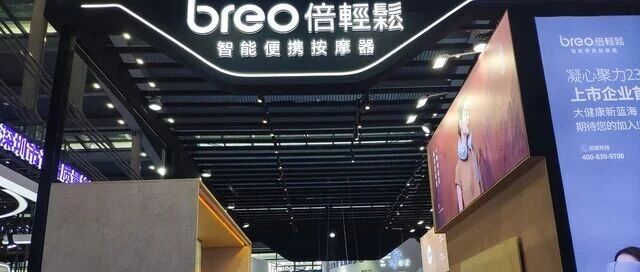
倍轻松实控人马学军遭证监会立案
YOUNG财经 漾财经· 2026-02-09 10:50
Core Viewpoint - The actual controller of Beiliangong, Ma Xuejun, is under investigation by the China Securities Regulatory Commission (CSRC) for suspected market manipulation, marking the second investigation within a month [2][5]. Group 1: Company Background - Beiliangong was established in 2001 and went public on the Sci-Tech Innovation Board in July 2021, focusing on the design, research, development, production, sales, and service of smart portable health hardware, including products like neck and eye massagers [2]. - Ma Xuejun has been leading the company since its inception and currently holds a direct shareholding of 37.51%, controlling a total of 49.38% of the company's shares [2]. Group 2: Regulatory Issues - Ma Xuejun has previously faced regulatory inquiries due to fund occupation issues, including the misappropriation of 16.69 million yuan through employee loans and transferring 54 million yuan via related enterprises [3]. - In 2024 alone, the total amount of funds occupied reached 85.93 million yuan, with some amounts still unpaid by the end of the period [4]. Group 3: Financial Performance - Beiliangong reported a revenue of 1.085 billion yuan and a net profit of only 10.25 million yuan in its 2024 annual report, while the 2025 Q3 report indicated total assets of 676 million yuan and liabilities of 398 million yuan, leaving shareholders' equity at 278 million yuan [4]. - The company has faced continuous losses, with a projected net profit loss of 84 million to 105 million yuan for the entire year of 2025, and has received performance inquiry letters from the Shanghai Stock Exchange for four consecutive years, highlighting ongoing issues with information disclosure compliance [4].

倍轻松实控人再遭立案
Xin Lang Cai Jing· 2026-02-09 03:39
Core Viewpoint - The company Beike (688793.SH) is under investigation by the China Securities Regulatory Commission (CSRC) for market manipulation, involving its actual controller and chairman, Ma Xuejun, who has been investigated twice in a short period for various financial misconducts [1][2]. Group 1: Company Background - Beike was established in 2001 and went public on the Sci-Tech Innovation Board in July 2021, focusing on the design, research, development, production, sales, and service of smart portable health hardware, including products like neck and eye massagers [1]. - Ma Xuejun has been the main operator since the company's inception, holding a direct stake of 37.51% and controlling a total of 49.38% of the shares, giving him absolute control over the company [1]. Group 2: Financial Misconduct - Ma Xuejun has been involved in various financial misconducts, including the misappropriation of company funds totaling 16.69 million yuan through employee loans, transferring 54 million yuan via related companies, and prepaying suppliers, with a total of 85.93 million yuan misappropriated in 2024 alone [2]. - The company has also failed to disclose 30 million yuan in illegal guarantees, raising further concerns about its governance [2]. Group 3: Financial Performance - In 2024, Beike reported revenues of 1.085 billion yuan and a net profit of only 10.25 million yuan. By the third quarter of 2025, the company's total assets were 676 million yuan, liabilities were 398 million yuan, and shareholders' equity was reduced to 278 million yuan, with a negative cash flow from operating activities of 28.1 million yuan [3]. - As of February 6, 2026, the company's stock price was 22.71 yuan per share, reflecting a decline of approximately 81.5% from its peak market value, with a total market capitalization of 1.952 billion yuan [3]. Group 4: Regulatory Response - The company stated that the investigation pertains to Ma Xuejun personally and is not expected to significantly impact its daily operations, with Ma continuing to fulfill his duties and the company pledging to cooperate with the regulatory investigation [3].
SKG三闯IPO,募资前缘何先举债给实控人分红1.7亿
Nan Fang Du Shi Bao· 2026-01-28 13:49
Core Viewpoint - SKG's third attempt to go public reveals significant discrepancies between its founding principles and current operational challenges, including declining revenue, profit, and heavy reliance on a single product, raising questions about its future viability in the capital market [1][2][6]. Group 1: Financial Performance - SKG's revenue decreased from 1.06 billion yuan in 2021 to 900 million yuan in 2022, a year-on-year decline of 14.68% [2] - The net cash flow plummeted from 260 million yuan in 2021 to a negative 1 million yuan [2] - The net profit for SKG dropped from 210 million yuan in 2020 to 100 million yuan in 2022, marking a continuous decline over three years [2][3] Group 2: Product Dependency - SKG heavily relies on its cervical massager, which contributed 586 million yuan, 855 million yuan, and 743 million yuan to revenue from 2019 to 2021, accounting for 74.19%, 86.67%, and 70.33% of total revenue respectively [2] - Revenue from the cervical massager fell from 860 million yuan in 2020 to 450 million yuan in 2022, with its share of total revenue dropping from 86.67% to 50.42% [3] Group 3: Marketing vs. R&D Investment - SKG's marketing expenses from 2020 to 2022 were 210 million yuan, 215 million yuan, and 165 million yuan, consistently over 18% of revenue, totaling approximately 430 million yuan [4] - In contrast, R&D expenses decreased from 9.1% in 2022 to 6.6% in 2025, with a 17.7% year-on-year reduction in 2024 [4][5] - The number of R&D personnel dropped from 172 in 2022 to 161 in 2025, a reduction of over 6% [5] Group 4: Controversial Dividend Practices - SKG controversially borrowed funds to distribute dividends totaling 170 million yuan to shareholders, despite declining revenue and profits [6][7] - The total dividends paid reached 280 million yuan, accounting for 74% of net profit during the reporting period [7] - The company's interest-bearing loans surged from 173,000 yuan at the end of 2022 to 1.8 billion yuan by the third quarter of 2025 [8] Group 5: Market Competition and Future Outlook - The massage device market in China experienced a compound annual growth rate of 11.05% from 2015 to 2021, with increasing competition from brands like Xiaomi and Beiliang, intensifying price wars [8] - Analysts suggest that SKG's brand longevity will depend on its ability to build core competitiveness beyond marketing [9]
SKG三闯IPO 募资前缘何先举债给实控人分红1.7亿
Nan Fang Du Shi Bao· 2026-01-28 13:48
Core Viewpoint - SKG, known for its neck massager, is attempting its third IPO after previous failures, revealing significant operational challenges including declining revenue, profit, and an imbalance between marketing and R&D efforts [1][3][10]. Group 1: Financial Performance - SKG's revenue decreased from 1.06 billion yuan in 2021 to 900 million yuan in 2022, a year-on-year decline of 14.68% [3]. - The net profit for SKG dropped from 210 million yuan in 2020 to 100 million yuan in 2022, marking a continuous decline over three years [4]. - The cash flow net amount fell sharply from 260 million yuan in 2021 to a negative 1 million yuan in 2022 [3]. Group 2: Product Dependency and Risks - SKG heavily relies on its neck massager, which contributed 5.86 billion yuan, 8.55 billion yuan, and 7.43 billion yuan in revenue from 2019 to 2021, accounting for 74.19%, 86.67%, and 70.33% of total revenue respectively [4]. - The revenue from the neck massager decreased from 860 million yuan in 2020 to 450 million yuan in 2022, with its contribution to total revenue dropping from 86.67% to 50.42% [5]. Group 3: Marketing vs. R&D Investment - SKG's marketing expenses from 2020 to 2022 were 210 million yuan, 215 million yuan, and 165 million yuan, consistently over 18% of revenue, totaling approximately 430 million yuan [6]. - In contrast, R&D expenses decreased from 9.1% in 2022 to 6.6% in 2025, with a 17.7% year-on-year reduction in 2024 [6][7]. - The number of R&D personnel decreased from 172 in 2022 to 161 in 2025, indicating a reduction in focus on R&D [7]. Group 4: Controversial Financial Practices - SKG controversially borrowed funds to distribute 170 million yuan in dividends to shareholders, despite declining revenue and profits [10][11]. - The total dividends paid reached 280 million yuan, accounting for 74% of net profit during the reporting period [11]. - The company's debt increased significantly, from 173,000 yuan at the end of 2022 to 1.8 billion yuan by the third quarter of 2025 [12]. Group 5: Market Competition and Future Outlook - The massage device market in China saw a compound annual growth rate of 11.05% from 2015 to 2021, with increasing competition from brands like Xiaomi and Beiliang, intensifying price wars [12]. - Analysts suggest that SKG's future viability depends on its ability to build core competitiveness beyond marketing [13].
星瞰IPO | 递表前突击分红2亿,网红按摩仪公司还缺钱?
Sou Hu Cai Jing· 2025-12-24 11:43
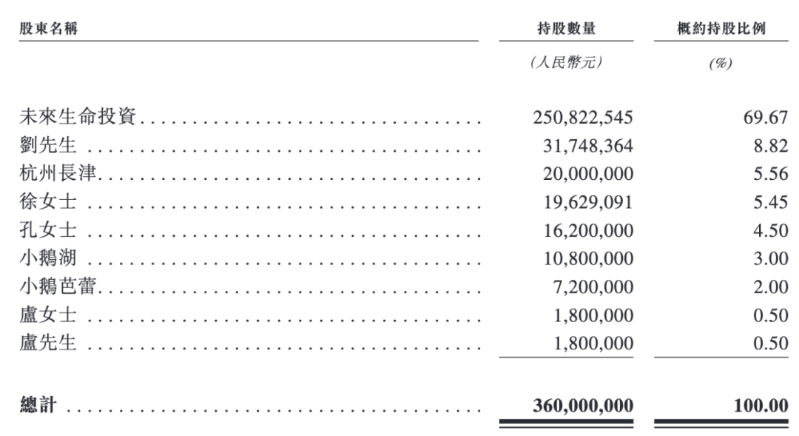
Core Viewpoint - Future Health, the parent company of SKG, has submitted a listing application to the Hong Kong Stock Exchange, but its significant dividend distribution prior to the IPO has raised concerns among observers [1][4]. Group 1: Dividend Distribution - The company declared a dividend of 199 million RMB to its equity shareholders for the nine months ending September 30, 2025, which has already been paid in September and October 2025 [1]. - The net profit for the same period was only 106 million RMB, resulting in a dividend payout ratio of 187.74% of the net profit [1]. - The primary beneficiaries of this dividend are the founders Liu Jie and Xu Siying, who hold 8.82% and 5.45% of the company's shares, respectively, and collectively own 83.94% of the company [1][2]. Group 2: Company Background and Market Position - Future Health has a history of dividend payments, distributing 50 million RMB in 2022 and 30 million RMB in 2023, totaling 235 million RMB for the period from 2022 to the first nine months of 2025 [3]. - The founders established SKG in 2007, initially focusing on home appliances, but pivoted to the health market in 2016, launching a neck massager as their first product in the wearable health device sector [3]. - According to Frost & Sullivan, the company is projected to hold a 4.1% market share in the global smart soothing wearable device market and a 21.5% share in the Chinese market by 2024 [3]. Group 3: IPO Challenges - The company has faced scrutiny from regulatory bodies regarding its cash dividend practices, which contributed to its withdrawal from the ChiNext IPO in 2023 and the termination of its guidance for the Beijing Stock Exchange in August [3]. - The uncertainty surrounding SKG's ability to successfully navigate the Hong Kong Stock Exchange listing process raises questions about whether the dividend distribution is a strategic move for future growth or a premeditated cash-out scheme by the founders [4].
A股闯关未果再冲港股IPO,SKG上市前夕突击分红近2亿元
Sou Hu Cai Jing· 2025-12-24 09:37
Core Viewpoint - The company SKG is attempting to capitalize on the wearable health technology market, but faces significant challenges in revenue growth, profitability, and financial management as it prepares for its IPO in Hong Kong [1][12]. Group 1: Market Position and Growth Potential - SKG is the leading company in China's smart soothing wearable device industry, with a projected market share of 21.5% in 2024 [1]. - The global wearable health device market is expected to grow at a compound annual growth rate (CAGR) of 13.8%, reaching $79.5 billion by 2029, while the Chinese market is projected to reach 61.5 billion yuan in 2024, expanding at a CAGR of 15.9% [2]. Group 2: Financial Performance - SKG's revenue from 2022 to 2024 is reported as 904 million yuan, 1.046 billion yuan, and 1.045 billion yuan, indicating a slight decline in 2024 despite industry growth [2]. - The adjusted net profit decreased from 137 million yuan in 2022 to 123 million yuan in 2023, a drop of 10.2%, with a slight recovery to 126 million yuan in 2024, primarily due to cost-cutting measures rather than revenue growth [2][3]. Group 3: Profit Distribution and Debt Management - SKG has distributed a total of 280 million yuan in cash dividends from 2022 to 2024, with a dividend payout ratio of 57.3%, including an aggressive payout of 199.4% of net profit in the first three quarters of 2025 [4]. - The company's interest-bearing bank loans increased from 70.17 million yuan at the end of 2022 to 180 million yuan by September 2025, indicating a growing reliance on debt for operational funding [5]. Group 4: Product Structure and Innovation - SKG's revenue is heavily reliant on a single product category, the neck massager, which accounted for over 50% of total revenue from 2022 to 2024, with minimal growth observed [8]. - The company's research and development (R&D) expenses have decreased from 82.16 million yuan in 2022 to 79.18 million yuan in 2024, with the R&D expense ratio declining from 9.1% to 7.6% during the same period [9][10]. Group 5: Sales Model and Brand Reputation - SKG's sales model is primarily distributor-driven, which has led to challenges in channel management and brand reputation, with over 500 complaints related to product quality and safety issues reported [11]. - The company's marketing expenses have significantly outpaced R&D spending, raising concerns about the sustainability of its growth strategy [10].
网红按摩仪卖不动!SKG母公司冲刺港股:IPO前夕突击分红2个亿,被质疑重营销、轻研发
Sou Hu Cai Jing· 2025-12-22 14:57
Core Viewpoint - The company Future Health, the parent of the massage device brand SKG, has submitted a listing application to the Hong Kong Stock Exchange, marking its third attempt to enter the capital market after previous setbacks [1][6]. Company Overview - Future Health was established in 2007 by founder Liu Jie, who transitioned from the restaurant and coal mining industries to focus on small home appliances before pivoting to wearable health products in 2016 with the launch of a cervical massager [3][5]. - The company has successfully positioned its products as essential for urban consumers, particularly in office settings, leveraging microcurrent technology to simulate manual massage [5]. Market Position and Product Strategy - SKG has maintained the largest market share in China's smart wearable relaxation device sector, with a projected market share of 21.5% in 2024 [5]. - The product line includes various massage devices and health monitoring tools, targeting both everyday wellness and professional rehabilitation [5]. - The company employs a three-pronged strategy of technology-driven innovation, experiential marketing, and targeted product development to capture niche markets [5]. Financial Performance - Revenue figures from 2022 to 2024 show slight growth, with revenues of 904 million RMB, 1.046 billion RMB, and 1.045 billion RMB respectively, while profits increased from 119 million RMB to 135 million RMB [10]. - In the first three quarters of 2025, the company reported a revenue of 878 million RMB, a year-on-year increase of 16.22%, with profits rising by 24.92% to 106 million RMB [10]. Challenges and Strategic Concerns - The company has faced significant challenges in its IPO journey, including compliance issues that led to the withdrawal of its application in 2023 and a failed attempt to list on the Beijing Stock Exchange [6]. - Recent financial maneuvers, including aggressive dividend payouts totaling 280 million RMB, have raised questions about the company's long-term intentions and financial health [16]. - The company has been criticized for its heavy marketing expenditures, which significantly outpace its research and development investments, raising concerns about its commitment to innovation [21]. Industry Context - The global market for smart wearable health devices is projected to grow from 41.7 billion USD in 2024 to 79.5 billion USD by 2029, with a compound annual growth rate of 13.8% [22]. - The Chinese market for smart wearable health devices is expected to reach 128.3 billion RMB by 2029, growing at a compound annual growth rate of 15.9% from 2024 [22]. - The competitive landscape in the smart relaxation device market is fragmented, with increasing competition leading to product homogenization, necessitating continuous innovation and effective marketing strategies [22].
世上所有的商品,都只是给买家一个转账的理由而已
Sou Hu Cai Jing· 2025-12-06 11:27
Core Insights - The article emphasizes that consumers often do not purchase products for their functional attributes but rather for the emotional and identity-related reasons they fulfill [6][8][32] - It highlights the concept of "producer's curse," where creators may misinterpret the value of their products based on their expertise, leading to a disconnect with consumer willingness to pay [2][12] Group 1: Consumer Behavior - Consumers are more interested in the emotional experiences and identity affirmations that products provide rather than their technical specifications [5][10] - The article illustrates that purchasing decisions are often driven by deeper psychological needs, such as the desire for self-identity and emotional satisfaction [7][19] - The example of buying a Dyson vacuum cleaner illustrates that consumers are not just buying a product but are also seeking validation of their identity as capable individuals [7][10] Group 2: Marketing Strategies - Effective marketing should focus on the "reason" behind a purchase rather than just the product features, shifting the narrative from "what" to "who" the consumer becomes by using the product [18][30] - The article suggests that successful brands create a narrative that resonates with consumers' aspirations and emotional needs, as seen in the case of Starbucks selling a "third space" experience rather than just coffee [20][30] - It emphasizes the importance of understanding consumer psychology and crafting marketing messages that reflect their inner desires and fears [22][27] Group 3: Product Development - The article advocates for a new approach to product development that prioritizes the emotional and identity-related reasons for purchasing over traditional functional attributes [31][32] - It outlines a five-step process for developing products that align with consumer motivations, starting from understanding human desires to creating compelling narratives [36] - The final goal is to create products that serve as "reason carriers," enabling consumers to connect with their aspirations and identities [32][33]