
自动喷水灭火系统

Search documents
推进高层建筑消防安全专项整治
Xin Lang Cai Jing· 2026-01-13 19:51
Group 1 - The core focus of the Haidong Fire Rescue Team is on enhancing fire safety in high-rise buildings through targeted training, inspections, self-assessments, and experience sharing [1] - The team addresses common fire hazards such as damaged fire facilities, illegal use of fire and electricity, and improper charging of electric bicycles, using visual aids for clearer understanding [1] - A dual prevention mechanism is established, combining fire supervision with self-inspection by building management to improve fire resistance capabilities [1] Group 2 - Advanced management practices are promoted through on-site observation, explanations, and discussions, focusing on the standardized operation of fire control rooms [2] - The team conducts face-to-face presentations in communities and businesses, utilizing LED screens for awareness campaigns and guiding micro fire stations in practical training [2] - A closed-loop collaborative mechanism is created, integrating drills, hazard inspections, simultaneous publicity, and immediate feedback [2]
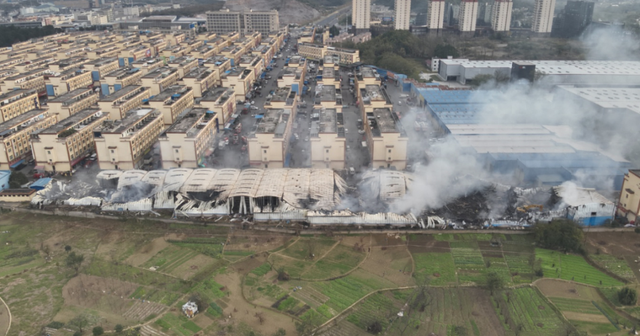
一场大火“烧出”3家单位违法行为!合计罚款8万余元
Xin Lang Cai Jing· 2026-01-11 01:43
Core Viewpoint - A fire incident at a wholesale market in Guiyang, China, revealed serious violations by three involved parties regarding fire safety regulations, leading to administrative penalties totaling 82,600 yuan [3][12]. Group 1: Fire Incident and Investigation - A fire broke out at a wholesale market in Guiyang, prompting an investigation that uncovered significant fire safety violations [3]. - The investigation found that the market's fire prevention equipment, including fire curtains and alarm systems, were of substandard quality, and the purity of the fire extinguishing agent was also inadequate [3][6]. Group 2: Penalties Imposed - The market management was issued a notice to rectify the violations but failed to comply, resulting in a fine of 10,000 yuan for the management unit and 600 yuan for the responsible individual [6]. - The fire safety maintenance company was fined 30,000 yuan for not properly maintaining fire safety equipment and failing to report non-functional systems [8][11]. - The fire safety assessment company was also fined 30,000 yuan for discrepancies in their safety evaluation reports, with an additional 6,000 yuan penalty for the project manager [11][12].

高层建筑消防安全自查自改展开
Liao Ning Ri Bao· 2025-12-31 00:59
Core Viewpoint - The State Council's Safety Committee has issued a notice to conduct a comprehensive inspection and rectification action for major fire risks in high-rise buildings, emphasizing the importance of fire safety responsibilities and proactive measures in fire risk management [1][2]. Group 1: Fire Safety Management - The provincial fire safety committee has released a notice outlining the responsibilities of property rights, usage, management units, and property service companies in conducting self-inspections and rectifications in high-rise buildings [1]. - Key areas for inspection include the use of flammable materials in newly installed external wall insulation systems and the illegal occupation of evacuation routes and fire truck access during external wall renovations [1]. - For internal renovations, inspections should focus on compliance with regulations for small-scale projects involving welding and the maintenance or installation of elevators, air conditioning, and electrical systems [1]. Group 2: Fire Safety Equipment - Inspections of fire safety equipment in high-rise buildings should prioritize checking the indoor and outdoor fire hydrant systems, automatic sprinkler systems for water supply and pressure issues, and the operational status of fire alarm and smoke control systems [2]. - Daily fire safety management must include the removal of flammable materials from building facades and ensuring compliance with the "one building, one sign" system for fire performance and safety requirements of insulation materials [2]. Group 3: Training and Reporting - In addition to inspections, there is a requirement to conduct fire safety training and drills, with at least one full participation fire evacuation drill organized [2]. - Major fire hazards identified during inspections can be reported through the 12345 government service hotline [2].
青鸟消防:旗下子公司科力恒已有脉冲式雾化喷射器 可搭载于消防无人机平台
Zheng Quan Ri Bao Wang· 2025-12-08 10:12
Core Viewpoint - Qingniao Fire Protection (002960) has developed a pulse atomization sprayer that can be mounted on firefighting drone platforms, addressing challenges in fire prevention and response in high-rise buildings [1] Group 1: Company Developments - The subsidiary Keli Heng has successfully created a pulse atomization sprayer for use in firefighting drones [1] - The company has extensive technical research and development capabilities, along with rich project experience [1] Group 2: Industry Challenges - High-rise buildings present significant challenges for fire prevention, alarm, personnel evacuation, and firefighting due to their vertical height and multiple floors [1] - Essential firefighting equipment for high-rise buildings includes automatic fire alarm and linkage control systems, emergency lighting and intelligent evacuation indication systems, electrical fire monitoring systems, fire equipment power monitoring systems, residual pressure monitoring systems, combustible gas alarm systems, and automatic sprinkler systems [1] Group 3: Project Experience - The company has provided customized firefighting solutions for several landmark high-rise buildings, including but not limited to Beijing CITIC Tower, China International Trade Center, Nanchang Greenland Center, Chongqing Center, Changsha Huayuan Jin Waitan, Nanchang New Land Center, and Wuhan Chenggong Building [1]
百万栋高层住宅,消防安全要注意什么?
2 1 Shi Ji Jing Ji Bao Dao· 2025-11-28 12:01
Core Insights - The fire safety issues of high-rise and super high-rise buildings have become a public concern, with a significant increase in the number of households living in such buildings over the past decade [1][10][13]. Group 1: Building Statistics - There are over one million high-rise buildings and more than 5,000 super high-rise buildings in China, with the total number being the highest in the world [4][10]. - From 2010 to 2020, the number of households living in high-rise buildings increased by 150% [1][13]. - As of 2017, 61.9 million high-rise buildings were reported, with 24 meters and above classified as high-rise [4][12]. Group 2: Fire Safety Challenges - High-rise buildings face unique challenges during fires, such as rapid vertical spread of smoke and heat, making evacuation difficult [5][6]. - The average time for evacuating a 240-meter high building exceeds one hour, while toxic smoke can incapacitate individuals within four minutes [5]. - Firefighting equipment, such as aerial ladder trucks, has limitations, with the highest operational height being around 101 meters, which is insufficient for many super high-rise buildings [6][7]. Group 3: Internal Fire Safety Systems - Internal fire safety systems in high-rise buildings, including fire hydrants and automatic alarm systems, often lack adequate water supply due to aging infrastructure [7][8]. - Approximately 46% of high-rise residential buildings lack automatic fire safety systems, and those that do have an average functionality rate of less than 50% [8][11]. Group 4: Material Safety Concerns - Many high-rise buildings utilize flammable exterior insulation materials, with around 4.2 million buildings reported to have such materials, increasing fire risks [11][12]. - The use of inappropriate materials in construction is a significant concern, as it can exacerbate fire hazards [9][11]. Group 5: Regulatory and Future Directions - Government initiatives aim to improve fire safety standards, with plans to increase the functionality rate of fire safety systems in high-rise buildings to 90% by 2025 [8]. - There is a growing emphasis on using non-combustible materials in construction and maintenance to mitigate fire risks [12].

新兴领域、绿色低碳 市场监管总局批准发布一批重要国家标准
Zhong Guo Jing Ji Wang· 2025-11-21 08:39
Emerging Fields - The National Market Regulation Administration has approved the release of 167 national standards related to rare earth permanent magnet materials, fine ceramics, and carbon fiber composite materials, promoting the iteration and transformation of new material technologies and guiding standardized industrial development [1][2] - Four national standards concerning intelligent computing have been published, focusing on terminology, reference architecture, and testing methods, which solidify the foundation for AI-enabled industrial upgrades [2] Transportation and Green Low Carbon - Three national standards have been released for urban rail transit vehicle alarm information and signaling systems, enhancing public rail transit safety capabilities [2] - Thirty national standards have been published, covering areas such as unmanned aerial vehicle registration, road traffic signs, gas vehicles, and urban rail transit screen doors, contributing to the safe development of transportation [2] - Twenty-two national standards related to kitchen waste treatment equipment, waste incineration equipment, and greenhouse gas management systems have been introduced, further improving the green low carbon standard system [2] - A total of 199 national standards have been released for wind power generation systems and high-end equipment, accelerating technology upgrades and product quality improvements in the manufacturing sector [2] Safety Production - Twenty-two national standards have been published regarding gas transmission and distribution equipment safety, pressure pipeline specifications, and small amusement facility safety, reinforcing the safe operation of facilities and public spaces [3] - Mandatory national standards for fireworks safety and quality have been established, enhancing safety performance requirements for fireworks products [3] - Eleven mandatory national standards for key fire safety products, including automatic sprinkler systems and foam extinguishing agents, have been updated to improve performance and reliability in fire prevention [3] Economic and Trade Services - Three national standards have been released for cross-border e-commerce and e-commerce platform transaction information, guiding risk prevention and independent site construction for e-commerce platforms [3] - Five national standards related to logistics documentation and multi-modal transport have been published, enhancing the standardization of logistics processes and promoting scientific evaluation of multi-modal transport capabilities [3] Agriculture and Rural Development - Thirty national standards have been established for agricultural safety, providing a technical foundation for safe agricultural production [4] - Forty-six national standards related to grain, oil, tobacco, and forestry biomass materials have been published to support high-quality agricultural product supply [4] - Seven national standards concerning water-saving irrigation and agricultural product trading have been introduced to enhance the standardization level of agricultural production [4] Daily Life - Ten national standards for smart home appliances, including applications and recycling materials, have been released to promote the intelligence, greenness, and safety of home appliance products [4] - Thirteen national standards for textiles and footwear, including smart textiles and size conversion charts, have been published to guide enterprises in standardized production and enhance consumer experience [4] - Six national standards related to the elimination of iodine deficiency have been established to strengthen healthcare service guarantees [4]

【图解】新兴领域、绿色低碳 市场监管总局批准发布一批重要国家标准
Zhong Guo Jing Ji Wang· 2025-11-21 04:20
Emerging Fields - The National Standards Administration has approved the release of 167 national standards related to rare earth permanent magnet materials, fine ceramics, and carbon fiber composite materials, promoting the iteration and transformation of new material technologies and guiding standardized industrial development [1][2] - Four national standards concerning intelligent computing have been published, covering terminology and social products [1] Transportation and Green Low Carbon - Three national standards have been released for urban rail transit vehicle alarm information and signal systems, enhancing public rail transit safety [2] - Thirty national standards have been published for unmanned aerial vehicle registration and operation identification, road traffic signs, gas vehicles, container repairs, and urban rail transit screen doors, supporting the safe development of transportation [2] - Twenty-two national standards have been introduced for kitchen waste treatment equipment, waste incineration equipment, oilfield production energy consumption testing, lighting facility economic operation, and greenhouse gas management systems, further improving the green low-carbon standard system [2] - A total of 199 national standards have been released for wind power generation systems, CNC plate rolling machines, and reciprocating internal combustion engines, accelerating high-end equipment technology upgrades and product quality improvements, promoting sustainable development in manufacturing [2] Safety Production - Twenty-two national standards have been published for gas transmission and distribution equipment safety, pressure pipeline specifications, and small amusement facilities safety, reinforcing the safe and stable operation of infrastructure and public places [3] - Mandatory national standards for fireworks safety and quality have been established, enhancing safety performance requirements for fireworks products [3] - Eleven mandatory national standards for key fire-fighting products, including automatic sprinkler systems and foam extinguishing agents, have been updated to improve performance and reliability through enhanced quality control [3] Economic and Trade Services - Three national standards have been released for cross-border e-commerce and e-commerce platform transaction information, guiding risk prevention and independent site construction for cross-border e-commerce [4] - Five national standards related to logistics documents, logistics service contracts, automotive parts turnover boxes, and multimodal transport capacity evaluation have been published to enhance the standardization level of logistics and multimodal transport [4] - National standards for the Chinese translation of place names from Sweden, Finland, Norway, Denmark, and Thailand have been established to support economic and cultural exchanges with Nordic and ASEAN countries [4] Agriculture and Rural Areas - Thirty national standards have been published to ensure agricultural production safety [6] - Forty-six national standards related to grain, oil, tobacco, and forestry biomass materials have been released to support high-quality agricultural product supply [6] - Seven national standards for water-saving irrigation and agricultural product trading have been introduced to enhance the standardization level of agricultural production [6] People's Daily Life - Ten national standards for smart home appliances, including application scenarios and lithium-ion batteries, have been published to promote the intelligence, greenness, and safety of home appliance products [8] - Thirteen national standards for smart textiles, silk fabrics, and shoe size comparison tables have been released to guide enterprises in standardized production and enhance consumer experience [8] - Six national standards related to the elimination of iodine deficiency diseases have been published to strengthen healthcare service guarantees [8]

涉及新兴领域、交通和绿色低碳等 一批重要国家标准发布
Xin Hua She· 2025-11-07 06:45
Emerging Fields - A total of 167 national standards related to rare earth permanent magnet materials, fine ceramics, and carbon fiber composite materials have been released to promote the iteration of new material technologies and guide standardized industrial development [1] - Four national standards in intelligent computing have been established to solidify the foundation for AI-enabled industrial upgrades [1] - Fourteen national standards concerning semiconductor equipment and materials have been introduced, focusing on electronic components and integrated circuit packaging testing to support the healthy development of the semiconductor industry [1] Transportation and Green Low-Carbon - Three national standards for urban rail transit vehicle alarm information and signaling systems have been published to enhance public rail transit safety [1] - Thirty national standards, including those for unmanned aerial vehicle registration and road traffic signs, aim to improve transportation safety [1] - Twenty-two national standards related to kitchen waste treatment equipment and greenhouse gas management systems have been introduced to enhance the green low-carbon standard system [1] - A total of 199 national standards for wind power generation systems and CNC plate rolling machines have been released to accelerate high-end equipment technology upgrades and improve product quality [1] Safety Production - Twenty-two national standards for gas transmission and distribution equipment and pressure pipelines have been established to strengthen the safety and stability of public facilities [2] - Mandatory national standards for fireworks safety and quality have been updated to improve safety performance requirements [2] - Eleven mandatory national standards for key fire safety products have been revised to enhance quality control and reliability [2] Economic and Trade Services - Three national standards for cross-border e-commerce and e-commerce platform transaction information have been introduced to guide risk prevention and provide technical references for transaction management [2] - Five national standards for logistics and multimodal transport have been established to improve the standardization of documentation and container usage [2] Agriculture and Rural Development - Thirty national standards related to feed, pesticides, and animal health have been released to ensure agricultural production safety [2] - Forty-six national standards for grain, oil, and forestry biomass materials have been introduced to support high-quality agricultural product supply [2] - Seven national standards for water conservation and agricultural product trading have been established to enhance agricultural production standardization [2] Daily Life - Ten national standards for smart home appliances and lithium-ion batteries have been released to promote the smart, green, and safe quality of home appliances [3] - Thirteen national standards for textiles and footwear have been introduced to guide production and enhance consumer experience [3] - Six national standards related to the elimination of iodine deficiency have been established to strengthen healthcare services [3]
涉稀土永磁、集成电路等,一批国家标准发布
Shang Hai Zheng Quan Bao· 2025-11-07 05:04
Summary of Key Points Core Viewpoint - The National Market Regulation Administration has approved a series of important national standards aimed at enhancing quality of life, ensuring safety, and promoting sustainable development across various sectors. Emerging Fields - A total of 167 national standards have been released for new materials such as rare earth permanent magnet materials, fine ceramics, and carbon fiber composites, facilitating technology iteration and industry standardization [1] - Four national standards related to intelligent computing have been established, focusing on terminology, reference architecture, and testing methods to support AI-driven industrial upgrades [1] - Fourteen national standards concerning semiconductor equipment and materials have been introduced, which include electronic components and integrated circuit packaging testing, promoting healthy development in the semiconductor industry [1] Transportation and Green Low-Carbon - Three national standards for urban rail transit vehicles have been published to enhance public transportation safety [2] - Thirty national standards have been released for unmanned aerial vehicles, road traffic signs, and gas vehicles, contributing to the safety of transportation systems [2] - Twenty-two national standards related to waste treatment and greenhouse gas management have been established to improve the green low-carbon standard system [2] - A total of 199 national standards for high-end equipment technology upgrades have been introduced, promoting sustainable development in manufacturing [2] Safety Production - Twenty-two national standards for gas distribution equipment and pressure pipelines have been published to ensure the safety and stability of infrastructure [2] - Mandatory national standards for fireworks safety and quality have been established to enhance product safety requirements [2] - Eleven mandatory national standards for key fire safety products have been updated to improve performance and reliability in fire prevention [2] Economic and Trade Services - Three national standards for cross-border e-commerce and transaction information have been released to guide risk prevention and management for e-commerce platforms [3] - Five logistics and multimodal transport national standards have been introduced to enhance the standardization of logistics documentation and service contracts [3] - National standards for the Chinese translation of geographical names from Nordic and ASEAN countries have been published to support economic and cultural exchanges [3] Agriculture and Rural Development - Thirty national standards for feed, pesticides, and animal health have been established to ensure agricultural production safety [3] - Forty-six national standards for grain, tobacco, and biomass materials have been released to support high-quality agricultural product supply [3] - Seven national standards related to water conservation and agricultural trade have been introduced to enhance standardization in agriculture [3] Daily Life - Ten national standards for smart home appliances have been published to promote the intelligence, greenness, and safety of household products [3] - Thirteen national standards for textiles and footwear have been established to guide production and enhance consumer experience [3] - Six national standards related to health care, including iodine deficiency elimination, have been released to strengthen medical service guarantees [3] Additional Standards - The National Market Regulation Administration has also published standards related to smart manufacturing, semiconductor equipment, and enterprise safety management [4]
青鸟消防: 2025年半年度报告摘要
Zheng Quan Zhi Xing· 2025-08-25 17:15
Core Viewpoint - The company reported a revenue of 2.15 billion yuan for the first half of 2025, reflecting a 5.04% decrease compared to the same period last year, primarily due to a temporary adjustment in domestic industry demand. Despite this, the company demonstrated resilience and competitive advantages in the market [3][4][12]. Company Overview - The company operates in the fire safety products industry, focusing on research, development, production, and sales of fire safety and IoT solutions. It has established a comprehensive product system covering various fire safety management processes [2][3]. - The company has a strong emphasis on R&D, with over 1.73 billion yuan invested in the first half of 2025, marking a 6.53% increase year-on-year [6][12]. Financial Performance - The company achieved a net profit attributable to shareholders of 1.59 billion yuan, a decrease of 16.06% year-on-year. The gross profit margin was 35.6%, slightly down by 1.23 percentage points due to market price competition [3][13]. - The company’s cash flow from operating activities was negative at -181 million yuan, showing an improvement of 7.05% compared to the previous year [13]. Business Segments - The domestic commercial alarm and evacuation business generated 1.34 billion yuan in revenue, down 7.48% year-on-year, but still outperformed the overall industry data [3][4]. - The industrial and sector fire safety business saw a revenue increase of 3.27% year-on-year, reaching 352 million yuan, driven by projects in data centers and high-end manufacturing [4][5]. - The overseas business segment achieved approximately 392 million yuan in revenue, a growth of 4.83% year-on-year, with a focus on expanding market presence in North America and Europe [5][12]. R&D and Innovation - The company has successfully developed the "Zhu Huan" series chip, which integrates fire detection and high-bandwidth communication capabilities, enhancing product efficiency and cost-effectiveness [6][8]. - The company is advancing its product lines to meet new national standards and has launched several innovative products, including a new automatic sprinkler system and a nuclear power-specific fire alarm system [6][9][11]. Future Outlook - The company aims to strengthen its position in the domestic market while diversifying its industrial and overseas fire safety businesses as core growth engines. It plans to leverage advancements in AI and robotics to enhance its service offerings and operational efficiency [12].