自拍杆

Search documents
(新春走基层)桑梓情深客路长 浙籍华侨新年话“变”
Xin Lang Cai Jing· 2026-02-21 08:58
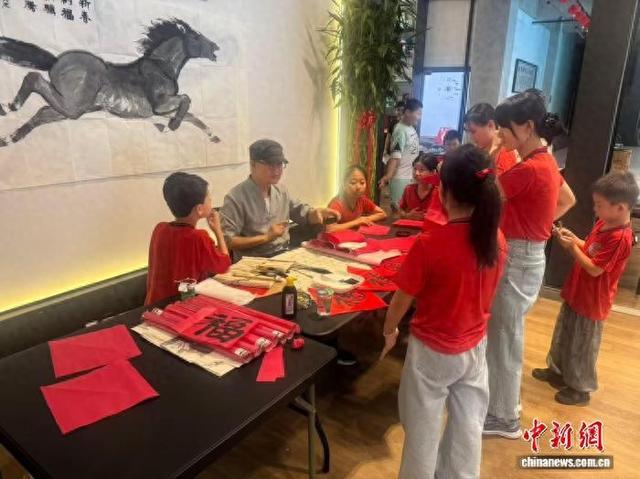
Core Viewpoint - The article highlights the experiences of Zhang Xiaohong, the president of the Brazilian Jinhua Chamber of Commerce, who reflects on the significance of the Spring Festival for overseas Chinese, emphasizing the blend of cultural traditions and modern business practices in the context of international trade [1][5]. Group 1: Business Development - Zhang Xiaohong started his business journey with exporting sunglasses and later transitioned to creating his own brand and managing overseas warehouses, showcasing the evolution of Chinese foreign trade [3]. - He capitalized on the global trend of selfie sticks around 2013, successfully selling millions of units in Brazil, indicating the potential for Chinese products in international markets [3]. - The rise of cross-border e-commerce has transformed the foreign trade landscape, presenting both opportunities and challenges for Chinese companies unfamiliar with Brazilian laws and tax policies [3]. Group 2: Community and Cultural Significance - The Spring Festival serves as a crucial time for overseas Chinese to connect, share information, and strengthen relationships, making it more than just a traditional holiday [5]. - Zhang organizes annual gatherings for fellow compatriots in Brazil, where traditional Jinhua dishes are shared, fostering a sense of community and nostalgia among expatriates [4]. - This year's celebration coincides with Brazil's Carnival, prompting a collaborative potluck where attendees bring dishes that represent their hometown, further enhancing cultural ties [4].

华强北,为什么能持续产生硬件创新?
虎嗅APP· 2026-02-10 14:12
Core Viewpoint - The article explores why Huaqiangbei, a district in Shenzhen, can continuously produce hardware innovations with minimal venture capital involvement, contrasting it with the Silicon Valley model that relies heavily on venture capital funding [4][6][18]. Group 1: System's Minimum Unit - Huaqiangbei is often referred to as "China's Electronics First Street," characterized by a vast network of trade, solution providers, and factories, functioning as a large API interface [10][12]. - The minimum unit in Huaqiangbei consists of sharp traders, solution companies, supporting factories, and a network of trust, allowing for a "Lego-style" survival philosophy where components can be easily assembled [13][14]. - This "physical open-source" approach lowers the hardware development barrier, enabling non-technical entrepreneurs to thrive [14][15]. Group 2: Why VC Fails Here - The business model in Huaqiangbei inherently rejects the venture capital logic due to different return cycles and exit mechanisms [18][22]. - Entrepreneurs in Huaqiangbei prioritize cash flow and quick returns, often completing product cycles in a matter of weeks or months, which does not align with the long-term investment horizon of VCs [22][24]. - A unique distributed financial system based on "familiar credit" allows entrepreneurs to leverage supplier credit and customer deposits to fund operations, bypassing traditional capital requirements [23][24]. Group 3: Innovation Funnel and Market Dynamics - Huaqiangbei's innovation logic is based on survival of the fittest, where low barriers to entry lead to a high volume of product experimentation [32][34]. - The market acts as the ultimate judge, with a rapid feedback loop that results in a high failure rate (95% of products) and a few successes that can become major hits [37][38]. - Unlike Silicon Valley, which reduces uncertainty through lab testing, Huaqiangbei eliminates it through market trials and rapid iteration [38]. Group 4: The Role of Chaos - Huaqiangbei's chaotic environment, often criticized for producing "high copies," is actually a source of its vitality, allowing for rapid innovation without stringent regulations [42][44]. - The lack of strict order fosters a low-cost environment for innovation, enabling entrepreneurs to test ideas quickly and adapt based on market response [45][46]. - This chaotic ecosystem has historically contributed to the development of a robust supply chain and skilled workforce in China, despite its controversial reputation [48]. Group 5: Future Challenges - Looking ahead to 2026, Huaqiangbei faces challenges from the hollowing out of hardware value due to the rise of AI and cloud computing, which may render traditional hardware innovation less relevant [56][57]. - The emergence of digital supply chain platforms could threaten Huaqiangbei's role as an intermediary, raising questions about the future of its business model [58][59]. - Despite these challenges, Huaqiangbei is evolving from a product-selling hub to a capability-selling entity, positioning itself as a global hardware innovation factory [60][61].

田轩:国家投资天生是耐心资本,为何难真正做到投早、投小、投硬科技?
Guan Cha Zhe Wang· 2026-02-09 10:48
Core Insights - The article emphasizes the importance of enhancing technological self-reliance and innovation in China's economic development, particularly in the context of the "14th Five-Year Plan" [1][44] - It discusses the current state of China's financial system in supporting technological innovation, highlighting both advantages and shortcomings [4][47] Group 1: Advantages of China's Financial System - The macroeconomic policies, including monetary and fiscal measures, have significantly supported technological innovation, with examples such as a 10 basis point interest rate cut and a 50 basis point reserve requirement ratio reduction in 2025 [5][50] - A multi-tiered capital market has been established, with various platforms like the main board, ChiNext, and the Beijing Stock Exchange catering to different types of enterprises, including high-growth tech firms [9][50] - The development of digital finance in China provides numerous applications that support small and medium-sized enterprises and tech innovators through supply chain finance and big data services [10][51] Group 2: Shortcomings of China's Financial System - The financial system is predominantly based on indirect financing, which does not align well with the needs of technological innovation, as banks prioritize certainty over the inherent uncertainties of innovation [10][52] - Despite a large number of venture capital firms, there is still a tendency to invest later in the development cycle, limiting support for early-stage, high-risk innovative companies [11][52] - The secondary market lacks completeness, with room for improvement in regulatory frameworks, including issuance, trading, and delisting systems to better support innovation [12][52] Group 3: Shift in Financing Dynamics - In 2025, direct financing surpassed indirect financing for the first time, with direct financing reaching 16.7 trillion yuan, accounting for 46.9% of the total social financing increment [13][55] - The mismatch between traditional financial models and the needs of technological innovation is evident in the pursuit of certainty versus the uncertainty of innovation processes [14][56] Group 4: Recommendations for Improvement - There is a need to enhance the inclusivity of the capital market to support early-stage tech companies, allowing for trial and error in innovation [20][23] - Optimizing the evaluation and assessment mechanisms for state-owned venture capital funds is crucial to encourage early and small investments in high-risk projects [29][30] - Encouraging corporate venture capital (CVC) can provide strategic support for innovation, as these investments often focus on long-term growth rather than immediate financial returns [31][32]
大陆台商二代接班 户外用品跑出大市场
Zhong Guo Xin Wen Wang· 2025-07-29 06:34
Core Insights - The article highlights the success of a second-generation Taiwanese businessman, Lin Weijun, who has leveraged his background and market opportunities to grow a business in outdoor products, particularly focusing on golf accessories and other related items [1][2] Group 1: Business Development - Lin Weijun's factory, established in the Zhangzhou Taiwanese Investment Zone, initially focused on selfie stick production and has since expanded into various outdoor sports products [1] - The factory has seen significant demand for its retractable golf ball retriever, which has become the highest-ordered product, particularly in the U.S. market [1][2] - The company invests heavily in research and development to innovate products and has introduced advanced technologies like 3D printing to expedite sample production [1][2] Group 2: Market Strategy - Approximately 40-50% of the factory's orders come from the U.S., with products also entering European and Asian markets, indicating a strong international presence [2] - The company has adopted high-end materials, such as carbon fiber, for new golf-related products, resulting in a 30% weight reduction and a 40% increase in costs, yet still appealing to golf enthusiasts [2] Group 3: Entrepreneurial Spirit - Lin Weijun represents a trend among second-generation Taiwanese entrepreneurs who seek to innovate beyond traditional family business models, emphasizing a desire for independence and entrepreneurship [2] - The company aims to build on the experience of previous generations while integrating new perspectives to strengthen production foundations and explore new market opportunities [2]
场景拉通创新 |微观视界
Jing Ji Guan Cha Wang· 2025-07-25 16:05
Core Viewpoint - Yang Chunhua, the general manager of Zhongshan Shuguang Aluminum Industry Co., Ltd., emphasizes continuous innovation and the importance of adapting to market demands in the precision aluminum manufacturing sector [2][3]. Company Overview - Zhongshan Shuguang Aluminum Industry Co., Ltd. was founded in 2010 and specializes in manufacturing ultra-fine, ultra-thin, high-precision, and high-strength aluminum tubes and profiles [3]. - The company has become a supplier for Fortune 500 companies like Canon and Sony, filling a technological gap in the domestic market [3]. - Shuguang Aluminum's monthly production of magnetic roller aluminum tubes exceeds 8 million units, capturing over 50% of the global market share [3]. Technological Advancements - The company invested 14 years to develop its own technology to overcome Japanese companies' dominance in the magnetic roller aluminum tube market, achieving a mold precision of 0.01 mm [3][4]. - Shuguang Aluminum's precision aluminum materials are now 0.1 μm more accurate than those produced in Japan [3]. Market Expansion - The company is expanding into the consumer market by developing products like selfie sticks, leveraging its B2B experience to address consumer needs [6][12]. - Yang Chunhua identified a market opportunity in the selfie stick segment, recognizing the technical similarities with existing products [6]. Challenges and Lessons - The company faced significant challenges when transitioning from B2B to B2C, resulting in a stockpile of 5 million units due to misjudging consumer preferences [6][10]. - Yang Chunhua learned that understanding consumer needs is crucial for success in the C-end market, contrasting with the B-end approach [6][10]. Product Development Strategy - Shuguang Aluminum is focusing on creating a new brand, Vndefo, for its selfie sticks, emphasizing portability, stability, and aesthetics [8][9]. - The company aims to meet the demands of various user scenarios, ensuring that products are lightweight, easy to use, and adaptable to different devices [9][10]. Industry Insights - The exploration of Shuguang Aluminum's selfie stick business exemplifies the potential for traditional manufacturing firms to innovate and expand into high-growth consumer markets [12]. - The shift from supply-side to demand-side strategies is crucial for companies looking to thrive in the evolving market landscape [12][16].