
自热小火锅

Search documents
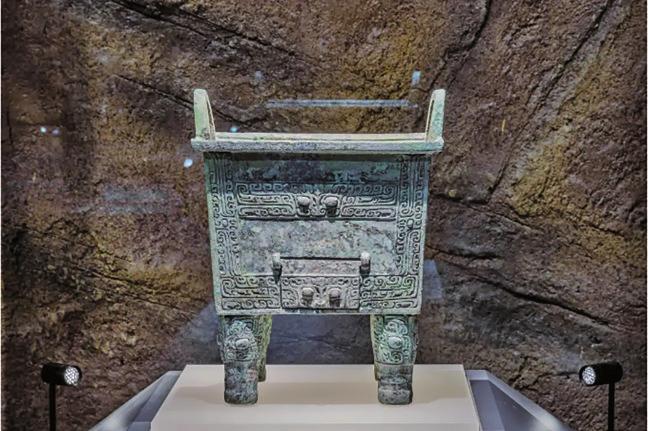
这件青铜鼎开了个小门
Xin Lang Cai Jing· 2026-02-13 17:28
Group 1 - The article discusses the ancient Chinese heating device known as the "Wending," which was used to warm food during winter [3][4] - The Wending features a unique design with a small door on its body, allowing for flexible opening and closing [4] - Inside the Wending, there is an independent hollow furnace chamber where burning charcoal can be placed, transferring heat to the upper container to warm food [4]

京东首家首批救援物资连夜送达,紧急驰援香港大埔火灾
Xin Lang Ke Ji· 2025-11-27 07:05
Core Viewpoint - The article highlights the rapid response of JD.com in providing emergency relief supplies following a severe fire incident in Hong Kong's Tai Po district, demonstrating the company's commitment to social responsibility and community support [1][3]. Group 1: Emergency Response - JD.com was the first company to deliver emergency supplies to the fire site, coordinating with local councils and initiating an emergency response mechanism [1]. - The company mobilized over 500 hot meals for affected individuals and rescue personnel, with plans for ongoing support based on the needs at the scene [3]. Group 2: Logistics and Supply Chain - JD Logistics activated its emergency plan, leveraging its extensive warehousing network in the Greater Bay Area to expedite the delivery of essential items such as bedding, hygiene products, and food [3]. - The company has a policy allowing local warehouse managers to donate necessary supplies without prior approval during disasters, ensuring a swift response [3]. Group 3: Ongoing Support and Commitment - JD.com will maintain close communication with the Hong Kong SAR government to provide further assistance as needed, emphasizing its dedication to supporting the fire relief efforts [3]. - The company believes in the importance of mutual support during challenging times, reinforcing its role as a socially responsible enterprise [3].


用供需适配性激活消费潜力(市场漫步)
Ren Min Ri Bao· 2025-11-25 22:20
Core Insights - The article emphasizes the importance of adapting supply and demand to enhance consumer satisfaction and activate the potential of the large-scale market [1][2][3] Group 1: Market Trends - The current consumer market is characterized by new trends such as deep application of new technologies, online and offline integration, and multi-channel development [1] - There is a growing demand for personalized, diversified, and high-quality consumption, particularly among younger generations like Generation Z, who prioritize trendiness, social attributes, and experiential consumption [1][2] Group 2: Supply and Demand Adaptation - There exists a structural contradiction of insufficient quality supply, which restricts the release of consumption potential and affects economic circulation efficiency [2] - Enhancing supply-demand adaptability is identified as a key strategy to unlock consumption potential [2] Group 3: Data-Driven Insights - Companies are encouraged to utilize data to accurately identify consumer trends, as demonstrated by successful collaborations like Fuguang and JD.com during this year's "Double 11" sales event [2] - Establishing regular research mechanisms and leveraging big data and artificial intelligence are essential for aligning supply with market demands [2] Group 4: Supply Innovation - Supply-side innovation is crucial for addressing adaptation challenges, with examples including the integration of cultural institutions into commercial spaces and the rise of domestic brands [2] - Future efforts should focus on accelerating the application of new technologies, enhancing high-quality supply, and developing flexible manufacturing to meet personalized demands [2] Group 5: Efficient Distribution Channels - Efficient circulation is vital for ensuring that quality supply meets demand, with significant progress made in modern trade circulation systems since the 14th Five-Year Plan [3] - By 2024, the wholesale and retail industry's added value is projected to reach 13.8 trillion yuan, a 40% increase from the end of the 13th Five-Year Plan [3] - Continued development of modern circulation systems is necessary to lower logistics costs and support supply-demand matching [3] Group 6: Economic Growth - The article highlights the immense potential of China's large-scale market and the need for a virtuous cycle of "consumption upgrade—industry upgrade—supply-demand balance" to better unleash consumption potential [3]
颐海国际20250911
2025-09-11 14:33
Summary of Yihai International Conference Call Company Overview - **Company**: Yihai International - **Industry**: Food and Seasoning Products Key Points Industry and Market Performance - Yihai International's overseas business grew over 30% in the first half of the year, with third-party business growth nearing 50% [2][4] - The company is penetrating the Southeast Asian market through distributors, focusing on the Chinese community and gradually entering mainstream local markets [2][4] - The B-end market shows significant potential, with expectations for continued doubling growth in the second half of the year, despite a potential slowdown next year due to a higher base [2][3] Financial Performance and Projections - The overseas market's profit margin is currently lower than the domestic market, with third-party gross margins around 50% but less favorable cost-effectiveness [5][6] - By 2025, the overseas business scale is projected to reach approximately 200 million RMB, with operational costs impacting profitability [6] - By 2027, the overseas business is expected to achieve a cost-effectiveness ratio similar to the domestic market, potentially reaching comparable net profit levels [6] Product Development and Strategy - The company has made progress in KA channels, providing customized products for major retailers like Walmart and Hema [2][7] - The introduction of new flavors is challenging due to the overall weakness in the restaurant industry, leading to a focus on regional products rather than nationwide hits [8][9] - The company plans to enhance its product structure by increasing the proportion of small B customers, which have higher gross margins [16][23] Cost Management and Profitability - Raw material costs are expected to remain stable, with minor increases not significantly impacting overall profitability [15] - The company aims to maintain gross margins between 23% and 25% through self-production of key ingredients [14][15] - Net profit is influenced by fluctuating expense rates, with expectations for slight improvement in the second half of the year [17] Future Outlook - The company remains optimistic about the B-end market, anticipating continued high growth rates as the restaurant industry recovers [23][22] - Yihai International's competitive edge lies in its pricing and quality advantages in the B-end market, allowing for market share growth despite industry challenges [20][21] Shareholder Returns and Capital Expenditure - The company maintains a generous dividend policy with no significant changes anticipated [18][19] - There are no major capital expenditure plans, as current production capacity is sufficient [19] Conclusion - Yihai International is positioned for growth in both domestic and overseas markets, with strategic initiatives aimed at enhancing profitability and market share in the competitive food and seasoning industry. The focus on B-end market expansion and cost management will be crucial for sustaining growth in the coming years [2][3][23]