
消费潜力

Search documents
县域市场水果“焕新”、传统菜市活力升级 从“菜篮子”“果盘子”透视消费潜力
Yang Shi Wang· 2026-01-25 08:19
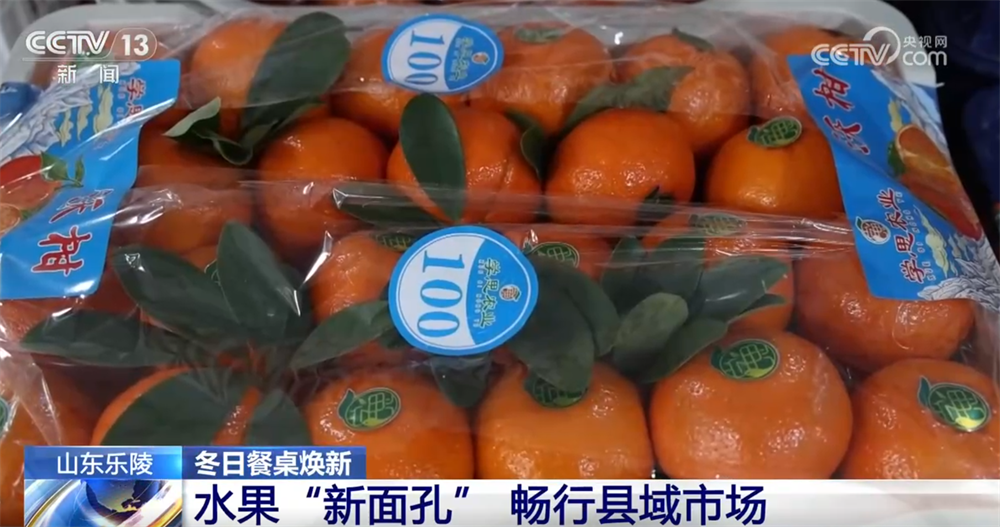
Group 1: Agricultural Market Development - China has become the world's largest producer and consumer of fruits and vegetables, with a significant increase in seasonal fruits and fresh vegetables available in the market during winter [1] - The newly built agricultural wholesale market in Leiling is set to officially open in September 2025, featuring a variety of fresh fruit options, including new varieties introduced by local vendors [4][9] - The market has seen an average daily fruit trading volume of around 200 tons, attracting over 2,000 buyers for procurement [9] Group 2: Consumer Trends and Product Variety - Local consumers are increasingly seeking diversity and freshness in fruit options, leading vendors to introduce new varieties, such as three new types of apples this year [4] - The introduction of different strawberry varieties has also been noted, reflecting the market's adaptability to consumer preferences [7] - The market's expansion has allowed for a broader range of products, with vendors actively sourcing from various regions, enhancing the overall selection available to consumers [12] Group 3: Regional Agricultural Insights - In Guangxi, the agricultural market is a major hub for winter vegetables, with daily transactions reaching approximately 700 tons and an annual turnover of around 11 billion yuan [13] - The market features a wide variety of local and regional vegetables, supported by advancements in cold chain logistics that enable fresh produce to arrive quickly [15] - New vegetable varieties, such as the hybrid "Ban Lan Gen Qing Cai," are gaining popularity, showcasing the market's innovation in product offerings [17] Group 4: Cultural and Market Integration - The Guangxi market is not only a trading hub but also a cultural space, with plans to enhance the market's infrastructure and cultural representation, making it a destination for both shopping and cultural experiences [19][21]

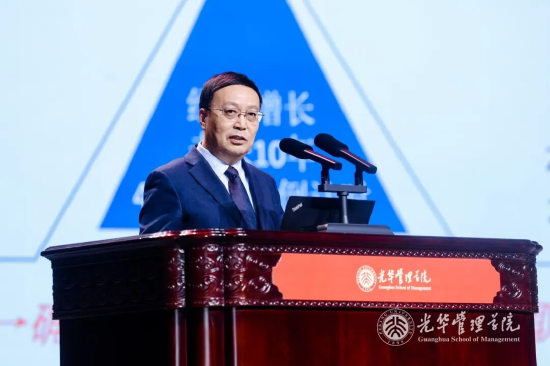
高培勇:解决消费问题实为分配制度变革,需统筹政策与改革两大系统
Xin Lang Cai Jing· 2026-01-17 16:46
Core Viewpoint - The forum emphasizes the importance of domestic demand in driving economic growth during the "14th Five-Year Plan" period, highlighting the need to address new challenges in consumption and economic stability [1][4]. Group 1: Economic Growth and Consumption - The need to maintain economic growth within a reasonable range during the "14th Five-Year Plan" is critical [3][6]. - Consumption is increasingly recognized as the main driver of economic growth and a stabilizing anchor [3][6]. - There is a significant contradiction between strong supply and weak demand, primarily due to weak consumption [3][6]. Group 2: Characteristics of Current Consumption Demand - Current consumption demand is characterized by an increase in quantity but a decrease in price, stemming from weak expectations and lack of confidence rather than traditional supply-demand imbalances [3][6]. - Consumption is fundamentally a function of income and wealth accumulation, necessitating a distinction between current "consumption potential" and long-term "consumption capacity" [3][6]. Group 3: Policy Recommendations - Policy support should focus on releasing consumption potential, while reform and innovation should aim to enhance consumption capacity [3][6]. - Addressing consumption issues requires a profound transformation of the distribution system, necessitating coordinated efforts across demand, supply, and expectations [3][6]. - Specific measures include reshaping the fiscal and tax structure, transforming public finance, addressing basic public service gaps, establishing modern social security and transfer payment systems, and enhancing expectation management [3][6].
2025年GDP前瞻:全年5%左右目标可完成,国务院领导密集下地方调研
Hua Xia Shi Bao· 2026-01-16 12:56
Economic Outlook - In 2025, China's economy is expected to demonstrate resilience despite complex international circumstances, with a projected growth rate of around 5% [2] - Predictions indicate that by the end of 2026, the growth rate will gradually recover from 4.5% in Q4 2025 to 5.1%, with an annual growth rate of approximately 4.8% [3] Policy Initiatives - The Chinese government is focusing on technology innovation, green transformation, and improving people's livelihoods as part of its economic strategy [2] - Significant investments are being made in infrastructure projects, with a total of 2.95 billion yuan allocated for early 2026 projects, including 2.2 billion yuan for key areas like urban underground networks and high-standard farmland [6] Consumer Demand - There is a recovery in consumer sentiment, although challenges remain due to income levels and expectations [5] - The upcoming Spring Festival is anticipated to boost service consumption, with historical data indicating that tourism revenue during this period significantly contributes to quarterly averages [5] Investment Strategies - The government is emphasizing both "investment in things" and "investment in people," highlighting the importance of human capital development alongside physical infrastructure [8] - There is a call for debt restructuring to enhance fiscal sustainability and support for people's livelihoods [7]
经济日报:从“一高一深”看消费潜力
Xin Lang Cai Jing· 2026-01-11 03:48
Core Insights - The Chinese film market is projected to achieve a box office of 51.832 billion yuan and 1.238 billion viewers by 2025, both reflecting over 20% growth [1] - The film consumption market is characterized as "experiential" and "emotional," indicating a strong connection to consumer sentiment and cultural aspirations [1] Group 1: Market Dynamics - The film market's vitality showcases the resilience and potential of China's domestic demand, especially in the context of broader consumption challenges [1] - The "high" market consists of economically developed regions like Guangdong, Jiangsu, Zhejiang, and Shanghai, which are key contributors to box office revenue due to high income levels and mature viewing habits [2] - Guangdong has consistently been the top box office contributor, exemplified by its significant contribution of over 1.65 billion yuan to the record-breaking 15.4 billion yuan box office of "Ne Zha" [1][2] Group 2: Emerging Markets - The "deep" market refers to the growing influence of third and fourth-tier cities, which have seen an increasing share of box office revenue, reaching the highest contribution in five years by 2025 [2] - During the 2025 Spring Festival, box office revenue from third and fourth-tier cities exceeded 58%, establishing them as the primary revenue source [2] - The development of infrastructure and commercial activities in these areas is expected to further enhance viewing demand, transforming them into innovative spaces for new consumption habits and industry ecosystems [2] Group 3: Future Opportunities - To unlock further consumption potential, it is essential to understand the unique characteristics of both "high" and "deep" markets [3] - The high expectations for film quality in developed regions will drive the film industry towards higher production standards and content innovation [3] - The enthusiasm for local narratives in the deep market provides a solid foundation for domestic films, encouraging the emergence of diverse and relatable content [3] - Both market segments can mutually reinforce each other, creating a sustainable growth engine for film consumption and enhancing the market transformation of Chinese stories [3]
进一步激活消费增长新动能
Zheng Quan Ri Bao· 2025-12-17 16:13
Core Viewpoint - The central economic work conference prioritizes "expanding domestic demand and building a strong domestic market" for the upcoming year, emphasizing the continuity and stability of consumption expansion policies in the context of a complex global economic environment and the gap in consumer rates between China and developed countries [1] Group 1: Consumption Expansion Policies - The expansion of domestic demand is a long-term strategic move, with consumption being the core pillar of domestic demand [1] - China's total consumption scale has steadily increased, with new consumption hotspots and trends emerging, but there are still challenges in internal driving forces [1] - In 2024, China's consumer rate is projected to be 39.9%, which is still 10 to 30 percentage points lower than that of developed countries, particularly in terms of service consumption [1] Group 2: Supply-Demand Matching - High-quality supply must be aligned with consumption upgrades to eliminate supply-demand mismatches, enhancing supply-demand adaptability [2] - The Ministry of Industry and Information Technology and other departments have issued a plan focusing on "leading industrial upgrades through consumption upgrades," emphasizing structural optimization alongside incremental growth [2] - This policy direction aligns with trends towards low-carbon and digital development, addressing supply shortfalls in areas like home services and health tourism [2] Group 3: Strengthening Consumer Capacity - Consumer capacity and willingness are foundational for expanding consumption, supported by stable income expectations and a robust social security system [3] - Policies should focus on increasing residents' income share in national income distribution and enhancing social security measures to alleviate financial pressures on education, healthcare, and pensions [3] - Only with income support and reduced living concerns can consumer willingness translate into actual purchasing power [3] Group 4: Reform and Market Activation - Comprehensive reforms are necessary to eliminate barriers to consumption and release market growth potential [4] - In major consumption areas, unreasonable restrictions should be gradually removed, while service consumption should focus on easing market access and integrating business models [4] - Strengthening the management of new consumption formats and enhancing consumer rights protection will encourage residents to consume confidently [4] Group 5: Policy Tools and Economic Growth - There are ample policy tools available to boost consumption, with supply optimization addressing "availability" issues, welfare policies alleviating "willingness" concerns, and reforms removing "accessibility" barriers [4] - The coordinated and precise implementation of these policies is expected to unleash consumer potential and promote an economic development model driven by domestic demand and consumption [4]
发布会预告,就在下周一!
证券时报· 2025-12-12 04:26
Group 1 - The core viewpoint of the article highlights the upcoming press conference by the State Council Information Office on December 15, 2025, where the National Bureau of Statistics will present the economic performance for November 2025 [1] - In November, the Consumer Price Index (CPI) increased by 0.7% year-on-year, with the core CPI (excluding food and energy) rising by 1.2%, maintaining a growth rate above 1% for three consecutive months [2] - The Producer Price Index (PPI) saw a month-on-month increase of 0.1%, marking two consecutive months of growth, while the year-on-year decline was 2.2%, with the decline rate widening by 0.1 percentage points compared to the previous month [2] Group 2 - The article notes that the effects of comprehensive measures to address "involution" competition are becoming evident, with industries such as coal mining, photovoltaic equipment manufacturing, and lithium-ion battery manufacturing experiencing a narrowing of price declines over several months [2] - The price trends in certain industries reflect the rapid development of emerging sectors and the effective release of consumer potential [2]

1.2%↑!创2024年3月以来新高!
券商中国· 2025-12-10 03:32
Core Viewpoint - In November, consumer spending continued to recover, and the effectiveness of comprehensive rectification of "involution-style" competition became evident, with notable changes in price trends across various industries [2][7]. Consumer Price Index (CPI) - In November, the CPI increased by 0.7% year-on-year, with the growth rate expanding by 0.5 percentage points compared to the previous month, marking the highest increase since March 2024 [3][4]. - Food prices rose by 0.2% year-on-year, while non-food prices increased by 0.8%. Fresh vegetable prices turned from a decline of 7.3% last month to an increase of 14.5%, contributing approximately 0.49 percentage points to the CPI [3][4]. - Month-on-month, fresh vegetable prices rose significantly by 7.2%, far exceeding the average seasonal decline of 3.2%, impacting the CPI by about 0.17 percentage points [3]. Core CPI - The core CPI, excluding food and energy, rose by 1.2% year-on-year, maintaining a growth rate above 1% for three consecutive months [5]. - Prices for services and industrial consumer goods, excluding energy, increased by 0.7% and 2.1%, respectively, contributing approximately 0.29 and 0.53 percentage points to the CPI [5]. Producer Price Index (PPI) - The PPI decreased by 2.2% year-on-year, with the decline rate expanding by 0.1 percentage points compared to the previous month, primarily due to a high comparison base from the previous year [6]. - The PPI showed a month-on-month increase for two consecutive months, attributed to seasonal demand increases in certain domestic industries [8]. Industry Price Trends - The comprehensive rectification of "involution-style" competition has led to a narrowing of price declines in related industries, such as coal mining, photovoltaic equipment manufacturing, and lithium-ion battery manufacturing [7]. - Emerging industries are rapidly developing, driving price increases in sectors like external storage devices (up 13.9% year-on-year) and integrated circuit manufacturing (up 1.7%) [7]. - Consumer potential is being effectively released, reflected in price increases in sectors such as craft art and ceremonial supplies (up 20.6% year-on-year) and sports ball manufacturing (up 4.3%) [7].

用供需适配性激活消费潜力(市场漫步)
Ren Min Ri Bao· 2025-11-25 22:20
Core Insights - The article emphasizes the importance of adapting supply and demand to enhance consumer satisfaction and activate the potential of the large-scale market [1][2][3] Group 1: Market Trends - The current consumer market is characterized by new trends such as deep application of new technologies, online and offline integration, and multi-channel development [1] - There is a growing demand for personalized, diversified, and high-quality consumption, particularly among younger generations like Generation Z, who prioritize trendiness, social attributes, and experiential consumption [1][2] Group 2: Supply and Demand Adaptation - There exists a structural contradiction of insufficient quality supply, which restricts the release of consumption potential and affects economic circulation efficiency [2] - Enhancing supply-demand adaptability is identified as a key strategy to unlock consumption potential [2] Group 3: Data-Driven Insights - Companies are encouraged to utilize data to accurately identify consumer trends, as demonstrated by successful collaborations like Fuguang and JD.com during this year's "Double 11" sales event [2] - Establishing regular research mechanisms and leveraging big data and artificial intelligence are essential for aligning supply with market demands [2] Group 4: Supply Innovation - Supply-side innovation is crucial for addressing adaptation challenges, with examples including the integration of cultural institutions into commercial spaces and the rise of domestic brands [2] - Future efforts should focus on accelerating the application of new technologies, enhancing high-quality supply, and developing flexible manufacturing to meet personalized demands [2] Group 5: Efficient Distribution Channels - Efficient circulation is vital for ensuring that quality supply meets demand, with significant progress made in modern trade circulation systems since the 14th Five-Year Plan [3] - By 2024, the wholesale and retail industry's added value is projected to reach 13.8 trillion yuan, a 40% increase from the end of the 13th Five-Year Plan [3] - Continued development of modern circulation systems is necessary to lower logistics costs and support supply-demand matching [3] Group 6: Economic Growth - The article highlights the immense potential of China's large-scale market and the need for a virtuous cycle of "consumption upgrade—industry upgrade—supply-demand balance" to better unleash consumption potential [3]
超大规模市场看优势之一——消费之大:众口能调 各自精彩
Sou Hu Cai Jing· 2025-11-17 15:16
Core Insights - China's super-large market advantage is widely recognized, rooted not only in its 1.4 billion population but also in its deep economic potential [1][2] - The country has the world's largest middle-income group, which shows a strong willingness to upgrade consumption across various sectors such as education, healthcare, and cultural tourism [1] - The proportion of the middle-income group in China's total population is still significantly lower than that in developed countries, indicating substantial growth potential in the consumer market [1] Consumption Capacity - China's overall consumption capacity is robust, supported by a large and continuously upgrading middle-income demographic [1] - The diverse consumption habits and preferences across different regions of China contribute to a rich tapestry of consumer behavior [1][2] Consumption Diversity - The variety of consumption levels reflects the vast geographical and cultural differences within China, leading to unique consumer preferences [1] - The coexistence of different consumption cultures enhances the vibrancy of the market, as seen in the interactions between northern and southern consumer behaviors [1] Consumption Model Evolution - Recent years have seen rapid iterations in consumption models, introducing terms like "self-satisfaction consumption," "national trend consumption," and "green consumption," among others [2] - These new consumption models signify a shift in consumer values from material satisfaction to spiritual pursuits and from singular choices to diverse experiences [2] Market Dynamics - China's consumer market is characterized by its vastness and depth, accommodating differences while fostering integration [2] - The super-large market's true advantage lies in its potential, diversity, and innovative consumption models, which are vital sources of vitality for the Chinese economy [2]
显微镜下的中国经济(2025年第42期):年内宏观数据可能的动向
CMS· 2025-11-10 11:31
Economic Trends - Industrial production is expected to slow down, with recent supply-side indicators showing signs of weakening, particularly in capacity utilization rates which have declined across various sectors[1] - October's industrial added value growth rate is likely to decelerate, correlating with a drop in exports and port cargo throughput[1] Price Dynamics - October inflation data exceeded expectations, with CPI turning positive year-on-year and PPI showing its first positive growth of the year, indicating a stabilization in prices[1] - However, CPI is expected to remain low due to a significant year-on-year decline in pork prices, which have dropped over 25%[1] Investment and Consumption - Investment demand remains weak, with real estate sales data returning to levels seen before last year's peak, suggesting further slowdown in real estate investment growth[1] - Despite weak investment, consumer spending shows potential for improvement, driven by seasonal increases in service and food prices, alongside e-commerce promotions and consumption subsidies[1] Risks and Challenges - Risks include geopolitical tensions, domestic policy implementation falling short of expectations, and potential global recession impacts[1]