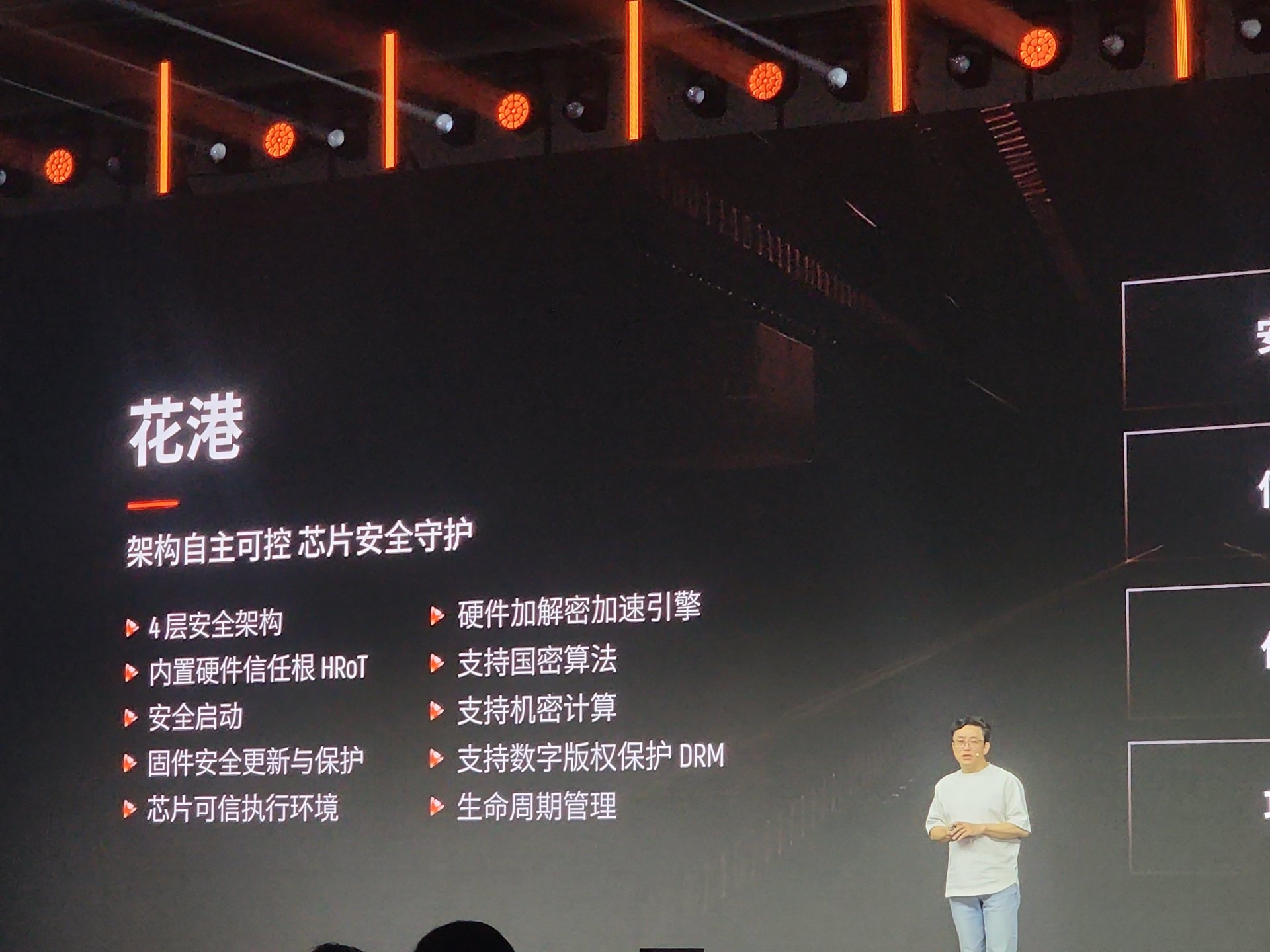
花港

Search documents
市值一日蒸发480亿,寒武纪否认市场传闻但股价难止跌
Feng Huang Wang· 2026-02-03 12:08
Core Viewpoint - The stock price of Cambricon, a leading domestic AI chip company, experienced a significant drop of 9.18% on February 3, closing at 1128 yuan per share, largely due to market rumors regarding its revenue projections for 2026 being significantly lower than expectations [1][3]. Group 1: Stock Performance and Market Reaction - Cambricon's stock price fell sharply, with an intraday decline of up to 14%, resulting in a market capitalization loss of over 48 billion yuan in one day [1][3]. - The company issued a statement denying the rumors about its revenue guidance and emphasized that it has not organized any small-scale communications recently [1][3]. - Despite a slight recovery in stock price after the statement, negative market sentiment persisted [1]. Group 2: Revenue Projections and Financial Outlook - Cambricon projected its 2025 annual revenue to be between 6 billion to 7 billion yuan, representing a year-on-year growth of 410.87% to 496.02%, with a net profit forecast of 1.85 billion to 2.15 billion yuan [3]. - The expected net profit for Q4 2025 is estimated to be between 245 million to 545 million yuan, indicating a significant decline compared to analyst expectations of 613 million yuan [3]. Group 3: Industry Context and Competitive Landscape - The adjustment in the AI chip sector reflects both domestic and international market pressures, with concerns about the saturation of AI infrastructure driven by large language models [2]. - The domestic market is seeing an influx of new AI chip companies, which may dilute Cambricon's market position and raise questions about its valuation and future performance [2]. - Other companies in the sector, such as Tenstorrent and Mozi Technology, are actively launching new products and providing detailed updates on their technological advancements, contrasting with Cambricon's limited communication [4].

中国AI半导体加速“脱英伟达”
日经中文网· 2026-02-02 03:10
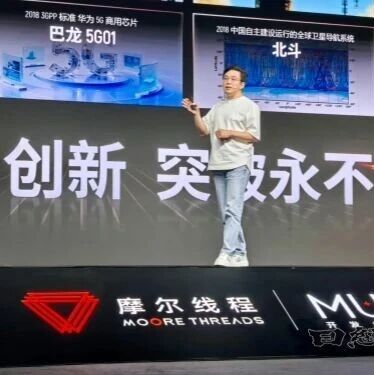
Core Viewpoint - The Chinese AI semiconductor industry is rapidly growing, with predictions indicating an increase in domestic self-sufficiency from 30% in 2024 to 80% by 2026, aiming to enhance competitiveness in high-tech sectors against the U.S. [2][5] Group 1: Company Developments - Moore Threads, founded by former NVIDIA executive Zhang Jianzhong, has introduced new products including the "Huagang" GPU and AI semiconductors "Huashan" and "Lushan," which are expected to begin mass production in 2026 [4][5]. - The company aims to reduce reliance on NVIDIA, which currently holds a 66% market share in China's AI semiconductor market [5]. - Other emerging companies in the sector, referred to as the "GPU Four Little Dragons," include MetaX, Shanghai Birun Technology, and Shanghai Suiruan Technology, all of which are also preparing for IPOs to accelerate semiconductor R&D [5][6]. Group 2: Market Dynamics - The Chinese AI semiconductor market is projected to see significant shifts by 2026, with Huawei's HiSilicon expected to capture 50% market share, while NVIDIA's share is anticipated to drop to 8% [8]. - The market is characterized by increasing competition, with companies like Baidu's Kunlun and Cambricon also entering the fray [8]. - The semiconductor supply chain is still under development, with challenges in transitioning from NVIDIA's dominant structure to domestic production [9]. Group 3: Production Capabilities - SMIC has achieved stable production of 7nm AI semiconductors and is expanding its capacity to support various Chinese companies in AI semiconductor manufacturing [7].

AI迈入“技术+资本”驱动成长期
Ke Ji Ri Bao· 2026-01-26 00:57
Core Viewpoint - The recent wave of IPOs by domestic AI companies in China signifies a transition from a technology-driven exploration phase to a capital-driven industrialization phase, characterized by rapid revenue growth, significant R&D investment, and ongoing losses [1][2]. Group 1: Transition from Exploration to Growth Phase - The current IPO wave indicates that China's AI industry has surpassed the foundational development phase and is entering a growth phase marked by large-scale investment, industry chain collaboration, and accelerated application penetration [1][2]. - AI development inherently features high fixed costs and low marginal costs, with substantial initial investments in computing power, data management, and talent, but decreasing unit costs as scale increases [1]. Group 2: Role of Capital Markets - The IPOs suggest that capital markets are increasingly taking over the role of major internet companies in allocating computing power and R&D resources, shifting from short-term funding to long-term financing [2]. - The listed companies cover critical areas of AI development, including computing power, foundational models, and vertical applications, indicating a shift from isolated innovations to a collaborative ecosystem [2]. Group 3: Market Challenges Post-IPO - Post-IPO, AI companies face stricter public scrutiny and immediate profitability pressures, necessitating a balance between long-term R&D investments and short-term market expectations [3]. - Companies are advised to establish verifiable R&D milestones and present measurable indicators of success to align with market expectations and reduce the impact of short-term fluctuations on R&D [3]. Group 4: Commercialization Strategies - Companies should develop a layered cash flow strategy to secure funding for long-term R&D, diversifying revenue streams through subscriptions, API calls, and service deployments [4]. - The goal is to use more stable revenue sources to buffer against the uncertainties of cutting-edge R&D, ensuring that innovation does not compromise profitability [4]. Group 5: New Competitive Landscape - Continuous R&D investment and capital expenditure are essential for both model and chip layers, with many companies planning to allocate IPO proceeds towards foundational model development and platform capabilities [5]. - The financing boom is expected to accelerate innovation cycles and shift the focus from isolated breakthroughs to project-based and product-oriented developments, raising industry entry barriers [5]. Group 6: Macro Trends in AI - The global AI market is projected to reach $900 billion by 2026, with China expected to see a growth rate exceeding 30% during the same period, highlighting its position as a rapidly growing market [6]. - The effectiveness of this financing wave in fostering sustainable innovation will depend on directing capital towards long-term research and maintaining a balance between efficiency, ecosystem boundaries, and compliance [6].
【A股收评】三大指数上攻,海南板块掀涨停潮,算力仍活跃
Sou Hu Cai Jing· 2025-12-22 07:47
Market Performance - The three major indices strengthened, with the Shanghai Composite Index rising by 0.69%, the Shenzhen Component Index increasing by 1.47%, and the ChiNext Index up by 2.23% [2] - Over 2,800 stocks in the two markets were in the green, with a total trading volume reaching approximately 1.86 trillion yuan [2] Precious Metals Sector - The precious metals sector rebounded, with Hunan Silver (002716.SZ) and Xiaocheng Technology (300139.SZ) rising over 7%, while Western Gold (601069.SH) and Shandong Gold (600547.SH) saw significant gains [3] - According to a report by GF Securities, the long-term bullish logic for gold remains intact despite potential short-term fluctuations, supported by factors such as the restructuring of the global monetary credit system, accelerated de-dollarization, and continuous central bank purchases of gold [3] Hainan Sector - The Hainan sector experienced a surge, with Kangzhi Pharmaceutical (300086.SZ) and Shennong Seed Industry (300189.SZ) increasing by 20%, and China Duty Free Group (601888.SH), Hainan Airport (600515.SH), and Hainan Highway (000886.SZ) rising by 10% [3] - The official launch of the Hainan Free Trade Port's full island closure on December 18 led to significant sales, with Sanya's duty-free sales reaching 118 million yuan on the first day, and a 60% year-on-year increase in customer traffic [3] Computing Hardware Sector - The computing hardware sector was active, with semiconductor and communication concepts leading the gains; Kaige Precision Machinery (301338.SZ) rose over 17%, and Changxin Bochuang (300548.SZ) increased by over 12% [4] - Domestic computing chain companies are rapidly advancing their listings, with several companies like Moer Thread and Muxi Co. progressing in their IPO processes [4] - Moer Thread announced a new GPU architecture called "Huagang," which boasts a 50% increase in computing density and a tenfold improvement in energy efficiency [4] Intelligent Driving Sector - The intelligent driving sector saw significant activity, with Zhejiang Shibao (002703.SZ), Laisai Laser (920363.BJ), and others experiencing substantial gains [5] - The release of conditional access permits for the first batch of L3-level autonomous driving vehicles marks a critical step towards commercial application in China [5] - The pharmaceutical commercial and film industry sectors faced declines, with companies like Bona Film Group (001330.SZ) and Huaren Health (301408.SZ) seeing notable drops [5]






芯片,突传重磅!
证券时报· 2025-12-21 10:40
Group 1: Chip Innovations - Samsung Electronics has launched the Exynos 2600 system-on-chip (SoC), the world's first mobile application processor built using 2nm technology, featuring a 113% increase in AI computing power compared to its predecessor Exynos 2500 [2][5] - The Exynos 2600 integrates a new tri-cluster CPU design with a maximum clock speed of 3.8GHz, achieving up to 39% improvement in overall computing performance and enhanced energy efficiency [5][6] - The new GPU architecture "Huagang" from Moore Threads has been introduced, with two chips "Huashan" and "Lushan" that enhance AI inference training and high-performance graphics rendering, achieving a 50% increase in computing density and a 10x improvement in energy efficiency [3][15] Group 2: Optical Computing Breakthroughs - Researchers from Shanghai Jiao Tong University have achieved a significant breakthrough in optical computing, developing the LightGen chip capable of supporting large-scale semantic media generation models, with results published in the journal Science [9][10] - LightGen demonstrates a two-order-of-magnitude improvement in computing power and energy efficiency compared to leading digital chips, addressing the challenges of running complex generative models [10][11] - The chip can perform high-resolution image generation, 3D generation, and video generation, while supporting various large-scale generative tasks [11][12]
摩尔线程发布第五代GPU架构“花港”:能效可提升十倍 明年量产
Mei Ri Jing Ji Xin Wen· 2025-12-20 04:21
Group 1 - The core focus of the news is the announcement by Moer Thread, a leading domestic GPU company, regarding the production of its fifth-generation GPU architecture "Huagang" set to begin next year [2][4] - Moer Thread's CEO Zhang Jianzhong introduced several products based on the "Huagang" architecture, including the AI training and inference product "Huashan," the high-performance graphics rendering product "Lushan," and the "Changjiang" intelligent SoC chip [2] - Moer Thread differentiates itself by offering a full-featured GPU that integrates AI chips, GPGPU, and graphics chips, while being compatible with NVIDIA's ecosystem (CUDA) [4] Group 2 - The "Huagang" architecture features a new instruction set, with a 50% increase in computing density and a 10-fold improvement in energy efficiency, capable of supporting intelligent computing clusters of over 100,000 cards [4] - The GPU is equipped with the first-generation AI generative rendering architecture (AGR) and a second-generation ray tracing hardware acceleration engine, supporting DirectX 12 Ultimate, which is considered the gold standard for next-generation gaming [4]
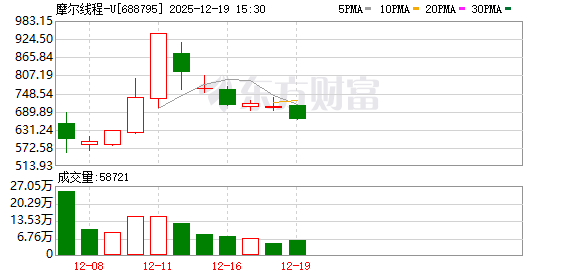
摩尔线程发布第五代GPU架构“花港”:能效可提升十倍,明年量产
Mei Ri Jing Ji Xin Wen· 2025-12-20 03:54
Group 1 - The core focus of the news is the announcement by Moore Threads, a leading domestic GPU company, regarding the production of its fifth-generation GPU architecture "Huagang" set to begin next year [1][4] - Moore Threads held its first MUSA Developer Conference in Beijing, where CEO Zhang Jianzhong highlighted the company's advancements and product launches [1] - The company has introduced several products based on the "Huagang" architecture, including the AI training and inference product "Huashan," the high-performance graphics rendering product "Lushan," and the "Yangtze" intelligent SoC chip [1] Group 2 - Moore Threads differentiates itself by focusing on full-featured GPUs that integrate AI chips, GPGPU, and graphics chips, while also being compatible with NVIDIA's ecosystem (CUDA) [4] - Since 2022, the company has been iterating its GPU technology at a rate of one generation per year, having previously launched four generations of products: "Sudi," "Chunxiao," "Quyuan," and "Pinghu" [4] - The "Huagang" architecture features a new instruction set with a 50% increase in computing density and a 10-fold improvement in energy efficiency, supporting large-scale intelligent computing clusters [4]