华山

Search documents
未知机构:兴业社服三特索道底部首家独家推荐26年即将迎来拐点被严重低估的成-20260213
未知机构· 2026-02-13 02:30
Company and Industry Summary Company Overview - The company discussed is **三特索道 (SanTe Cableway)**, which is positioned in the tourism and leisure industry, focusing on cableway operations and related projects. The company has been significantly impacted by the debt crisis of its former controlling shareholder, **当代集团 (Contemporary Group)**, leading to a change in control to the **Wuhan East Lake New Technology Development Zone Management Committee** [1]. Key Points and Arguments - **Debt Crisis Impact**: The company has faced challenges due to the debt crisis of its former controlling shareholder, which is expected to be resolved by 2026, allowing for potential growth [1]. - **Shareholding Structure**: As of 2023, the new controlling entity and its concerted parties hold a total of **23.77%** of the shares, while the Contemporary Group holds **22.97%**. The buy-in price is noted at **16.28 CNY per share** [1]. - **Financial Recovery**: The company has been actively disposing of and revitalizing loss-making projects since the pandemic, resulting in a decrease in the debt-to-asset ratio from **61% in 2019** to **20% currently**. Net profit is projected to grow from **0.11 million CNY in 2019** to **1.42 million CNY in 2024** [2]. - **Project Performance**: Currently, the company operates **seven profitable projects** across **nine provinces**, generating a cumulative profit of **2.75 million CNY**. Key contributors include projects at **梵净山 (Fanjing Mountain)**, **华山 (Mount Hua)**, **猴岛 (Monkey Island)**, and **珠海 (Zhuhai)** [2]. - **Loss-Making Projects**: There are three main loss-making projects with a total loss of **5.249 million CNY**, which is expected to reduce to approximately **3 million CNY by 2025** [2]. - **Future Growth Potential**: New and renovated projects are anticipated to significantly enhance performance, with the **珠海 project** expected to increase profits by over **10 times** post-renovation. The **千岛湖牧心谷 (Thousand Island Lake Muxin Valley)** project is under construction and is expected to contribute over **40 million CNY** in performance by the first half of 2027 [2]. - **Valuation and Growth Outlook**: The company is currently valued at **20 times earnings for 2025**. With the resolution of equity issues and the full takeover by the State-owned Assets Supervision and Administration Commission (SASAC), the company is expected to see significant growth, with projected earnings of **1.8 million CNY in 2026** and **2.4 million CNY in 2027**. There is a positive outlook for a valuation increase to **25-30 times** by 2027, indicating potential for a doubling of value [2]. Additional Important Insights - The company is in a recovery phase, with a focus on improving its financial health and operational efficiency through strategic project management and revitalization efforts [2]. - The anticipated changes in shareholding and management structure are expected to provide a more stable foundation for future growth and investment opportunities [1][2].

中国AI半导体加速“脱英伟达”
日经中文网· 2026-02-02 03:10
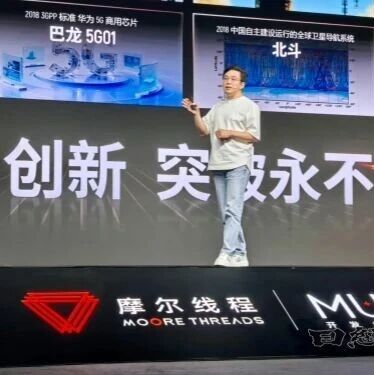
Core Viewpoint - The Chinese AI semiconductor industry is rapidly growing, with predictions indicating an increase in domestic self-sufficiency from 30% in 2024 to 80% by 2026, aiming to enhance competitiveness in high-tech sectors against the U.S. [2][5] Group 1: Company Developments - Moore Threads, founded by former NVIDIA executive Zhang Jianzhong, has introduced new products including the "Huagang" GPU and AI semiconductors "Huashan" and "Lushan," which are expected to begin mass production in 2026 [4][5]. - The company aims to reduce reliance on NVIDIA, which currently holds a 66% market share in China's AI semiconductor market [5]. - Other emerging companies in the sector, referred to as the "GPU Four Little Dragons," include MetaX, Shanghai Birun Technology, and Shanghai Suiruan Technology, all of which are also preparing for IPOs to accelerate semiconductor R&D [5][6]. Group 2: Market Dynamics - The Chinese AI semiconductor market is projected to see significant shifts by 2026, with Huawei's HiSilicon expected to capture 50% market share, while NVIDIA's share is anticipated to drop to 8% [8]. - The market is characterized by increasing competition, with companies like Baidu's Kunlun and Cambricon also entering the fray [8]. - The semiconductor supply chain is still under development, with challenges in transitioning from NVIDIA's dominant structure to domestic production [9]. Group 3: Production Capabilities - SMIC has achieved stable production of 7nm AI semiconductors and is expanding its capacity to support various Chinese companies in AI semiconductor manufacturing [7].

武汉竞逐“智驾第一城”产业高地
Chang Jiang Ri Bao· 2026-01-30 00:59
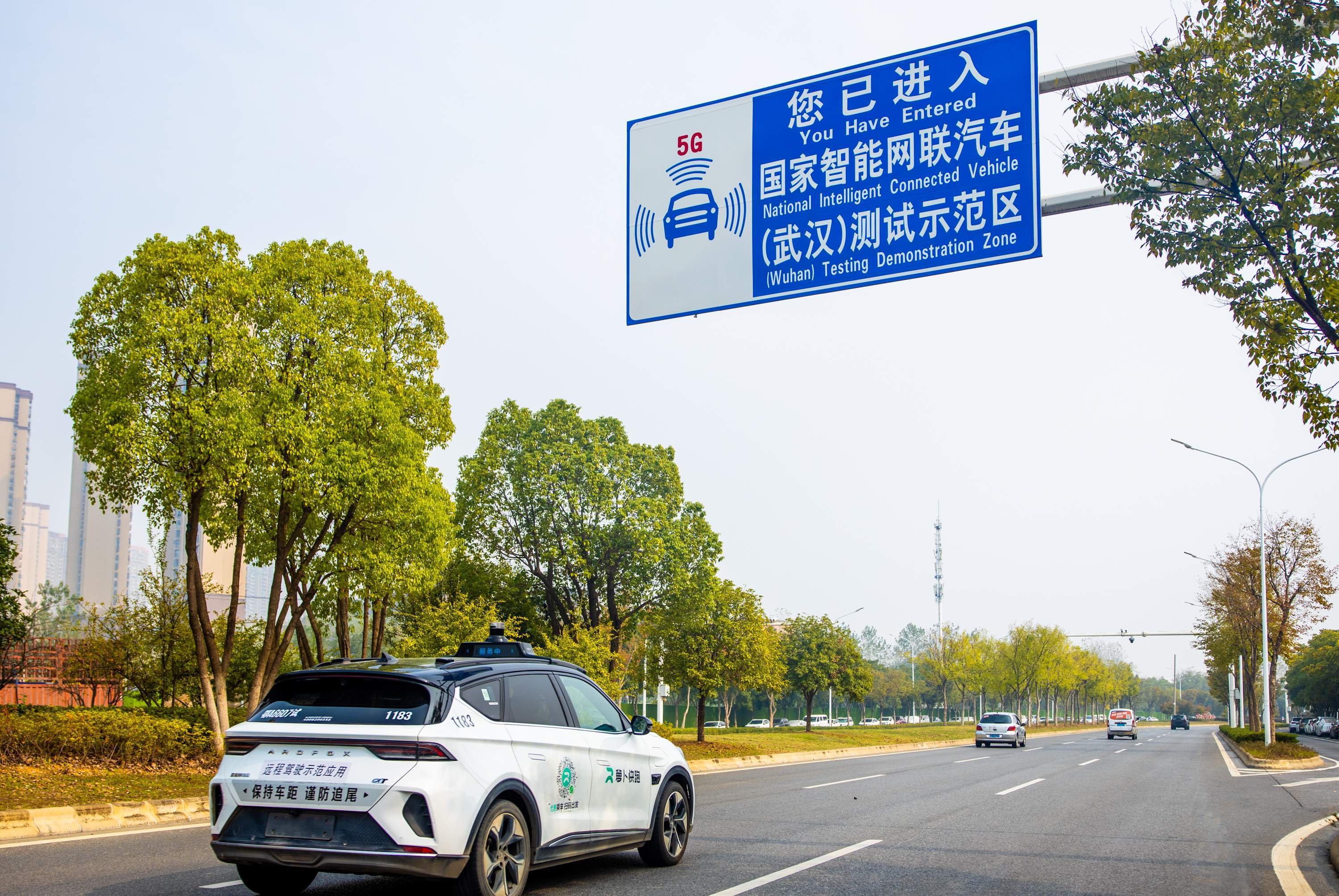
Core Insights - Wuhan has made significant progress in the smart driving industry over the past decade, focusing on enterprise-led initiatives and regulatory frameworks to facilitate commercialization and innovation [1][7] Industry Development - Wuhan has established a cross-departmental working group involving economic, transportation, and traffic management sectors to address challenges in autonomous vehicle traffic management, paving the way for commercial deployment [2] - The city has progressively opened up testing and application scenarios, leading to a robust ecosystem characterized by a "scene-driven—industry agglomeration—ecological construction" cycle [2][7] Company Contributions - Companies like Luobo Kuaipao have completed over 100 million kilometers of testing in Wuhan, becoming a vital transportation option for residents [7] - Chip manufacturer XinQing Technology aims to provide a solid computational foundation for automotive partners, with its "Longying No. 1" smart cockpit chip designed to withstand extreme temperatures [7][8] - Hezhima Intelligent has established its global headquarters in Wuhan and plans to go public in 2024, focusing on automotive AI chips and solutions [8] Ecosystem and Collaboration - Wuhan has attracted over 380 companies in the smart driving sector, creating a comprehensive industrial ecosystem that includes key players like Yika Tong and Valeo [13] - The city has implemented a permanent coordination mechanism among various departments to enhance regulatory oversight and data integration for vehicle operations [13] Future Goals - Looking ahead, Wuhan aims to further open up applications in smart manufacturing and transportation, with companies setting ambitious revenue targets and expanding into new markets [14]
AI迈入“技术+资本”驱动成长期
Ke Ji Ri Bao· 2026-01-26 00:57
Core Viewpoint - The recent wave of IPOs by domestic AI companies in China signifies a transition from a technology-driven exploration phase to a capital-driven industrialization phase, characterized by rapid revenue growth, significant R&D investment, and ongoing losses [1][2]. Group 1: Transition from Exploration to Growth Phase - The current IPO wave indicates that China's AI industry has surpassed the foundational development phase and is entering a growth phase marked by large-scale investment, industry chain collaboration, and accelerated application penetration [1][2]. - AI development inherently features high fixed costs and low marginal costs, with substantial initial investments in computing power, data management, and talent, but decreasing unit costs as scale increases [1]. Group 2: Role of Capital Markets - The IPOs suggest that capital markets are increasingly taking over the role of major internet companies in allocating computing power and R&D resources, shifting from short-term funding to long-term financing [2]. - The listed companies cover critical areas of AI development, including computing power, foundational models, and vertical applications, indicating a shift from isolated innovations to a collaborative ecosystem [2]. Group 3: Market Challenges Post-IPO - Post-IPO, AI companies face stricter public scrutiny and immediate profitability pressures, necessitating a balance between long-term R&D investments and short-term market expectations [3]. - Companies are advised to establish verifiable R&D milestones and present measurable indicators of success to align with market expectations and reduce the impact of short-term fluctuations on R&D [3]. Group 4: Commercialization Strategies - Companies should develop a layered cash flow strategy to secure funding for long-term R&D, diversifying revenue streams through subscriptions, API calls, and service deployments [4]. - The goal is to use more stable revenue sources to buffer against the uncertainties of cutting-edge R&D, ensuring that innovation does not compromise profitability [4]. Group 5: New Competitive Landscape - Continuous R&D investment and capital expenditure are essential for both model and chip layers, with many companies planning to allocate IPO proceeds towards foundational model development and platform capabilities [5]. - The financing boom is expected to accelerate innovation cycles and shift the focus from isolated breakthroughs to project-based and product-oriented developments, raising industry entry barriers [5]. Group 6: Macro Trends in AI - The global AI market is projected to reach $900 billion by 2026, with China expected to see a growth rate exceeding 30% during the same period, highlighting its position as a rapidly growing market [6]. - The effectiveness of this financing wave in fostering sustainable innovation will depend on directing capital towards long-term research and maintaining a balance between efficiency, ecosystem boundaries, and compliance [6].
芯片,突传重磅!
证券时报· 2025-12-21 10:40
Group 1: Chip Innovations - Samsung Electronics has launched the Exynos 2600 system-on-chip (SoC), the world's first mobile application processor built using 2nm technology, featuring a 113% increase in AI computing power compared to its predecessor Exynos 2500 [2][5] - The Exynos 2600 integrates a new tri-cluster CPU design with a maximum clock speed of 3.8GHz, achieving up to 39% improvement in overall computing performance and enhanced energy efficiency [5][6] - The new GPU architecture "Huagang" from Moore Threads has been introduced, with two chips "Huashan" and "Lushan" that enhance AI inference training and high-performance graphics rendering, achieving a 50% increase in computing density and a 10x improvement in energy efficiency [3][15] Group 2: Optical Computing Breakthroughs - Researchers from Shanghai Jiao Tong University have achieved a significant breakthrough in optical computing, developing the LightGen chip capable of supporting large-scale semantic media generation models, with results published in the journal Science [9][10] - LightGen demonstrates a two-order-of-magnitude improvement in computing power and energy efficiency compared to leading digital chips, addressing the challenges of running complex generative models [10][11] - The chip can perform high-resolution image generation, 3D generation, and video generation, while supporting various large-scale generative tasks [11][12]

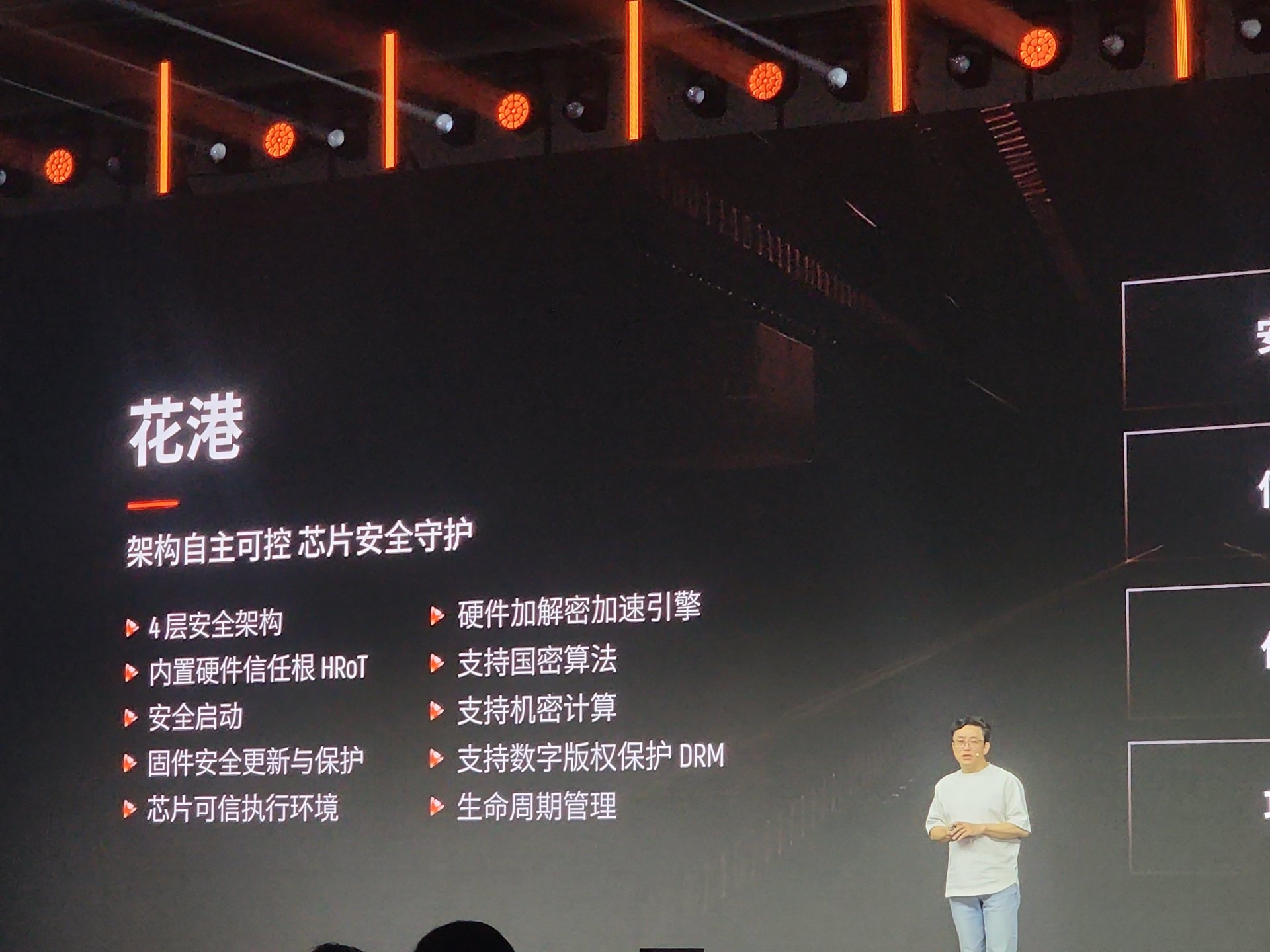
摩尔线程发布第五代GPU架构“花港”:能效可提升十倍 明年量产
Mei Ri Jing Ji Xin Wen· 2025-12-20 04:21
Group 1 - The core focus of the news is the announcement by Moer Thread, a leading domestic GPU company, regarding the production of its fifth-generation GPU architecture "Huagang" set to begin next year [2][4] - Moer Thread's CEO Zhang Jianzhong introduced several products based on the "Huagang" architecture, including the AI training and inference product "Huashan," the high-performance graphics rendering product "Lushan," and the "Changjiang" intelligent SoC chip [2] - Moer Thread differentiates itself by offering a full-featured GPU that integrates AI chips, GPGPU, and graphics chips, while being compatible with NVIDIA's ecosystem (CUDA) [4] Group 2 - The "Huagang" architecture features a new instruction set, with a 50% increase in computing density and a 10-fold improvement in energy efficiency, capable of supporting intelligent computing clusters of over 100,000 cards [4] - The GPU is equipped with the first-generation AI generative rendering architecture (AGR) and a second-generation ray tracing hardware acceleration engine, supporting DirectX 12 Ultimate, which is considered the gold standard for next-generation gaming [4]
摩尔线程发布第五代GPU架构“花港”:能效可提升十倍,明年量产
Mei Ri Jing Ji Xin Wen· 2025-12-20 03:54
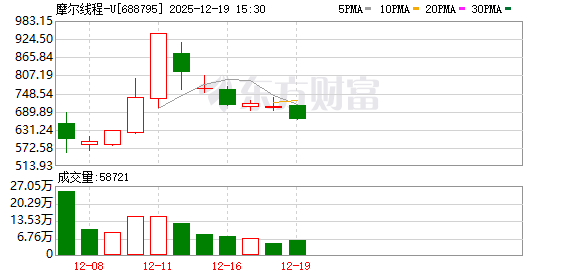
Group 1 - The core focus of the news is the announcement by Moore Threads, a leading domestic GPU company, regarding the production of its fifth-generation GPU architecture "Huagang" set to begin next year [1][4] - Moore Threads held its first MUSA Developer Conference in Beijing, where CEO Zhang Jianzhong highlighted the company's advancements and product launches [1] - The company has introduced several products based on the "Huagang" architecture, including the AI training and inference product "Huashan," the high-performance graphics rendering product "Lushan," and the "Yangtze" intelligent SoC chip [1] Group 2 - Moore Threads differentiates itself by focusing on full-featured GPUs that integrate AI chips, GPGPU, and graphics chips, while also being compatible with NVIDIA's ecosystem (CUDA) [4] - Since 2022, the company has been iterating its GPU technology at a rate of one generation per year, having previously launched four generations of products: "Sudi," "Chunxiao," "Quyuan," and "Pinghu" [4] - The "Huagang" architecture features a new instruction set with a 50% increase in computing density and a 10-fold improvement in energy efficiency, supporting large-scale intelligent computing clusters [4]
总价超4亿元,黑芝麻智能拟收购AI芯片公司
Guan Cha Zhe Wang· 2025-12-05 06:36
Core Viewpoint - Black Sesame Intelligence announced plans to acquire AI chip company Yizhi Electronics for approximately RMB 400 million to 550 million, with the transaction expected to be completed by Q1 2026 [1][5]. Group 1: Acquisition Details - The acquisition will be executed through equity purchase and capital injection, making Yizhi Electronics a non-wholly owned subsidiary of Black Sesame Intelligence [1]. - The announcement indicates that negotiations have progressed significantly since the initial intention disclosed on June 18, which did not reveal the target company's name [1]. Group 2: Yizhi Electronics Overview - Yizhi Electronics specializes in AI machine vision algorithms and SoC chip design, focusing on edge/endpoint AI SoC chip development for applications in smart vehicles, smart hardware, and smart security [4]. - The company is set to complete the new generation of automotive-grade chips in 2024 and has secured projects with automotive manufacturers, complementing Black Sesame's automotive-grade computing platform [4]. Group 3: Strategic Synergies - The acquisition is expected to create significant strategic synergies by enhancing product offerings, expanding into new markets, and achieving operational complementarity [5]. - Black Sesame aims to provide a comprehensive range of automotive-grade computing chips and full-scene solutions for smart vehicles, while also extending its product line to broader robotics applications [5]. Group 4: Company Performance - Black Sesame Intelligence, founded in 2016, went public on the Hong Kong Stock Exchange in 2024 and focuses on developing automotive-grade SoC solutions [7]. - The company reported a revenue of RMB 253 million for the first half of 2025, reflecting a year-on-year growth of 40.4%, although it incurred a net loss of RMB 762 million due to high R&D expenses [7].


均胜电子携手黑芝麻智能 构建多芯片平台机器人域控产品
Zheng Quan Shi Bao Wang· 2025-11-21 04:21
Core Insights - Junsun Electronics and Hezhima Intelligent have officially established a strategic partnership focusing on the joint development of robotic domain controllers, optimization of intelligent computing platforms, and co-creation of industry scenario solutions [1][2][3] Group 1: Company Overview - Junsun Electronics is a leading automotive parts company that has been actively expanding into the robotics components business since 2025, leveraging its extensive experience in automotive parts technology, manufacturing, and supply chain [1] - Hezhima Intelligent is a benchmark enterprise in the intelligent computing field, specializing in high-performance AI SOC chips and edge computing modules, with its products widely used in smart driving, robotics, and intelligent manufacturing [2] Group 2: Strategic Collaboration - The collaboration aims to leverage the core strengths of both companies, with Junsun Electronics providing its engineering and industrialization experience, while Hezhima Intelligent offers high-performance intelligent computing chip and platform technology [3] - The partnership is expected to enhance both companies' competitive advantages in their respective fields and provide innovative solutions to address industry challenges related to core technologies and multi-platform compatibility [3] Group 3: Technological Development - The strategic cooperation will focus on the development of next-generation embodied intelligent robot control systems and industry solutions, emphasizing resource sharing, collaborative innovation, and mutual benefits [3] - Hezhima Intelligent launched the SesameX multi-dimensional intelligent computing platform on the same day the partnership was announced, providing a solid technical foundation for their collaboration [2]

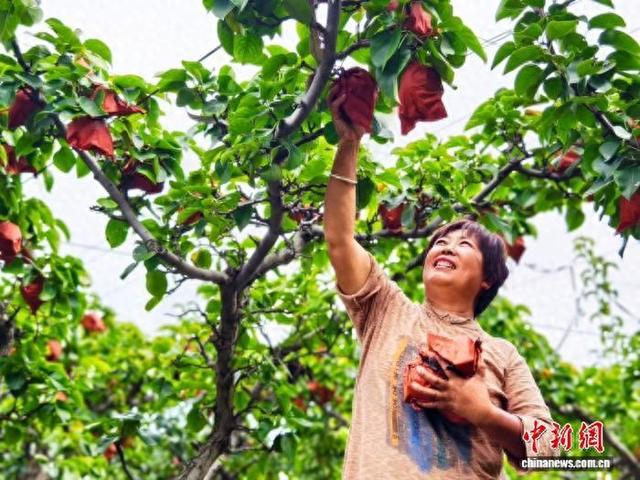
江苏睢宁:梨园飘香汇聚四方客 乡村振兴绘就“致富果”
Zhong Guo Xin Wen Wang· 2025-09-30 10:59
Core Viewpoint - The article highlights the successful development of the pear industry in Pinglou Community, Suining County, Jiangsu Province, showcasing how it has become a significant source of income for local farmers through high-quality production and effective market strategies [1]. Group 1: Industry Development - Over 20 years, Pinglou Community has established a large-scale pear orchard covering over 2,000 acres, leading to the creation of a pear trading market [1]. - The community has transitioned from farmers seeking buyers to merchants coming to purchase pears, indicating a shift in market dynamics [5]. Group 2: Economic Impact - Farmers like Xu Jinhua report annual net earnings of 20,000 to 30,000 yuan from cultivating six to seven acres of pears, demonstrating the high profitability of pear farming compared to traditional grain crops [3]. - The introduction of new pear varieties such as "Xinyu" and "Huashan" has allowed farmers to adapt to market demands, enhancing their income potential [3][5]. Group 3: Market Infrastructure - The establishment of nearly 20 pear collection points in Pinglou Community has created a regional distribution hub for pears, facilitating better service for both farmers and merchants [7]. - The use of social media platforms and community WeChat groups has improved communication between farmers and buyers, streamlining the sales process [7].