
花生碎

Search documents
从“分大小”到“分内涵” 延津花生身价翻番
He Nan Ri Bao· 2025-11-28 23:25
Core Insights - The peanut planting area in Yanjin County remains stable at around 600,000 acres, with a total of 115 purchasing and processing entities, achieving an annual purchasing and processing capacity exceeding 400,000 tons and a processing output value of 2.43 billion yuan [1][3] Group 1: Industry Overview - The local peanut industry is characterized by a significant reduction in daily peanut deliveries, indicating that most of the peanuts have been stored [1] - The Yanjin County peanut cooperative expects to purchase 12,000 tons of peanuts this year, having already completed the shelling and grading of 2,000 tons [1] - The cooperative employs a grading system that categorizes peanuts into six sizes, maximizing their value by supplying high-end food companies with premium peanuts [1] Group 2: Quality and Processing - The unique soil quality in Yanjin, with an average organic matter content of 19%, contributes to the superior quality of Yanjin peanuts [2] - The local peanut grading system has led to a processing transformation, achieving over 75% local processing conversion rate [2] - Major companies, such as Shandong Luhua Group and Suzhou Koushuiwa Food Co., have established operations in Yanjin, further enhancing the local peanut market [2] Group 3: Product Innovation - The classification standards for peanuts are evolving from external size to internal nutritional content, with the launch of the high oleic peanut variety "Yuhua 93" [2] - The average yield of the high oleic peanut variety is reported to be 4,500 kg per acre, which is expected to enhance both nutritional value and flavor [2][3] - Collaboration with companies like Shandong Luhua Group aims to promote the standardized cultivation of high oleic peanuts, potentially increasing farmers' income by approximately 15% [3]
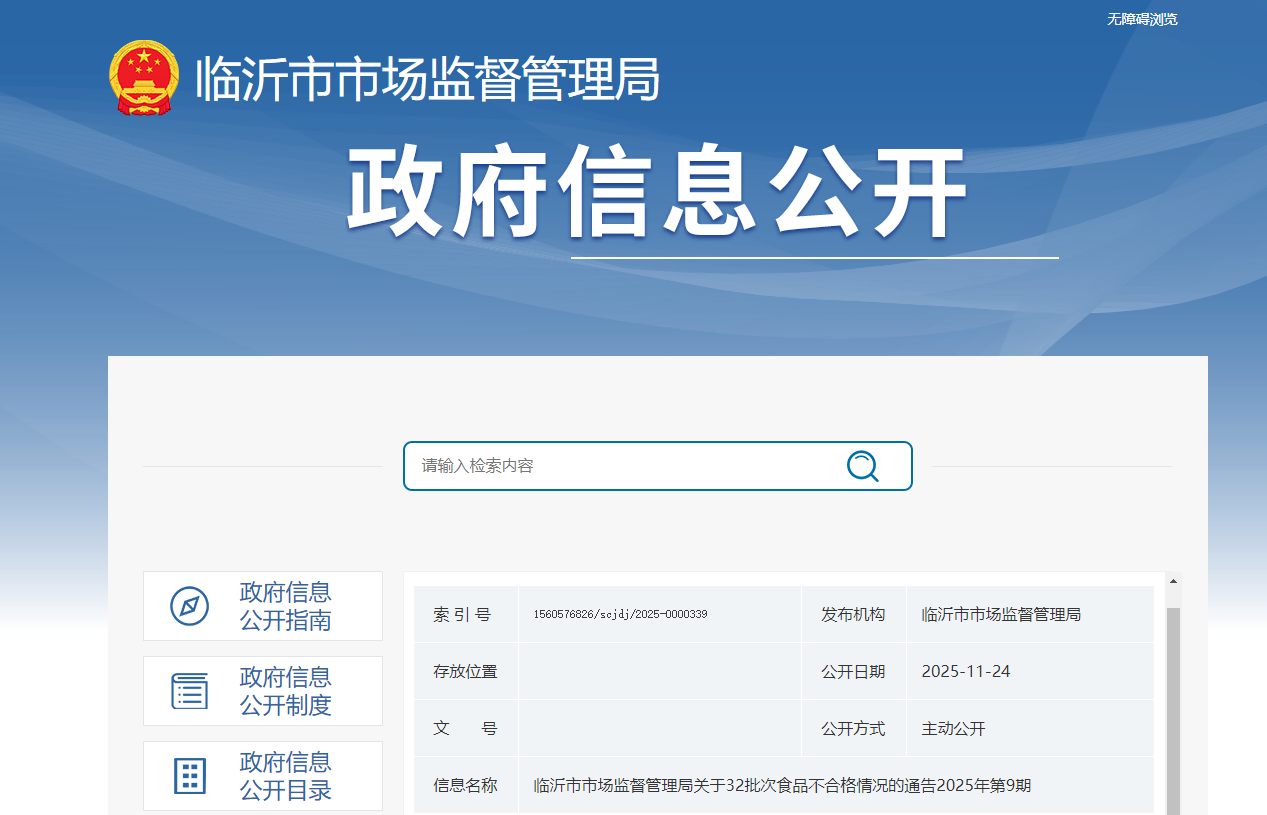
山东省临沂市市场监督管理局关于32批次食品不合格情况的通告2025年第9期
Zhong Guo Zhi Liang Xin Wen Wang· 2025-11-25 07:59
根据《中华人民共和国食品安全法》及其实施条例等有关规定和临沂市食品安全监督抽检计划安排,为进一步保障食品安全,市市场监督管理局对食用农产 品、餐饮食品、糕点等28大类食品2320批次样品进行了监督抽检,其中食用农产品、餐饮食品、炒货食品及坚果制品等12大类食品32批次样品不合格,检出 农药残留、兽药残留、食品添加剂超标等。 特此通告。 临沂市市场监督管理局 2025年11月24日 | 附件3 | | | | | | | | | | | | | | | | | | --- | --- | --- | --- | --- | --- | --- | --- | --- | --- | --- | --- | --- | --- | --- | --- | --- | | | | 食品抽检不合格产品信息 | | | | | | | | | | | | | | | | 标称 | | 标称 | 被抽 | | | | | | | | | 检 | | | | | | 序 | 生产 | 生产 | 样单 | 被抽样单 | 食品名 | 规格 | 商标 | 生产/购进 日期/批号 | 食品 | 食品 | 检验 | 验 | 不合格 ...

花生:油料米供应充足 企业收购较积极
Qi Huo Ri Bao· 2025-10-30 01:02
Core Insights - The article discusses the current situation of peanut and corn harvesting in Henan province, highlighting the impact of weather conditions on crop quality and market dynamics [1][2][5] Group 1: Harvesting and Market Conditions - Farmers in Henan are actively selling their harvested peanuts and corn due to unfavorable market conditions and weather impacts, with many opting for immediate sales rather than storage [2][3] - The quality of peanuts has been affected by recent weather, with some crops showing signs of mold and sprouting, leading to a decline in market prices [2][5] - The overall planting area for peanuts in Henan has increased by approximately 10% this year, despite adverse weather conditions [5] Group 2: Trade and Supply Chain Dynamics - Peanut processing plants and traders are actively purchasing peanuts from farmers, with a significant increase in the number of trucks delivering peanuts to processing facilities [4][6] - The market for peanut oil and food-grade peanuts is currently favorable for processors, who are looking to stock up on raw materials due to lower prices [4][6] - The supply-demand relationship for peanuts is becoming more relaxed as the harvest concludes, leading to a decrease in prices for both oil-grade and food-grade peanuts [7][8] Group 3: Price Trends and Market Outlook - The purchase prices for peanuts in Henan have dropped significantly, with some grades falling to around 4 yuan per jin, while lower-quality peanuts are being bought for less than 3 yuan per jin [7][8] - The influx of low-priced peanuts from Henan is affecting market activity in Northeast China, where trading volumes are declining and prices are under pressure [9] - There is a cautious outlook for peanut futures, with expectations of further price declines due to reduced demand from the food industry and a lack of interest from traders in entering the market [9]
全国母乳喂养宣传日丨担心母乳不足?调节心情或比喝补汤更管用
Bei Ke Cai Jing· 2025-05-20 11:48
Core Viewpoint - The article emphasizes the importance of both physical and psychological factors in breastfeeding, highlighting that maternal anxiety and emotional well-being significantly impact milk production [1][2]. Group 1: Psychological Factors - Maternal anxiety during breastfeeding can stem from concerns about milk supply, which may be exacerbated by emotional stress and physical exhaustion [1]. - The connection between emotional states and milk flow is noted, with negative emotions potentially leading to liver qi stagnation, affecting milk release despite adequate production [1]. Group 2: Dietary Recommendations - Scientific evidence does not support the idea that certain soups or foods significantly increase milk supply; rather, hydration and maternal confidence may play a role [4][5]. - A diverse diet is encouraged during breastfeeding, as the quantity of milk is primarily determined by the frequency of effective milk removal [7]. - Consumption of seafood is generally safe for breastfeeding mothers, with recommendations to introduce new seafood gradually to monitor for potential allergic reactions in infants [8]. - Moderate caffeine intake, such as 1-2 cups of coffee per day, is considered acceptable during breastfeeding, provided that the infant shows no adverse reactions [9].