英伟达Grace CPU

Search documents
英伟达GTC大会迎来AI芯片转向?美媒:CPU将重回舞台中央
Feng Huang Wang· 2026-03-14 03:23
Core Insights - Nvidia's CPU, Vera, is set to be unveiled at the GTC conference, marking a revival for CPUs driven by the rise of AI agents [1] - The CPU market is projected to double from $27 billion in 2025 to $60 billion by 2030, with Nvidia reporting over $62 billion in data center revenue, a 75% year-on-year increase [3] - The demand for CPUs is surging due to a fundamental shift in computing needs, as AI applications evolve from chatbots to task-oriented agents [3] Group 1: Nvidia's CPU Development - Nvidia's first data center CPU, Grace, was launched in 2021, and the next-generation Vera is now in production [1] - The company has established a significant partnership with Meta for the large-scale deployment of Grace CPUs, with plans for Vera by 2027 [1] - Nvidia's CPUs are designed to complement its GPUs, which have driven the company's market capitalization to $4.4 trillion [1] Group 2: Market Dynamics - The CPU market is experiencing a "quiet supply crisis," with predictions that growth rates may surpass those of GPUs by 2028 [4] - Major CPU suppliers AMD and Intel have issued warnings about supply shortages, with delivery times extending up to six months and prices rising over 10% [5] - AMD's data center head noted unprecedented demand growth over the past six to nine months, while Intel expects inventory to hit a low point this quarter [5] Group 3: Technical Differentiation - Nvidia's CPUs are optimized for AI workflows, differing fundamentally from AMD and Intel's general-purpose CPUs [6] - Nvidia's Grace CPU features 72 cores, while AMD's EPYC and Intel's Xeon CPUs typically have 128 cores, focusing on maximizing core count for cost efficiency [6][7] - Nvidia's CPUs are based on ARM architecture, contrasting with the x86 architecture used by Intel and AMD, which has dominated the market for decades [7] Group 4: Competitive Landscape - Major cloud service providers like Amazon, Google, and Microsoft are developing their own CPUs, indicating a shift towards custom silicon in the industry [8] - By Q4 2025, Intel is expected to hold a 60% market share in server CPUs, with AMD at 24.3% and Nvidia at 6.2%, while other companies like Amazon and Google will capture the remaining share with ARM-based processors [8]


天孚通信股价创新高,节后A股开市首日光模块、MLCC板块爆发
Di Yi Cai Jing· 2026-02-24 04:31
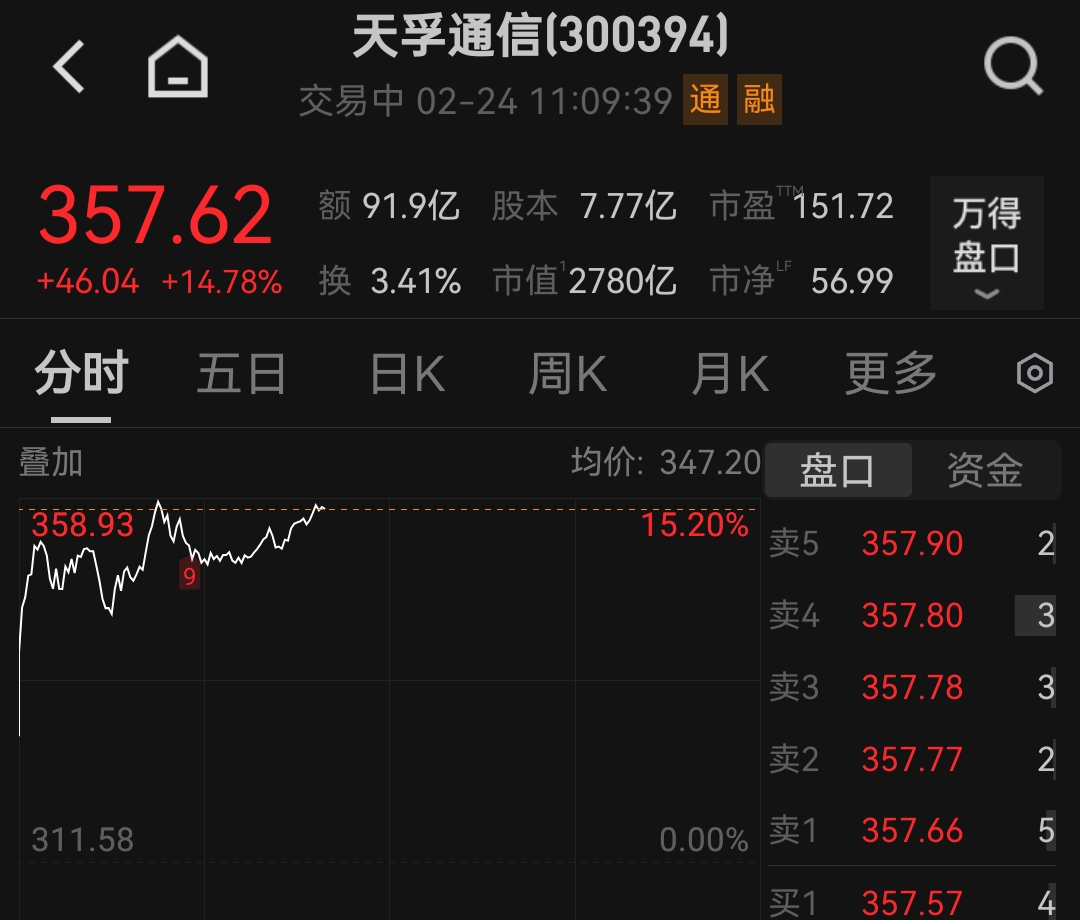
Core Viewpoint - The stock prices of optical module and MLCC concept stocks surged after the Chinese New Year, with Tianfu Communication and Sanhuan Group reaching historical highs, driven by the demand for AI data centers [1][3]. Group 1: Stock Performance - Tianfu Communication (300394.SZ) saw its stock price increase by 14.78%, reaching 357.62 CNY, with a market capitalization of 278 billion CNY [2][3]. - Sanhuan Group (300408.SZ) experienced a stock price rise of 12.93%, reaching 64.17 CNY, with a market capitalization of 122.9 billion CNY [2][3]. - Other notable performers included Zhongji Xuchuang (300308.SZ) up over 6%, and Xinyi Sheng (300502.SZ) up over 4% [3]. Group 2: Industry Demand - MLCCs are critical components in AI servers, with their demand significantly higher than in standard servers [3]. - Amazon announced plans to invest 12 billion USD in new data centers in Louisiana, continuing the trend of cloud service providers expanding their infrastructure [3][4]. - Nvidia's strategic partnership with Meta involves deploying millions of chips, indicating strong demand for advanced computing infrastructure [4]. Group 3: Future Projections - Tianfu Communication expects a net profit of 1.881 billion to 2.15 billion CNY for 2025, representing a growth of 40% to 60% [4]. - Zhongji Xuchuang anticipates a net profit of 9.8 billion to 11.8 billion CNY for 2025, reflecting a growth of 89.5% to 128.17% [4]. - Xinyi Sheng projects a net profit of 9.4 billion to 9.9 billion CNY for 2025, indicating a substantial growth of 231.24% to 248.86% [4].


扎克伯格与黄仁勋签署超大规模协议,Meta将部署数百万颗英伟达芯片
Sou Hu Cai Jing· 2026-02-18 12:28
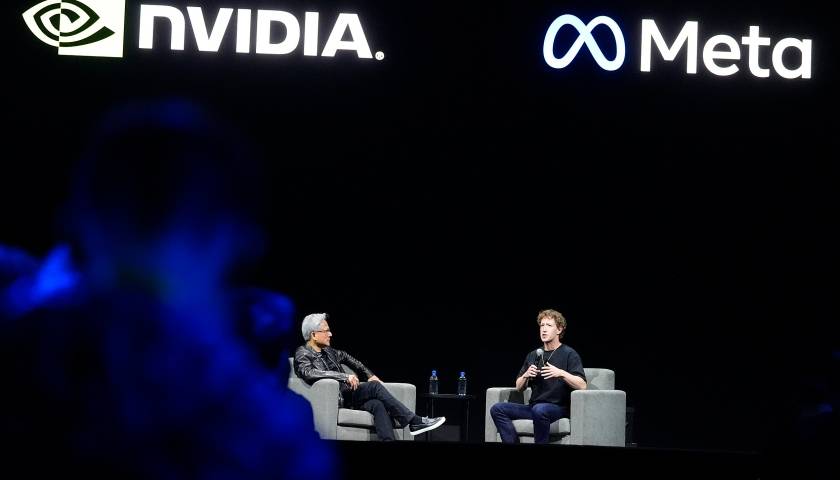
Group 1 - Nvidia and Meta have established a multi-year strategic partnership focusing on local deployment, cloud, and AI infrastructure [1] - Meta will build a large-scale data center for AI training and inference, utilizing Nvidia's CPU and millions of Blackwell and Rubin architecture GPUs [1] - Meta becomes the first company to independently deploy Nvidia's Grace CPU, designed for data centers, AI, and high-performance computing [1] Group 2 - The partnership includes the deployment of Nvidia's Vera CPU, expected to achieve large-scale application by 2027, enhancing Meta's AI computing capabilities [3] - Meta will implement a unified architecture based on Nvidia's GB300 system, simplifying operations while maximizing performance and scalability [3] - The collaboration indicates a full-chain integration rather than simple chip procurement, raising questions about Meta's potential shift away from in-house chip development [3] Group 3 - As of February 17, Nvidia's stock closed at $184.97, with a market capitalization of $4.49 trillion, making it the highest-valued company in the U.S. stock market [4] - Meta's stock closed at $639.29, with a slight decline, resulting in a market capitalization of $1.62 trillion, ranking ninth in the U.S. stock market [4]
Meta扩大与英伟达的合作:将采用数百万颗AI芯片
Xin Lang Ke Ji· 2026-02-18 07:50
Core Insights - Meta has entered a large-scale agreement to utilize millions of NVIDIA chips, including the new standalone CPU and the next-generation Vera Rubin system, in its AI data centers [1][2] - The financial terms of the agreement have not been disclosed, but it is expected to be in the hundreds of billions range, with a significant portion of Meta's capital expenditure directed towards this collaboration [1][2] - This partnership marks a significant expansion of the existing collaboration between Meta and NVIDIA, which has been ongoing for at least a decade [1] Group 1 - The standalone CPU is a major highlight of this collaboration, making Meta the first company to deploy NVIDIA's Grace CPU as a standalone chip in data centers [1][2] - The next-generation Vera CPU is planned for deployment by Meta in 2027, as part of a broader commitment to invest $600 billion in data centers and supporting infrastructure in the U.S. by 2028 [2] - Meta plans to build 30 data centers, with 26 located in the United States [2] Group 2 - Two major AI data centers are currently under construction: the 1 GW Prometheus project in New Albany, Ohio, and the 5 GW Hyperion project in Richland Parish, Louisiana [3] - The agreement includes NVIDIA's Spectrum-X Ethernet switches for high-speed GPU interconnectivity within large AI data centers [3] - Meta will also leverage NVIDIA's security capabilities to support AI functionalities in WhatsApp [3] Group 3 - Meta is not solely reliant on NVIDIA, as it is also considering using Google's Tensor Processing Units (TPUs) in its data centers by 2027, which previously caused NVIDIA's stock to drop [3] - The company is developing its own chips and utilizing AMD products, especially as AI companies seek alternative supply channels amid NVIDIA's supply constraints [3] - NVIDIA's current Blackwell GPUs have been in short supply for several months, while the next-generation Rubin GPUs have recently entered production [3] Group 4 - Through this agreement, Meta has secured a sufficient supply of chips and will engage in deep joint design with NVIDIA's engineering team to optimize and accelerate cutting-edge AI model training and inference [4] - Meta is developing a new cutting-edge model, codenamed Avocado, as a successor to its Llama series AI technology [5] - Recent fluctuations in Meta's stock price have raised concerns on Wall Street regarding its AI strategy, with significant price movements following the announcement of ambitious AI investment plans [5]

英伟达Rubin及国内外情况
2026-01-07 03:05
Key Points Summary of NVIDIA Conference Call Company Overview - **Company**: NVIDIA - **Key Product**: VR 200 architecture with significant innovations in key components and system design Core Insights and Arguments - **VR 200 Architecture**: The VR 200 architecture features a new Ruby design, upgrading from L6 to L10 level delivery, enhancing integration and functionality of the motherboard [2][4] - **Power Consumption**: The new GPUs may reach power consumption levels of 1,000 to 1,500 watts, necessitating widespread adoption of liquid cooling technology [2][5] - **Supply Chain Impact**: Increased demand for raw materials like copper and silver due to higher PCB layer counts (increased from 18 to 24 or 28 layers) [4][5] - **Standardization Effects**: NVIDIA's standardized system design reduces flexibility for brands like Dell and ASUS, potentially leading to increased product homogeneity and pushing some brands towards competitors like AMD or Google [6][7] - **Market Position**: Supermicro maintains a leading position in the domestic GPU server market due to its stable partnership with NVIDIA, while Dell remains a significant player globally [8] - **Manufacturing Partnerships**: Foxconn continues to be a key manufacturing partner for NVIDIA, producing H100, H200 GPUs, and B100, B200 modules, with expected visibility improvements in the coming months [9][10] - **Supply Chain Management**: NVIDIA collaborates closely with Foxconn, deploying automated equipment to ensure efficient production and assembly [12] Additional Important Insights - **Power Supply Improvements**: The VR 200 cabinet utilizes silicon carbide (SiC) technology to enhance power conversion efficiency to 80%-90%, reducing power loss and improving system stability [3][13] - **Future Orders**: NVIDIA anticipates a significant increase in H200 GPU orders in 2026, with an expected domestic market scale of 2 million units, equivalent to 250,000 servers [3][18] - **Delivery Schedule**: The delivery process involves multiple steps, with an estimated one-month timeline from order to final delivery, aiming for approximately 500,000 units per quarter starting from April 2026 [19] - **MPS Market Share**: MPS (New Yuan System) has seen an increase in its share within NVIDIA's supply chain, indicating growing market interest [20] - **Liquid Cooling Systems**: The Robin series integrates more GPUs per CPU compared to the GB300, requiring enhanced liquid cooling solutions to manage increased thermal output [21]
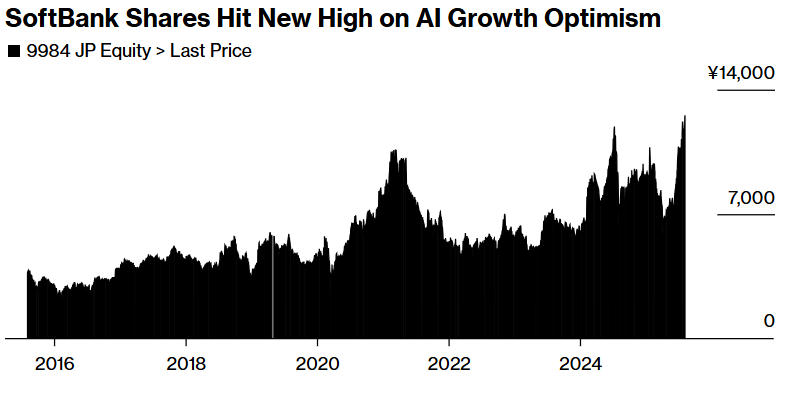
“AI信仰”引爆看涨狂潮! 软银股价涨势如虹 狂飙13%至历史新高
智通财经网· 2025-08-08 02:47
Core Viewpoint - SoftBank Group Corp. has achieved a significant turnaround by returning to profitability in the latest quarter, leading to a surge in its stock price to a historical high in the Japanese market, reflecting investor confidence in its AI-related investments, particularly in Nvidia and TSMC [1][2][5] Investment Performance - SoftBank's Vision Fund has seen a rebound in investment value, aided by the sale of its stake in T-Mobile US Inc. for $4.8 billion and a recent $3 billion stock sale, which supports its aggressive AI investment strategy [1][5] - The company's stock price increased by as much as 13%, marking the largest gain in four months, and its American Depositary Receipts (ADRs) rose over 5%, nearing the historical peak set in 2021 [2][5] AI Investment Strategy - SoftBank has significantly increased its holdings in Nvidia to approximately $3 billion, more than doubling its previous investment, and has also acquired shares in TSMC and Oracle, benefiting from the rising demand for AI infrastructure [5][8] - The company is focusing on AI infrastructure investments, with plans to invest up to $30 billion in OpenAI and a $6.5 billion acquisition of Ampere Computing, as part of its broader strategy to establish a $1 trillion AI manufacturing center in Arizona [9][10] Market Outlook - Analysts predict that the ongoing demand for AI computing power will continue to drive stock prices for companies like Nvidia and TSMC, with a potential global investment wave in AI infrastructure reaching $2 trillion [7][8] - SoftBank's recent financial results showed a net profit of 421.82 billion yen (approximately $2.9 billion), significantly exceeding analyst expectations, driven by the recovery in technology valuations and strong returns from its portfolio companies [6][8] Challenges and Future Plans - Despite the positive outlook, SoftBank's stock buyback plan has been curtailed, with only about 3.3 trillion yen of the planned 5 trillion yen executed, which may limit future upside potential [2][5] - The company faces scrutiny regarding its ability to manage large-scale financing needs amid rising interest rates in Japan, which could impact its stock valuation relative to its net asset value [9][10]