药品活性成分

Search documents
对华贸易战输得彻底,美国人猛然发现,印度一直在给中国送钱
Sou Hu Cai Jing· 2026-01-23 09:39
Core Viewpoint - The ongoing trade war between the US and China has not yielded the expected results for the US, as the trade deficit with China remains significant despite high tariffs and efforts to shift supply chains to countries like India [1][11]. Group 1: US-China Trade Relations - Since the initiation of tariffs in 2018, the US aimed to reduce its trade deficit with China and bring manufacturing back to the US or to other countries [1]. - By 2024, US tariffs on Chinese goods covered hundreds of billions of dollars, yet the trade deficit with China did not significantly decrease, with bilateral trade reaching $582.5 billion [1]. - The Biden administration continued to promote supply chain diversification, particularly through initiatives like the CHIPS Act, but the effectiveness of these measures remains questionable [1]. Group 2: India's Role in the Supply Chain - India has emerged as a potential alternative to China for manufacturing, with significant growth in exports, particularly in sectors like smartphones, where exports reached $6.96 billion in 2024 [2]. - Despite India's rising exports, it remains heavily reliant on Chinese components, with two-thirds of electronic components imported from China [5]. - The trade relationship between India and China is complex, as India's imports from China are growing at a rate twice that of its overall import growth [4]. Group 3: Challenges in Decoupling from China - India's manufacturing sector continues to depend on Chinese parts, with critical components for electronics and pharmaceuticals sourced from China [5][7]. - The trade deficit with China is projected to reach $99.2 billion by 2025, indicating that India's attempts to reduce reliance on China have not yet succeeded [9]. - India's efforts to decouple from China face significant hurdles, including the need for time to build domestic capabilities and reduce dependency on Chinese technology and components [11][19]. Group 4: Future Outlook - The Indian government plans to implement targeted tariffs and incentives to reduce reliance on Chinese imports and enhance local production capabilities [17]. - India is also focusing on building strategic reserves of critical minerals, such as rare earth elements, to support its manufacturing ambitions [19]. - The path to decoupling from China is expected to be long and challenging, with India's industrial position still needing significant improvement to compete effectively [11][19].

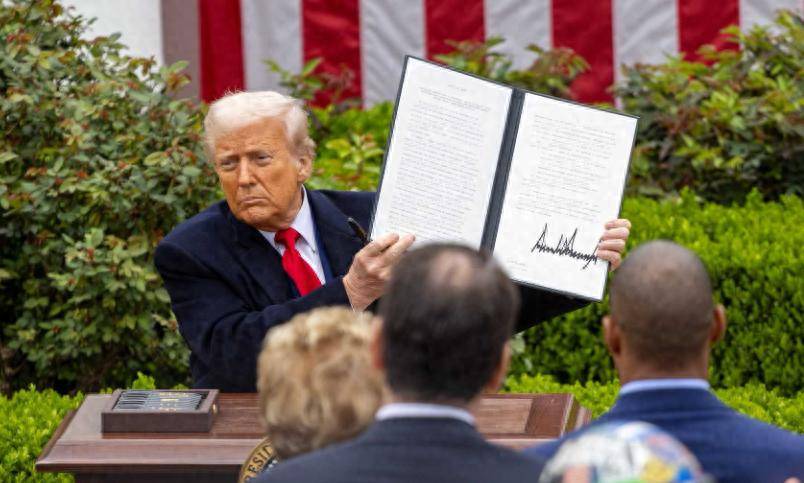
14国谈判没有进展,美国想和中国谈判,特朗普:我和中国关系很好
Sou Hu Cai Jing· 2025-07-15 10:00
Group 1 - The core viewpoint of the article is that after negotiations with 14 countries broke down, the U.S. is now seeking to engage China, indicating a shift in strategy from hardline tactics to a more conciliatory approach [1][14][22] - The U.S. issued a "final ultimatum" to 14 countries, imposing punitive tariffs ranging from 25% to 40% on their products, which has led to a unified front among these nations against U.S. pressure [2][10][34] - The initial expectation that countries would yield to U.S. pressure has not materialized, with nations like Japan and South Korea taking a strong stance against U.S. tactics [3][5][28] Group 2 - The U.S. has only reached a framework agreement with the UK and Vietnam, while negotiations with other countries have failed, particularly in Southeast Asia [6][7] - The U.S. is facing internal pressure as domestic industries warn that increased tariffs on Asian components could lead to layoffs [10][32] - The article suggests that the U.S. strategy of using tariffs to reshape global supply chains is flawed, as it underestimates the complexity and interdependence of global manufacturing networks [39][40] Group 3 - The article highlights that the U.S. is now considering exemptions for certain Chinese products, indicating a potential shift in its approach to trade negotiations [20][22] - China's response to the U.S. overtures has been cautious, emphasizing that negotiations must be based on mutual respect and rejecting unilateral pressure [24][40] - The collective resistance from the 14 countries and China's measured response signal a significant challenge for the U.S. in its trade policy [26][34][43]