螺蛳粉火锅

Search documents
地方美食再破圈 臭宝和《疯狂动物城2》合作款系列产品掀起嗦粉热潮
Cai Fu Zai Xian· 2025-12-10 10:49
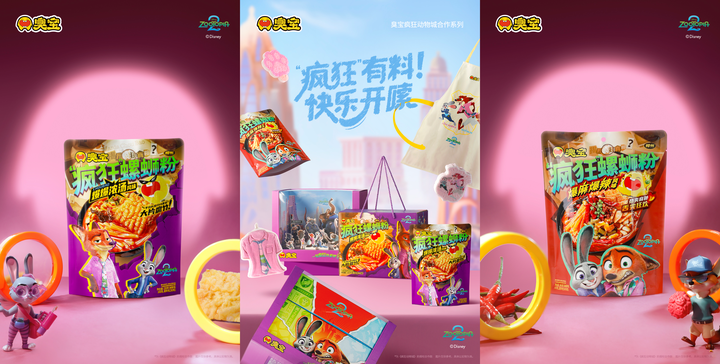
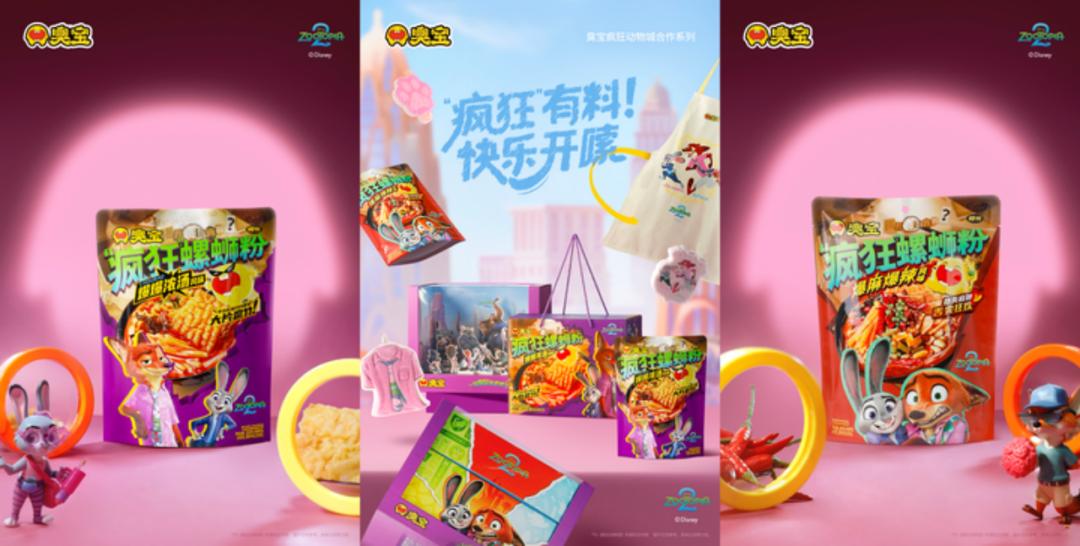
Core Insights - The collaboration between Choubao brand and "Zootopia 2" has successfully generated significant consumer interest, with the initial batch of 650,000 bags of "crazy" snail noodles selling out quickly [1] - This partnership not only represents an innovative marketing strategy but also highlights the intersection of local cuisine and international IP, providing a model for the development of local specialties [4] Group 1: Product Launch and Marketing Strategy - The collaboration features a themed product line including "crazy" snail noodles, merchandise, and commemorative gift boxes, designed to engage consumers through creative interactions [1] - The brand has effectively utilized social media platforms like Douyin and Xiaohongshu to create diverse content related to the collaboration, achieving over 25 million views on Douyin and over 2.5 million exposures on Xiaohongshu [3] - Choubao has initiated interactive campaigns on Douyin, such as the SnailNoodleMystery topic, to enhance user engagement and expand online reach [3] Group 2: Market Impact and Consumer Engagement - The collaboration has sparked widespread attention in the market and industry, showcasing how local delicacies can gain broader recognition through strategic partnerships [4][7] - Choubao's innovative product offerings, such as "explosive" snail noodles and various themed dishes, have resonated with consumers, fostering deeper emotional connections through lively brand interactions [4] - The brand's approach to integrating local cuisine into contemporary cultural contexts has revitalized traditional foods, allowing them to transcend regional and flavor limitations [7]

为什么年轻人买东西,上头必须印点啥?
3 6 Ke· 2025-12-08 11:37
Core Insights - The article emphasizes the growing trend of IP collaborations in various consumer sectors, highlighting their potential to enhance brand growth and product upgrades while connecting with consumers' emotional values [1][2][17]. Group 1: IP Collaborations - The box office for "Zootopia 2" has surpassed 3 billion, showcasing the popularity of IP collaborations this year, which include partnerships with brands like McDonald's, Yili, and Uniqlo [1]. - IP collaborations have permeated daily life, influencing various aspects of consumption, from food to fashion and even pet products [1]. - Brands are increasingly recognizing the importance of emotional value in consumer preferences, making IP collaborations a strategic direction to meet market demands [1][2]. Group 2: Consumer Trends - The concept of "emotional value" and "pleasurable consumption" has gained traction among the new generation of consumers, who prioritize emotional satisfaction over mere utility [2][15]. - The "Guzzi economy" is experiencing explosive growth, with the market expected to reach 168.9 billion yuan in 2024, reflecting a significant year-on-year increase of 40.63% [5]. - The number of pan-anime users in China is projected to reach 503 million by 2024, indicating a growing mainstream acceptance of previously niche markets [5]. Group 3: Brand Strategies - Brands like Luckin Coffee have successfully integrated IP collaborations into their marketing strategies, conducting multiple partnerships each month to drive traffic and sales [5]. - The collaboration between brands and popular IPs, such as the partnership between "Stinky Treasure" and "Zootopia 2," has generated significant consumer engagement and excitement, leading to viral social media interactions [10][12]. - Emotional connections with consumers are becoming crucial for brands, as seen in "Stinky Treasure's" efforts to engage with young audiences through interactive marketing and product innovation [12][14]. Group 4: Market Dynamics - The rise of products that provide strong emotional value, such as collectibles and immersive experiences, is reshaping consumer spending habits, moving from practical to emotional consumption [15][16]. - The success of brands like Pop Mart, which saw a 204.4% year-on-year revenue increase, illustrates the potential of emotional connection and cultural recognition in driving sales [15]. - Companies are increasingly challenged to not only deliver quality products but also to provide additional value that resonates with consumers' emotional needs [19].

反对浪费,从一粥一饭做起
Ren Min Ri Bao Hai Wai Ban· 2025-06-02 22:50
Core Viewpoint - The newly released "Measures for Promoting and Managing the Catering Industry" aims to combat food waste in the restaurant sector, with specific guidelines set to take effect on June 15, 2025 [2][3]. Group 1: Industry Overview - The annual revenue of the national catering industry has reached 5.57 trillion yuan, accounting for over 11% of the total retail sales of consumer goods [2]. - There are over 10 million operating entities in the catering industry, which significantly contributes to the consumption of grains, meat, and vegetables [2]. Group 2: New Regulations - The new regulations focus on three main areas to reduce food waste: 1. Implementation of food waste reduction requirements for catering service providers in various scenarios [3]. 2. Encouragement of practices such as menu optimization, public utensils, takeout services, and rewards for minimizing waste [3]. 3. Increased responsibilities for industry associations in combating food waste [3]. Group 3: Practical Applications - Restaurants are adopting strategies to minimize food waste, such as offering half portions and encouraging customers to order appropriately [5][6]. - The "38 Bites Action Plan" introduced by Beijing Huaten Group aims to quantify meal portions based on average consumption, promoting responsible ordering [6]. - Various restaurants are implementing "just-in-time" inventory practices to reduce food spoilage and waste [8]. Group 4: Consumer Behavior Changes - There is a noticeable shift in consumer attitudes towards dining, with many preferring to avoid waste rather than showcase abundance [10]. - Initiatives like "clean plate" campaigns and rewards for minimizing waste are becoming popular among consumers [10][11]. Group 5: Long-term Implications - The measures to combat food waste may initially limit short-term sales but are expected to promote healthier long-term growth in the catering industry [11].