行车ADAS

Search documents
利润率跌破2%:博世中国挥刀裁员
Xin Lang Cai Jing· 2026-02-04 12:07
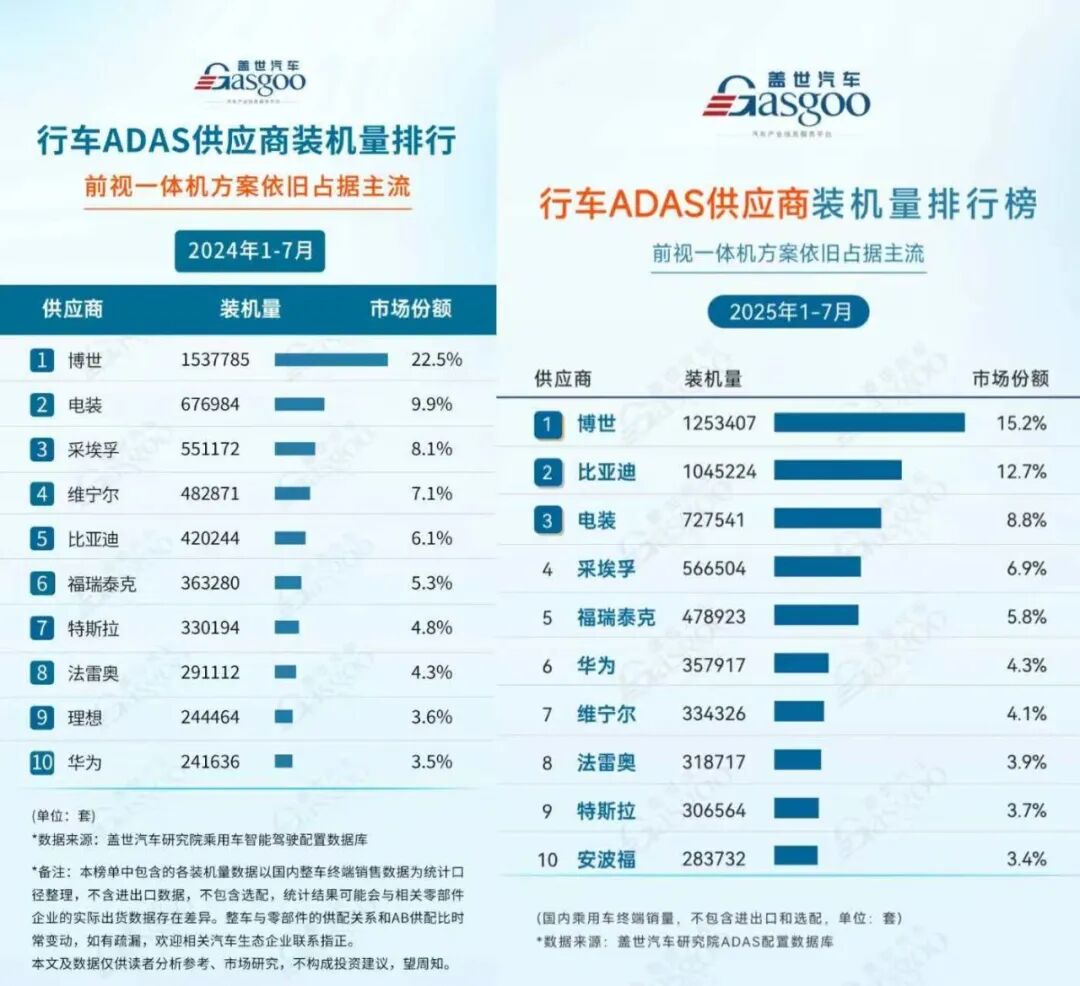
Core Insights - Bosch is facing unprecedented transformation challenges in the Chinese market, including layoffs and restructuring efforts to adapt to the declining demand for traditional fuel vehicles and the rise of new energy vehicles [1][2][7] Group 1: Layoffs and Restructuring - Bosch has initiated layoffs affecting nearly 200 employees, particularly in its Wuxi base, which focuses on fuel vehicle and hydrogen fuel cell projects [1][8] - The company has announced a global layoff plan of 22,000 employees, with 9,000 in Germany in 2024 and an additional 13,000 in 2025, indicating a significant workforce reduction [2][8] - Bosch's employee count in China is projected to decrease from approximately 58,000 at the end of 2023 to 56,000 by the end of 2024, reflecting a steady decline [8] Group 2: Financial Performance - Bosch's sales are expected to slightly increase to €91 billion in 2025, but the EBIT margin is projected to drop to about 2%, down from 3.5% in 2024, indicating a significant decline in profitability [2][9] - The company has set aside €3.1 billion for restructuring costs, which is about 3.5% of the projected sales for 2025, highlighting the financial strain from ongoing adjustments [9] Group 3: Market Position and Competition - Bosch's competitive position in the Chinese market is deteriorating due to the rapid rise of local companies like Huawei and BYD, which are gaining market share through faster technology iterations and better cost performance [4][11] - In the ADAS sector, Bosch's market share dropped from 22.5% in the first half of 2024 to 15.2% in the same period of 2025, while Huawei's share increased from 3.5% to 4.3% [11] - Bosch's position in the cockpit domain is particularly weak, ranking ninth with only 3.6% market share, while local competitors like BYD Electronics lead the market [11][12] Group 4: Strategic Responses - In response to declining profits and local competition, Bosch is increasing its R&D investment in China, targeting 11.9 billion yuan in 2024, which is about 8% of its sales, focusing on local development projects [12][13] - Bosch is also leveraging its global presence to assist Chinese automakers in expanding internationally, having supported over 200 models in their overseas ventures [13]
补偿N+4,德国巨头博世在华启动人员优化,燃油汽车项目成「重灾区」
36氪· 2026-02-03 09:18
Core Viewpoint - Bosch is facing significant challenges in its traditional fuel vehicle business, leading to layoffs and a decline in market competitiveness against emerging Chinese companies like Huawei and BYD [5][6][11]. Group 1: Layoffs and Business Performance - Bosch China has initiated layoffs affecting nearly 200 employees, primarily in its fuel vehicle and hydrogen fuel cell projects, with compensation packages reported to be generous [5][8]. - The company has acknowledged a decline in its workforce in China, with employee numbers dropping from approximately 58,000 in 2023 to 56,000 in 2024 [6]. - Bosch's sales in China showed a growth of 5.2% in 2023, reaching about 139 billion RMB, but this growth is expected to slow to 2.7% in 2024, with projected sales of 142.7 billion RMB [10]. Group 2: Market Competition and Challenges - Bosch's market share in the ADAS (Advanced Driver Assistance Systems) segment has been declining, with its installation volume dropping from 22.5% in the first half of 2024 to 15.2% in the first half of 2025 [12][15]. - Competitors like BYD have significantly increased their market share, with BYD's ADAS installation volume rising from 6.1% to 12.7% within a year [15]. - The company is struggling with a profit margin of approximately 2%, which is below expectations, and is facing pressures from rising costs and a challenging economic environment [9][10]. Group 3: Strategic Adjustments and Future Outlook - Bosch's leadership has indicated the need for organizational restructuring to enhance long-term competitiveness and investment capacity, citing the necessity to adapt to a rapidly changing market [9][17]. - The company is focusing on local investments and innovation in China, despite the competitive landscape becoming increasingly challenging due to the rise of domestic players [10][17]. - Analysts suggest that Bosch's reliance on traditional fuel vehicle technologies is hindering its ability to compete effectively in the electric vehicle market, leading to a potential further decline in market share [17].


补偿N+4,德国巨头博世在华启动人员优化,燃油汽车项目成「重灾区」
3 6 Ke· 2026-02-03 04:14
Group 1 - Bosch China has initiated layoffs affecting nearly 200 employees, primarily in its fuel vehicle and hydrogen fuel cell projects in Wuxi [1][2] - The layoffs are described as economic layoffs, with compensation packages reportedly generous, offering N+4 [1] - Bosch's overall employee count in China has shown a slight decline, from approximately 58,000 at the end of 2023 to 56,000 a year later [1] Group 2 - Bosch's sales in China have been declining, with a reported revenue of approximately 139 billion RMB in the 2023 fiscal year, a 5.2% increase year-on-year, and an estimated 142.7 billion RMB in 2024, reflecting a slower growth rate of 2.7% [4] - The company's EBIT margin is projected to be around 2% for 2025, below expectations, indicating pressure on profitability [2][3] Group 3 - Bosch's market position is weakening due to increased competition from Chinese companies like Huawei and BYD, which are capturing market share in advanced driver-assistance systems (ADAS) [5][10] - In the first seven months of 2025, Bosch's ADAS installation volume was 1,253,407 units, with a market share of 15.2%, while BYD followed closely with 1,045,224 units and a 12.7% market share [5][8] Group 4 - Bosch's chairman emphasized the need to optimize labor costs and streamline organizational structures to maintain long-term competitiveness [3] - The company is facing challenges from a sluggish economic environment and rising costs, which have pressured its performance [3][10] Group 5 - The shift in market dynamics indicates a transfer of automotive industry influence, with Chinese suppliers increasingly able to provide high-quality products and core technologies [10] - Bosch's reliance on traditional fuel vehicle technologies is becoming a liability as the industry transitions to electric vehicles [10]
补偿N+4! 德国巨头博世在华启动人员优化,燃油汽车项目成“重灾区”
Xin Lang Cai Jing· 2026-02-03 00:20
Core Viewpoint - Bosch is undergoing significant layoffs, particularly in its fuel vehicle and hydrogen fuel cell projects in China, amidst declining sales and profitability in the automotive sector, facing increasing competition from local companies like Huawei and BYD [3][4][6][12]. Group 1: Layoffs and Company Response - Bosch has initiated layoffs affecting nearly 200 employees in China, with a focus on its fuel vehicle and hydrogen fuel cell projects [3][4]. - The company denies the layoffs, claiming they are part of normal operational management [3][4]. - Bosch has previously announced substantial layoffs in Germany, totaling 22,000 by 2030, indicating a broader trend of workforce reduction [3][4][12]. Group 2: Financial Performance - Bosch's sales in China showed a growth of 5.2% in FY2023, reaching approximately 139 billion RMB, but the growth rate slowed to 2.7% in FY2024 with sales around 142.7 billion RMB [6][18]. - The company's projected sales for 2025 are expected to be 91 billion euros, a slight increase from 90.3 billion euros in 2024, but the EBIT margin is only about 2%, below expectations [4][16]. - Bosch's profitability is under pressure due to declining sales, rising tariff costs, and necessary structural adjustments [5][16]. Group 3: Market Position and Competition - Bosch's market share in the ADAS sector has decreased significantly, with a drop from 22.5% in the first half of 2024 to 15.2% in the first half of 2025, while competitors like BYD and Huawei are gaining ground [10][19][22]. - The competitive landscape is shifting, with local companies like BYD and Huawei rapidly advancing in technology and market share, particularly in areas like autonomous driving and smart vehicle technologies [12][22][24]. - Industry analysts note that Bosch is facing challenges from traditional business decline, slow electric transition, and high costs, which are exacerbated by talent loss to startups focusing on niche products [12][24].