证券ETF建信

Search documents
沪指重返4000点上方,证券ETF建信(515560)所跟踪指数涨超2%,券商三季报密集披露,业绩延续高增速
Xin Lang Cai Jing· 2025-10-29 05:16
Group 1 - The core viewpoint of the articles highlights the positive performance of the securities sector, with significant growth in revenue and net profit reported by several listed securities firms [1][2] - As of October 29, 2025, the CSI All Share Securities Company Index rose by 2.26%, with notable increases in individual stocks such as Huazhong Securities (up 10.05%) and Northeast Securities (up 9.73%) [1] - Five listed securities firms have disclosed their Q3 2025 financial results, showing a trend of "double growth" in both operating income and net profit [1] Group 2 - Huazhong Securities reported Q3 2025 operating income of 1.616 billion yuan, a year-on-year increase of 60.72%, and net profit attributable to shareholders of 848 million yuan, up 97.61% [1] - For the first three quarters of 2025, Huazhong Securities achieved operating income of 4.423 billion yuan, a 67.32% increase year-on-year, and net profit of 1.883 billion yuan, up 64.71% [1] - The growth in performance is attributed to significant increases in revenue from securities investment and brokerage services [1][2] Group 3 - CITIC Securities emphasizes that the "14th Five-Year Plan" provides clear guidance on business priorities and industry structure, promoting direct financing through equity and bond markets [2] - The plan encourages the development of futures, derivatives, and asset securitization, indicating a warming regulatory attitude towards these areas [2] - The industry is expected to see a gradual formation of a differentiated development pattern, with ten comprehensive institutions leading the sector during the "14th Five-Year" period [2]

为什么没人愿意认购ETF了?
Sou Hu Cai Jing· 2025-05-15 12:05
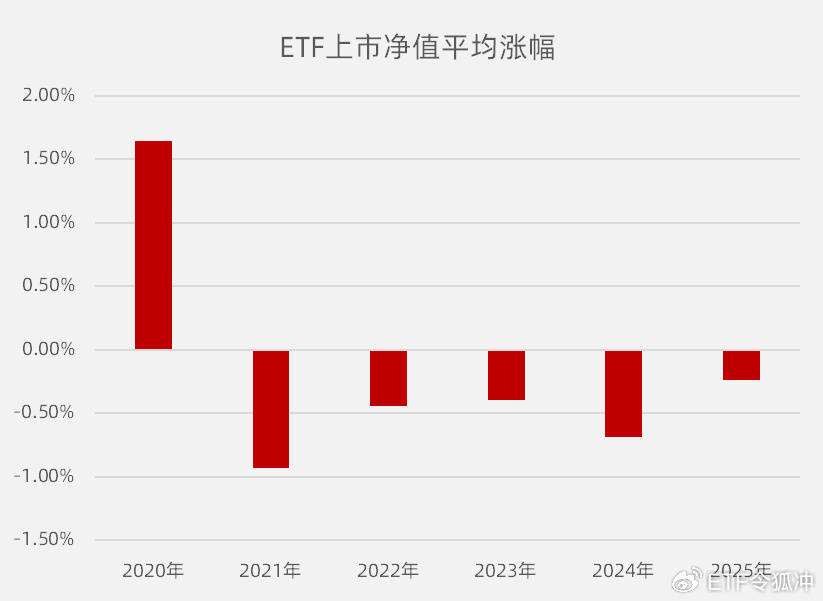
Core Viewpoint - The article discusses the challenges faced by financial institutions in Taiwan and mainland China regarding the practice of "self-funding" to meet ETF sales targets, highlighting the negative returns associated with this practice in recent years [1][2][3]. Group 1: Self-Funding and Negative Returns - The phenomenon of "self-funding" exists across various industries, but negative expected returns in the fund industry are rare [3]. - For example, newly launched stock ETFs in 2020 had an average net value increase of approximately 1.5% from establishment to listing, allowing managers to lock in profits through market transactions [5]. - However, by 2021, self-funding behavior began to yield negative returns, with an average net value performance of -1% for self-funded ETF subscriptions [6]. - In some cases, such as a specific startup board ETF, losses could exceed 10% by the time of listing [8]. Group 2: Accelerated Construction Periods - The article notes that the construction period for ETFs has significantly decreased, from an average of 28 days in 2020 to just 11 days by 2025 [12]. - This rapid construction leaves fund managers with limited opportunities for market timing, leading to a mechanical approach to building positions [13][19]. - The average construction time for ETFs has remained under 15 days from 2021 to 2025, making it challenging for managers to find suitable entry points [18]. Group 3: Successful Timing by Fund Managers - Data shows that certain fund managers have successfully timed their ETF launches, resulting in significant profits for initial investors [20]. - For instance, the "Chip ETF Leader" managed by GF Fund earned nearly 386 million yuan for its initial subscribers [21]. - The timing of these successful launches often coincided with favorable market conditions, such as the semiconductor industry's growth during the trade war [23]. Group 4: Investor Experience and Fund Management - The article emphasizes that while ETF products are primarily tools for market participation, the experience of initial investors is crucial [28]. - It suggests that fund managers should consider the timing of product issuance and the length of the construction period to enhance investor returns [29].

大金融爆发,A股收复3400点,行情来了?
Sou Hu Cai Jing· 2025-05-14 21:46
Group 1 - The joint statement from the US-China Geneva trade talks exceeded expectations, leading to a significant rise in US stocks, which is anticipated to positively impact A-shares despite a disappointing performance recently [1] - A-shares opened high but faced profit-taking, resulting in a decline after the initial surge, although the overall market pressure is easing [1] - The banking sector has shown resilience, with the Shenwan Bank Index recording a 6-day consecutive rise and an over 8% increase year-to-date, outperforming other sectors like technology and media [3][6] Group 2 - The non-bank financial sector experienced a strong rally, with significant gains in stocks such as China Pacific Insurance and Hongta Securities, indicating a shift in market sentiment [11] - The non-bank financial sector remains down 3% year-to-date, ranking among the bottom sectors, but recent inflows suggest a potential turnaround [11][13] - The financial sector's performance is bolstered by recent policy changes, including interest rate cuts and liquidity support, which are expected to enhance profitability and attract more investments [14][15]