迪士尼玩偶

Search documents
用AI假图骗“仅退款”,788元“退款秘籍”公开叫卖
3 6 Ke· 2025-11-20 11:16
Core Insights - The article discusses the emerging trend of using AI-generated images to fraudulently obtain refunds from e-commerce platforms, highlighting a growing gray market for such practices [1][14][19] Group 1: AI Fraudulent Refunds - Sellers are increasingly facing challenges from buyers who use AI to create fake images of damaged products to request refunds, leading to significant losses for businesses [1][11] - The trend has become widespread across various product categories, with fruits being particularly affected, as sellers report numerous instances of buyers submitting AI-altered images to claim refunds [1][13] Group 2: Seller Experiences - A seller named 乐乐 identified a fraudulent refund request when a buyer submitted an obviously altered image of a product, but the platform still sided with the buyer, resulting in a partial refund [2][4] - Another seller, 昕昕, has adapted by requiring buyers to provide multiple angles of product images and videos to counteract potential fraudulent claims [13] Group 3: Gray Market for AI Tutorials - There is a burgeoning gray market where individuals sell tutorials on how to use AI tools for fraudulent refund claims, with prices for these courses reaching up to 788 yuan [14][15] - These tutorials provide detailed strategies for maximizing the chances of successful refunds, including the use of AI-generated images alongside real photos to avoid detection [16][17] Group 4: Platform Responsibilities - The article emphasizes the need for e-commerce platforms to enhance their detection capabilities for AI-generated content and to implement stricter penalties for fraudulent refund attempts [19][20] - It suggests that platforms should refine their rules and consider seller appeals more carefully to prevent unjustified refunds that can harm businesses [20]

在得物做年轻人生意,每15分钟一个百万级爆品,稳定长销3年
36氪· 2025-05-28 13:07
Core Insights - The article discusses how brands can capture the attention of 500 million young consumers, emphasizing the importance of understanding consumer trends and emotional value in products [19][20]. Group 1: Brand Performance on the Platform - A jewelry dealer reported a sales increase of over 1600% year-on-year on the platform, indicating significant growth potential for brands in the jewelry category [4]. - A toy dealer experienced a 100-fold increase in sales over two years, reaching 70 million yuan in 2024, showcasing the platform's effectiveness for toy brands [5]. - The platform has seen a nearly 200% year-on-year growth for brands like Pop Mart, with over 150,000 units sold [6]. Group 2: Consumer Trends - Young consumers prioritize emotional value and practical functionality over mere price, leading to a shift in purchasing behavior [8][12]. - Products like "test shoes" have gained popularity, with significant sales figures indicating a demand for high-quality, functional items [8]. - Emotional products, ranging from affordable accessories to high-end jewelry, are among the top-selling items on the platform [11]. Group 3: Low Return Rates - The platform boasts a low average return rate of 10%, significantly lower than the 40-90% seen in other e-commerce sectors, which helps reduce costs for merchants [16]. - High-value items like jade bracelets have a return rate of only 8-9%, indicating strong consumer satisfaction [16]. - The platform's model of "authentication before shipping" builds consumer trust, contributing to lower return rates [16]. Group 4: Business Model and Growth - The platform's operational model is simpler compared to others, allowing merchants to focus on product selection and promotion without extensive overhead [17]. - Brands have reported significant sales growth, with some achieving over 400% increase in sales on the platform [17]. - The average product lifecycle on the platform is 138 days, which is 2.4 times longer than the industry average, indicating a more stable sales environment [17][18]. Group 5: Targeting Young Consumers - The platform has over 500 million registered users, with a balanced gender ratio, making it a key player in reaching the young demographic [19]. - Brands that understand young consumer trends and launch exclusive products on the platform are more likely to succeed [20]. - The platform has expanded its categories significantly, now covering over 30 major categories, which allows for diverse consumer engagement [23]. Group 6: Policy Support for Merchants - The platform has implemented policies to reduce operational costs for merchants, including fee reductions of up to 16% in key categories [25]. - Brands have reported substantial marketing returns due to these supportive policies, enhancing their profitability [25]. - The platform is seen as a vital channel for brands to tap into the growth potential of young consumers [26].

三位数买高奢,中产都在海关拍卖捡漏?
Hu Xiu· 2025-05-02 10:32
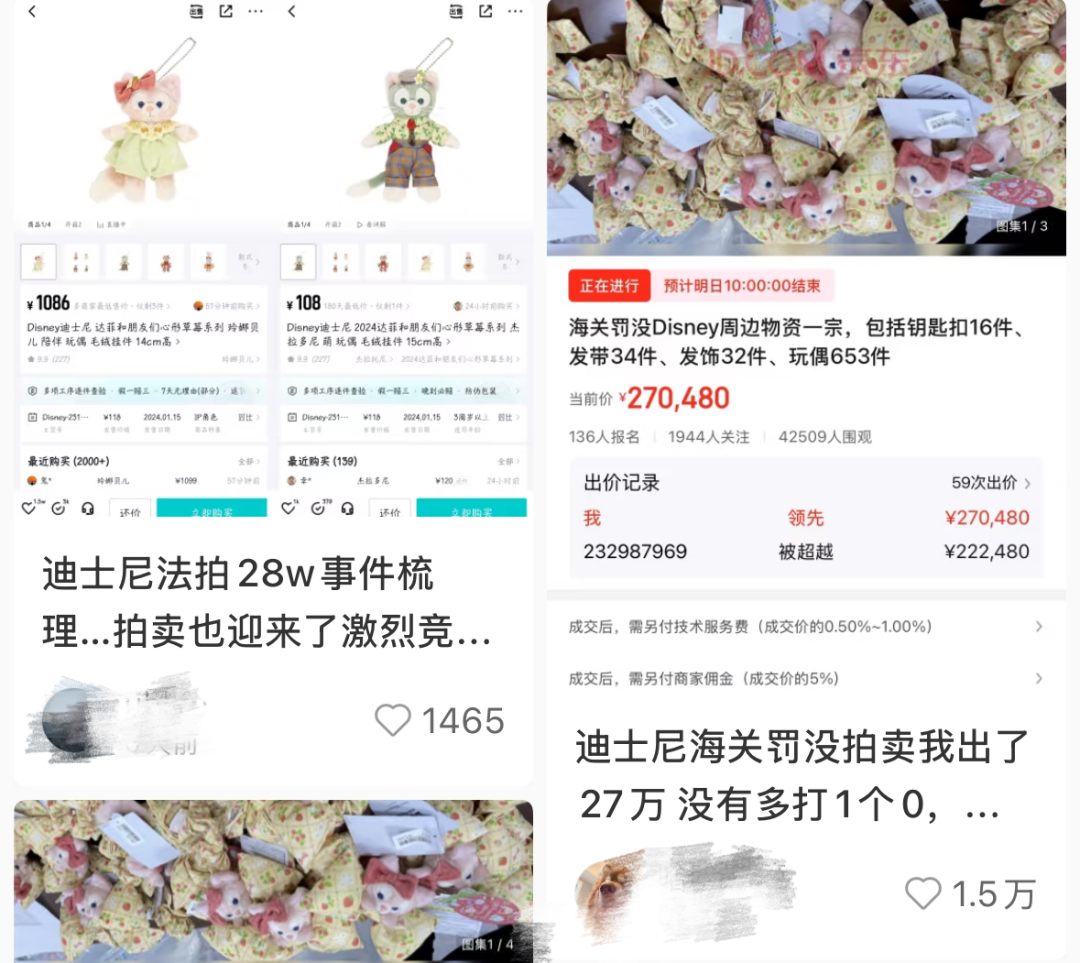
Group 1 - The article highlights the recent auction of 735 Disney merchandise items, including 653 plush toys, which attracted significant attention and resulted in a toy being sold for 280,480 yuan, a nearly ninefold increase from its starting price of 32,480 yuan [8][10][18] - The auction was characterized by intense bidding, with over 60,000 viewers and 139 participants, showcasing the growing interest in collectible items among younger consumers [5][18][21] - The auction featured a specific item known as "green Belle," which was misidentified, leading to confusion and inflated prices, demonstrating the speculative nature of the collectibles market [20][21][50] Group 2 - The article discusses the evolving role of customs in the collectibles market, indicating that customs authorities are increasingly involved in the auctioning of seized goods, which has become a new trend in the "guzi" (collectibles) economy [22][29][50] - It notes that the auction process is often opaque, with no guarantees regarding the authenticity of the items sold, raising concerns among buyers about potential counterfeit products [48][50] - The customs auctions have become a popular venue for middle-class consumers seeking to acquire luxury items at lower prices, reflecting a shift in consumer behavior towards seeking value in seized goods [33][36][39]