
采用脑机接口技术的医疗器械

Search documents
2项医疗器械行业标准制修订项目立项,脑机接口再迎政策利好
Changjiang Securities· 2026-01-31 11:05
Investment Rating - The industry investment rating is "Positive" and maintained [8] Core Insights - On January 28, the National Medical Products Administration approved two medical device industry standard revision projects related to brain-computer interface technology, which is expected to accelerate the commercialization of the brain-computer interface industry [5][12] - The rapid approval of these standards reflects the urgent need for establishing industry standards in the brain-computer interface sector, which is currently transitioning from technological research to clinical application and industrialization [12] - The brain-computer interface industry is experiencing significant technological breakthroughs, with a total of 2,041 related patents in China as of early 2026, of which over 90% are invention patents [12] Summary by Sections Event Description - The National Medical Products Administration has initiated two standard revision projects to support the high-quality development of medical devices utilizing brain-computer interface technology [5][12] Event Commentary - The approval of these standards is expected to provide a critical push for the development of brain-computer interfaces, facilitating their transition from laboratory research to clinical applications [12] - The industry is currently at a pivotal stage, with a growing number of patents and a need for standardized regulations to support its growth [12] - The government has recognized brain-computer interfaces as a key future industry, aiming to enhance their commercialization and integration into the healthcare system [12]
脑机接口标准化迎新突破 两项医疗器械标准立项赋能产业升级
2 1 Shi Ji Jing Ji Bao Dao· 2026-01-29 23:36
Core Viewpoint - The recent approval of two medical device industry standards by the National Medical Products Administration (NMPA) marks a significant step towards the high-quality development of brain-computer interface (BCI) technologies in the medical field, providing essential support for standardization and regulation [1][2][3] Standardization and Industry Development - The establishment of standards is crucial for the rapid development of the BCI industry, which currently faces challenges such as terminology confusion, fragmented technology layout, and lack of unified regulations [2][9] - As of early 2026, there are 2,041 BCI-related patents in China, with over 90% being invention patents, and a peak of 391 applications in 2024 [2][9] - The BCI market in China is projected to reach 3.2 billion yuan in 2024, growing by 18.8% year-on-year, and is expected to reach 5.58 billion yuan by 2027, with a growth rate of 20% [2][9] Regulatory and Policy Framework - The "14th Five-Year Plan" identifies BCI as one of the six key future industries, indicating its transition from a frontier technology to a new engine for national economic growth [11] - The NMPA has prioritized the approval of implantable BCI medical devices, expediting the market entry of innovative products [11][12] - The implementation of government pricing for BCI surgeries in 2025 signifies the integration of BCI technology into standardized medical services [11] Commercialization and Market Trends - The BCI industry is entering a critical year for commercialization, driven by policy support, technological advancements, and clinical breakthroughs [12] - Investment enthusiasm in the BCI sector remains high, with 18 financing events recorded from January 2025 to the present, and BCI-related stocks have seen significant price increases [5][12] - The first rechargeable, closed-loop BCI device was successfully implanted in a patient, showcasing the clinical application potential of BCI technology [5][12] Future Directions and Applications - The future development of BCI technology is expected to focus on active applications for neural modulation, multi-modal integration, and the enhancement of functions beyond mere restoration [6][13] - The vision outlined in the "Implementation Opinions" aims to cultivate 2 to 3 globally influential leading enterprises and a number of specialized small and medium-sized enterprises by 2030, forming a complete industrial ecosystem [13]
国家药监局:《采用脑机接口技术的医疗器械范式设计与应用规范运动功能重建》等2项医疗器械行业标准立项
Mei Ri Jing Ji Xin Wen· 2026-01-28 06:04
Core Viewpoint - The National Medical Products Administration (NMPA) has approved the establishment of two industry standards for medical devices utilizing brain-computer interface (BCI) technology to promote high-quality development in this sector [1] Group 1: Regulatory Developments - The NMPA has initiated the revision of two key standards: "Design and Application Specifications for Medical Devices Using Brain-Computer Interface Technology for Motor Function Rehabilitation" and "Reliability Verification Methods for Invasive Devices Using Brain-Computer Interface Technology" [1]
药监局发布行业标准立项公示,脑机接口或在医疗场景率先落地
Changjiang Securities· 2026-01-14 00:39
Investment Rating - The industry investment rating is "Positive" and maintained [7] Core Insights - On January 9, the National Medical Products Administration (NMPA) announced two recommended industry standards for medical devices utilizing brain-computer interface (BCI) technology, focusing on reliability verification methods for invasive devices and design/application specifications for motor function reconstruction [2][4] - The BCI industry is transitioning from "technical exploration" to "standard implementation," with the establishment of systematic terminology and definitions for BCI medical devices, which is expected to promote standardization and large-scale application [4] - Recent developments in pricing standards for BCI services across various provinces indicate a clearer path for reimbursement, which is anticipated to enhance clinical application of this new technology [4] - The report suggests that BCI technology may achieve commercial application in medical settings first, driven by supportive policies that address both supply and demand aspects [4] Summary by Sections Industry Standards - The NMPA has published two new standards for BCI medical devices, which include methods for verifying the reliability of key components and definitions for the motor function reconstruction paradigm [4] Market Dynamics - Multiple regions have established pricing for BCI medical services, with guidelines set to take effect from April 30, 2025, which is expected to facilitate the clinical use of BCI technology [4] Policy Support - The report emphasizes that government policies are actively promoting the adoption of BCI technology in medical applications, addressing critical issues such as affordability and institutional hesitance [4]
国家药监局:计划对两项脑机接口相关医疗器械行业标准立项
Xin Lang Cai Jing· 2026-01-12 04:32
Core Viewpoint - The National Medical Products Administration (NMPA) has announced the initiation of two recommended industry standards for medical devices utilizing brain-computer interface technology, focusing on reliability verification methods and design/application specifications for invasive devices [1] Group 1: Industry Standards - The two proposed standards are titled "Reliability Verification Methods for Invasive Medical Devices Using Brain-Computer Interface Technology" and "Design and Application Specifications for Movement Function Reconstruction Using Brain-Computer Interface Technology" [1] - These standards are categorized as recommended industry standards, indicating a push towards formalizing guidelines in this emerging field [1] Group 2: Public Feedback - The NMPA has opened a public feedback period for any objections regarding the proposed standards, encouraging stakeholders to communicate their concerns [1]
脑机接口,加快接入现实生活(瞰前沿)
Ren Min Wang· 2026-01-09 23:00
Core Insights - The first medical device standard for brain-computer interface (BCI) technology in China was implemented on January 1, marking a significant step in the integration of BCI technology into clinical practice and patient care [3][4][5]. Group 1: Standardization and Definition - The newly established standard defines "medical devices using brain-computer interface technology" as devices that decode neural signals from the central nervous system in real-time, facilitating bidirectional information exchange between patients and external devices [3][4]. - The standard aims to unify terminology across various disciplines involved in BCI technology, addressing inconsistencies that hinder industry development and providing a clear technical basis for regulatory oversight [5]. Group 2: Clinical Applications and Innovations - BCI medical devices are seen as a revolutionary advancement in healthcare, with potential applications including aiding patients with paralysis to regain motor functions and improving communication capabilities [6]. - Clinical trials at Beijing Tiantan Hospital have demonstrated the effectiveness of BCI technology in rehabilitation, with patients showing significant improvements in motor skills after receiving BCI implants [7][8]. Group 3: Future Prospects and Technological Development - The BCI sector is expected to grow significantly, with the potential to treat various neurological conditions such as epilepsy and Alzheimer's disease [6]. - Ongoing research and development efforts are focused on enhancing the performance of BCI systems, including reducing latency in signal processing to improve user experience and control accuracy [11].

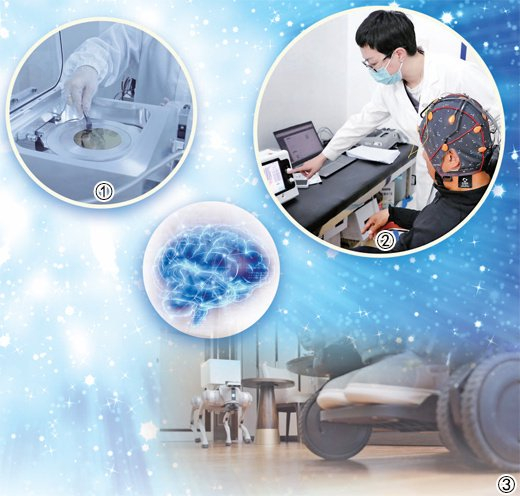
我国首个脑机接口医疗器械标准实施 脑机接口,加快接入现实生活(瞰前沿)
Ren Min Ri Bao· 2026-01-09 22:09
Core Viewpoint - The implementation of China's first medical device standard for brain-computer interface (BCI) technology marks a significant step towards integrating advanced technologies into healthcare, aiming to enhance patient rehabilitation and treatment options [1][2]. Group 1: Standard Definition and Significance - The newly established standard defines "medical devices using brain-computer interface technology" as devices that decode neural signals from the central nervous system to facilitate real-time interaction between patients and external devices, improving or replacing certain physiological functions [3]. - The standard aims to unify terminology across various disciplines involved in BCI technology, addressing inconsistencies that hinder industry development and providing a clear technical basis for regulatory oversight [4]. - Establishing this standard is expected to create a unified language system for the emerging BCI field, enhancing collaboration across disciplines, improving product development efficiency, and setting benchmarks for market competition [4]. Group 2: Potential and Future Directions - BCI medical devices represent a revolutionary advancement in healthcare, with the potential to restore bodily functions for patients with conditions like spinal cord injuries, enabling them to control robotic arms or communicate through thought [5]. - The National Medical Products Administration plans to promote innovation in BCI medical devices through regulatory measures and scientific research, facilitating the transition from concept to clinical application [5]. - Clinical trials at institutions like Beijing Tiantan Hospital demonstrate the practical applications of BCI technology, with patients undergoing rehabilitation training showing significant improvements in motor functions [7][8]. Group 3: Technological Advancements and Applications - Recent clinical trials have showcased the ability of high-level paraplegic patients to control electric wheelchairs and robotic dogs using implanted BCI devices, expanding the scope of traditional medical applications [9]. - The development of advanced neural data compression techniques and low-latency control systems is crucial for ensuring effective interaction between patients and external devices, enhancing the user experience [10][11]. - The integration of BCI technology with smart devices like robotic arms and electric wheelchairs is essential for improving the quality of life for patients, highlighting the importance of external device development in realizing the full potential of BCI systems [11].
我国首部脑机接口医疗器械标准明年1月1日正式实施,脑机接口产业明确路线图
Ge Long Hui· 2025-10-04 22:37
Core Viewpoint - The approval of the first industry standard for brain-computer interface (BCI) medical devices by the National Medical Products Administration marks a significant step in the development of the BCI industry in China, aiming for substantial growth and international competitiveness by 2030 [1] Industry Development - The new standard will be implemented on January 1, 2024, and is part of broader efforts to standardize and systematize the BCI industry in China [1] - The Ministry of Industry and Information Technology and six other departments have issued an implementation opinion that aims to enhance innovation capabilities and establish a reliable industrial system by 2030 [1] Market Potential - The BCI market in China is projected to reach 3.2 billion yuan in 2024 and is expected to grow to 6.14 billion yuan by 2028 [1] Strategic Support - The implementation opinion is seen as a critical step for China to transition from "catching up" to "keeping pace" and eventually "leading" in the BCI field, providing strategic support for addressing aging population issues and enhancing national security [1] Key Tasks and Measures - The opinion outlines six key tasks, including strengthening basic software and hardware development, creating high-performance products, promoting the application of technological achievements, and enhancing industrial support capabilities [1] - A total of 17 specific measures have been detailed to form a complete and systematic framework for advancing industry development [1] Ecosystem Enhancement - Experts believe that these initiatives will improve the BCI industry ecosystem, enhance international competitiveness, and promote applications across multiple fields, ultimately benefiting public welfare [1]
影响市场重大事件:工信部等八部门印发《有色金属行业稳增长工作方案(2025—2026年)》,要求科学合理布局氧化铝、铜冶炼、碳酸锂等项目,避免重复低水平建设
Mei Ri Jing Ji Xin Wen· 2025-09-28 22:35
Core Insights - The Ministry of Industry and Information Technology and eight other departments have issued a plan for the non-ferrous metals industry aimed at stabilizing growth from 2025 to 2026, targeting an average annual growth of around 5% in added value and a 1.5% increase in the production of ten non-ferrous metals [1][2][3][4][5]. Group 1: Industry Growth and Development - The plan anticipates an average annual growth of approximately 5% in the added value of the non-ferrous metals industry from 2025 to 2026 [1]. - Production of ten non-ferrous metals is expected to grow by about 1.5% annually, with significant progress in domestic resource development for copper, aluminum, and lithium [1][2]. - The production of recycled metals is projected to exceed 20 million tons, enhancing the supply capacity of high-end products [1][2]. Group 2: Financial and Policy Support - The plan includes utilizing long-term special government bonds and other funding channels to support resource development, high-end material research, energy conservation, and digital transformation [2]. - It emphasizes the importance of expanding important non-ferrous metal futures trading varieties and financial derivatives [2]. Group 3: Project Management and Infrastructure - The plan advocates for a scientific and reasonable layout of projects related to alumina, copper smelting, and lithium carbonate to avoid redundant low-level construction [3]. - It aims to accelerate the approval processes for mineral resource development projects through the establishment of green channels [3]. Group 4: Innovation and High-End Product Development - The initiative promotes innovation in high-end products, focusing on the needs of key industries such as new-generation information technology and new energy vehicles [4]. - It encourages breakthroughs in high-quality raw materials and advanced rare earth materials, enhancing the performance of aluminum and magnesium alloys [4][5]. Group 5: Application of Rare Metals - The plan aims to elevate the application levels of rare metals in emerging industries such as integrated circuits, industrial mother machines, and artificial intelligence [5]. - It promotes the validation of high-end products like high-purity gallium and tungsten hard alloys, as well as the innovative application of frontier materials [5].
脑机接口术语标准发布:行业规范化里程碑,开启产业化加速期
Shanxi Securities· 2025-09-24 03:39
Investment Rating - The report maintains an investment rating of "Leading the Market-A" for the biopharmaceutical industry, indicating an expected price increase exceeding the benchmark index by more than 10% [10]. Core Insights - The biopharmaceutical industry has shown significant market performance over the past year, with innovations in drug development, particularly in the area of cancer therapies such as PD-1 and ADCs [2]. - The release of the YY/T 1987-2025 standard for brain-computer interface (BCI) medical devices marks a critical step in the industrialization of BCI technology in China, addressing long-standing issues of concept ambiguity and standardization [3][4]. - The establishment of a unified terminology system is expected to enhance communication between research, clinical applications, and regulatory bodies, thereby improving the efficiency of technology transfer [3]. - The report highlights the ongoing policy evolution in the BCI sector, characterized by national strategic guidance, industry collaboration, and localized implementation efforts [4][6]. Summary by Sections Industry Performance - The biopharmaceutical sector has experienced notable advancements, particularly in innovative drug therapies for non-small cell lung cancer (NSCLC) and small cell lung cancer (SCLC) [2]. Policy Developments - The introduction of the BCI terminology standard is part of a broader policy framework aimed at fostering the development of the BCI industry, which has been recognized as a strategic priority since the launch of the China Brain Project in 2016 [3][4]. Technological Innovations - Recent breakthroughs in BCI technology, such as the "NeuroWorm" developed by the Shenzhen Institute of Advanced Technology, demonstrate China's leading position in implantable BCI solutions, with applications in treating neurological disorders [6]. Investment Recommendations - The report suggests focusing on companies involved in BCI technology, including Chengyitong, Xiangyu Medical, Aipeng Medical, Weisi Medical, Mcland, and Xinwei Medical, as potential investment opportunities [7].