量化大数据系统

Search documents
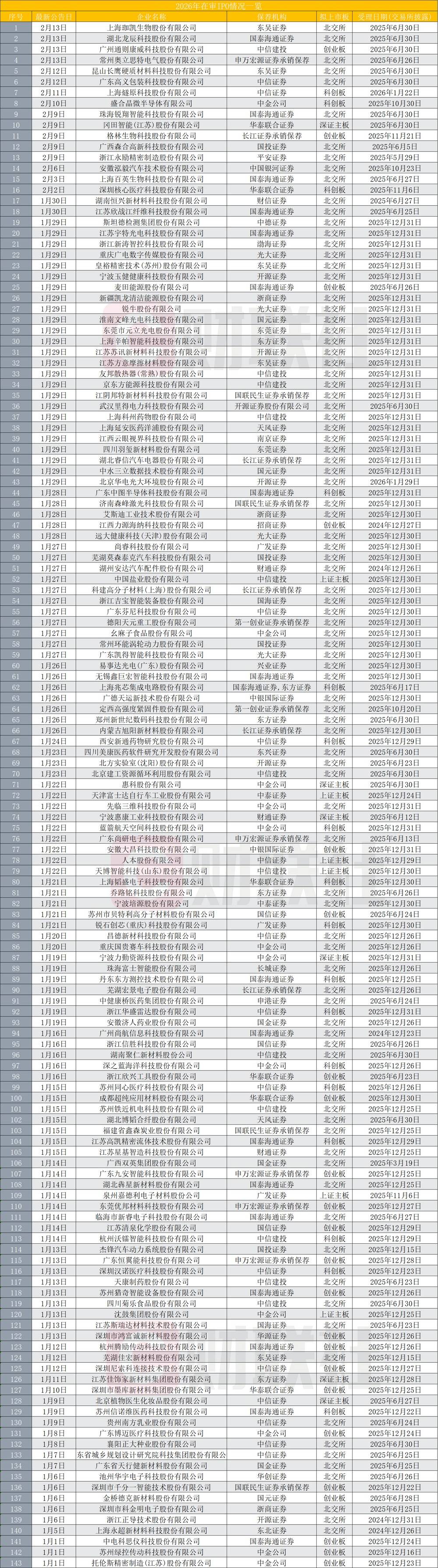
IPO提速,大A能接得住吗?
Sou Hu Cai Jing· 2026-02-24 12:42
Group 1 - The A-share IPO market is showing clear signs of recovery, with the number of projects under review increasing by over 146% compared to the same period last year, while the number of terminated reviews has decreased by over 85% [1] - New quality productivity-related sectors have become the core focus for the year, indicating a shift in investment strategies [1] - The maturity of quantitative big data technology allows for precise capture of the true intentions of funds, moving beyond mere speculation based on market trends [1] Group 2 - The article emphasizes the importance of recognizing the consensus among different types of funds, as this often leads to above-average performance of related stocks [1] - Quantitative tools can help identify signals of active trading behavior, such as "speculative capital rushing to buy," which indicates a consensus among funds [5][9] - The article illustrates that even before a stock shows significant price movement, quantitative data can reveal active trading behaviors, suggesting potential value [9][14] Group 3 - The article discusses the commonality of fund logic across different industries, asserting that similar trading traces are left when two types of funds reach consensus, regardless of industry attributes [12] - It highlights that the use of quantitative tools can provide clarity on trading behaviors, helping investors avoid being misled by short-term price fluctuations [7][16] - The current warming of the IPO market and focus on new quality productivity sectors present opportunities for investors to leverage quantitative tools for better decision-making [16]

老美政策风向突变,相关板块数据上必须盯牢
Sou Hu Cai Jing· 2026-02-17 04:52
Group 1 - The U.S. federal greenhouse gas regulatory system is undergoing a significant overhaul, with the Trump administration set to overturn the "endangerment finding" established during the Obama era, which could destabilize regulatory frameworks for industries worth trillions of dollars, including vehicles and engines [1] - The fossil fuel industry, while seemingly poised to benefit, is adopting a cautious stance as regulatory uncertainty may lead companies to delay investments or shift towards regions with more stable regulatory frameworks that align with international standards [1] - Market fluctuations are often exaggerated by surface-level news, but the true determinants of trend direction are the real trading behaviors driven by capital in response to information changes, highlighting the core value of quantitative big data [1] Group 2 - Investors typically rely on policies and performance indicators to gauge trends, but these are merely superficial; the actual driving force behind trends is the intent behind trading behaviors [3] - A quantitative big data system can transform intangible trading behaviors into visual indicators, such as the "dominant momentum" represented by colored bars indicating various trading actions, and "institutional inventory" reflecting the activity level of institutional funds [3][6] - When blue "buyback" actions coincide with active orange "institutional inventory," it indicates planned trading adjustments by institutional funds; however, if only blue "buyback" is present without "institutional inventory," it suggests passive retail investor behavior [6] Group 3 - In a bull market, rapid price increases followed by adjustments and subsequent rebounds are common, but quantitative data can clarify the essence of these movements through behavioral characteristics [10] - Stocks that exhibit similar rebound patterns may have different underlying trading logic; for instance, one stock may show institutional-led adjustments while another may be driven by retail investors, leading to divergent future trends [10][12] - High-level fluctuations are often misjudged by investors; quantitative data can penetrate the surface similarities of rebound trends to identify true behavioral characteristics [12] Group 4 - Market fluctuations are not random; each trend reversal is backed by a continuous evolution of trading behaviors [12] - Quantitative big data acts as a "behavioral observatory," converting intangible capital intentions into trackable quantitative indicators, allowing investors to avoid subjective biases [12] - In the face of policy changes and market volatility, focusing on changes in behavioral characteristics through data can establish an objective and stable judgment framework, which is a core advantage of quantitative trading [12]

美联储迎来灵魂拷问,数据拆解涨跌逻辑
Sou Hu Cai Jing· 2026-02-13 09:05
Group 1 - The article discusses the emotional traps investors face when reacting to news, particularly regarding the Federal Reserve's nominations and the subsequent market reactions [1][3] - It highlights the tendency of investors to make impulsive decisions based on market fluctuations driven by news and emotions, often leading to buying high and selling low [1][3] - The piece emphasizes the importance of quantitative data in understanding market behavior, suggesting that it can help investors see beyond surface-level price movements to the underlying trading actions [5][9] Group 2 - Quantitative data can reveal the true nature of market movements, distinguishing between genuine market reactions and those artificially created to disrupt investor behavior [5][7] - The article illustrates how different stocks can appear to be reacting similarly to market events, but their underlying trading dynamics can be vastly different, affecting future performance [7][9] - It advocates for a shift from emotion-driven investment decisions to a data-driven approach, which can provide clearer insights into market trends and participant behaviors [11][12]

IPO行情升温,用数据看穿资金共识
Sou Hu Cai Jing· 2026-01-17 08:12
Group 1 - The industry is experiencing increasing optimism, with many institutions expanding their investment banking operations. Leading brokerages are leveraging resource advantages to capture market share across all sectors, while smaller firms are focusing on regional or niche areas for breakthroughs. New productive forces have become a central focus for various stakeholders [1][3] - The market concentration of leading brokerages is on the rise, with approximately 70% of market share held by top institutions. The growth in M&A activities indicates that capital is gathering in areas of consensus. However, ordinary investors find it challenging to access core industry data and integrate it with daily market observations [3][4] Group 2 - A quantitative big data system can reveal clear signals of capital consensus. The "Capital Panorama" data visually presents the activity levels of institutional and retail investors, indicating when both types of capital are focused on the same asset, signaling a clear consensus [4][6] - Observing repeated signals of capital activity can help identify assets that are gaining attention from multiple funding sources, even before significant price movements occur. This approach allows for long-term monitoring of potential investment opportunities [6][10] Group 3 - By filtering out price fluctuations and focusing solely on trading behavior data, it is possible to concentrate on the actions of capital without being influenced by short-term price changes. This method helps avoid the pitfalls of "chasing highs and cutting losses" [7][9] - The frequency of consensus signals is indicative of stronger capital agreement, especially when prices have not yet surged. Early detection of these signals can prepare investors for upcoming market movements [10][12] Group 4 - The core value of quantitative big data lies in its ability to eliminate subjective judgment and restore the market's true state through objective data. This leads to a clearer and more stable observation logic, which is essential for sustainable investment strategies [16]

IPO终止引关注,量化数据析关键
Sou Hu Cai Jing· 2026-01-16 23:13
Core Viewpoint - A company that was initially aiming for the Sci-Tech Innovation Board has withdrawn its IPO application, with the Shanghai Stock Exchange announcing the termination of the review process. The company faces issues such as high reliance on a single client, elevated accounts receivable, cash flow volatility, and pressure from buyback clauses on its actual controller. The true determinants of the company's direction are the actual trading behaviors of institutional investors, rather than the potentially misleading news and performance data [1]. Group 1: Market Reactions and Institutional Behavior - Many investors often make decisions based on performance data or perceived stability, only to face unexpected adjustments or volatility. This highlights the importance of understanding underlying institutional trading behaviors to avoid unnecessary losses [4]. - The "institutional inventory" data, which reflects the trading activity of institutional investors, is crucial for understanding market dynamics. Active participation from institutional funds indicates stronger support for a stock's price movement [4][9]. Group 2: Trading Patterns and Signals - During periods of consolidation, the lack of active institutional participation can lead to price declines, confirming the adage "long consolidation leads to a drop." The absence of sustained funding support during horizontal trading phases can result in subsequent adjustments [9]. - In contrast, stocks that maintain active institutional participation during consolidation are more likely to experience upward momentum, demonstrating the critical role of funding behavior in determining price direction [12]. Group 3: Misleading Market Signals - Stocks that appear to break down may not always indicate a genuine trend reversal. The "institutional inventory" data can reveal ongoing institutional interest, suggesting that such breakdowns may be superficial and not indicative of a fundamental shift [15][17]. - The reliance on quantitative data helps investors see beyond surface-level information, allowing for more informed decision-making based on actual market behaviors rather than speculative interpretations of news and performance metrics [17].