金秀矿

Search documents
比稀土还珍贵?广西发现“特富”新矿物,含镍量超常规80倍!
Sou Hu Cai Jing· 2026-01-24 13:22
Core Insights - The discovery of a new mineral named "Jinxiuite" in Guangxi, China, reveals a nickel content 80 times higher than conventional industrial standards, highlighting a significant potential resource for China's strategic needs [1][36][44]. Group 1: Discovery and Research Process - In 2021, a team from the China Geological Survey collected 400 kilograms of rock from the Longhua mining area to investigate its rich nickel and cobalt content [3][36]. - The research involved meticulous processes, including slicing the rock into 0.03 mm thin films and using advanced techniques to isolate a tiny particle that exhibited unique spectral properties [5][7][17]. - The mineral's structure was confirmed through rigorous international voting, leading to its official recognition [12][13]. Group 2: Significance of Jinxiuite - Jinxiuite is not just a new mineral; it represents a breakthrough in mineral exploration techniques, moving from traditional methods to advanced imaging and analysis [16][19]. - The mineral's unique atomic arrangement offers a "perfect formula" for material scientists, potentially aiding in the development of new materials for high-tech applications [25][30]. - The discovery indicates that there are untapped resources in South China, challenging previous geological assumptions about mineral deposits [36][49]. Group 3: Strategic Implications - China currently relies heavily on imports for nickel, with a dependency rate of 92.5%, primarily from the Philippines, which poses strategic risks [43][44]. - The discovery of Jinxiuite provides a crucial signal that China has valuable nickel resources, potentially reducing reliance on foreign supplies [48][50]. - The presence of cobalt alongside nickel in the Longhua deposit, with cobalt content 75 times higher than conventional levels, further enhances the strategic value of this find [52][54]. Group 4: Future Directions - The research team advocates for the establishment of a "mineral marker model" to guide future exploration efforts, indicating that similar deposits may exist beneath the surface [49][50]. - The ongoing efforts in mineral discovery reflect China's commitment to securing its resource base and enhancing its position in the global resource landscape [56][61].

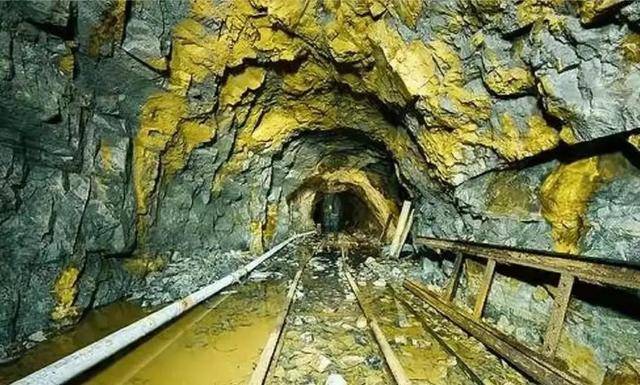
从400公斤矿石中“大海捞针” 中国新矿物家族再添金秀矿
Xin Lang Cai Jing· 2025-12-25 18:25
Core Viewpoint - A new mineral named "Jinxiuite" has been discovered by a research team from the Chinese Academy of Geological Sciences in Guangxi, representing a significant advancement in mineralogy and potential applications in material science [7][9]. Group 1: Discovery Process - The research team collected over 400 kilograms of ore samples from the Longhua mining area in Guangxi to investigate the unusual enrichment of nickel and cobalt [7]. - The samples underwent a meticulous process involving grinding into ultra-thin samples and scanning with an electron microscope, followed by micro-level extraction and analysis to confirm the mineral's unique characteristics [8]. Group 2: Naming and Significance - The name "Jinxiuite" is derived from its discovery location, Jinxiu Yao Autonomous County, symbolizing the area's natural beauty and ecological significance [9]. - The mineral's discovery is likened to finding an unrecorded star in the universe, highlighting its scientific value beyond mere exhibition [9]. Group 3: Unique Characteristics - Jinxiuite's chemical formula belongs to the tetragonal crystal system, with a unique combination of nickel, bismuth, antimony, arsenic, and sulfur that differs fundamentally from known minerals [9]. - The mineral's layered structure may inspire the design of new functional materials, particularly in thermoelectric conversion applications [10]. Group 4: Implications for Industry - The Longhua deposit has a nickel and cobalt content nearly 80 times higher than conventional industrial standards, indicating its rarity and potential for the renewable energy sector [10]. - The discovery underscores the growing demand for nickel and cobalt in the new energy vehicle battery industry, as well as the associated elements bismuth and antimony for semiconductor and high-end manufacturing [10]. Group 5: Future Research Directions - The Chinese Academy of Geological Sciences plans to conduct further research on Jinxiuite, including tracing its genesis and evaluating its economic viability for resource recovery [11]. - The establishment of Jinxiuite as a marker mineral could aid in future geological explorations for nickel and cobalt deposits across the country [11].
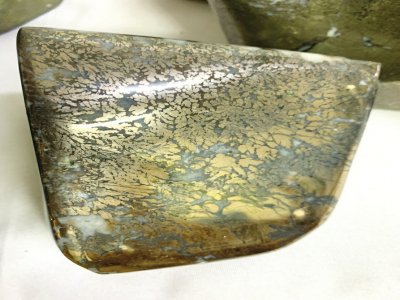
我国发现的新矿物正式命名为金秀矿
Yang Shi Xin Wen Ke Hu Duan· 2025-12-19 01:09
Core Viewpoint - The discovery of a new mineral named Jinxiuite, composed of nickel, bismuth, antimony, arsenic, and sulfur, has been officially approved, highlighting China's advanced geological survey capabilities and its significance in resource exploration [1][3]. Group 1: Mineral Discovery - Jinxiuite was discovered in the Longhua nickel-cobalt deposit in Jinxiu Yao Autonomous County, Guangxi, which has a nickel content of approximately 17.5% and cobalt content of about 1.5%, significantly higher than conventional standards [1]. - The discovery of Jinxiuite represents a milestone in scientific breakthroughs, expanding human understanding of material properties and potentially leading to the synthesis of new materials with unique characteristics [3]. Group 2: Economic Implications - The Jinxiuite mineral contains valuable metals such as nickel and cobalt, which are crucial for resource utilization and economic benefits, especially given China's reliance on imports for cobalt [2]. - Establishing theoretical models for Jinxiuite as a marker mineral could enhance future geological exploration, indicating the potential presence of economically valuable nickel-cobalt mineralization [2]. Group 3: Research and Approval Process - The process of discovering and obtaining approval for a new mineral involves extensive sampling, data analysis, and comparison with existing minerals, culminating in a proposal submitted to the International Mineralogical Association [4][5]. - The approval process includes initial reviews and multiple rounds of voting before a new mineral is officially recognized and named, as seen with Jinxiuite, which was named after its location in Guangxi [5].
能源早新闻丨工信部:将对光伏行业进一步加强产能调控
中国能源报· 2025-12-18 22:33
Industry News - The Ministry of Industry and Information Technology (MIIT) will strengthen capacity regulation in the photovoltaic industry, aiming for a dynamic balance of production capacity by promoting the orderly exit of outdated capacity through market-oriented and legal means [2] - The MIIT and the Ministry of Ecology and Environment have released the "Major Environmental Protection Technology and Equipment Catalog (2025 Edition)" to accelerate the research and application of advanced environmental protection technologies, covering key areas such as air and water pollution prevention, solid waste treatment, and soil pollution remediation [2] - The State Grid announced the completion and operation of the Jinshang-Hubei ±800 kV UHVDC transmission project, which is significant for promoting the cross-regional optimization of clean energy and enhancing national energy security [3] - Shanxi Province has built a total of 369 intelligent coal mines, accounting for over one-third of the national total, indicating a significant advancement in mining technology [3] - A new mineral named "Jinxiu" has been officially recognized, showcasing advancements in mineral discovery and classification by Chinese geological researchers [3] - A giant underwater gold mine has been discovered in Yantai, Shandong, with proven gold reserves of over 3900 tons, representing 26% of the national total, highlighting the region's mining potential [3] International News - Israel has approved a natural gas export agreement to Egypt, valued at 112 billion new shekels, marking the largest gas export deal in Israel's history [4] - The European Parliament has approved a plan to gradually stop importing Russian natural gas by the end of 2027, reflecting a significant shift in energy policy within the EU [4] - The International Energy Agency (IEA) forecasts a slight decline in global coal demand by 2030 due to increased competition from renewable energy, natural gas, and nuclear energy [5] Corporate News - A Chinese company has successfully commenced commercial operations of a 100 MW photovoltaic project in Tunisia, which is the largest solar power project in the country, aimed at diversifying the energy structure and reducing fossil fuel consumption [6]

我国发现并申请的新矿物获批,中文名定为“金秀矿”
Huan Qiu Wang Zi Xun· 2025-12-18 04:54
Core Viewpoint - The discovery of a new mineral named Jinxiuite (金秀矿) by the China Geological Survey team highlights the significance of the Longhua nickel-cobalt deposit in Guangxi, which is characterized by high-grade hydrothermal nickel-cobalt mineralization and is crucial for China's resource strategy in nickel and cobalt [1][3][4] Group 1: Mineral Discovery - The new mineral Jinxiuite has been officially approved with the international designation IMA2025-059, and its chemical formula is Ni₁₈Bi₂SbAsS₁₆ [3] - Jinxiuite is the second new mineral discovered in the Longhua nickel-cobalt deposit, following the discovery of Guixiangite (贵祥矿) [3] Group 2: Geological Significance - The Longhua nickel-cobalt deposit is characterized by high-grade vein-type mineralization, primarily composed of nickel-cobalt arsenic sulfides, indicating a complex formation process involving multiple phases of magmatic hydrothermal activity [3][4] - The discovery of Jinxiuite and Guixiangite suggests that the mineral composition is influenced by early mineralization processes, with later stages introducing more cobalt-bearing minerals and increasing concentrations of bismuth and antimony [3] Group 3: Industry Implications - Nickel and cobalt are critical minerals for China, with applications in aerospace, chemical, mechanical manufacturing, and home appliances, particularly as key components in lithium-ion batteries [4] - The discovery of new mineral resources is significant for addressing China's reliance on imported cobalt, which has been a long-standing issue due to the scarcity of domestic resources [4]
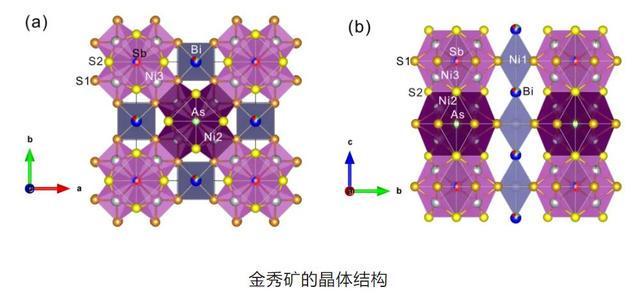
我国发现新矿物,正式命名
中国能源报· 2025-12-18 03:49
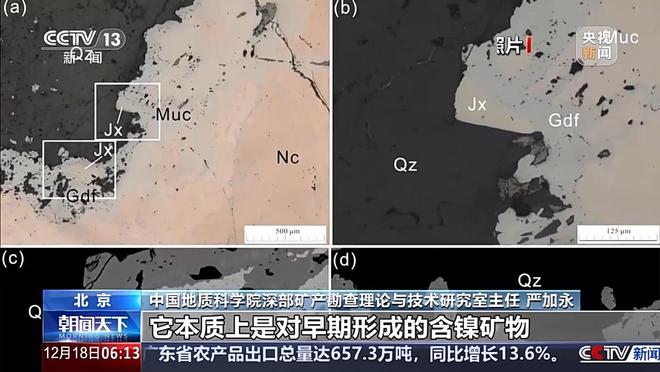
Core Viewpoint - The discovery of a new mineral named Jinxiuite in China represents a significant scientific breakthrough, enhancing the understanding of mineral resources and potentially leading to new material applications [1][8]. Group 1: Discovery and Characteristics - Jinxiuite, a nickel-bismuth-antimony-arsenic sulfide, was officially approved by the International Mineralogical Association and discovered in the Longhua nickel-cobalt deposit in Guangxi, China [1][3]. - The Longhua deposit is rich in nickel and cobalt, with concentrations of approximately 17.5% nickel and 1.5% cobalt, significantly higher than conventional standards [1]. - The mineral's formation involved the replacement of earlier nickel-containing minerals, resulting in a new stable crystal structure [3]. Group 2: Economic and Research Implications - The discovery of Jinxiuite is crucial as nickel-cobalt deposits are scarce, particularly cobalt, which has been heavily reliant on imports [5]. - The presence of valuable metals like nickel and cobalt in Jinxiuite necessitates further research on their extraction, impacting the economic viability of resource utilization [7]. - Establishing theoretical models for Jinxiuite as a marker mineral could aid in identifying economically valuable nickel-cobalt mineralization in future geological explorations [7]. Group 3: Scientific Significance - The discovery of new minerals like Jinxiuite expands human understanding of the material world and may lead to the synthesis of new materials with unique properties [8][10]. - Jinxiuite serves as a "time capsule" for geological history, revealing the evolution of elements under extreme geological conditions [12][14]. - The mineral acts as a natural sensor for deep Earth processes, providing valuable data for understanding the Earth's past, present, and future [14]. Group 4: Discovery Process - The process of discovering and approving a new mineral involves extensive sampling and data analysis from known deposits [15]. - Key methods for confirming a new mineral include electronic probe analysis and X-ray diffraction to determine elemental composition and atomic arrangement [19][20]. - The naming of new minerals can be based on their structure or geographical location, as seen with Jinxiuite, named after its discovery site in Guangxi [21].
新矿物背后的奥秘
Zhong Guo Zi Ran Zi Yuan Bao· 2025-12-18 03:02
Core Viewpoint - The discovery of two new minerals, Gui Xiang Nickel-Bismuth Ore and Jin Xiu Ore, by the Chinese Academy of Geological Sciences marks a significant advancement in mineralogy and reflects China's growing influence in this field [5][12][22]. Group 1: New Mineral Discoveries - The new minerals were officially recognized by the International Mineralogical Association (IMA) after a thorough review process [12][25]. - As of 2025, China has discovered over 200 new minerals, positioning the country as a global leader in this area [9][26]. - The discoveries of Gui Xiang Nickel-Bismuth Ore and Jin Xiu Ore are part of a broader strategic initiative to enhance mineral exploration in China [10][22]. Group 2: Importance of Nickel-Cobalt Resources - Nickel and cobalt are critical minerals for various industries, including aerospace, chemical, and mechanical manufacturing, and are essential components in lithium batteries [11][27]. - The Longhua Nickel-Cobalt deposit, where the new minerals were found, has an average nickel grade of 7.48% and cobalt grade of 0.64%, indicating a medium-sized resource [11][27]. - China's reliance on imported cobalt highlights the strategic importance of domestic nickel-cobalt resources [11][27]. Group 3: Research and Technological Advances - The discoveries were facilitated by advancements in research techniques and persistent efforts from the geological team [13][19]. - New technologies, such as electron probes and transmission electron microscopy, have enabled the identification of smaller and previously undetectable minerals [19][21]. - The research team emphasizes that the identification of new minerals contributes to a deeper understanding of mineral formation processes and geological events [21][22].
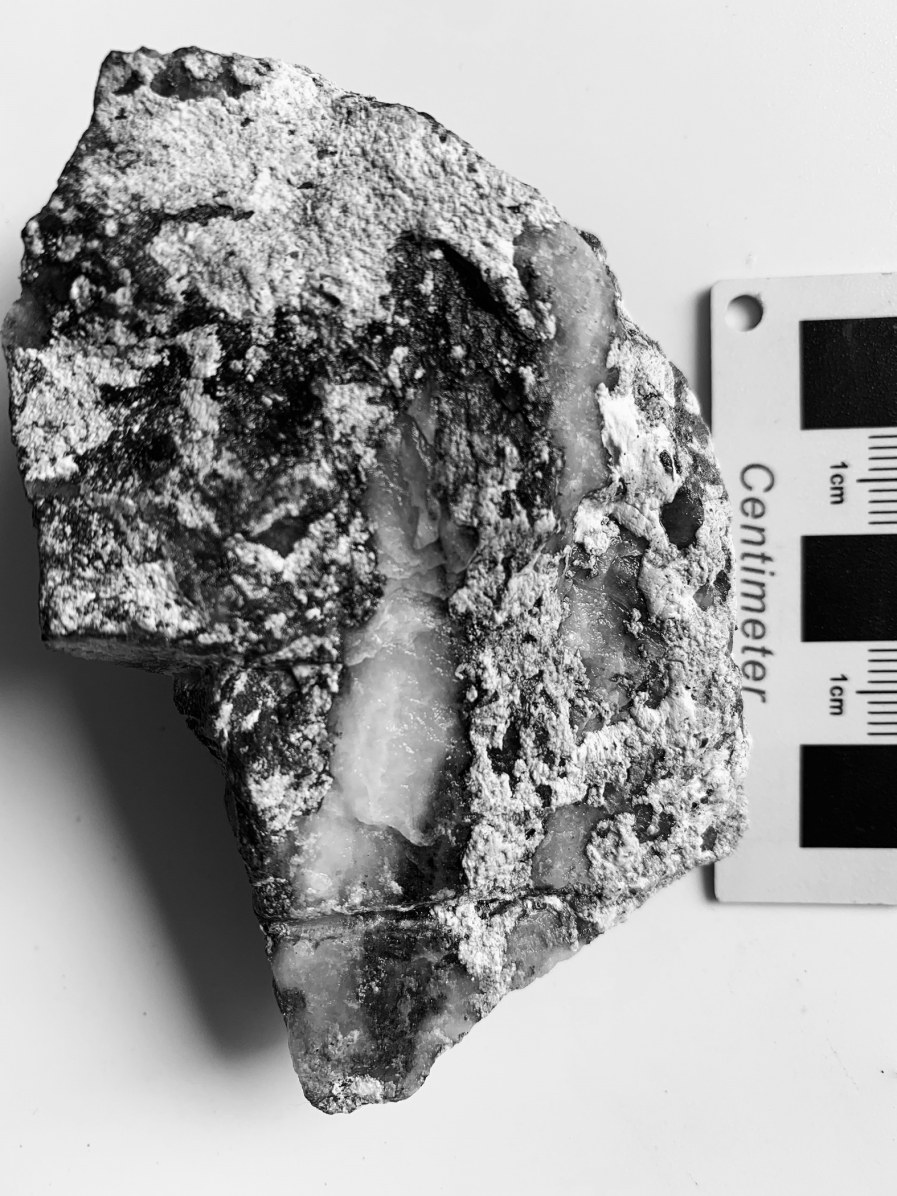
我国发现新矿物!正式命名为金秀矿
Yang Shi Xin Wen· 2025-12-18 00:42
Core Viewpoint - A new mineral named "Jinxiuite" has been officially approved by the International Mineralogical Association, discovered by researchers from the China Geological Survey in the Longhua nickel-cobalt deposit in Guangxi, China [1] Group 1: Mineral Discovery - The new mineral, Jinxiuite, is a nickel-bismuth-antimony sulfide [1] - Jinxiuite was discovered in the Longhua nickel-cobalt deposit, which is rich in nickel and cobalt [1] Group 2: Mineral Composition - The nickel content in the Longhua deposit is approximately 17.5%, while cobalt content is around 1.5% [1] - These concentrations are nearly 80 times higher than the conventional mineralization standards of 0.2% for nickel and 0.02% for cobalt [1]
地球矿物家族添新成员!我国发现的新矿物正式命名为金秀矿
Huan Qiu Wang Zi Xun· 2025-12-17 23:49
Core Viewpoint - The discovery of a new mineral named "Jinxiuite" (金秀矿) by researchers from the Chinese Academy of Geological Sciences represents a significant advancement in geological research and adds a new member to the mineral family, with implications for material science and resource extraction [1][8][10]. Group 1: Mineral Discovery - The new mineral Jinxiuite, composed of nickel, bismuth, antimony, arsenic, and sulfur, was discovered in the Longhua nickel-cobalt deposit in Jinxiu Yao Autonomous County, Guangxi, China [1][3]. - The Longhua nickel-cobalt deposit is rich in nickel and cobalt, with concentrations of approximately 17.5% nickel and 1.5% cobalt, significantly higher than conventional standards [1][5]. Group 2: Implications for Resource Utilization - The discovery of Jinxiuite is crucial for understanding the genesis of hydrothermal nickel-cobalt deposits and may guide future exploration efforts [5]. - The mineral contains valuable metals such as nickel, cobalt, and bismuth, prompting further research into the extraction feasibility and economic benefits of these resources [7]. Group 3: Scientific Significance - The identification of new minerals enhances the understanding of Earth's geological history and can reveal the evolution of elements under extreme geological conditions [10][12]. - Jinxiuite serves as a natural sensor for probing deep Earth processes, providing valuable data for understanding the planet's past, present, and future [12]. Group 4: Discovery Process - The process of discovering and obtaining approval for a new mineral involves extensive sampling, data analysis, and comparison with previously identified minerals, culminating in a proposal submitted to the International Mineralogical Association [18][20]. - The naming of the mineral, in this case, Jinxiuite, is based on its geographic origin, reflecting the location of its discovery [20].
我国发现新矿物金秀矿
第一财经· 2025-12-17 12:07
Core Viewpoint - A new mineral named "Jinxiu" has been officially approved, discovered by researchers from the China Geological Survey, highlighting advancements in mineral exploration in China [1]. Group 1: Discovery and Characteristics - The Jinxiu mineral was found in the Longhua nickel-cobalt deposit located in Jinxiu Yao Autonomous County, Guangxi Zhuang Autonomous Region [3]. - The Longhua nickel-cobalt deposit is rich in nickel and cobalt, with nickel and cobalt content at approximately 17.5% and 1.5% respectively, which is nearly 80 times higher than conventional mineral standards of 0.2% for nickel and 0.02% for cobalt [3].