铃驹生态

Search documents
上汽大通品牌全面焕新:全面转向新能源、构建用户创富生态
2 1 Shi Ji Jing Ji Bao Dao· 2025-12-02 13:56
Core Insights - SAIC Maxus has launched a new branding initiative, "Zhonghui Logo," and is fully committed to the new energy vehicle (NEV) market, with NEV sales accounting for 41% of its total commercial vehicle sales, the highest among traditional commercial vehicle brands [1] - The company has introduced the "Lingju Ecosystem," a closed-loop platform for vehicle leasing, cargo matching, vehicle management, and fleet management, aiming to empower users with zero commission [2] - SAIC Maxus is focusing on global expansion, with products sold in over 100 countries and regions, and aims to enhance the quality of Chinese NEV exports [3] Group 1 - The new energy vehicle sales proportion of SAIC Maxus has reached 41%, driven by the successful launch of the "Dana" series, with over 3,000 orders for the Dana V1L within a month [1] - The company plans to develop its product line based on the "Hongtu Super Commercial Electric Architecture" and the "Xingzhan Platform," which will support various powertrain configurations [1] - SAIC Maxus is transitioning its strategic focus towards "user value," introducing the "8S Super User Experience Center" to enhance service offerings beyond traditional models [1] Group 2 - The "Lingju Ecosystem" allows cargo owners to publish their shipping needs without any commission fees, promoting a low-barrier entrepreneurial environment [2] - The company is set to launch autonomous vehicles, including the Dana RoboVAN and RoboBUS, with plans for commercial deployment in specific scenarios starting next year [2] - SAIC Maxus has established a strong presence in the European NEV light commercial vehicle market, with significant orders from partners like DHL, totaling 800 electric vehicle orders [3] Group 3 - The transformation of SAIC Maxus represents a shift from merely providing transportation tools to creating a "wealth creation ecosystem," redefining the brand's relationship with users in the context of new energy and smart technology [3]

押注无人客货与商用赛道,大通想告别“传统汽车制造商”的标签
Tai Mei Ti A P P· 2025-11-26 08:33
Core Insights - The automotive industry is undergoing significant transformation, with traditional manufacturers adapting to survive in a changing market [2][3] - SAIC Group has announced a new commercial vehicle strategy centered around the Maxus brand, aiming to enhance decision-making efficiency and strengthen its competitive position in the light commercial vehicle sector [2][4] Group 1: Brand and Market Strategy - Maxus is rebranding to emphasize its leadership in the new energy commercial vehicle sector, launching a new logo and showcasing innovative products at the Guangzhou Auto Show [2][4] - The company aims to transition fully to new energy vehicles, with a focus on developing a next-generation energy platform and various powertrain options [4][5] - Maxus has achieved a 41% sales share of new energy vehicles among traditional commercial vehicle brands, with retail sales reaching 205,641 units from January to October 2025, marking an 8.8% year-on-year increase [4][5] Group 2: Marketing and Ecosystem Development - The company is shifting from a traditional automotive manufacturer to a user-centric enterprise through initiatives like the "Starry Sky Plan" and "Lingju Ecosystem," which aim to support users in wealth creation [5][6] - The "Lingju Ecosystem" offers comprehensive services for logistics users, enhancing vehicle operational efficiency by 25% and reducing overall costs by 18% [5][6] - Maxus is implementing a 1+N network model to expand its dealership presence, having opened 80 new stores this year to penetrate lower-tier markets [5][6] Group 3: Technological Advancements - Maxus has made significant strides in autonomous driving, unveiling the RoboVAN and RoboBUS, which are the first commercially developed autonomous vehicles by a major manufacturer [6][7] - These vehicles feature innovative technologies, including a unique algorithm for operational efficiency and a robust L4 chassis design ensuring safety and reliability [7][8] - The RoboBUS is expected to be commercially launched by the end of next year, initially operating in specific environments such as scenic areas [7][8]

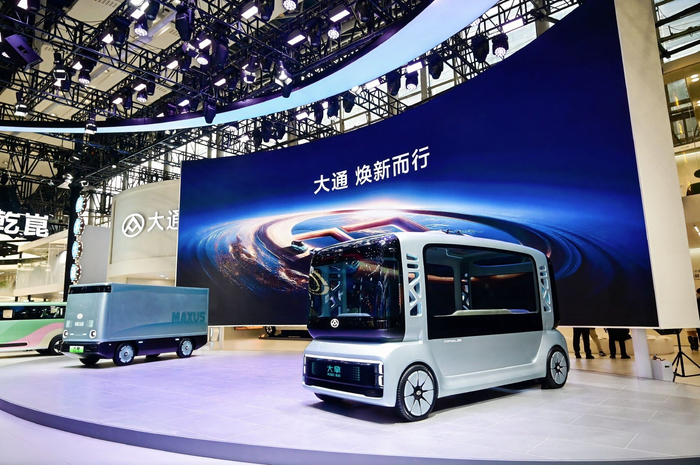
上汽大通不再局限于汽车制造商角色
Jing Ji Guan Cha Wang· 2025-11-24 02:10
Core Insights - This year marks a transformative phase for SAIC Maxus, focusing on accelerating its transition to new energy and expanding beyond traditional automotive manufacturing into various sectors [2] Group 1: Brand and Market Strategy - SAIC Maxus is entering the "user value era," implementing initiatives like the "Star Plan" to assist new farmers in selling products globally through e-commerce live streaming [2] - The company unveiled a new brand identity, "Zhonghui Logo," symbolizing its global strategic layout and commitment to user-centric values [2] - The new brand mission emphasizes creating a user-oriented enterprise through advanced technology and a complete ecological chain, paving the way for every hardworking individual [2] Group 2: Product and Service Innovations - At the recent auto show, SAIC Maxus launched the RoboVAN and RoboBUS, showcasing its advanced technology in autonomous vehicles [3] - The company plans to introduce the "8S Super User Experience Center" in January, enhancing traditional service offerings with new media, official modifications, and user co-creation modules [3] - The "Lingju Ecology" platform allows users to rent vehicles at lower costs, facilitating entrepreneurial opportunities and helping them accumulate initial wealth [3][4] Group 3: Market Positioning and User Empowerment - In the commercial vehicle market, the focus is on the "wealth creation capability" of vehicles, including cargo capacity and economic efficiency [5] - SAIC Maxus adopts the philosophy that "the user's business is Maxus's business," aiming to empower users by providing not just vehicles but also support in selling goods and sourcing [5] - The company acknowledges the challenges in fully realizing this empowerment strategy and recognizes the need for continuous improvement [5]
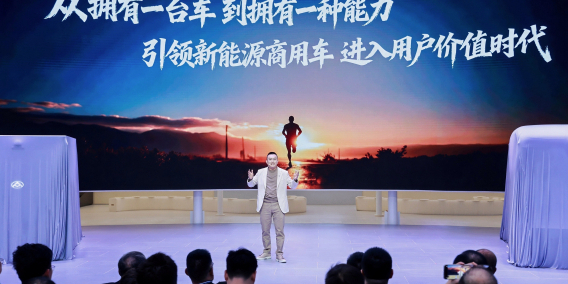
9.58万起!上汽大通纯电大VAN新品上市 或冲击市场格局
第一商用车网· 2025-10-18 13:34
Core Viewpoint - The launch of MAXUS DANA M1 and DANA V1L marks a significant shift in the electric VAN market, aiming to meet diverse operational needs in passenger transport, logistics, and customized modifications [1][5][22]. Product Launch and Pricing - The DANA M1, equipped with a CATL 83 kWh battery, starts at 197,800 yuan, while the DANA V1L with the same battery starts at 170,800 yuan. A variant with a 50 kWh battery is priced at 124,800 yuan, with a limited-time offer starting at 95,800 yuan [1]. Technological Advancements - The new vehicles are supported by the Hongtu Super Commercial Electric Architecture 2.0, which enhances power, space, and intelligence, transitioning electric commercial vehicles from mere tools to comprehensive wealth-creating partners [3][5][12]. Market Positioning - As the leading brand in the light commercial vehicle sector, MAXUS leverages its past success in fuel vehicles to address the challenges of the electric VAN market through a combination of technology, product matrix, and ecosystem services [5][22]. User-Centric Design - The DANA M1 offers configurations for 7 and 9 passengers, with features addressing common industry pain points such as space constraints and high operational costs. It includes a spacious passenger area and optimized energy consumption for cold weather [8][10]. Logistics Optimization - The DANA V1L is designed for logistics, featuring a high cargo space utilization rate of 70% and a maximum volume of 8.9 cubic meters. It also boasts a low loading height and high operational efficiency, with a range of 535 kilometers [10][12]. Ecosystem Development - The launch of the Lingju Ecosystem aims to create a one-stop wealth creation platform, addressing user pain points in vehicle selection, management, and freight sourcing, with features like zero-deposit rentals and real-time vehicle monitoring [17][18][20]. Future Outlook - MAXUS aims to continue enhancing the Hongtu Super Commercial Electric Architecture 2.0 and leverage the Lingju Ecosystem to establish itself as a leader in the electric commercial vehicle market, promoting wealth creation for users [22].