
银河品牌车型

Search documents
研报掘金|中金:维持吉利汽车“跑赢行业”评级 多品牌协同提升盈利能力
Xin Lang Cai Jing· 2026-01-06 06:40
Core Viewpoint - The report from CICC indicates that Geely Auto is expected to achieve passenger car sales of approximately 3.0246 million units in 2025, representing a year-on-year growth of 39%, surpassing the company's original target of 3 million units [1] Sales Growth - The significant sales growth is attributed to the rich product matrix of the Galaxy brand, with the Xingyuan model expected to sell over 40,000 units per month [1] - New models such as A7, Xingyao 6, Xingyao 8, and M9 are set to launch within the year, driving a projected 150% year-on-year growth in Galaxy brand sales for 2025 [1] Export Performance - Export sales are anticipated to grow by 1% year-on-year to 420,000 units, maintaining overall stability [1] Profitability Outlook - The integration of Geely, Zeekr, and Lynk & Co brands is expected to gradually release synergies in production management, enhancing profitability as the product cycle improves [1] - Due to the upward product cycle and multi-brand collaboration, the net profit forecasts for Geely for 2025 and 2026 have been raised by 3.2% and 8.9% to 17.5 billion yuan and 21.5 billion yuan, respectively, with a first-time introduction of a net profit estimate of 24.9 billion yuan for 2027 [1] Rating and Target Price - The company maintains an "outperforming the industry" rating with a target price of 26 HKD [1]

深蓝接盘现代重庆工厂,闲置汽车产能再迎”接盘”潮
Jing Ji Guan Cha Wang· 2025-11-22 16:04
Core Insights - The automotive industry is witnessing a significant trend where manufacturers are acquiring or managing other factories to enhance their production capacity, reflecting a competitive landscape and structural overcapacity in the market [2][6][8] Group 1: Capacity Acquisition Trends - Changan Automobile has taken over Beijing Hyundai's Chongqing factory, which will be converted to a Deep Blue Automotive production line, with a formal rebranding expected by late October [2] - Geely has acquired the former SAIC-GM Beisheng factory in Shenyang, which will be remodeled to produce Galaxy brand vehicles [2] - Reports indicate that Chuangneng New Energy may take over the Weima Automotive factory in Huanggang, although this has not been officially confirmed [2] - The trend of acquiring idle capacity has shifted from independent brands to joint ventures, with Dongfeng taking over production capacity from Nissan and Shenlong Automotive this year [2][6] Group 2: Strategic Goals and Production Capacity - Geely aims to exceed 5 million vehicle sales by 2027, while Changan targets the same sales figure by 2030, driving their recent acquisitions [3] - Changan's production capacity for 2024 is projected at 2.25 million units, with a utilization rate of 84%, indicating a tight capacity situation against their sales target of 3 million units [4] - Geely's production capacity for 2024 is 4.23 million units, but its utilization rate is only 45%, primarily due to previous factory restructuring [5] Group 3: Market Dynamics and Historical Context - The automotive market has seen a shift from independent brands acquiring idle capacity to joint ventures facing closures and factory sales, reflecting changing competitive dynamics [6][7] - The market saw a significant increase in production capacity, exceeding 40 million units by 2019, but faced a downturn leading to many companies exiting the market [6][7] - The rise of new energy vehicles has led to a dramatic increase in market share for independent brands, from 35.7% in 2020 to 68.7% currently, contributing to the decline of joint venture manufacturers [7] Group 4: Policy and Local Government Initiatives - The Chinese government has initiated policies to optimize existing production capacity, with a focus on revitalizing idle assets in the automotive sector [8][9] - Local governments are actively implementing strategies to utilize existing automotive production capacity, as seen in various provinces [8][9] - The shift from "incremental expansion" to "stock optimization" is evident, with significant emphasis on activating over 20 million units of idle capacity in the new energy vehicle sector [8][9]



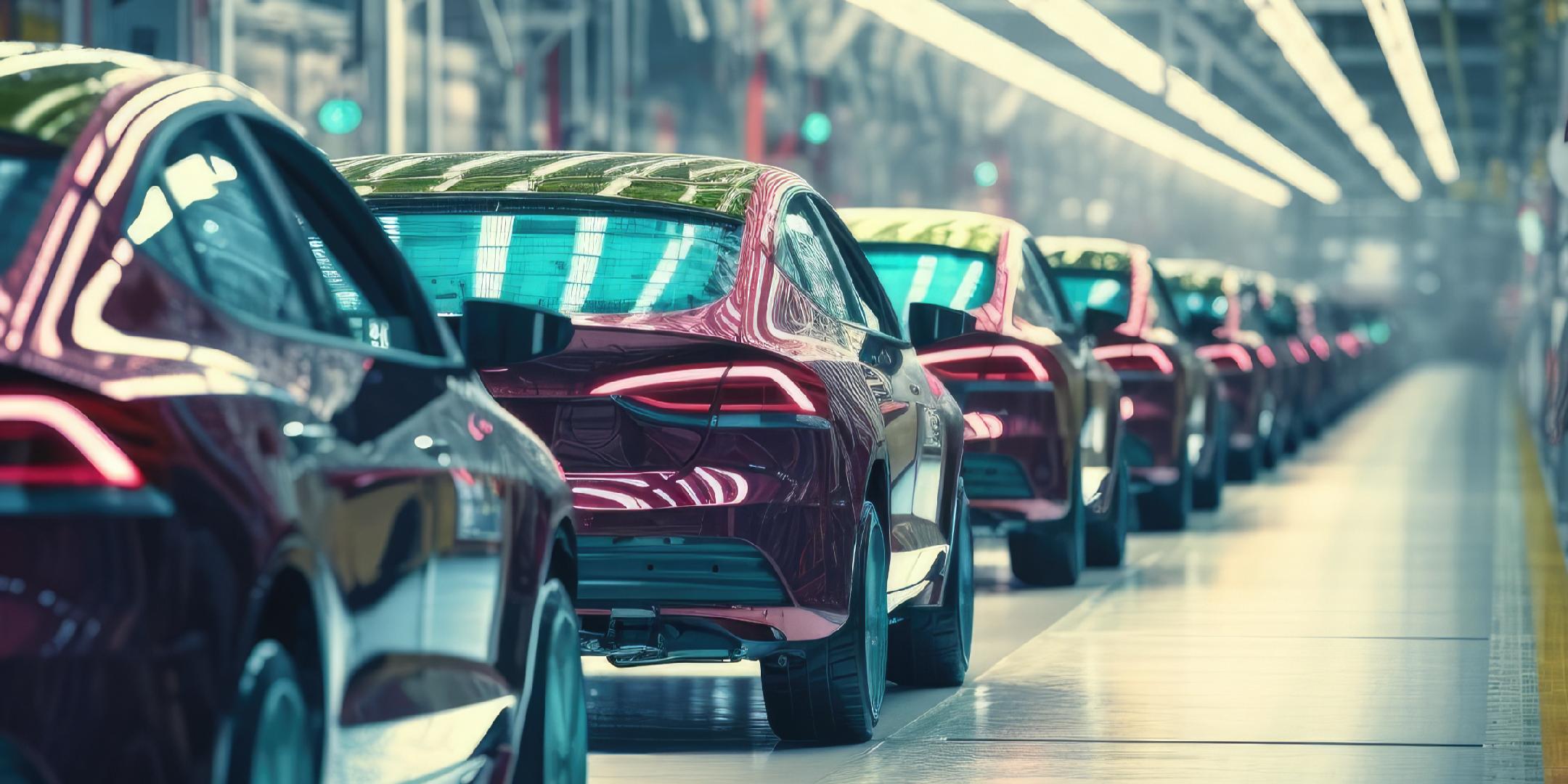
汽车产能大挪移
Jing Ji Guan Cha Wang· 2025-11-21 14:13
Group 1 - The automotive industry is witnessing a trend where manufacturers in need of new production capacity are acquiring or managing other factories to supplement their production capabilities [1][5] - Recent examples include Changan Automobile taking over Beijing Hyundai's Chongqing factory, which has been converted to a Deep Blue Automotive production line, and Geely acquiring the former SAIC-GM Beisheng factory in Shenyang [1][2] - The shift in idle capacity has moved from domestic brands to joint venture companies, with companies like Dongfeng acquiring production capacity from Nissan and Shenlong [1][5] Group 2 - Geely and Changan are both targeting ambitious sales goals of 5 million vehicles by 2030, prompting their recent acquisitions to match production capacity with these targets [2][3] - Geely's production capacity for 2024 is projected at 4.23 million vehicles, but its utilization rate is only 45%, necessitating expansion due to the rapid growth of its Galaxy brand [3][4] - Changan's production capacity for 2024 is set at 2.25 million vehicles, with a utilization rate of 84%, indicating a tighter capacity situation as it aims for a sales target of 3 million vehicles [3] Group 3 - The automotive market has seen a significant shift in market share, with domestic brands increasing their share from 35.7% in 2020 to 68.7% currently, leading to the exit of several joint venture companies [6] - Many joint venture companies have closed factories or sold them to domestic brands, such as GAC Fiat and GAC Mitsubishi, which have seen their facilities taken over by companies like GAC Aion and Lantu [6][7] - The trend of optimizing existing production capacity is being supported by local government policies aimed at revitalizing idle assets in the automotive sector [7][8] Group 4 - The Chinese government has recognized the need to optimize existing automotive production capacity, with policies aimed at activating over 1 trillion yuan of idle assets through market mechanisms [7] - Local governments are implementing strategies to utilize existing automotive production capacity, as seen in Hubei's plan to achieve 350 billion yuan in new energy vehicle output by 2025 [7][8] - New automotive startups are emerging in response to local government initiatives to revitalize idle production capacity, such as Jiangling Group's new energy vehicles and Haima Automobile's new product lines [8]
吉利汽车(00175):扣非净利大增超预期,看好下半年销量,行业反内卷受惠标的
BOCOM International· 2025-08-15 08:19
Investment Rating - The report assigns a "Buy" rating to Geely Automobile (175 HK) with a target price of HKD 24.21, indicating a potential upside of 27.8% from the current closing price of HKD 18.95 [1][9]. Core Insights - The report highlights a significant increase in non-GAAP net profit, exceeding market expectations, and expresses optimism regarding sales performance in the second half of the year, benefiting from industry trends against excessive competition [2][7]. - Geely's revenue for the first half of 2025 reached RMB 150.3 billion, a year-on-year increase of 27%, while the net profit attributable to shareholders was RMB 9.29 billion, a year-on-year decrease of 14%. However, the non-GAAP net profit grew by 102% year-on-year to RMB 6.66 billion, surpassing market forecasts [7][11]. - The report anticipates Geely's sales target for the year to be raised from 2.7 million to 3 million units, supported by the launch of approximately five new key electric and hybrid models in the second half of the year [7][11]. Financial Overview - Revenue projections for Geely are as follows: RMB 179.2 billion in 2023, RMB 240.2 billion in 2024, RMB 335.1 billion in 2025, RMB 395.8 billion in 2026, and RMB 439.1 billion in 2027, with year-on-year growth rates of 21.1%, 34.0%, 39.5%, 18.1%, and 10.9% respectively [3][11]. - The net profit forecast shows an increase from RMB 5.3 billion in 2023 to RMB 21.1 billion in 2027, with a notable jump to RMB 16.6 billion in 2024, followed by a slight decrease in 2025 [3][11]. - The report indicates a projected earnings per share (EPS) of RMB 0.53 in 2023, rising to RMB 2.10 by 2027, with a peak EPS of RMB 1.65 in 2024 [3][11]. Market Performance - Geely's stock has shown a year-to-date increase of 27.87%, with a 52-week high of HKD 20.35 and a low of HKD 7.70 [6][11]. - The average daily trading volume is reported at 102.16 million shares, reflecting strong market interest [6][11].