长安CS75

Search documents
有辆30指数2026年首月大涨近20%,折射春节前二手车需求强劲
Zhong Guo Qi Che Bao Wang· 2026-02-06 05:51
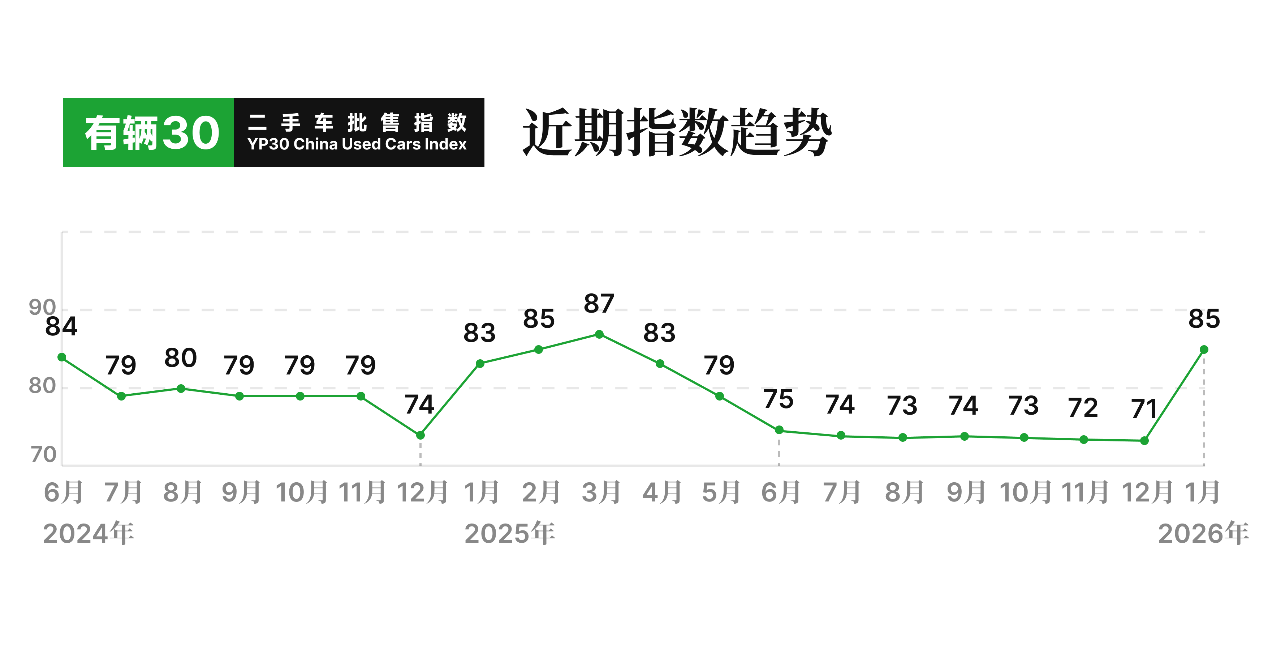
Core Insights - The "Youliang 30 Used Car Wholesale Index" recorded a significant increase of 19.7% month-on-month in January 2026, reaching 85 points, driven by strong demand in the automotive consumption market before the Spring Festival, marking the largest monthly increase since its inception [1] - The index now includes a complete list of 30 benchmark models, enhancing its transparency and market reference value, providing a clearer and more credible quantitative framework for observing the dynamics of the Chinese used car market [1][2] Index Composition - The 30 benchmark models represent high liquidity and typical market indicators across various segments, covering brands from China, the US, Germany, and Japan, aimed at reflecting the overall trends in the Chinese used car market [2] - Notable models include Chinese brands like Great Wall Haval H6 and BYD Song, German brands like Volkswagen Golf and BMW 3 Series, Japanese brands like Honda CR-V and Toyota RAV4, and American brands like Tesla Model Y and Buick GL8 [2] Market Trends - The index data for January 2026 reveals a profound structural adjustment beneath the overall market prosperity, with mid-to-large vehicles experiencing a price increase of 27.1% year-on-year, significantly higher than the average market increase of 11.1% for compact cars [4] - Chinese brands led the market with a year-on-year price increase of 36.9%, reflecting advancements in technology, product strength, and market recognition, while German brands maintained a robust 34.6% increase [7] - In contrast, Korean and French brands faced declines of 9.0% and 13.8% respectively, indicating challenges in market share and brand influence [7] Vehicle Type Dynamics - The market has seen a notable shift in demand, with MPV prices soaring by 35.7%, becoming the fastest-growing category, while traditional SUV prices saw a modest increase of 3.2% and sedans increased by 18.6% [10] Circulation and Transactions - The liquidity of used car sources in China continues to rise, with total used car transactions in 2026 surpassing 20 million units, reaching 20.108 million, a year-on-year increase of 2.52%, and an increasing proportion of interprovincial transactions [13] - The "Youliang 30 Index" provides innovative analysis on interprovincial circulation, with Sichuan province entering the top 5 in interprovincial procurement in January 2026 [13] Index Value and Macro Significance - The "Youliang 30 Index" serves as a quantifiable and traceable "data dashboard" for industry governance and market fluctuation assessment, helping relevant departments gauge the true structure of the current consumption market and consumer confidence levels [22] - The index's monthly data series creates a dynamic price map, allowing for scientific measurement and analysis of the impact of policies like "trade-in" on the circulation segment [22] - The transparency and standardization of the "Youliang 30 Index" respond to national requirements for market data element commercialization and the establishment of a high-standard market system, facilitating the transition of the used car industry from a traditional "experience-driven" model to a "data-driven" modernized development phase [22]

比亚迪方程豹要掀了整个市场 竟然一口气发布5款新车
Xin Lang Cai Jing· 2026-01-29 00:59
Core Insights - The company, Fangchengbao, has rapidly gained market traction with its Ti7 model, selling over 50,000 units in just 80 days, prompting competitors like BYD to adjust production lines to meet demand [1] - However, the average selling price of its vehicles has decreased significantly, from 330,000 to 240,000, indicating a shift towards lower-end models [1] - In 2026, Fangchengbao plans to launch five new models, expanding its price range and targeting various consumer segments [2][3][4] Model Launches - The first model, Ti3 DM-i, is priced in the mid-teens and aims for a fuel consumption of 2.6 liters with a range of 2,000 kilometers, targeting consumers considering models like Haval H6 and Changan CS75 [2] - The second model, Ti5, is a mid-size SUV priced between 180,000 and 220,000, designed to compete with Tesla Model Y and AITO M5, focusing on practicality and unique design [2] - The third model, Mg7, is Fangchengbao's first sedan with a price range of 230,000 to 280,000, boasting over 1,000 kilometers of electric range and advanced features [3] - The fourth model, Ti9, is a flagship vehicle priced above 300,000, equipped with high-end technologies and targeting high-end family users [3] - The fifth model is an updated version of the Leopard 5, aimed at maintaining the brand's core market while enhancing comfort and technology [4] Technological Advancements - Fangchengbao's vehicles will utilize BYD's fifth-generation DM hybrid system, achieving over 46% thermal efficiency and reducing fuel consumption to below 3 liters [4] - The company is also implementing advanced driving technologies across its lineup, including the "Tianshen Eye" hardware for intelligent driving capabilities [5] - Interior features include a standardized 15.6-inch rotating central control screen and eco-friendly materials, with a focus on user experience [6] Market Positioning - Fangchengbao's brand positioning has evolved from being a "BYD off-road brand" to a "full-scenario technology brand," with a product line covering various vehicle types and price ranges from 130,000 to 350,000 [6] - The company has observed a 15% decrease in foot traffic for Tesla Model Y following the announcement of new models, indicating a shift in consumer interest [6] - Fangchengbao aims to deliver 500,000 vehicles in 2026, significantly increasing production capacity and supply chain efficiency [8] Competitive Strategy - Fangchengbao is strategically targeting competitors' weaknesses, such as offering hybrid technology at lower prices and enhancing interior comfort compared to rivals [7] - The company has received over 20,000 pre-orders for the Ti3 DM-i within a week of its announcement, with a significant portion coming from consumers initially considering traditional fuel SUVs [7] - The rapid product development cycle, taking only 18 months from design to production, showcases Fangchengbao's vertical integration capabilities within BYD [8]

奇瑞瑞虎8:置换比例超过80%,对比最多的是博越L
车fans· 2026-01-28 00:30
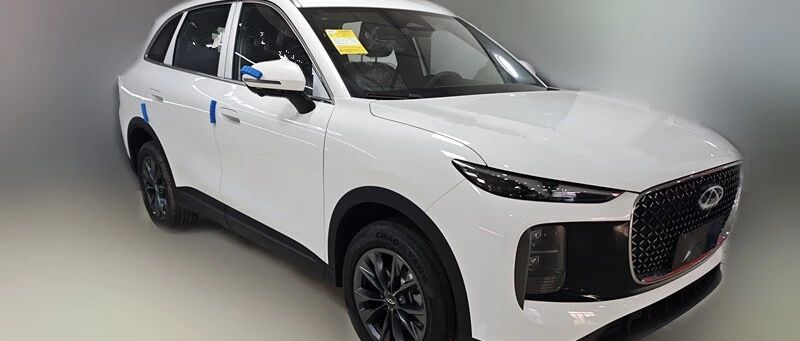
Sales Performance - The new Chery Tiggo 8 has seen significant interest, with 2-3 out of 10 customer groups visiting local dealerships specifically to check out this model [2] - In the last month, over 40 vehicles were sold at the dealership, with more than 10 units being the new Tiggo 8 [3] - The most popular configurations in stock are the 1.6T automatic luxury model priced at 109,900 yuan and the premium model at 119,900 yuan, which together account for over half of the inventory [3] Customer Demographics - The primary customers for the new Tiggo 8 are young males aged 20 to 30, with an 80% trade-in rate for older vehicles [5] - Many customers are working-class individuals with decent family financial support, often involved in small businesses [5] - A specific case highlighted a 27-year-old customer who chose the Tiggo 8 for its appealing design and features, influenced by family opinions [7] Competitive Landscape - The most common competitors compared to the Tiggo 8 are the Geely Boyue L and Haval H6, with 40% and 30% of customers respectively considering these models [9] - Some customers expressed concerns that the Tiggo 8 lacks significant innovation compared to its predecessor, the Tiggo 8 PLUS, which may affect its appeal [12] Customer Preferences - Customers appreciate the Tiggo 8 for its design, which aligns with young people's aesthetics, and the perceived advanced technology of its 1.6T engine [14] - The best-selling configuration is the 1.6T automatic premium model, with 70% of sales coming from this variant [20] Pricing and Financing - Current cash discounts for the Tiggo 8 are around 10,000 yuan, with financing options including a 2-year, 70,000 yuan interest-free loan [16][18] - The dealership has noted that lower-end and top-end models are not selling well, with the top model priced at 129,000 yuan being particularly challenging to move [20] Customer Feedback - Initial customer feedback has been limited, with some complaints about the design of the electronic handbrake and tire grip during test drives [22][24] - Regular maintenance costs are approximately 450 yuan, with service intervals set at every six months or 5,000 kilometers [25] Market Considerations - The new Tiggo 8 has been segmented into two variants, the Leopard and Tiger versions, which has created some confusion among customers due to minimal differences [26] - The manufacturer offers various trade-in subsidies, with up to 12,000 yuan for certain configurations, which may incentivize purchases [28]
卷上天的新能源厂商,销量却被燃油车背刺了
Hu Xiu· 2025-10-13 14:09
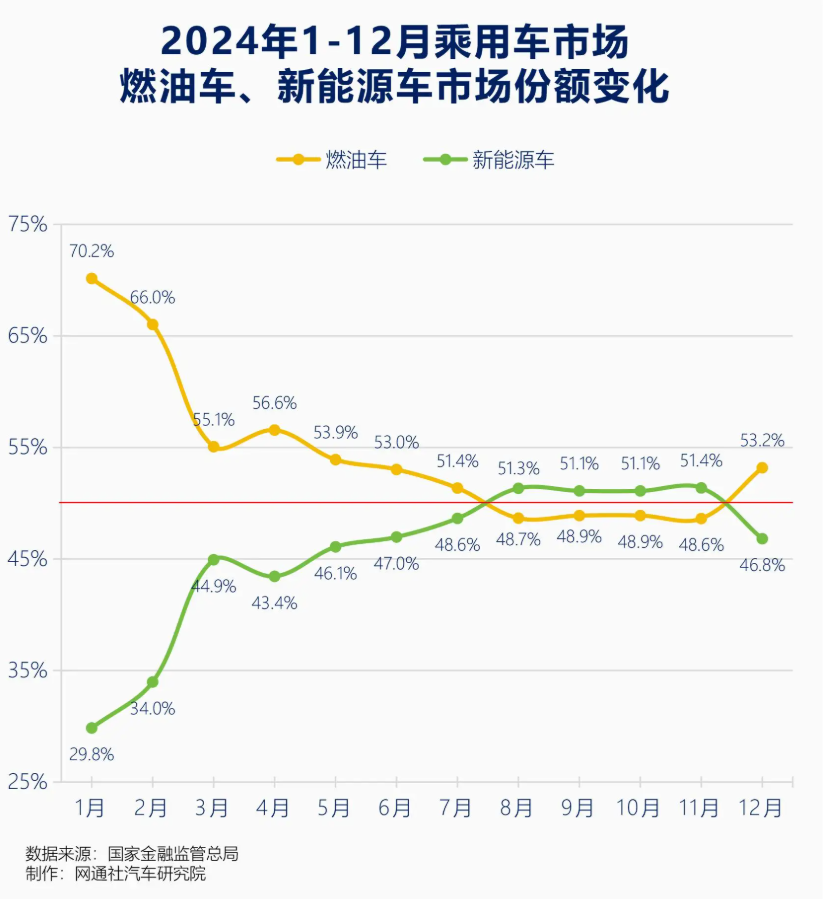
Core Insights - The sales of fuel vehicles in China exceeded 902,000 units in August, marking a year-on-year increase of 13.5%, with total sales for the first eight months reaching 8.747 million units, nearly matching last year's total [1] - The resurgence of fuel vehicles is seen as counterintuitive, as the market was expected to shift towards new energy vehicles focused on carbon neutrality [2][6] - The preference for fuel vehicles varies by region, with specific models gaining popularity in different areas, indicating a regional bias in consumer behavior [5][40] Sales Trends - Fuel vehicle sales have rebounded, with a nearly 5% year-on-year increase in the third quarter, while the growth rate of new energy vehicles has slowed for the first time [22] - The increase in fuel vehicle sales is attributed to practical considerations, such as the challenges of charging infrastructure for electric vehicles [58][67] Consumer Behavior - Consumers are increasingly purchasing fuel vehicles due to the difficulties associated with charging electric vehicles, including long wait times and high installation costs for home charging stations [10][14] - The emotional connection to fuel vehicles is highlighted, with many consumers expressing a preference for the reliability and simplicity of fuel vehicles over the complexities of electric vehicles [19][38] Regional Preferences - Different regions exhibit distinct preferences for fuel vehicles, influenced by local conditions and consumer needs, such as climate and terrain [40][50] - In areas with extreme weather conditions, fuel vehicles are favored for their reliability, while in urban settings, the practicality of fuel vehicles is emphasized [67][68] Market Dynamics - The fuel vehicle market is evolving, with manufacturers adapting to consumer demands for reliability and cost-effectiveness, while also integrating advanced technologies to remain competitive [61][63] - The perception of fuel vehicles is shifting from being seen as outdated to being recognized for their practicality in specific scenarios, indicating a nuanced market landscape [69][70]
奇瑞风云T9:各型号置换补贴相差12000,到手的订单又跑去买星越L
车fans· 2025-05-23 00:29
Core Viewpoint - The article discusses the sales performance and customer demographics of the Chery Fengyun T9, highlighting its competitive pricing and features in the SUV market, particularly in lower-tier cities [2][3][5]. Sales Performance - During the recent May Day holiday, customer visits to the dealership increased significantly, with 35% specifically interested in the Fengyun T9 [2]. - The dealership sold 17 units of the Fengyun T9 last month, with a total of 55 vehicles sold [2]. - The current inventory includes 25 units, primarily in the mid-range long-range version priced at ¥142,900 [2]. Customer Demographics - The primary customer base consists of males aged 20-40, with an average purchasing age of over 35, often small business owners with stable incomes [3]. - Customers tend to have prior positive experiences with the Chery brand, influencing their decision to consider the Fengyun T9 [7]. Competitive Analysis - The Fengyun T9 is frequently compared to models such as the Geely Xingyue L, Changan CS75, and BYD Song PLUS [7]. - Customers who chose the Fengyun T9 often cite its spaciousness and hybrid features as key selling points, while those who opted for other brands typically expressed concerns about the Chery brand image or design [9]. Pricing and Discounts - Current discounts for the Fengyun T9 range from ¥12,000 to ¥14,000, reflecting a seasonal adjustment in pricing [11]. - The financing options available include a five-year bank loan with no special policies from Chery, leading to a common choice of early repayment after two years [13]. Configuration Preferences - The mid-range long-range version is the best-selling configuration, with at least 50% of sales attributed to this model [15]. - The top-tier version struggles to sell due to perceived poor value and limited third-row space [15]. Customer Feedback - Common complaints from customers include concerns about driving confidence due to size, tire noise, and sound system quality [17]. - Maintenance costs average around ¥400 per service, with intervals set at every six months or 5,000 kilometers [19]. Purchase Considerations - Different versions of the Fengyun T9 have varying trade-in subsidies, with the lowest configuration receiving no subsidy and the highest receiving ¥12,000 [20].

从吉利博越L看自主紧凑型SUV的生存与进阶
Jing Ji Guan Cha Wang· 2025-05-16 04:14
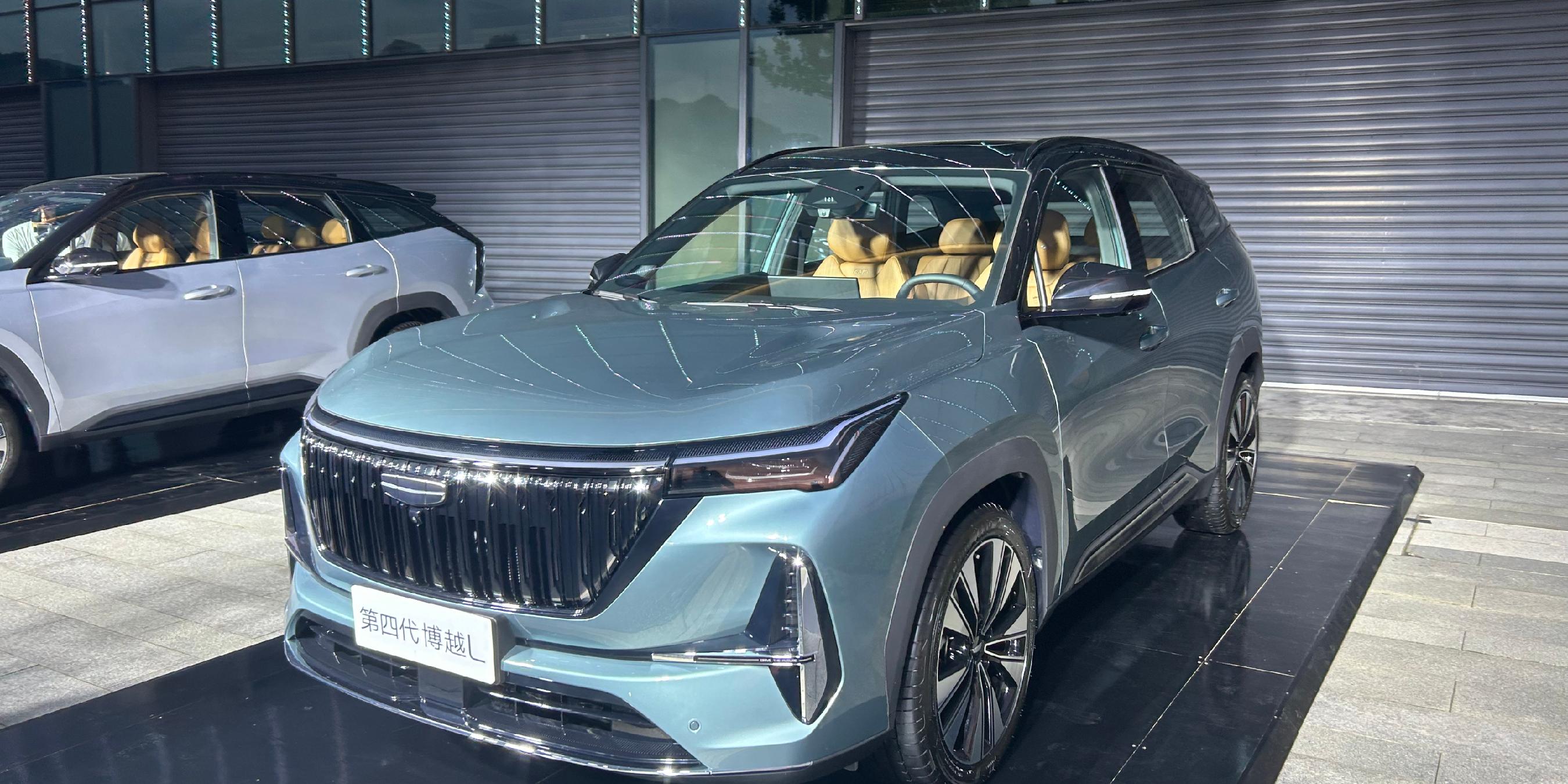
Group 1: Product Launch and Features - The fourth-generation Geely Boyue L was launched on May 13, with a starting price of 92,900 yuan, positioning it as a compact SUV [2] - It features the CMA global luxury architecture and offers two power combinations: 2.0TD+7DCT and 1.5TD+7DCT, achieving a 0-100 km/h acceleration in 7.4 seconds [2] - The vehicle incorporates GEEA 3.0 electronic architecture and Xingrui AI technology, enhancing its smart capabilities, including automatic adjustments based on user preferences and remote diagnostics for 99% of core components [2] Group 2: Market Trends and Historical Context - The rise of SUVs in China has allowed domestic brands to catch up with joint ventures, with the SUV market growing from 1.6 million units in 2011 to an expected 11.31 million units in 2024, increasing its market share from 8.6% to 49.2% [3][6] - The Haval H6, launched in 2011, significantly boosted family SUV demand, leading to a shift in consumer preference from sedans to SUVs [3] - By 2024, domestic brands occupy 12 out of the top 20 spots in SUV sales, a significant increase from 2011 when the top ten were dominated by foreign brands [6] Group 3: Technological Advancements and Industry Evolution - The development of proprietary technology platforms, such as Geely's CMA architecture and Great Wall's Lemon platform, has enabled Chinese automakers to break free from the "market for technology" model [6] - The average price of compact SUVs has decreased from 250,000 yuan in 2010 to 120,000 yuan currently, facilitating the rise of domestic brands [6] - The evolution of models like the Haval H6 and Geely Boyue demonstrates a shift from short product lifecycles to long-lasting classic models, with the Haval H6 now in its third generation after 14 years [6] Group 4: Global Expansion and Competitive Landscape - Domestic SUVs, including the Geely Boyue, are now exported to over 60 countries, with Chery's Tiggo 7 surpassing Tesla Model Y in export volume in 2023 [7] - The rise of compact SUVs has allowed domestic manufacturers to innovate and move towards higher-end markets, with new models entering the "light luxury" segment [8] - The fourth-generation Boyue L aims to meet high expectations for intelligence in fuel vehicles, positioning itself as a competitive option in its class [8] Group 5: Design Philosophy and Brand Identity - The first-generation Boyue introduced the "Chinese aesthetics" design concept, setting a benchmark for domestic SUVs and influencing competitors [9] - The evolution from imitation to defining market rules reflects the overall upward trajectory of domestic compact SUVs, which are crucial for the survival and competitiveness of companies in the industry [9]