
香菇菌棒

Search documents
青海高原特色农产品出口增速连续22个月位列中国第一
Xin Lang Cai Jing· 2026-01-16 11:54
Group 1 - The core viewpoint of the articles highlights the significant growth in agricultural exports from Qinghai Province during the "14th Five-Year Plan" period, with total exports reaching 2.04 billion RMB, which is 2.6 times that of the "13th Five-Year Plan" period, and an average annual growth rate of 37.3% [1] - Qinghai's export of frozen trout has surged to 860 million RMB, accounting for 42.1% of the province's agricultural exports, making it the largest export product for five consecutive years [1] - The export of "cool-season vegetables" from Qinghai is projected to reach 11,000 tons by 2025, with the growth rate ranking first in China and the variety of exported products increasing to 36, reaching 14 countries and regions [3] Group 2 - The establishment of vegetable planting bases in Qinghai has reached 81,000 acres, representing 12% of the province's total vegetable planting area, indicating significant progress in building a large-scale export industry for "cool-season vegetables" [3] - The province has also achieved large-scale exports of potatoes, with an export volume of 4,110.2 tons in 2025, alongside the first-time exports of various other agricultural products such as yak meat products, shiitake mushroom sticks, and quinoa [3] - The "cool-season" industry is becoming a key driver for the development of foreign trade in Qinghai Province, showcasing its potential as a "hot industry" [3]


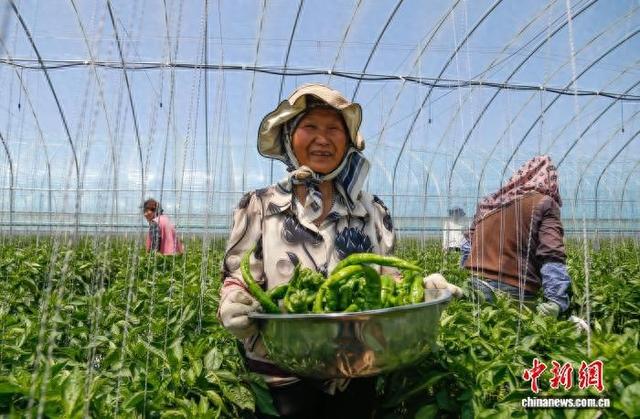
(乡村行·看振兴)“菌棒工厂”火力全开 山西万荣菇农忙出好“钱”景
Xin Lang Cai Jing· 2026-01-01 06:23
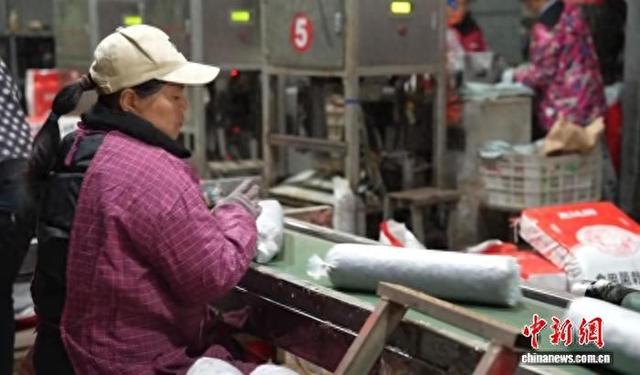
Core Insights - The mushroom industry in Wanrong County is currently in a busy production phase, focusing on the preparation of mushroom cultivation materials for the upcoming year [1][3] - The county has established a comprehensive industrial chain that includes research and development of mushroom strains, standardized planting, and cold chain logistics [4] Group 1: Production Capacity - Various mushroom stick production bases in Wanrong County are operating at full capacity, with over 100 workers engaged daily, producing 50,000 sticks per day [3] - The use of automated production lines has significantly increased efficiency, with each machine capable of producing 8,000 bags daily, improving efficiency by 20% and reducing costs by 10% compared to traditional methods [3] Group 2: Industry Development - Wanrong County has 15 mushroom stick production enterprises and over 4,000 acres dedicated to mushroom cultivation, covering all 14 townships in the county [4] - The county aims to produce 50 million mushroom sticks by March 2026, with plans to establish temperature-controlled cultivation facilities to enable year-round production and explore a two-crop system annually [4]
矢志“走在前列” 开拓现代化门源新局面
Xin Lang Cai Jing· 2025-12-22 19:20
Group 1: Core Perspectives - The county of Menyuan is actively pursuing high-quality development by focusing on becoming a green and organic agricultural and livestock product output area, an international ecological tourism destination, and promoting ethnic unity [1][2][3] Group 2: Agricultural Development - Menyuan is strategically positioned as a key node on the ancient Silk Road and the new Silk Road Economic Belt, benefiting from significant geographical and transportation advantages [2] - The county is recognized as an important base for oilseed products, barley seed breeding, edible mushroom production, and ecological animal husbandry, with successful registrations of geographical indication trademarks for bee products and other agricultural products [2] - Future plans include enhancing the modern agricultural industrial park, promoting ecological agriculture, and ensuring the stability of grain and oil planting areas [2] Group 3: Tourism Development - Menyuan has been recognized for its natural beauty and cultural heritage, attracting over 1 million tourists and creating job opportunities for around 30,000 people [3] - The county is developing high-quality tourism routes and new camping models, aiming to integrate tourism with ecological conservation [3] - Plans for the future include creating five major ecological tourism sectors and enhancing the brand influence of Menyuan as an international ecological tourism destination [3] Group 4: Ethnic Unity and Cultural Development - Menyuan has a diverse population with 26 ethnic groups, making ethnic work a priority for local governance [4] - The county has implemented cultural preservation projects and established several national and provincial-level ethnic unity demonstration units [4][5] - Future initiatives will focus on promoting ethnic interactions and enhancing the governance of religious affairs to foster social stability and unity [5]
锻长板补短板 欠发达县域苗更壮
Si Chuan Ri Bao· 2025-12-17 00:19
Core Viewpoint - The article highlights the significant progress made in poverty alleviation and industrial development in underdeveloped counties in Sichuan, driven by state-owned enterprises and targeted support initiatives [1][5]. Group 1: Industrial Development - Sichuan Energy Development Group has expanded the production of mugwort products, achieving a planting area of over 50,000 acres and involving more than 4,000 households, with each household earning an average annual income of 3,000 to 3,500 yuan per acre [2][3]. - The establishment of a smart goose farming facility in Hongjun Tree Village has led to an average income of approximately 150,000 yuan per batch, with plans to develop a full supply chain for goose processing [3]. - The Sichuan Port Investment Group has invested 6 million yuan to build a mushroom cultivation facility, demonstrating a successful transition from pilot to widespread cultivation, with an average annual income increase of 20,000 yuan for participating farmers [4]. Group 2: Educational Support - The article emphasizes the importance of combining educational empowerment with industrial support, as seen in the initiatives by Sichuan Road and Bridge Group, which organized cultural and educational activities for local children [6][7]. - Sichuan Development (Holding) Company has invested 19 million yuan in building a new secondary school, adding 1,650 new student places to address educational shortages in the region [7]. Group 3: Employment and Skills Training - Sichuan Airlines Group has provided training for over 600 local artisans in traditional embroidery, facilitating their transition into modern creative product development [8][9]. - The establishment of a vocational training school by State Grid Sichuan Electric Power Company aims to train 2,000 individuals annually, with the first cohort achieving an average monthly income of over 5,000 yuan [9][10]. - The article notes the integration of agricultural training programs, such as the cultivation of strawberries, to enhance local employment opportunities and agricultural skills [10].
食用菌企业驶向全球化新蓝海
Zhong Guo Jing Ji Wang· 2025-11-17 01:24
Core Insights - The global mushroom industry is at a pivotal moment for development, with opportunities arising from the Belt and Road Initiative, which expands market access for Chinese edible mushrooms [1] - A new innovative model led by Chinese companies, focusing on "domestic cultivation, overseas sales, and local fresh mushroom distribution," enhances global supply chain resilience and efficiency [1][2] - Seven Rivers Bio has established over 20 subsidiaries globally, exporting more than 60% of China's mushroom spawn and holding a 67% market share in North America [1][2] Group 1 - Seven Rivers Bio's mushroom spawn exports have increased by 35% compared to the previous year, demonstrating strong growth despite tariff fluctuations [2] - The company aims to sell fresh mushrooms directly to major supermarkets in the U.S., targeting an increase in high-end market share [2] - The successful introduction of a new mushroom strain, QH147, into Japan marks a shift from product export to technology export, indicating a broader industry evolution [2] Group 2 - The Chinese edible mushroom industry is transitioning from mere product trade to a comprehensive system that includes strain research, technology, cultivation management, and standard output [2] - Companies are encouraged to solidify their presence in East Asia and Southeast Asia while also breaking into high-end markets in Europe and America [3] - The industry is leveraging China's complete and efficient food industrial system to rapidly convert ideas into high-quality, standardized products for global distribution [3]
【商洛】香菇菌棒首次以“批次检验(检疫)”模式出口
Shan Xi Ri Bao· 2025-11-09 23:35
Core Points - The first batch of edible mushroom products from Luonan County, totaling over 20,000 sticks and 45 tons, has successfully been exported to South Korea after passing inspection and quarantine by the Shangluo Customs [1][2] - The "batch inspection (quarantine)" reform trial aims to facilitate the export of fresh agricultural products, significantly reducing inspection time and improving efficiency for companies [1][2] Group 1 - The "batch inspection (quarantine)" reform separates the "inspection (quarantine) batch" from the "customs declaration batch," allowing for a more precise assessment of product quality and safety [1] - Companies with good customs credit and sound quality management systems will benefit from this reform, as only the first batch of goods will undergo on-site inspection, while subsequent shipments will be verified through document review [1][2] Group 2 - The new inspection model addresses the "small quantity, multiple times" inspection issue faced by companies like Luonan Lingnan Biotechnology Poverty Alleviation Development Co., which had to carefully manage inspection and shipping schedules [2] - From January to September of this year, the Shangluo Customs supervised the export of edible mushrooms and related products worth nearly 40 million yuan [2] - The customs authority aims to connect with local foreign trade enterprises to accelerate the release of reform benefits, promoting the export of more specialty agricultural products [2]
陕西商南县:以“四个聚力”绘就高质量发展新图景 奏响“四大名城”建设强音
Huan Qiu Wang· 2025-06-20 05:55
Group 1: Economic Development - The county of Shangnan is focusing on high-quality economic and social development, aligning with the goal of becoming "China's Health and Wellness Capital" and the construction of "Four Famous Cities" [1][2] - The tea industry is prioritized as a leading sector, with a total tea garden area reaching 290,000 acres and standardized tea garden area exceeding 100,000 acres, benefiting over 20,000 households [1][2] - A total of 209 key industrial projects have been established with a total investment of 14 billion yuan, enhancing the county's economic strength [2] Group 2: Tourism Development - Shangnan is enhancing its tourism industry by developing national and provincial tourism resorts, hosting various events, and improving tourist attractions, leading to a continuous increase in visitor numbers and tourism revenue [2][3] - The county has been recognized for its tourism development, being awarded as a strong county for tourism development monitoring in 2024 and as an advanced county for promoting consumption and stabilizing growth [2] Group 3: Health and Wellness Initiatives - The construction of "Health and Wellness Slow City" is progressing, with 31 health villages and 5 boutique homestay clusters established, contributing to the local economy [3] - Shangnan has been recognized as a national-level pilot county for comprehensive forest health and wellness construction, with health and wellness economy becoming a new engine for high-quality development [3]

陕西特色农产品频“出海” 秦岭“小菌棒”拓海外市场
Zhong Guo Xin Wen Wang· 2025-05-15 07:16
Group 1 - The successful export of a batch of shiitake mushroom spawn worth over 650,000 RMB to South Korea was facilitated by the coordination and guidance of customs officials [1] - Shaanxi province's specialty agricultural products have been expanding their export footprint, including persimmons to Canada, grapes to Kazakhstan, melons to Vietnam, peaches to the UAE, and edible mushroom spawn to South Korea and the USA [1] - The company Shaanxi Hefeng Sunshine Biotechnology Co., Ltd. has established a full industrial chain demonstration park for edible mushrooms, producing a variety of products including black fungus and canned goods [1] Group 2 - Since the opening of the customs in December 2020, the Shanzhou Customs has supervised the export of shiitake mushroom spawn valued at over 61 million RMB, with the total export value of edible mushrooms and their products reaching nearly 410 million RMB by March 2025, accounting for 76% of the total foreign trade value of agricultural products in Shanzhou [2] - The edible mushroom industry in Shanzhou has developed a collaborative growth model across multiple counties, integrating various industries and exporting multiple product categories, enhancing the industry's international market recognition [2] - Shanzhou Customs aims to leverage the ecological resource advantages of the Qinling Mountains to support the outward development of the edible mushroom industry chain [2]
一朵菇带富一个村(党旗在基层一线高高飘扬)
Ren Min Ri Bao· 2025-05-05 22:17
Core Insights - The article highlights the successful transformation of Guandian Village in Hubei's Suizhou City through the development of a standardized mushroom cultivation industry, leading to significant economic growth for the village [1][2][3] Group 1: Economic Impact - In 2023, a villager reported earning over 40,000 yuan from cultivating 3,000 mushroom sticks, and later expanded to 7,000 sticks, generating over 100,000 yuan in income [1] - The village's collective economic revenue exceeded 1 million yuan last year, a significant turnaround from a debt of over 400,000 yuan just a few years prior [1] - The village plans to expand its cultivation scale to 1.3 million sticks, aiming to further enhance agricultural product value and increase villagers' income [3] Group 2: Operational Strategy - The village adopted a professional management approach by integrating land, constructing new facilities, and purchasing equipment, implementing a "centralized stick production, decentralized mushroom cultivation" model [2] - A local villager with experience in mushroom cultivation was invited to provide technical guidance, resulting in improved yield and quality of mushroom sticks [2] - The cost of producing mushroom sticks was reduced from 5.7 yuan to 3.8 yuan per stick, benefiting local farmers [1][2] Group 3: Revenue Distribution - The village's revenue distribution plan allocates 30% for reinvestment, 30% for public infrastructure, 30% for villagers' dividends, and 5% for assistance to those in need [2] - This financial strategy has led to improvements in village infrastructure, including road repairs and the construction of a cultural square [2]