
骁龙8 Elite Gen 6

Search documents
英特尔任命首席GPU架构师,高通1个月连失三员大将
美股研究社· 2026-02-04 11:21
Core Viewpoint - Intel is focusing on expanding its GPU capabilities by hiring Eric Demmers, a prominent GPU architect from Qualcomm, to lead its GPU production efforts, indicating a strategic shift towards enhancing its data center offerings [4][6][7]. Group 1: Intel's GPU Strategy - Intel's CEO, Pat Gelsinger, announced the hiring of Eric Demmers, a highly regarded GPU architect, to strengthen Intel's GPU team [4]. - Demmers previously led Qualcomm's GPU business and is recognized for his ability to design graphics architectures from scratch, which is expected to significantly enhance Intel's GPU capabilities [6][7]. - Intel's GPU plans are primarily aimed at the data center market, with Demmers reporting to the head of Intel's data center chip division [7]. Group 2: Industry Challenges - A current shortage of storage chips is identified as a major challenge for AI development, with supply-demand imbalances expected to persist until 2028 [8]. - Qualcomm has recently lost two key CPU architects, Gerard Williams III and John Bruno, who were instrumental in the development of custom CPU designs for the company [8][9]. - Williams and Bruno, founders of NUVIA, played a crucial role in Qualcomm's efforts to revitalize its presence in the PC and server markets [9].



高通与三星重启2nm代工合作,台积电独占局面或将被打破
Jing Ji Ri Bao· 2026-01-08 23:01
Group 1 - Qualcomm's CEO confirmed discussions with Samsung Semiconductor for 2nm wafer foundry, marking a return to collaboration after five years, aiming to challenge TSMC's dominance in advanced process orders [1] - Qualcomm's previous flagship chip, Snapdragon 8 Gen 1, was exclusively produced by Samsung at 4nm, but performance issues led Qualcomm to switch to TSMC for subsequent products [1] - Samsung is offering wafer foundry prices at least 30% lower than TSMC to attract Qualcomm for 2nm production, with plans to secure orders for the upcoming Snapdragon 8 Elite Gen 5 [1] Group 2 - Qualcomm is expected to launch its latest flagship chip, Snapdragon 8 Elite Gen 6, in two versions: Pro and Standard, indicating a potential return to a dual foundry strategy with TSMC and Samsung sharing flagship chip orders [2] - The new flagship chip is scheduled for Q4 release, with wafer foundries starting shipments in Q3 for final testing [2] - The CPU architecture will continue to utilize Qualcomm's in-house developed Oryon, with the high-end version expected to support LPDDR6, positioning Qualcomm to deliver a strong AI smartphone for non-Apple brands [2]

高通与三星洽谈2纳米芯片代工合作
Huan Qiu Wang Zi Xun· 2026-01-08 03:27
Group 1 - Qualcomm's CEO Cristiano Amon confirmed the company's active discussions with Samsung Electronics regarding 2nm chip foundry collaboration, with all related chip design work completed to accelerate product commercialization [1] - Samsung has become the first company to announce mass production of 2nm chips, showcasing strong technical appeal with its second-generation 2nm process (SF2P), which will be used for the Exynos 2600 chip in the Galaxy S26 series [2] - The collaboration between Qualcomm and Samsung is significant as Qualcomm previously shifted its advanced chip foundry orders to TSMC due to stability issues with Samsung's foundry process, indicating that Samsung's SF2P process has reached competitive levels in performance, energy efficiency, and production yield [2]
DRAM严重短缺:苹果告急,戴尔大幅涨价
半导体行业观察· 2025-12-15 01:33
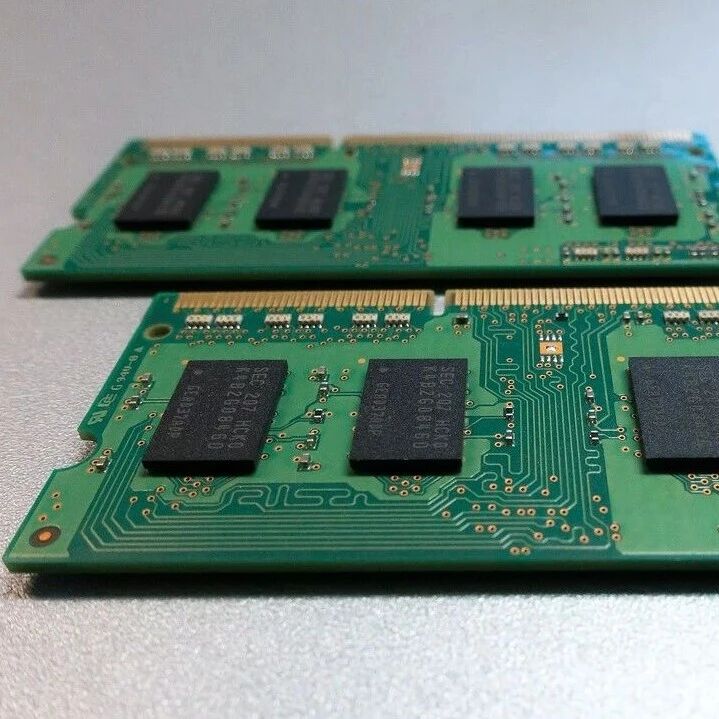
Group 1 - The DRAM supply shortage is expected to persist until 2028, with limited growth in commodity DRAM due to a shift in focus by major manufacturers towards AI server demands [2][6] - Existing suppliers' inventories have reached historical lows, exacerbating allocation pressures, and manufacturers are adopting conservative capacity expansion strategies [6] - The demand for server DRAM is projected to grow exponentially, with server share expected to rise from 38% in 2025 to 53% by 2030, driven by AI developments [6] Group 2 - Apple is facing significant cost increases for DRAM chips as its long-term agreement with Korean manufacturers is set to expire, potentially leading to higher product prices [8][9] - Dell has announced substantial price increases for various products due to the DRAM shortage, with expected hikes of hundreds of dollars for laptops and PCs [11][12] - The semiconductor market is entering a super cycle, with unprecedented supply shortages anticipated, particularly for server memory and high-bandwidth memory (HBM) [14][15]


芯片三巨头的2nm之争:安卓阵营押注台积电N2P制程反超苹果
Hua Er Jie Jian Wen· 2025-11-03 11:33
Core Insights - Qualcomm and MediaTek are preparing to adopt TSMC's advanced 2nm N2P process node in their next-generation chip designs, aiming to surpass Apple in process technology [1] - Apple plans to launch its A20 and A20 Pro chips on TSMC's initial 2nm N2 process, while Qualcomm's Snapdragon 8 Elite Gen 6 and MediaTek's Dimensity 9600 will leap directly to the improved N2P node [1][2] - TSMC's 2nm process is expected to become a scarce resource, with monthly production capacity projected to be only 15,000 to 20,000 wafers by the end of 2025 [1][3] Industry Competition - The competition in process technology is intensifying, with Apple holding a significant technological advantage [2] - Qualcomm's Snapdragon 8 Elite Gen 6 is expected to support LPDDR6 memory and UFS 5.0 storage standards, while MediaTek plans to release the Dimensity 9600 on the N2P node [2] - Apple's experience in developing custom CPU and GPU cores has led to a notable performance improvement of up to 29% in the efficiency core of the A19 Pro without increasing power consumption [2] Capacity Constraints - Apple has reportedly secured over half of the initial 2nm capacity supply, a strategy aimed at maintaining its competitive edge [3] - In response to capacity limitations, Qualcomm and MediaTek's shift to the N2P process may provide a viable option for securing sufficient wafer supply [3] - Analysts expect TSMC's 2nm process to become a scarce resource next year, making the choice of N2P process potentially beneficial for Android chip manufacturers seeking stable capacity [3]