
高油高产大豆

Search documents
促进乳制品消费 强化生猪产能综合调控 农业农村部最新部署
Zhong Guo Zheng Quan Bao· 2026-02-06 05:01
Core Viewpoint - The Ministry of Agriculture and Rural Affairs has released implementation opinions to ensure the modernization of agriculture and rural areas, focusing on stabilizing grain production and enhancing agricultural technology and enterprise development [1][3]. Group 1: Grain Production and Livestock Management - The plan aims to implement a new round of actions to increase grain production capacity by 1 billion jin, ensuring stable grain output at around 1.4 trillion jin [2][3]. - Comprehensive regulation of pig production capacity will be strengthened, including annual production registration for major pig farming enterprises [3]. - Support for the dairy industry will be enhanced, promoting integrated development of breeding and processing, and expanding the scope of student milk consumption [3]. Group 2: Agricultural Technology Innovation - The implementation opinions emphasize enhancing agricultural technology innovation efficiency, promoting the integration of technology and industry [5][6]. - Major projects in biological breeding and key agricultural research plans will be advanced to achieve significant original results in core seed sources and key agricultural machinery [6][7]. - A large-scale application of new agricultural technologies and products will be promoted, with a focus on grassroots agricultural technology promotion [6]. Group 3: Smart Agriculture Development - The plan includes actions for high-quality development of agricultural machinery, promoting the research and application of advanced and renewable energy agricultural machinery [9]. - The development of smart agriculture will be prioritized, utilizing AI, drones, IoT, and robotics to enhance agricultural practices [9]. - Establishment of smart agriculture technology centers and a comprehensive agricultural data platform will be pursued to support innovation [9]. Group 4: Strengthening Agricultural Enterprises - The implementation opinions propose the cultivation of competitive agricultural leading enterprises and the creation of a comprehensive agricultural product industry chain [11]. - A national key leading enterprise recognition program will be conducted, along with an agricultural entrepreneur cultivation plan [11]. - The plan aims to enhance agricultural brand development, promoting high-quality regional public brands and agricultural specialty brands [11].
促进乳制品消费,强化生猪产能综合调控,农业农村部最新部署
Zhong Guo Zheng Quan Bao· 2026-02-06 04:51
Core Viewpoint - The Ministry of Agriculture and Rural Affairs has released implementation opinions to promote agricultural modernization and rural revitalization, focusing on enhancing grain production capacity, livestock management, agricultural technology innovation, and the development of competitive agricultural enterprises [1][2]. Group 1: Grain Production and Livestock Management - The plan aims to implement a new round of actions to increase grain production capacity by 1 trillion jin, ensuring stable grain output at around 1.4 trillion jin [2]. - Comprehensive regulation of pig production capacity will be strengthened, including annual production registration for leading pig farming enterprises and managing the national breeding sow inventory [3]. - Support for the dairy industry will be enhanced, promoting integrated development of breeding and processing, and encouraging the expansion of milk consumption among students [3]. Group 2: Agricultural Technology Innovation - The implementation opinions emphasize enhancing agricultural technology innovation efficiency, promoting the integration of technology and industry [4]. - Major projects in biological breeding and key agricultural research and development plans will be advanced to achieve significant original results in core seed sources and key agricultural machinery [5]. - The plan includes large-scale application actions for new agricultural technologies and products, promoting the transformation and application of agricultural technology achievements [5]. Group 3: Smart Agriculture - The plan calls for high-quality development of agricultural machinery, including the development of high-end intelligent machinery and key components [7]. - The application of artificial intelligence in agriculture will be expanded, with a focus on drones, IoT, and robotics [7]. - Establishment of smart agriculture technology centers and the development of a comprehensive agricultural data platform are also highlighted [7]. Group 4: Development of Agricultural Enterprises - The implementation opinions propose the cultivation of competitive agricultural leading enterprises and the creation of a comprehensive agricultural product industry chain [8]. - A national key leading enterprise recognition program will be conducted, along with an agricultural entrepreneur cultivation plan [8]. - The plan emphasizes the importance of agricultural brand development and the promotion of high-quality regional public brands [8].
种质资源家底更厚实 2025年我国种业振兴行动取得积极成效
Yang Shi Xin Wen· 2025-12-12 13:23
Group 1 - The Ministry of Agriculture and Rural Affairs aims to achieve significant results in seed industry revitalization by 2025, with over 95% of crop varieties being independently bred and domestic market shares for livestock, aquatic products, and vegetables exceeding 80%, 85%, and 91% respectively [1] - The total amount of preserved agricultural genetic resources in China has reached the highest in the world, with the establishment of a national livestock genetic resource bank and the completion of a genetic resource improvement plan for corn [1][2] - The safety level of agricultural production seeds has steadily improved, with a seed supply guarantee rate of 80%, an increase of 10 percentage points since 2020, and a seed quality compliance rate maintained at over 98% [3] Group 2 - The seed industry technology innovation has entered the world's top tier, with significant advancements in core technologies and the development of high-quality crop varieties such as water-saving wheat and high-yield soybeans [2] - The cultivation system for seed industry enterprises has been established, with over 60% of technology research tasks led by enterprises, and R&D investment in crop seed companies doubling since 2020 [2] - Regulatory measures have been implemented to enhance the management of plant varieties, resulting in a 20% decrease in seed-related cases compared to 2020, fostering a better market environment for innovation [3]
“中国粮”主要用“中国种” 透过“硬核”数据看我国种源安全水平稳步提升
Yang Shi Wang· 2025-11-13 12:20
Core Insights - The core viewpoint of the articles highlights the significant advancements in China's seed industry since the launch of the seed revitalization initiative in 2021, with a focus on self-sufficiency and technological innovation in crop and livestock breeding. Group 1: Seed Industry Developments - Since the initiation of the seed revitalization action in 2021, the self-breeding crop varieties have exceeded 95%, while domestic seed sources for livestock and aquaculture have captured over 80% and 85% of the market, respectively [1] - The establishment of three national gene banks for crops, livestock, and marine fisheries has been completed, enhancing the foundation of genetic resources [1] - A total of 105 superior maize genetic resources have been successfully created under the crop genetic resource improvement plan [1] Group 2: Technological Integration and Efficiency - The proportion of high-quality rice varieties in the country has reached approximately 55%, marking a 10 percentage point increase since 2020 [4] - Research is ongoing to integrate artificial intelligence with traditional breeding and biotechnology to enhance breeding efficiency and quality [4] Group 3: Seed Supply Capacity - The seed supply capacity in China has significantly improved, with a national seed supply guarantee rate reaching 80%, an increase of 10 percentage points since 2020 [7] - The formation of a robust national team for quality seed breeding includes 216 crop seed production counties, 333 core livestock breeding farms, and 95 aquatic original seed farms [7]

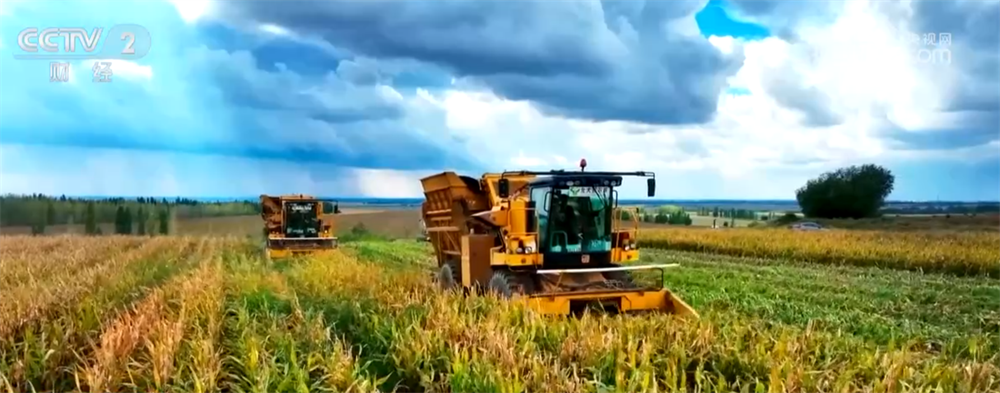
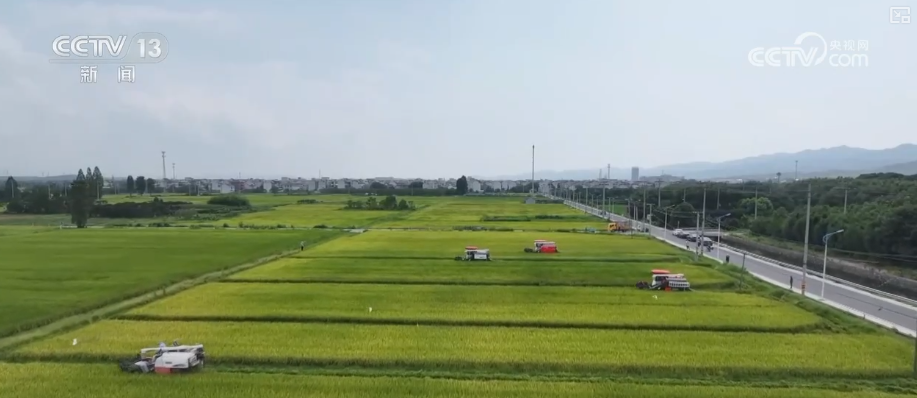
重大品种、先进农机接连突破上“新” 农业科技成果大面积落地应用
Yang Shi Wang· 2025-09-17 03:03
Group 1 - The core viewpoint of the article highlights that during the "14th Five-Year Plan" period, China has prioritized agricultural technology innovation, significantly enhancing its overall level to be among the world's top ranks [1][4] - A comprehensive agricultural technology innovation system has been established in China, comprising over 800 agricultural research institutions and more than 120,000 researchers, with an organized and systematic approach to tackling challenges being accelerated [4][10] - Key core technologies have achieved rapid breakthroughs, resulting in the development of essential crop varieties such as high-yield rice, drought-resistant wheat, and high-oil soybeans, with over 95% of the cultivated area consisting of independently bred varieties [8][10] Group 2 - The integration of industry, academia, and research has been steadily advancing, with over 1,000 enterprises participating in national agricultural technology projects, accounting for 51% of the total participating units [10] - A total of 50 modern agricultural industry technology systems have been established nationwide, with 300 major leading technologies and recommended agricultural varieties introduced annually to provide customized technology options for producers [10]
我国农业科技创新水平进入世界第一方阵
Yang Shi Xin Wen· 2025-09-16 23:36
Group 1 - The core viewpoint of the news is that China's agricultural technology innovation has significantly advanced during the "14th Five-Year Plan" period, positioning the country among the world's leaders in this field [1] - A comprehensive agricultural technology innovation system has been established, comprising over 800 agricultural research institutions and more than 120,000 researchers, with a systematic approach to tackling key challenges being accelerated [1] - Key breakthroughs in core technologies have been achieved, including the development of essential crop varieties such as high-yield rice, drought-resistant wheat, and high-oil soybeans, with over 95% of the cultivated area consisting of independently bred varieties [1] Group 2 - The Ministry of Agriculture and Rural Affairs has established 50 modern agricultural industry technology systems, promoting 300 leading agricultural varieties and technologies annually to provide customized technology options for producers [2] - The integration of industry, academia, and research has been steadily advancing, with over 1,000 enterprises participating in national agricultural technology projects, accounting for 51% of the total participating units [1]
中国农业科技创新整体水平已进入世界第一方阵
Zhong Guo Xin Wen Wang· 2025-09-16 09:08
Core Viewpoint - China's agricultural technology innovation has reached a leading position globally, marking significant advancements in key agricultural technologies and self-sufficiency in crop varieties [1][2]. Group 1: Agricultural Technology Innovations - Over the past five years, China has made rapid breakthroughs in key core technologies in agriculture, developing essential crop varieties such as high-yield rice, drought-resistant wheat, and high-oil soybeans [1]. - The area of self-bred crop varieties has exceeded 95%, ensuring that "Chinese grain" primarily uses "Chinese seeds" [1]. - Self-bred livestock and aquaculture species have broken foreign monopolies, with market shares continuously increasing [1]. Group 2: Application of Agricultural Technology - A total of 50 modern agricultural industry technology systems have been established nationwide, providing comprehensive technology innovation services across the entire industry chain [2]. - Each year, 300 leading agricultural varieties and technologies are recommended to producers, enhancing the availability and customization of technological solutions [2]. - More than 1,000 enterprises are involved in ongoing national agricultural technology projects, accounting for 51% of total participating units [2].
我国农业科技创新整体水平已进入世界第一方阵
Zhong Guo Xin Wen Wang· 2025-09-16 05:38
Core Viewpoint - China's agricultural science and technology innovation has reached a leading position globally, with significant achievements during the "14th Five-Year Plan" period [1] Group 1: Agricultural Science and Technology Innovation System - The overall effectiveness of the agricultural science and technology innovation system has significantly improved, with over 800 agricultural research institutions and more than 120,000 researchers [2] - A policy framework has been established to integrate scientific resources and promote a structured, collaborative, and competitive agricultural innovation system [2] Group 2: Breakthroughs in Key Technologies - Rapid breakthroughs in core technologies have been achieved, including advancements in crop yield and quality control, and the development of proprietary sensors for soil nutrient prediction and animal behavior monitoring [2] - The area of independently bred crop varieties exceeds 95%, with major varieties such as high-yield rice and disease-resistant wheat being developed [2] Group 3: Integration of Industry, Academia, and Research - The deep integration of industry, academia, and research is progressing steadily, with over 1,000 enterprises participating in national agricultural science and technology projects, accounting for more than 51% of total participants [3] - A "Hundred-Thousand" project is being implemented to cultivate leading agricultural technology enterprises [3] Group 4: Application of Agricultural Technology Achievements - A nationwide agricultural technology promotion service system has been established, with over 400,000 grassroots agricultural technicians actively working to facilitate the application of scientific achievements [3] - 50 modern agricultural industry technology systems have been built around key crops, providing comprehensive technological services across the entire industry chain [3]
农业农村部印发《关于加强农作物品种全链条管理的若干措施》
news flash· 2025-06-16 10:17
Group 1 - The article emphasizes the importance of collecting and introducing germplasm resources to enhance breeding and research capabilities [1] - It highlights the need for a regular collection of germplasm resources and accelerating the third census for cataloging and storage [1] - The introduction of high-yield, high-oil soybeans, disease-resistant corn, quality specialty wheat, sugar crops, and tropical crops is prioritized to enrich the breeding research foundation [1]