
精量播种机

Search documents
我国粮食总产量连续两年超1.4万亿斤,折射大国农业韧性强
Ren Min Ri Bao· 2026-02-26 01:40
Core Viewpoint - China's grain production has reached a stable new level for two consecutive years, with a total output of 14.2975 trillion jin (approximately 9.5 billion tons) by 2025, reflecting the resilience of the country's agriculture [1][2]. Group 1: Grain Production Growth - China's grain production increased from 13.657 trillion jin in 2021 to 14.2975 trillion jin in 2025, with over 20% of the world's grain produced in China [1][2]. - Per capita grain availability rose from 483 kg in 2021 to over 500 kg currently, indicating improved food security for the population [1]. Group 2: Policy and Technological Support - The central government's policies prioritize national food security, with continuous financial support directed towards disaster prevention and production stability [3]. - A robust disaster response mechanism has shifted grain production from being heavily reliant on weather to a more controlled and technology-driven approach [3]. Group 3: Technological Advancements - Innovations in agricultural technology, such as the use of four-legged robots and intelligent breeding robots, have significantly contributed to increased productivity [4]. - By 2025, the contribution rate of agricultural technology progress is expected to exceed 64%, enhancing the efficiency of grain production [4]. Group 4: Future Potential - Grain yield per mu (approximately 0.067 hectares) is projected to increase by 4.4 kg year-on-year, with single yield improvements contributing over 90% to the growth in grain production [5]. - The integration of high-quality farmland, improved seed varieties, and effective farming practices is expected to further strengthen the foundation of grain production [5].
一点四万亿斤折射大国农业韧性强
Ren Min Ri Bao· 2026-02-25 01:58
Core Viewpoint - China's grain production has reached a stable new level for two consecutive years, with a total output of 14.2975 trillion jin by 2025, reflecting the resilience of the country's agriculture [1][2]. Group 1: Grain Production Growth - China's grain production increased from 13.657 trillion jin in 2021 to 14.2975 trillion jin in 2025, with over 20% of the world's grain produced in China [1][2]. - Per capita grain availability rose from 483 kg in 2021 to over 500 kg currently, ensuring food security for the population of over 1.4 billion [1][2]. Group 2: Policy and Technological Support - The central government's policies prioritize national food security, with continuous financial support directed towards disaster prevention and production stability [3]. - Advanced agricultural technologies, such as autonomous pollination robots and high-efficiency harvesting equipment, are increasingly integrated into production, contributing to a projected agricultural technology progress rate of over 64% by 2025 [4]. Group 3: Future Potential and Strategic Planning - By 2025, grain yield per mu is expected to increase by 4.4 kg, with yield improvements contributing over 90% to the growth in grain production [5]. - The "14th Five-Year Plan" emphasizes enhancing the supply capacity of important agricultural products, focusing on integrated approaches to ensure food security for the population [5].
内蒙古全链条耕好节粮减损 “无形良田”
Xin Lang Cai Jing· 2025-12-25 01:00
Core Viewpoint - The article emphasizes the importance of reducing food waste and enhancing grain production efficiency through comprehensive management across the entire supply chain, aiming to ensure food security in China [1]. Group 1: Grain Production and Management - The central government aims to promote grain-saving and anti-food waste actions by 2025, establishing incentive mechanisms and advocating for healthy eating practices [1]. - Inner Mongolia is focusing on key areas to promote grain-saving and loss reduction, contributing to a more sustainable food security system [1]. Group 2: Mechanization and Technology - In Bayannur City, a competition was held to promote machine harvesting and reduce losses, achieving an average machine harvesting loss rate of 0.98% for wheat, a decrease of 0.57% from the previous year [3]. - Ordos City is enhancing the promotion of high-performance harvesting equipment and providing training to farmers to improve their skills and share technological benefits [3]. Group 3: Storage and Post-Harvest Management - Hohhot City is integrating grain-saving measures into all production stages, improving storage facilities, and providing one-stop services to reduce post-harvest losses [4]. - The introduction of "corn towers" in Xing'an League has significantly reduced storage losses, with farmers reporting a decrease of 1,500 jin (750 kg) per 30 mu (2 acres) of corn [6][7]. Group 4: Food Processing and Value Addition - Inner Mongolia is fostering innovative small and medium-sized enterprises in food processing, enhancing the value of grain processing by utilizing by-products [8]. - The establishment of 578 grain post-harvest service centers has helped farmers reduce grain losses significantly by providing timely cleaning, drying, and sales services [8]. Group 5: Food Waste Reduction Initiatives - The implementation of a dynamic monitoring and precise meal preparation model in community dining centers has led to monthly savings of over 2,000 yuan in dining expenses [9]. - Various local initiatives, including the "Clean Plate Campaign," are promoting a culture of food conservation across different sectors, from schools to community dining [11].


视频丨从“会种地”到“慧种地” 看十亿亩农田“版本升级”
Yang Shi Xin Wen Ke Hu Duan· 2025-12-13 12:19
Core Viewpoint - The article discusses the modernization and upgrading of agricultural practices in China, highlighting the integration of technology and infrastructure improvements to enhance productivity and resilience against climate challenges. Group 1: Technological Advancements - Farmers are adopting advanced equipment such as precision seeders, harvesters, and drones to improve efficiency and productivity [1][8] - Digital production methods are being implemented, leading to higher yields and better management of agricultural activities [3][6] - The use of data platforms allows farmers to monitor their fields in real-time, significantly improving oversight and decision-making [6] Group 2: Infrastructure Improvements - China plans to build and renovate 80 million acres of high-standard farmland this year, enhancing facilities and ecological conditions to ensure stable and high yields [13] - The construction of irrigation and drainage systems, such as interconnected ditches, is crucial for managing water resources effectively during droughts and floods [19][21] - The modernization of large and medium-sized irrigation areas and water conservancy projects is a focus to strengthen food security [23] Group 3: Agricultural Data and AI Integration - Remote sensing satellites and AI models are being utilized to monitor crop growth and optimize agricultural practices, contributing to increased yields and reduced pest issues [27][29][31] - The contribution rate of agricultural technology progress in China has reached 63.2%, with over 75% mechanization in farming operations [33] Group 4: Policy and Financial Support - The government is providing over 2,000 yuan per acre for high-standard farmland, with a focus on tailored solutions for different regions [36] - More than 1.1 million social service organizations are assisting farmers with various agricultural tasks, ensuring that smallholders can access advanced technologies [36][38] Group 5: Future Goals - Over 100 million acres of high-standard farmland have been established, with a target of 135 million acres by 2030 and complete upgrades of permanent basic farmland by 2035 [38]
从“会种地”到“慧种地” 看十亿亩农田“版本升级”
Yang Shi Xin Wen· 2025-12-12 07:25
Core Viewpoint - The article discusses the modernization and upgrading of agricultural practices in China, highlighting advancements in technology and infrastructure that enhance productivity and resilience against climate challenges. Group 1: Equipment and Technology Upgrades - Farmers are adopting advanced equipment such as precision seeders, harvesters, and drones to improve efficiency and yield [2][8] - Digital production methods are being implemented, leading to higher crop yields through scientific management [4] - Data platforms allow for real-time monitoring of agricultural activities, significantly improving oversight and productivity [6][12] Group 2: Infrastructure Improvements - China plans to build and renovate 80 million acres of high-standard farmland, enhancing irrigation and drainage systems to ensure stable yields [17] - The construction of drainage channels, known as "毛渠," is crucial for effective water management, helping to mitigate drought and flooding risks [21][23] - Modernization of irrigation systems and water infrastructure is a key focus, with significant investments aimed at securing food supply [25][39] Group 3: Agricultural Data and AI Integration - Remote sensing satellites and AI models are being utilized to monitor crop growth and optimize agricultural practices [29][31] - The contribution of agricultural technology to productivity is significant, with a reported 63.2% contribution rate from technological advancements [35] - The integration of big data models is replacing traditional farming methods, leading to more scientific decision-making in agriculture [35] Group 4: High-Standard Farmland Development - Over 100 million acres of high-standard farmland have been established, ensuring effective water management and pest control [41] - The government provides over 2,000 yuan per acre in subsidies for high-standard farmland, promoting tailored agricultural practices based on regional needs [39][36] - By 2030, the goal is to expand high-standard farmland to 135 million acres, further securing food production for the future [41]
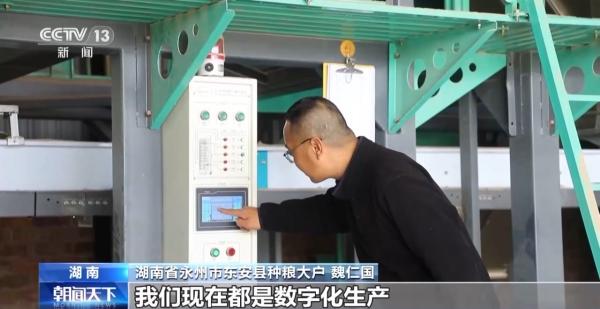
“十五五”新蓝图·新机遇丨强基础补短板 农业加快迈向现代化大产业
Xin Hua She· 2025-11-05 01:50
Core Insights - The article emphasizes the importance of modernizing agriculture in China, particularly in the context of the "14th Five-Year Plan" and the upcoming "15th Five-Year Plan" [1][2][3] - It highlights the need to enhance agricultural production capacity and quality, aiming to transform agriculture into a modern large-scale industry [2][3][4] Agricultural Production and Modernization - China's grain production is expected to achieve another bumper harvest, with a total grain output surpassing 1.4 trillion jin last year, ensuring food security for 1.4 billion people [1][2] - The per capita grain availability in China has reached 500 kg, indicating a stable supply of staple food [1] - The self-sufficiency rate for soybeans increased by 4 percentage points from 2020, while the self-sufficiency rate for edible vegetable oil rose by nearly 5 percentage points [2] Challenges and Strategic Focus - Despite progress, challenges remain in agricultural modernization, including low production efficiency, insufficient industrial chain extension, and weak international competitiveness [2][3] - The "15th Five-Year Plan" prioritizes addressing agricultural issues, promoting urban-rural integration, and enhancing living conditions in rural areas [2][4] Technological Advancements - Technological progress is deemed crucial for agricultural modernization, with a contribution rate of 63.2% from agricultural technology by the end of last year [3] - The mechanization rate for crop farming has exceeded 75%, and the coverage rate for quality seeds is over 96% [3] Future Outlook - The development of agricultural technology will be emphasized, focusing on high-yield, high-quality varieties, efficient water-saving technologies, and advanced machinery suitable for hilly areas [4] - Cold chain logistics is identified as a significant shortcoming in the agricultural supply chain, with potential for growth driven by e-commerce [5] - Investments in cold chain logistics are expected to increase, enhancing the digitalization and industrialization of the sector [5]
种足、种好、种优 “稻麦衔接”抢农时夯实2026年夏粮丰收基础
Yang Shi Wang· 2025-11-04 04:57
Core Viewpoint - The article discusses the challenges and solutions related to winter wheat planting in the Huang-Huai-Hai region of China, particularly due to delayed rice harvesting caused by continuous rainy weather. Group 1: Agricultural Challenges - The Huang-Huai-Hai region is a significant winter wheat production area in China, facing delays in rice harvesting due to prolonged rainy weather, impacting the planting schedule for winter wheat [1] - In Yuanyang County, the rice harvest has been delayed by nearly 20 days compared to previous years due to insufficient accumulated temperature, compressing the winter wheat planting window [5] Group 2: Technological Solutions - The use of drones for sowing winter wheat is being promoted, with plans to implement this technology by 2025, allowing for sowing 10 to 15 days before rice harvesting [8] - Advanced precision sowing machines equipped with Beidou navigation systems are being utilized to ensure accurate sowing and simultaneous fertilization [7] Group 3: Implementation and Support - In Huai County, over 1.8 million acres of winter wheat planting is progressing smoothly, with local agricultural departments organizing technical personnel to guide farmers on adjusting sowing depth and density based on soil moisture conditions [9] - The promotion of suitable late-sowing varieties and key technologies is being emphasized to ensure a solid foundation for summer grain harvests in 2026 [9]
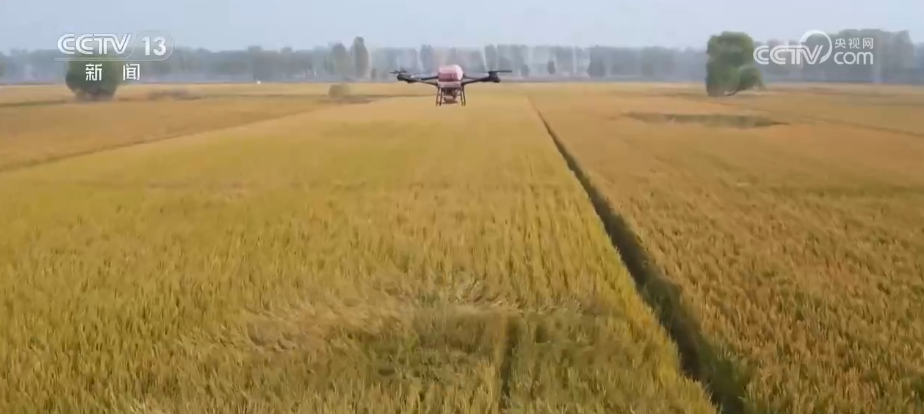
沃野开镰迎丰收 智慧农业绘新景
Zhen Jiang Ri Bao· 2025-10-26 23:27
Core Insights - The article highlights the successful harvest of rice in the high-standard farmland of Dinggang Town, Zhenjiang Economic Development Zone, showcasing the integration of modern agricultural technology and mechanization in enhancing food production and farmer income [1][2][3] Group 1: Harvest and Production - The rice harvest at Ronghe Farm covers 9,720 acres, with a fully mechanized process from harvesting to drying and processing, reflecting the modern agricultural concept of "storing grain in the land and technology" [1] - The farm is currently harvesting approximately 400 tons of rice daily, with half being dried on-site and the other half sold directly to grain merchants [1] - The expected yield for hybrid rice is around 800 kg per mu, while glutinous and japonica rice are projected to yield approximately 650 kg per mu [2] Group 2: Technological Advancements - The introduction of new agricultural machinery, including two tractors and three precision seeders, enhances operational efficiency and reduces seed usage [2] - The precision seeders allow for a reduction in seed usage from 40-45 jin per mu to 30-35 jin, saving approximately 200,000 yuan for 10,000 mu of land [2] - The integration of various technologies such as drones for fertilization and intelligent drying systems signifies a shift towards modern, smart agriculture [3]

【图解】当农业插上科技的翅膀 丰收答卷成色更足
Zhong Guo Jing Ji Wang· 2025-09-26 07:01
Core Insights - The article highlights the achievements in agricultural and rural development during the "14th Five-Year Plan" period, emphasizing the importance of agricultural technology innovation and modernization efforts [1][12]. Agricultural Technology Innovation System - China's agricultural technology innovation level has entered the world's top tier, with over 800 agricultural research institutions and more than 120,000 researchers [3]. - Significant breakthroughs have been made in core technologies, including new genes for crop yield and quality control, as well as proprietary sensors for soil nutrient prediction and animal behavior monitoring [3]. Crop Variety and Coverage - The area of independently bred crop varieties exceeds 95%, with the coverage rate of quality seeds surpassing 96% [4]. - Domestically bred varieties such as white feather broilers and Huaxi cattle are gaining market share, breaking foreign monopolies [5]. Agricultural Machinery Development - A range of suitable agricultural machinery has been developed, including high-horsepower tractors and precision seeding machines, contributing to a comprehensive mechanization rate in crop farming [6]. Technology Enterprise Cultivation - Over 1,000 enterprises are involved in national agricultural technology projects, accounting for 51% of participating units, promoting the "Hundred-Thousand-Million" agricultural technology enterprise cultivation project [7]. Application of Agricultural Technology Achievements - A nationwide agricultural technology promotion service system has been established, with over 400,000 grassroots agricultural technology promotion personnel active throughout the year [10]. - The system provides comprehensive technology innovation services covering the entire industry chain for key crops like rice, wheat, and livestock [11]. Future Outlook - The foundation for agricultural and rural development is becoming more solid, with a bright future anticipated as modern technology is leveraged to enhance agricultural productivity [12].

中国农业科技创新整体水平已进入世界第一方阵
Zhong Guo Xin Wen Wang· 2025-09-16 09:08
Core Viewpoint - China's agricultural technology innovation has reached a leading position globally, marking significant advancements in key agricultural technologies and self-sufficiency in crop varieties [1][2]. Group 1: Agricultural Technology Innovations - Over the past five years, China has made rapid breakthroughs in key core technologies in agriculture, developing essential crop varieties such as high-yield rice, drought-resistant wheat, and high-oil soybeans [1]. - The area of self-bred crop varieties has exceeded 95%, ensuring that "Chinese grain" primarily uses "Chinese seeds" [1]. - Self-bred livestock and aquaculture species have broken foreign monopolies, with market shares continuously increasing [1]. Group 2: Application of Agricultural Technology - A total of 50 modern agricultural industry technology systems have been established nationwide, providing comprehensive technology innovation services across the entire industry chain [2]. - Each year, 300 leading agricultural varieties and technologies are recommended to producers, enhancing the availability and customization of technological solutions [2]. - More than 1,000 enterprises are involved in ongoing national agricultural technology projects, accounting for 51% of total participating units [2].