
耐密宜机收玉米

Search documents
促进乳制品消费 强化生猪产能综合调控 农业农村部最新部署
Zhong Guo Zheng Quan Bao· 2026-02-06 05:01
Core Viewpoint - The Ministry of Agriculture and Rural Affairs has released implementation opinions to ensure the modernization of agriculture and rural areas, focusing on stabilizing grain production and enhancing agricultural technology and enterprise development [1][3]. Group 1: Grain Production and Livestock Management - The plan aims to implement a new round of actions to increase grain production capacity by 1 billion jin, ensuring stable grain output at around 1.4 trillion jin [2][3]. - Comprehensive regulation of pig production capacity will be strengthened, including annual production registration for major pig farming enterprises [3]. - Support for the dairy industry will be enhanced, promoting integrated development of breeding and processing, and expanding the scope of student milk consumption [3]. Group 2: Agricultural Technology Innovation - The implementation opinions emphasize enhancing agricultural technology innovation efficiency, promoting the integration of technology and industry [5][6]. - Major projects in biological breeding and key agricultural research plans will be advanced to achieve significant original results in core seed sources and key agricultural machinery [6][7]. - A large-scale application of new agricultural technologies and products will be promoted, with a focus on grassroots agricultural technology promotion [6]. Group 3: Smart Agriculture Development - The plan includes actions for high-quality development of agricultural machinery, promoting the research and application of advanced and renewable energy agricultural machinery [9]. - The development of smart agriculture will be prioritized, utilizing AI, drones, IoT, and robotics to enhance agricultural practices [9]. - Establishment of smart agriculture technology centers and a comprehensive agricultural data platform will be pursued to support innovation [9]. Group 4: Strengthening Agricultural Enterprises - The implementation opinions propose the cultivation of competitive agricultural leading enterprises and the creation of a comprehensive agricultural product industry chain [11]. - A national key leading enterprise recognition program will be conducted, along with an agricultural entrepreneur cultivation plan [11]. - The plan aims to enhance agricultural brand development, promoting high-quality regional public brands and agricultural specialty brands [11].
促进乳制品消费,强化生猪产能综合调控,农业农村部最新部署
Zhong Guo Zheng Quan Bao· 2026-02-06 04:51
Core Viewpoint - The Ministry of Agriculture and Rural Affairs has released implementation opinions to promote agricultural modernization and rural revitalization, focusing on enhancing grain production capacity, livestock management, agricultural technology innovation, and the development of competitive agricultural enterprises [1][2]. Group 1: Grain Production and Livestock Management - The plan aims to implement a new round of actions to increase grain production capacity by 1 trillion jin, ensuring stable grain output at around 1.4 trillion jin [2]. - Comprehensive regulation of pig production capacity will be strengthened, including annual production registration for leading pig farming enterprises and managing the national breeding sow inventory [3]. - Support for the dairy industry will be enhanced, promoting integrated development of breeding and processing, and encouraging the expansion of milk consumption among students [3]. Group 2: Agricultural Technology Innovation - The implementation opinions emphasize enhancing agricultural technology innovation efficiency, promoting the integration of technology and industry [4]. - Major projects in biological breeding and key agricultural research and development plans will be advanced to achieve significant original results in core seed sources and key agricultural machinery [5]. - The plan includes large-scale application actions for new agricultural technologies and products, promoting the transformation and application of agricultural technology achievements [5]. Group 3: Smart Agriculture - The plan calls for high-quality development of agricultural machinery, including the development of high-end intelligent machinery and key components [7]. - The application of artificial intelligence in agriculture will be expanded, with a focus on drones, IoT, and robotics [7]. - Establishment of smart agriculture technology centers and the development of a comprehensive agricultural data platform are also highlighted [7]. Group 4: Development of Agricultural Enterprises - The implementation opinions propose the cultivation of competitive agricultural leading enterprises and the creation of a comprehensive agricultural product industry chain [8]. - A national key leading enterprise recognition program will be conducted, along with an agricultural entrepreneur cultivation plan [8]. - The plan emphasizes the importance of agricultural brand development and the promotion of high-quality regional public brands [8].
【中国经济新看点】农业“芯片”守护中国饭碗
Zhong Guo Jing Ji Wang· 2026-01-16 22:20
Core Viewpoint - The article highlights the significant advancements in China's seed industry over the past five years, emphasizing self-sufficiency in seed sources and the successful implementation of the Seed Industry Revitalization Action Plan, which aims to enhance agricultural productivity and food security. Group 1: Seed Source Development - Over 95% of crop varieties are independently bred, with domestic seed sources for livestock and aquaculture exceeding 80% and 85% respectively, showcasing the progress in seed industry development [2] - The national seed supply capacity has improved significantly, with a supply guarantee rate of 80% from national seed bases, ensuring that "Chinese grain" primarily uses "Chinese seeds" [2] - The introduction of three new white feather broiler chicken breeds has filled the domestic gap in this market segment, enhancing the quality of poultry products [2] Group 2: Innovation and Technology - China has developed new crop varieties resistant to diseases and pests, with yields and quality of rice and wheat continuing to improve, maintaining international leadership [3] - The use of smart greenhouses for rice variety testing and advanced seed vitality detection technology has increased efficiency in seed quality assessment [4] - The overall level of agricultural technology innovation in China has entered the global top tier, with significant projects in biological breeding and genetic improvement [4] Group 3: International Cooperation - China's seed exports are projected to exceed imports for the first time in 2024, achieving a trade surplus, with exports reaching over 40 countries [6] - Companies are actively participating in the Belt and Road Initiative, promoting domestic varieties internationally and enhancing agricultural cooperation [7] - The focus for the 14th Five-Year Plan includes addressing challenges, enhancing strengths, and ensuring the high-quality development of the seed industry [7]
银杏濒危?保护种质资源不止是保护种子
Ren Min Ri Bao· 2025-12-28 04:31
Group 1 - The core issue is the distinction between wild ginkgo, which is endangered, and landscape ginkgo, which lacks genetic diversity despite being common in cities [1] - Germplasm resources are crucial for agriculture, encompassing not just seeds but also various plant parts and genetic materials, highlighting their broader significance [1] - The importance of germplasm resources is underscored as they are foundational to agricultural innovation and food security [2] Group 2 - China is a major germplasm resource country but still faces challenges in precise identification and the development of breakthrough varieties [3] - Current phenotypic identification of germplasm resources in China is only 35%, with a target of 60% by 2030, indicating a significant gap [3] - The integration of artificial intelligence in breeding innovation is essential for enhancing the breeding system and accelerating the development of new varieties [3]
种质资源家底更厚实 2025年我国种业振兴行动取得积极成效
Yang Shi Xin Wen· 2025-12-12 13:23
Group 1 - The Ministry of Agriculture and Rural Affairs aims to achieve significant results in seed industry revitalization by 2025, with over 95% of crop varieties being independently bred and domestic market shares for livestock, aquatic products, and vegetables exceeding 80%, 85%, and 91% respectively [1] - The total amount of preserved agricultural genetic resources in China has reached the highest in the world, with the establishment of a national livestock genetic resource bank and the completion of a genetic resource improvement plan for corn [1][2] - The safety level of agricultural production seeds has steadily improved, with a seed supply guarantee rate of 80%, an increase of 10 percentage points since 2020, and a seed quality compliance rate maintained at over 98% [3] Group 2 - The seed industry technology innovation has entered the world's top tier, with significant advancements in core technologies and the development of high-quality crop varieties such as water-saving wheat and high-yield soybeans [2] - The cultivation system for seed industry enterprises has been established, with over 60% of technology research tasks led by enterprises, and R&D investment in crop seed companies doubling since 2020 [2] - Regulatory measures have been implemented to enhance the management of plant varieties, resulting in a 20% decrease in seed-related cases compared to 2020, fostering a better market environment for innovation [3]
新华鲜报·“十四五”发展亮点丨端稳中国饭碗!农作物自育品种超95%
Xin Hua Wang· 2025-12-12 01:28
Core Insights - The article emphasizes the significant progress in China's seed industry, highlighting the goal of transforming from a major seed producer to a strong seed nation through the implementation of the "14th Five-Year Plan" and the "Seed Industry Revitalization Action Plan" [1][3]. Group 1: Seed Industry Development - China's self-bred crop varieties now account for over 95% of the total, with domestic sources for livestock and aquatic species exceeding 80% and 85% respectively, enhancing food security [1]. - The country has made breakthroughs in breeding, developing essential varieties such as disease-resistant wheat and high-yield soybeans, which are crucial for agricultural productivity [1][3]. Group 2: Agricultural Resource Management - A comprehensive national agricultural germplasm resource survey has been completed, marking the largest and most extensive effort since the founding of the People's Republic of China, resulting in the establishment of world-class germplasm banks [3]. - The identification and utilization of germplasm resources have accelerated, leading to a more dynamic use of stored resources [3]. Group 3: Innovation and Regulation - A favorable environment for innovation has been fostered through the revision of the Seed Law and the Plant Variety Protection Regulations, alongside a 20% reduction in seed-related legal cases since 2020 [3]. - The government aims to enhance the precision in identifying agricultural germplasm resources and convert these advantages into innovation strengths, thereby accelerating the pace of seed industry innovation [5]. Group 4: International Trade and Competitiveness - In 2024, China's seed exports surpassed imports for the first time, achieving a trade surplus, with hybrid rice, cotton, and vegetable seeds being exported to over 40 countries [5]. - The article highlights the increasing global competitiveness of Chinese seeds, with various domestically bred livestock and aquatic species also entering international markets [5].

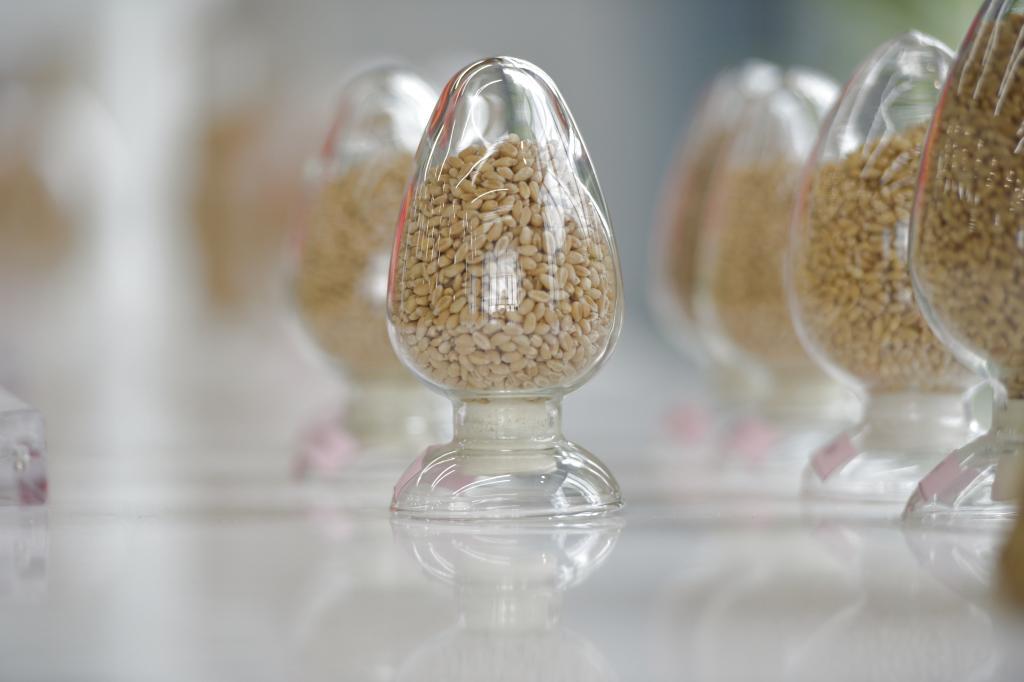
新华鲜报·“十四五”发展亮点|端稳中国饭碗!农作物自育品种超95%
Xin Hua She· 2025-12-12 01:23
Core Viewpoint - The article emphasizes the significant progress in China's seed industry, highlighting the country's efforts to enhance seed source security and achieve self-sufficiency in agricultural seeds, with over 95% of crop varieties being independently bred [1] Group 1: Seed Industry Development - The "14th Five-Year Plan" has led to a marked improvement in seed source security, with domestic breeding varieties now accounting for over 95% of crops, and domestic market shares for livestock and aquatic seeds exceeding 80% and 85% respectively [1] - The Central Committee's "Seed Industry Revitalization Action Plan" was approved in July 2021, outlining a roadmap for transforming China from a major seed producer to a strong seed nation [1] - Significant breakthroughs in breeding have been achieved, including the development of high-resistance wheat and rice varieties, as well as high-yield soybeans, which are accelerating the update of seed varieties [1] Group 2: Agricultural Resource Management - A comprehensive national agricultural germplasm resource survey has been completed, marking the largest and most extensive effort since the founding of New China, resulting in the establishment of three national germplasm banks that rank first globally in resource preservation [1] - The identification and utilization of germplasm resources have been expedited, leading to a more active use of stored resources [1] - A favorable environment for innovation has been fostered through the revision of the Seed Law and the Plant Variety Protection Regulations, alongside a 20% decrease in seed-related legal cases since 2020 [1] Group 3: International Trade and Future Outlook - In 2024, China's seed exports are projected to exceed imports for the first time, achieving a trade surplus [1] - Chinese hybrid rice, cotton, and vegetable seeds are being exported to over 40 countries, with domestically bred livestock and aquatic species also entering international markets [1] - The Ministry of Agriculture and Rural Affairs plans to enhance the precise identification of germplasm resources and convert these advantages into innovation, aiming to accelerate the pace of seed industry innovation [1]
【人民日报】全方位夯实粮食安全根基
Ren Min Ri Bao· 2025-11-19 00:39
Core Insights - The "14th Five-Year Plan" emphasizes enhancing agricultural production capacity and quality efficiency, as well as strengthening the supply guarantee for important agricultural products like grain, which is crucial for food security over the next five years [1] Group 1: Agricultural Development Strategies - The focus is on broadening the approach to food security beyond limited arable land, promoting diverse food resource development to meet the nutritional and personalized needs of consumers [1] - Black龙江 is highlighted as a pioneer in implementing a comprehensive food strategy, while Fujian is developing its unique agricultural industries, such as Ningde big yellow fish and Gutian edible fungi [1] Group 2: Technological Advancements in Agriculture - The article stresses the importance of technological breakthroughs in achieving agricultural modernization, with a focus on developing new agricultural production capabilities [2] - Black龙江 has achieved a 100% coverage rate of high-quality seeds for major crops, introducing new varieties that address critical agricultural challenges [2] - Automation and precision farming are being implemented, exemplified by the 15,000-acre unmanned farm operated by Beidahuang Group, which utilizes smart machinery for efficient operations [2] Group 3: Agricultural Service Systems - The article discusses the transformation of agricultural services, with cooperatives providing comprehensive support from planting to harvesting, reducing the burden on farmers [3] - In 河南, 932 agricultural service centers have been established to meet farmers' needs, while 广东 is enhancing its agricultural machinery service capabilities [3] - The establishment of a new agricultural social service system is essential for boosting confidence and motivation among service providers and ensuring benefits for farmers [3]
摸清“家底”、增强底气!“数”里行间看种业振兴精彩答卷
Yang Shi Wang· 2025-11-15 02:48
Core Viewpoint - The modernization of agriculture in China is heavily reliant on seed development, with significant progress made during the "14th Five-Year Plan" period in various aspects of the seed industry. Group 1: Agricultural Resource Management - The agricultural genetic resource inventory conducted during the "14th Five-Year Plan" is the largest and most comprehensive since the founding of New China, establishing a solid foundation of resources and creating three national gene banks for crops, livestock, and marine fisheries, with total resource preservation ranking first in the world [3]. Group 2: Technological Innovation - The seed industry has entered the world's top tier in technological innovation, establishing a multi-level breeding innovation system that has produced significant new varieties, including wheat resistant to scab, rice resistant to planthoppers, corn suitable for mechanical harvesting, and high-yield soybeans resistant to herbicides [5]. Group 3: Seed Supply Capacity - The seed supply capacity has significantly improved, with a national team of seed breeding bases formed around key regions such as Gansu for corn, Sichuan for rice, Heilongjiang for soybeans, and Hainan for tropical crops, achieving a seed supply guarantee rate of 80%, an increase of 10 percentage points since 2020 [9]. Group 4: Seed Source Security - Over the past five years of the seed revitalization initiative, the safety level of seed sources has steadily improved, with over 95% of crop varieties being independently bred, and domestic market shares for livestock and aquatic seed sources exceeding 80% and 85%, respectively, ensuring overall agricultural seed safety and manageable risks [11].
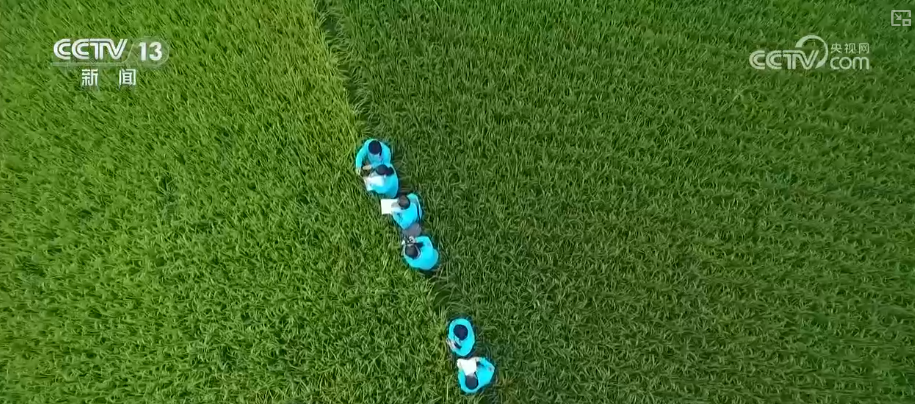
我国“十四五”种业振兴行动阶段性任务顺利完成
Yang Shi Xin Wen· 2025-11-15 00:21
Core Insights - The core viewpoint of the article emphasizes the significant advancements in China's seed industry during the "14th Five-Year Plan" period, highlighting the successful completion of key tasks in the seed revitalization initiative [1] Group 1: Agricultural Resource Management - China has conducted the largest and most comprehensive national agricultural germplasm resource survey since its founding, establishing a solid foundation of resources and creating three national germplasm banks for crops, livestock, and marine fisheries, with total resource preservation ranking first in the world [1] - The self-breeding varieties of crops account for over 95%, while domestic seed sources for livestock and aquatic products have market shares exceeding 80% and 85%, respectively, ensuring overall agricultural seed safety and manageable risks [1] Group 2: Technological Innovation - The seed industry has entered the world's top tier in technological innovation, with the development of significant new varieties such as high-resistance wheat to Fusarium head blight, rice resistant to rice planthoppers, and high-yield soybeans tolerant to herbicides [1] Group 3: Seed Supply Capacity - The seed supply capacity has significantly improved, with the national seed supply guarantee rate reaching 80%, an increase of 10 percentage points compared to 2020, supported by key breeding bases in Gansu, Sichuan, Heilongjiang, and Hainan [1]