
高铁线路

Search documents
西班牙高铁线路再现钢轨断裂 相关区段临时限速
Jing Ji Guan Cha Wang· 2026-01-26 10:56
Core Viewpoint - The Spanish railway infrastructure management agency reported a new rail fracture on the high-speed line between Madrid and Barcelona, leading to a temporary speed limit of 80 kilometers per hour on the affected section [1] Group 1 - The discovery of a new rail fracture point has prompted immediate action to ensure safety on the high-speed rail line [1] - Technical personnel are currently engaged in repair operations, utilizing connecting components to reinforce and link the damaged rail [1] - The agency aims to restore safe operation of the line as quickly as possible [1]
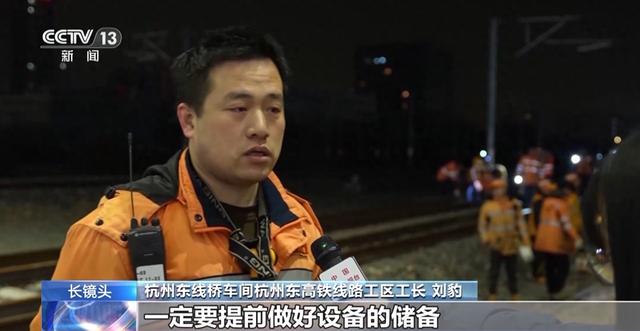
迎春运“大考” 他们连夜开展高铁换轨作业
Xin Lang Cai Jing· 2026-01-24 23:42
Core Viewpoint - The article highlights the preparations and efforts made by the Hangzhou East Station to ensure smooth operations during the upcoming Spring Festival travel rush, focusing on the critical task of rail replacement to enhance safety and stability [1]. Group 1: Rail Replacement Operations - The rail replacement operation at Hangzhou East Station involves 84 workers who must complete the replacement of 300 meters of rail within a 240-minute window during the night when high-speed trains are not in operation [1]. - The process of rail replacement is compared to "changing parts in a precision watch," emphasizing the need for millimeter-level precision to avoid any impact on train operation stability [7]. - The operation includes several precise steps such as loosening fasteners, sawing old rails, removing old rails, and inserting new rails, all of which must be executed in a coordinated manner [5]. Group 2: Safety and Standards - High standards and safety are emphasized as the primary requirements for the operation, ensuring the safety of both passengers and trains [9]. - The final inspection phase involves meticulous checks of rail gauge, level, and fastener conditions, with real-time adjustments made to ensure compliance with safety standards [11]. - The commitment of the workers is highlighted, with a focus on their dedication to ensuring the safe return of millions of travelers during the Spring Festival [13].

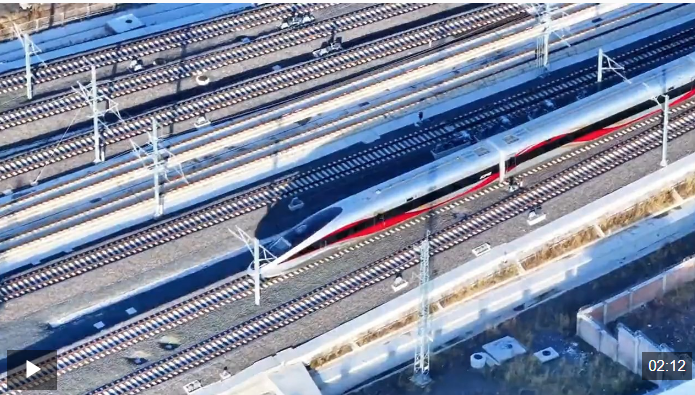
视频丨2025年,多条新线开通,哪一条经过你的家乡?
Yang Shi Xin Wen Ke Hu Duan· 2026-01-04 11:54
Core Insights - The article highlights the expansion of China's high-speed rail network, with operational mileage expected to exceed 50,000 kilometers by 2025 [2] - The "Eight Vertical and Eight Horizontal" high-speed rail network is becoming more integrated, enhancing connectivity across the country [2] - New lines and stations are being constructed, contributing to a dynamic and prosperous transportation landscape in China [2] Industry Developments - The high-speed rail network is set to continue its growth with multiple new lines scheduled for completion by 2025 [2] - The expansion of the rail network is aimed at improving the flow of people and goods, fostering economic development [2] - The ongoing development reflects a commitment to creating a more interconnected and efficient transportation system across China [2]
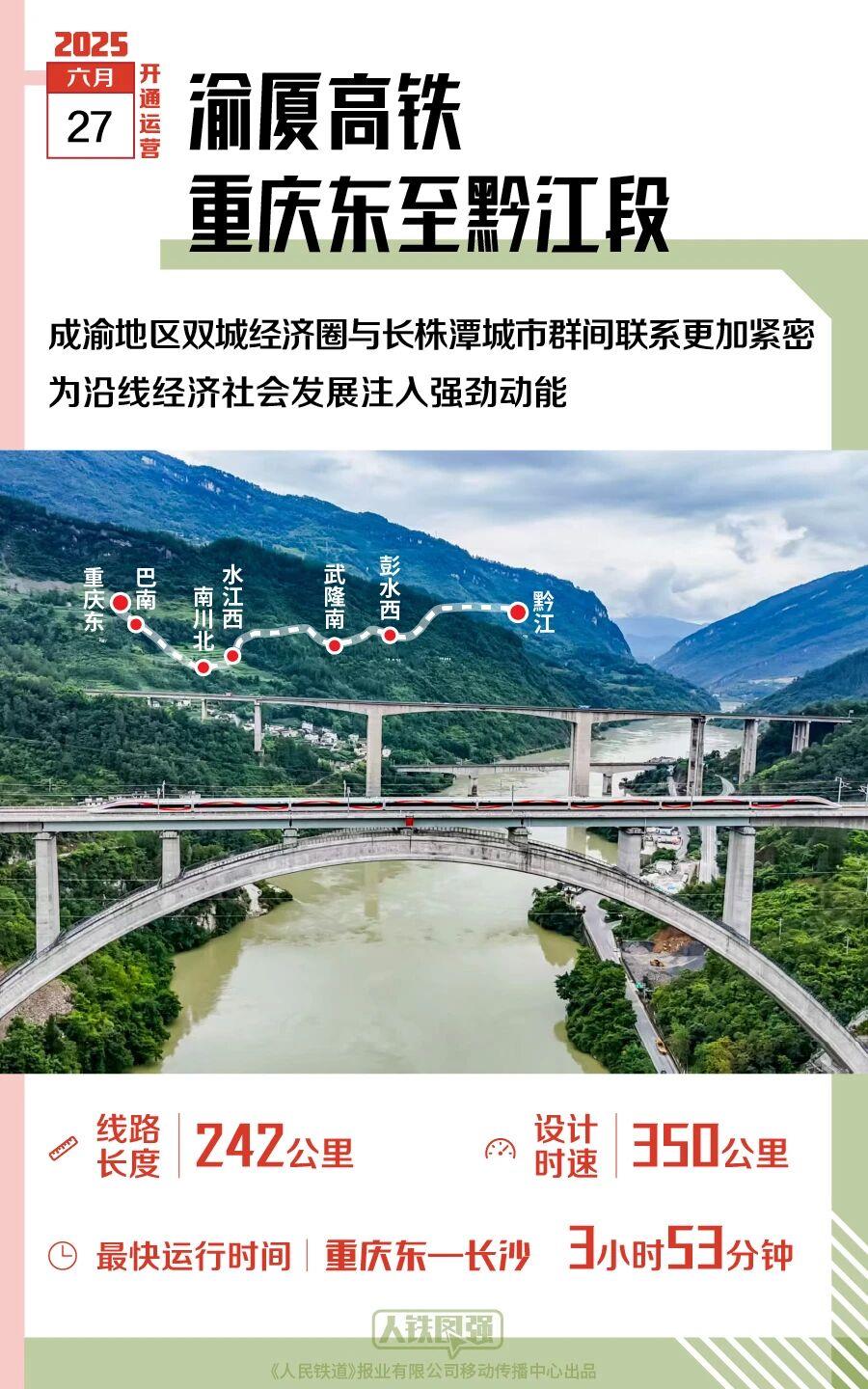
2025年,多条新线开通,哪一条经过你的家乡?
Xin Lang Cai Jing· 2026-01-04 11:43
Core Viewpoint - The expansion of China's high-speed rail network is set to continue, with the operational mileage expected to exceed 50,000 kilometers by 2025, contributing to the country's economic development and connectivity [1]. Group 1: High-Speed Rail Expansion - Multiple new high-speed rail lines are scheduled to be completed and operational by 2025, enhancing connectivity across various regions [1]. - The high-speed rail network is designed to facilitate tourism and economic development along the routes, particularly in the Northeast and Central China [7][8]. Group 2: Regional Development - The development of high-speed rail lines is expected to significantly improve the economic landscape of the Yangtze River Economic Belt and the integration of the Yangtze River Delta [23][35]. - The construction of new lines will support the high-quality development of border ethnic regions and enhance services for the China-ASEAN Free Trade Area [10]. Group 3: Infrastructure and Connectivity - The "Eight Vertical and Eight Horizontal" high-speed rail network is becoming more integrated, with new lines and stations being established across the country [38]. - The expansion aims to create a more fluid transportation system, enhancing the movement of people and goods throughout China [38].
高铁营业里程突破5万公里后,将转向“精耕”
Jing Ji Guan Cha Wang· 2025-12-26 07:50
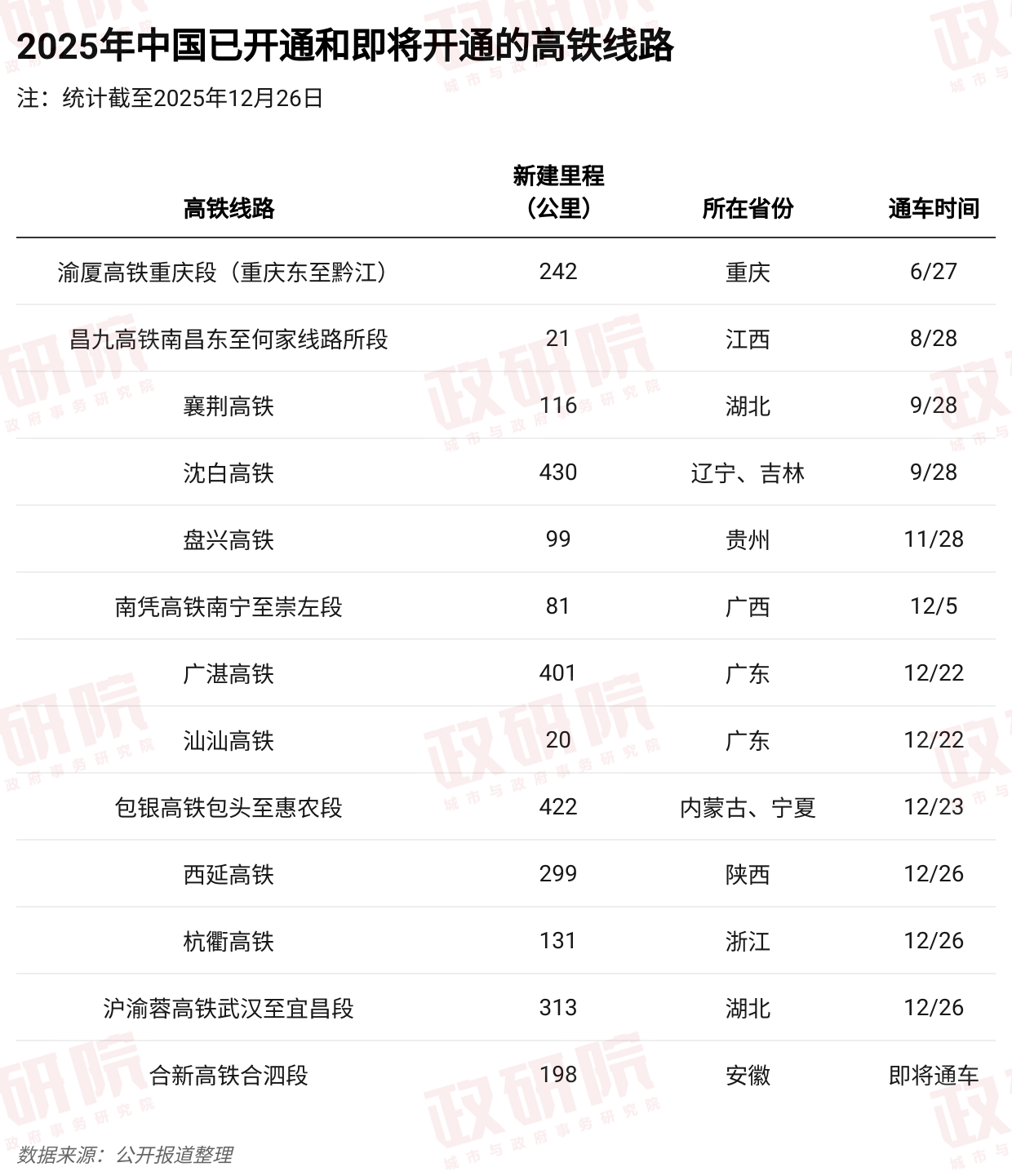
Core Viewpoint - The recent opening of multiple high-speed rail lines in China marks a significant expansion of the national high-speed rail network, enhancing connectivity and economic integration across various regions [1][3][5]. Group 1: High-Speed Rail Expansion - As of December 26, 2025, a total of 12 new high-speed rail lines have been opened, bringing the total operational mileage to over 50,000 kilometers, with an increase of approximately 2,575 kilometers in 2025 [1][2]. - The newly opened lines include significant routes such as the Guangzhan High-Speed Railway and the Baoyin High-Speed Railway, which have improved regional connectivity and reduced travel times [1][4][5]. Group 2: Economic Impact - The new high-speed rail lines are expected to reshape regional economic structures by enhancing transportation efficiency, facilitating the movement of people and goods, and promoting economic growth in connected areas [3][6]. - The opening of the Baoyin High-Speed Railway has significantly reduced travel time between key cities, thereby enhancing economic interactions and collaboration in the northwest region [3][4]. Group 3: Regional Connectivity - The new lines contribute to the completion of the national "eight vertical and eight horizontal" high-speed rail network, improving access to major urban centers and integrating previously isolated regions into the national economy [3][4][5]. - The introduction of "city-to-city" high-speed rail connections has been achieved in several provinces, enhancing local economies and facilitating regional development [7][8]. Group 4: Future Development and Challenges - The focus of future high-speed rail development is expected to shift towards optimizing existing networks and enhancing regional connectivity rather than solely expanding mileage, in response to financial pressures and changing demographic trends [10][11]. - The financial sustainability of high-speed rail projects is a growing concern, with many lines facing operational losses, necessitating a more strategic approach to new projects and existing line evaluations [10][11].
到2028年我省高铁里程将达4400公里
Qi Lu Wan Bao· 2025-12-18 12:02
Core Viewpoint - The Shandong provincial government has made significant progress in high-speed railway construction during the "14th Five-Year Plan" period, transitioning from a "follower" to a "leader" in high-speed rail development in China [1]. Group 1: Achievements in High-Speed Rail Construction - During the "14th Five-Year Plan," Shandong has completed seven high-speed rail projects, increasing the total high-speed rail mileage from 2,110 kilometers at the end of the "13th Five-Year Plan" to 3,055 kilometers, ranking first in the country [1]. - The province has opened 15 high-speed rail lines, expanding the number of interprovincial high-speed rail corridors to five [1]. Group 2: Economic and Connectivity Impact - The completion of the Rizhao-Lanzhou and Jinan-Zhengzhou high-speed rail lines has established dual high-speed rail corridors connecting Shandong to the Central Plains and Western/Southwestern regions, facilitating rapid access to major urban clusters [2]. - Travel times from Jinan and Qingdao to Zhengzhou have been significantly reduced to 1 hour and 48 minutes and 3 hours and 46 minutes, respectively, enhancing convenience for residents [2]. - The opening of the Weifang-Yantai and Laiwu-Rongcheng high-speed rail lines has created a main channel for external communication for the Jiaodong Peninsula, ending the history of several economically strong counties lacking high-speed rail access [2]. Group 3: Future Plans for High-Speed Rail Development - In the "15th Five-Year Plan" period, Shandong aims to accelerate the construction of six ongoing high-speed rail projects, targeting a total high-speed rail mileage of 4,400 kilometers by 2028, thereby forming a modern high-speed rail network across the province [3]. - The province is actively seeking to include seven additional projects in the national planning, which will expedite preliminary work and construction once approved [3].
现代化基础设施网络激发协同发展活力
Shan Xi Ri Bao· 2025-12-16 22:53
Core Viewpoint - The construction of significant water and transportation infrastructure in Shaanxi province is set to enhance regional development and economic growth, with projects like the Dongzhuang Water Conservancy Project and the Hanjiang to Weihe Water Diversion Project playing pivotal roles in this transformation [1][2][3]. Infrastructure Development - The Dongzhuang Water Conservancy Project, a 230-meter high dam, has transitioned from construction to operational phase, providing essential flood control and water supply to the Weihe River basin [1] - The Hanjiang to Weihe Water Diversion Project utilizes long tunnels to supply water from the Han River to the Guanzhong Plain, further supporting regional water needs [2] - Shaanxi's "14th Five-Year Plan" emphasizes the development of a comprehensive transportation network, including a "米" shaped and five horizontal and two vertical transportation framework, to enhance connectivity and efficiency [3] Economic Impact - The integration of high-speed rail lines, exceeding 2000 kilometers in total length, is expected to significantly reduce travel times and enhance economic activity along the routes, creating a more interconnected economic landscape [3][4] - The establishment of a modern energy transportation system in northern Shaanxi, including a coal transport railway network and oil and gas pipelines, supports the region's energy supply and economic stability [5] - Shaanxi's GDP grew by 5.3% year-on-year in the first three quarters of the year, outperforming the national average, indicating strong economic resilience and growth driven by infrastructure investments [5] Regional Collaboration - The infrastructure projects are fostering deeper regional integration, with improved transportation facilitating economic collaboration between cities like Xi'an and Xianyang [4] - The coordinated development of the three regions—Guanzhong, southern Shaanxi, and northern Shaanxi—aims to enhance overall competitiveness and economic circulation within the province [5] Long-term Vision - The ongoing infrastructure developments are not only aimed at short-term economic stabilization but also at laying a solid foundation for sustainable, high-quality economic growth in the long run [6]
铁路投资持续领跑,高技术产业投资依然亮眼
Hua Xia Shi Bao· 2025-11-15 10:20
Investment Overview - In the first ten months of the year, overall investment has declined, but investments related to people's livelihood and high-tech industries have shown strong performance [2] - Fixed asset investment (excluding rural households) reached 37,153.5 billion yuan, a year-on-year decrease of 0.5%, while investment excluding real estate development grew by 3.0% [2] - October saw a significant drop in fixed investment, with a year-on-year decline of 10.7% [2] Sector Performance - High-tech industries continue to grow significantly, with investments in information services, aerospace, and computer manufacturing increasing by 33.1%, 20.6%, and 7.4% respectively, outperforming overall investment growth rates [2] - Railway construction has been robust, with fixed asset investment reaching 671.5 billion yuan, a year-on-year increase of 5.7% [2][4] Infrastructure Investment - Infrastructure investment grew by 1.1% in the first three quarters, contributing to a 0.2 percentage point increase in total investment [5] - Railway investment growth is notably higher than the average, with several key projects progressing well [4][5] Real Estate Sector - Real estate investment has seen a significant decline, with a year-on-year drop of 14.7% in the first ten months, negatively impacting overall investment growth [7] - In October, real estate investment decreased by 23%, with sales area and funding for real estate companies also declining sharply [6][7] Manufacturing and Other Industries - Manufacturing investment grew by 2.7% year-on-year, accounting for 25.6% of total investment, which is an increase from the previous year [7] - Investments in the automotive and transportation equipment sectors maintained double-digit growth [5] Green and High-Tech Investments - Investments in high-tech sectors such as aerospace and information services grew by 19.7% and 32.7% respectively [8] - Clean energy investments, including solar and wind power, saw a combined year-on-year growth of 10.4% [8] Economic Outlook - Despite a slight decline in investment in October, the overall investment potential remains significant, with expectations for reasonable growth in the fourth quarter due to new policies and financial tools [3][8]
同比增长5.7%!前10月全国铁路完成固定资产投资6715亿元|快讯
Sou Hu Cai Jing· 2025-11-14 05:48
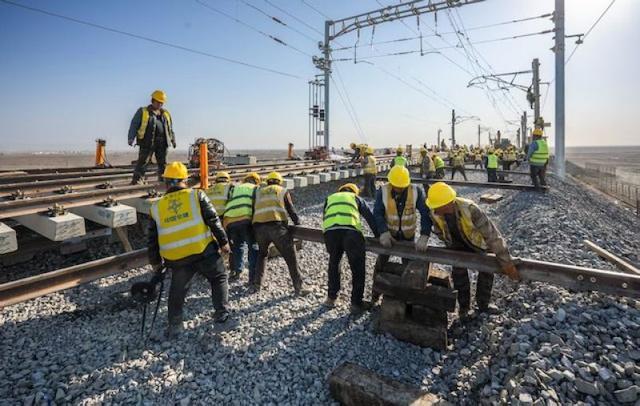
Group 1 - The core viewpoint of the article highlights the significant progress in railway construction in China, with a fixed asset investment of 671.5 billion yuan from January to October, representing a year-on-year increase of 5.7%, which supports high-quality economic development [2] - The China National Railway Group has focused on implementing national strategies and regional economic development, advancing the construction of a modern railway network, and has successfully completed several new lines and stations, enhancing connectivity [2] - Key engineering projects have made positive progress, including the Panxun to Xingyi high-speed railway entering the trial operation phase and the completion of the main structure of Xi'an East Station [2] Group 2 - The railway department plans to implement the spirit of the 20th National Congress and accelerate the construction of modern railway infrastructure, emphasizing safety and quality control to ensure the completion of annual investment tasks [3] - The focus will be on supporting the continuous recovery and improvement of the economy during the 14th Five-Year Plan period [3]
(经济观察)中国十余条高铁预计年内开通 “一小时高铁圈”扩容
Zhong Guo Xin Wen Wang· 2025-08-22 11:20
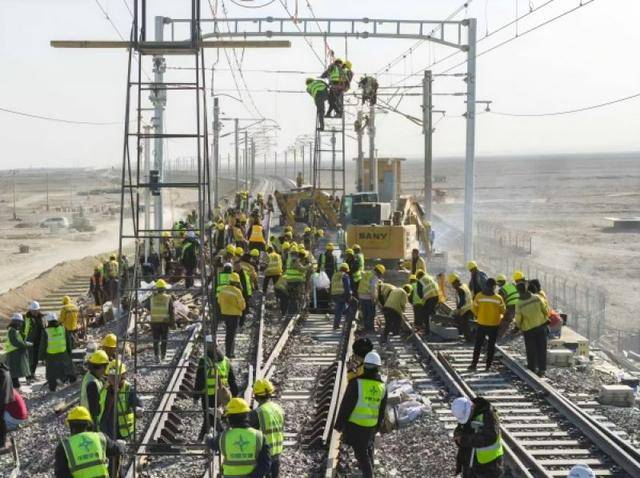
Core Viewpoint - China is set to open over ten high-speed rail lines by the end of the year, enhancing the national "eight vertical and eight horizontal" high-speed rail network and filling regional gaps in connectivity [1][2]. Group 1: Upcoming High-Speed Rail Lines - The Baotou-Yinchuan high-speed railway (Baoyin High-speed Rail) is the first high-speed rail line connecting two minority autonomous regions, covering approximately 517 kilometers with a design speed of 250 km/h [1]. - The Guangzhou-Zhanjiang high-speed railway (Guangzhan High-speed Rail) is entering the joint debugging phase, being the most complex and longest railway project in Guangdong, connecting the Guangdong-Hong Kong-Macao Greater Bay Area and Hainan Free Trade Port [1]. - The Shenyang-Changbai Mountain high-speed railway (Shenbai High-speed Rail) is expected to open by September 30, with a total length of about 430 kilometers and a design speed of 350 km/h [1]. Group 2: Impact on Transportation - The new high-speed rail lines will significantly reduce travel times, such as cutting the travel time from Guiyang to Xingyi from 5 hours to 2 hours, and from Nanning to Pingxiang from over 4 hours to 1 hour [3]. - The Baoyin High-speed Rail will fill the gap in the northwest high-speed rail network, becoming the most convenient route to Beijing, while the Shenbai High-speed Rail will make Liaoning the first province in Northeast China with high-speed rail access between all cities [4]. Group 3: Economic and Regional Development - The new lines will create "one-hour high-speed rail circles," enhancing the connectivity of cities like Shenyang and forming a "one-hour circle" for Wuhan, Xiangyang, and Yichang, promoting regional economic interaction [6]. - To maximize the economic benefits of high-speed rail, cities along the routes need to improve their transportation systems, develop high-speed rail logistics, and implement comprehensive development strategies [6][7].