鸡肉汉堡

Search documents
外资餐饮品牌正加速拥抱中国资本 汉堡王与麦当劳的中国东家皆有“中信渊源”
Mei Ri Jing Ji Xin Wen· 2025-11-13 14:48
Core Insights - The partnership between CPE Yuanfeng and RBI to form Burger King China highlights the struggles of Burger King in the Chinese market, where it has seen stagnant growth compared to competitors like KFC and McDonald's [1][2][4] - The shift in competitive dynamics in China emphasizes the importance of local operational capabilities over foreign brand prestige, leading to increased collaboration between foreign brands and local investors [2][10] Group 1: Market Performance - Burger King has approximately 1,250 stores in China, a decrease from 1,300 in 2019, indicating a net loss of about 50 stores over six years [1] - In contrast, KFC has over 12,000 stores in China, with a net increase of over 5,000 since 2019, while McDonald's is expected to reach 6,820 stores by 2024, adding 1,000 more by 2025 [1][4] - Local brand Tasting has surged from under 1,000 stores to nearly 9,000, showcasing the rapid growth of domestic competitors [1] Group 2: Strategic Shifts - The collaboration with CPE Yuanfeng, which will hold about 83% of the new joint venture, reflects a strategic pivot for Burger King to enhance its local market presence [1][7] - CPE Yuanfeng plans to inject $350 million into Burger King China to support expansion, marketing, menu innovation, and operational improvements [7] - The historical context shows that Burger King entered China late, missing the initial growth phase of Western fast food, which was dominated by KFC and McDonald's [4][5] Group 3: Operational Challenges - Burger King's initial strategy in China focused on a direct management model without franchising, leading to slower growth and a disconnect with local consumer preferences [4][5] - The company has faced challenges in adapting to the fast-changing Chinese market due to remote management practices and a high-end positioning that did not align with local demand [4][5][9] - The acquisition of Burger King China by CPE Yuanfeng is seen as a move to leverage local insights and operational expertise to revitalize the brand [10][11] Group 4: Investment Trends - The trend of Chinese investment firms acquiring foreign brands is driven by the established brand trust and consumer base these brands possess, which reduces the risk compared to building local brands from scratch [10][11] - Financially, the valuation of foreign brands in China presents attractive opportunities for local investors, as seen with Starbucks and other brands [10] - The potential for independent listings of foreign brands' Chinese operations creates significant investment opportunities, as demonstrated by Yum China's successful split from Yum Brands [11]

肯德基、麦当劳、星巴克、汉堡王外资餐饮为何在华密集“换老板”
Mei Ri Jing Ji Xin Wen· 2025-11-12 12:31
Core Insights - The article discusses the strategic partnership between CPE Yuanfeng and RBI to form a joint venture, Burger King China, in response to Burger King's stagnation in the Chinese market [1][6] - The competitive landscape in China has shifted from foreign brand prestige to local operational capabilities, prompting foreign brands to collaborate with local investors [2][10] Group 1: Market Performance - Burger King has approximately 1,250 stores in China, a decrease from 1,300 in 2019, indicating a net loss of about 50 stores over six years [1] - In contrast, competitors like KFC and McDonald's have seen significant growth, with KFC surpassing 12,000 stores and McDonald's expected to reach 6,820 stores by 2024 [1][4] - Local brand Tasting has expanded from under 1,000 stores to nearly 9,000 during the same period [1] Group 2: Historical Context - Burger King entered the Chinese market in 2005, missing the peak period for Western fast food education, which was dominated by KFC and McDonald's [4] - The brand's initial high pricing and focus on premium beef burgers created a disconnect with local consumer preferences [4][5] - Management challenges, including remote oversight from Singapore, hindered Burger King's ability to adapt to the rapidly changing Chinese market [4][3] Group 3: Strategic Moves - CPE Yuanfeng will inject $350 million into Burger King China to support expansion, marketing, menu innovation, and operational improvements [6] - The partnership includes a 20-year exclusive development agreement for the Burger King brand in China [6] - CPE Yuanfeng's background in local market insights positions it to enhance Burger King's operational capabilities [10] Group 4: Investment Trends - The trend of local investment in foreign brands is driven by the established brand trust and user base in China, which reduces risks compared to building local brands from scratch [10][9] - Financial attractiveness of the assets, such as lower average store valuations in China compared to global averages, makes these investments appealing [9] - The potential for operational synergies and local market expertise is a key factor for investment firms in acquiring foreign brands [10][9]

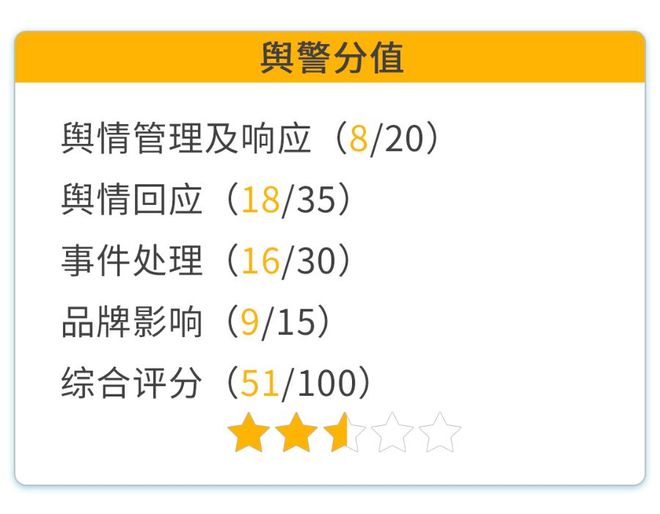
“牛约堡”被立案调查|消费舆警指数
2 1 Shi Ji Jing Ji Bao Dao· 2025-07-08 11:33
Group 1 - The core viewpoint emphasizes the importance of consumer trust and the impact of public sentiment on consumer-facing companies, highlighting the need for effective brand management and crisis response strategies [1] - The article discusses the establishment of a quantitative scoring mechanism for companies' public sentiment management, which includes four primary indicators and 14 secondary indicators, aimed at evaluating corporate responses to public events [1] Group 2 - The incident involving a baby being asked to leave the Shanghai Zoo for drinking milk has raised significant public debate about the balance between rules and human considerations in public spaces [6] - The Shanghai Zoo acknowledged shortcomings in staff service awareness and handling of the situation, committing to improve service facilities and staff training [5] - The food safety issues reported at the burger chain 牛约堡 (Niu Yue Bao) highlight serious concerns beyond mere hygiene, posing risks to consumer health and potentially damaging the brand's reputation [10] - 牛约堡 has a history of food safety complaints, indicating a pattern that could lead to a broader trust crisis within the industry if not addressed effectively [11]

汉堡王中国「大换血」,能否成功「翻身」?
36氪· 2025-03-10 11:15
Core Viewpoint - Burger King's recent strategic adjustments in China, including management changes and full recovery of franchise rights, signal a critical attempt to revitalize its presence in a competitive market after 20 years of operation [3][6][7]. Group 1: Management Changes and Strategic Moves - On March 6, 2024, Burger King China underwent significant management changes, with Rafa Odorizzi appointed as interim CEO and a new chairman, Lv Aijun, taking over [5][6]. - The registered capital of Burger King China increased from $410 million to $460 million, reflecting a 12.19% year-on-year growth [5]. - RBI Group has fully reclaimed operational rights in China, terminating its partnership with TFI Group for $158 million, indicating a shift towards finding partners more attuned to the Chinese market [7][8]. Group 2: Historical Context and Market Position - Since entering the Chinese market in 2005, Burger King has faced challenges, missing the initial growth phase of Western fast food, which saw competitors like McDonald's and KFC establish strong footholds [11][12]. - The brand's initial strategy focused on a high-end positioning with beef burgers, differentiating itself from competitors, but this led to slower growth due to a lack of franchise opportunities [15][16]. - Under TFI's management from 2012 to 2019, Burger King experienced rapid expansion, opening over 1,300 stores, but still faced challenges in brand recognition and market penetration [23][27]. Group 3: Current Challenges and Market Dynamics - As of 2024, Burger King China reported annual sales of approximately $700 million, with an average store revenue of $400,000, significantly lower than other international markets [32]. - The brand struggles with high operational costs and conflicts with franchisees over profitability and supply chain issues, exacerbated by a competitive pricing environment [34][35]. - The gap in store numbers compared to competitors is widening, with KFC and McDonald's significantly outpacing Burger King in store count and market presence [39]. Group 4: Future Outlook - The urgency for Burger King to implement comprehensive changes in product offerings, supply chain management, and localization strategies is critical for its survival in the Chinese market [38][39]. - The effectiveness of the recent strategic shifts remains to be seen, as the company aims to regain market share and improve operational efficiency [38].