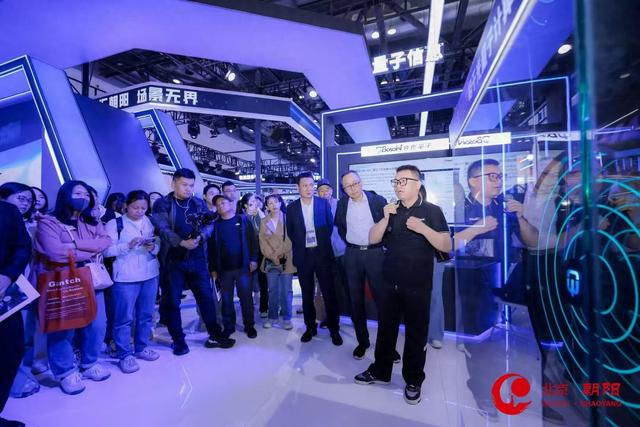
1000量子比特相干光量子计算机

Search documents
蓄力破局 量子科技迎接产业化关键一跃
Zhong Guo Zheng Quan Bao· 2025-12-29 22:13
Core Insights - Quantum technology is positioned as a key component of national strategy and is becoming a focal point in global competition among major powers [2][3][4] - The next five to ten years are critical for the industrialization of quantum technology, with significant investments and strategic initiatives from countries like the US, UK, and Canada [2][3][4] Investment and Policy Landscape - The US plans to increase quantum research funding from $1.8 billion to $2.7 billion for the fiscal years 2025-2029, emphasizing practical applications [3] - The UK has allocated £10.13 billion for quantum technology over the next four years, continuing its investment since 2014 [3] - Canada has initiated the "Canadian Quantum Champions Program" with an investment of CAD 92 million to support local quantum computing firms [4] Technological Advancements - China has made significant strides in quantum communication and computing, achieving global leadership and entering a phase of scale expansion [6][7] - Quantum communication technology is being applied in major projects like the "Beijing-Shanghai trunk line" and national quantum secure communication networks [6] - The quantum computing sector is expected to exceed $800 billion by 2035, with ongoing developments in superconducting, ion trap, and photonic technologies [7] Challenges and Opportunities - The industry faces challenges such as talent shortages, insufficient application scenarios, and limited developer scale, which hinder the acceleration of industrialization [9] - There is a need for a more robust educational framework to produce the necessary interdisciplinary talent for quantum technology [9] - The lack of sufficient downstream companies for algorithm development and application exploration is a significant bottleneck [9] Future Outlook - The integration of quantum computing with artificial intelligence is anticipated to unlock new application spaces and drive further innovation [7][8] - The focus is shifting from merely increasing quantum bit counts to ensuring technology meets market demands and usability [8] - Building a collaborative ecosystem and fostering technological innovation are essential for quantum technology to become a new engine for high-quality economic development [10]
蓄力破局量子科技迎接产业化关键一跃
Zhong Guo Zheng Quan Bao· 2025-12-29 21:13
Core Insights - Quantum technology is positioned as a key driver of future industries in China's 14th and 15th Five-Year Plans, indicating a strategic focus on its industrialization and application [1][2] - The global competition in quantum technology is intensifying, with major countries like the US, UK, and Canada significantly increasing their investments and policy support to secure leadership in this field [2][3] Investment and Funding - The US plans to increase quantum research funding from $1.8 billion to $2.7 billion for the fiscal years 2025-2029, emphasizing practical application development [2] - The UK has allocated £10.13 billion for quantum technology over the next four years, building on previous investments exceeding £1 billion since 2014 [3] - Canada has initiated the "Canadian Quantum Champions Program" with an investment of CAD 92 million to support local quantum computing firms [3] Technological Advancements - China has made significant strides in quantum communication and computing, achieving a leading position globally with projects like the "Micius" satellite and the "Zuchongzhi" superconducting quantum computer [3][4] - Quantum precision measurement is entering the commercialization phase, with the cold atom quantum gravity meter being a notable example of practical application [5][6] Market Potential - The global quantum computing market is projected to exceed $800 billion by 2035, driven by advancements in quantum technology and its integration with artificial intelligence [6] - The development of specialized quantum computers is progressing, with companies like Boson Quantum delivering the first 1000-qubit coherent optical quantum computer [6] Challenges and Bottlenecks - The industry faces challenges such as a shortage of skilled talent, insufficient application scenarios, and limited developer scale, which hinder the acceleration of quantum technology commercialization [7][8] - The lack of downstream companies for algorithm development and application exploration is a significant barrier to creating a positive feedback loop for technology iteration [8] Ecosystem Development - The successful industrialization of quantum technology requires a collaborative ecosystem that fosters innovation and addresses market needs, emphasizing the importance of patience and strategic investment in talent and infrastructure [8]
这6大未来产业,加快跑进现实(这些新提法,写入“十五五”规划建议④)
Ren Min Ri Bao Hai Wai Ban· 2025-12-02 22:46
Core Viewpoint - The article emphasizes the strategic importance of future industries in China's economy, highlighting the rapid development and application of technologies such as hydrogen energy, quantum technology, and embodied intelligence, which are expected to drive economic growth and innovation [4][5][7]. Group 1: Future Industries Overview - Future industries are a crucial part of China's "three new" economy, contributing over 18% to GDP last year [4]. - The "14th Five-Year Plan" identifies six key future industries, including quantum technology and biological manufacturing, which are at a critical stage of moving from laboratory to commercialization [5][6][10]. Group 2: Technological Advancements - China has achieved significant progress in hydrogen energy, with production capacity exceeding 50 million tons per year and over 600 renewable energy hydrogen production projects planned [8]. - In nuclear fusion, the EAST facility has set world records for plasma operation times, achieving 1 billion degrees Celsius for 1066 seconds [9][10]. - The development of the BEST facility aims for commercial nuclear fusion power generation by 2030, with a goal to light the first lamp by then [10]. Group 3: Market Potential and Applications - The market for brain-computer interfaces is expected to exceed 5.5 billion yuan, while the embodied intelligence market could surpass 400 billion yuan by 2030 [14]. - The application of embodied intelligence in various sectors, such as manufacturing and service industries, is being explored, with robots like NAVIAI demonstrating capabilities in tasks ranging from sewing to household chores [13][14]. Group 4: Policy and Support - The Chinese government is promoting the integration of technology and industry through policies aimed at fostering new application scenarios and supporting innovation [12][14]. - The focus on creating a supportive ecosystem for future industries includes investment in R&D and the establishment of platforms for biological manufacturing and brain-computer interfaces [14].

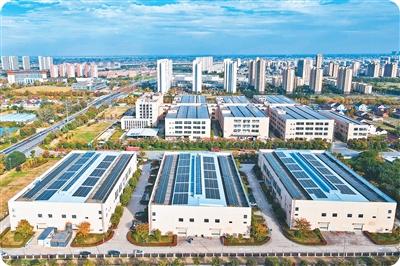
光量子计算机将迎批量生产
Shang Hai Zheng Quan Bao· 2025-11-26 00:41
Core Insights - The quantum technology sector in A-shares has seen significant gains, with multiple companies reaching their daily price limits, indicating strong market interest and investment potential [2] - The inauguration of China's first large-scale dedicated optical quantum computer manufacturing facility marks a pivotal shift from laboratory research to industrial production, with an expected annual output of several dozen optical quantum computers [2][3] - The facility, covering approximately 5,000 square meters, integrates research, manufacturing, and testing, aiming to achieve standardized and scalable production of optical quantum computers [2][3] Company Developments - Bosi Quantum, the company behind the new manufacturing facility, has established a comprehensive engineering system for optical quantum computing, focusing on key technologies such as coherent light sources and low-loss optical paths [3][5] - The manufacturing plant consists of three main components: module development, complete machine production, and quality control/testing systems, ensuring high standards in production and performance [5] - Bosi Quantum recently completed a significant A++ financing round, raising several hundred million yuan, which will be used to further develop specialized and general optical quantum computers, as well as to enhance quantum computing chip technology [5] Industry Context - China is recognized as one of the few countries achieving "quantum supremacy," with advancements in both superconducting and optical quantum computing technologies [6] - The recent launch of the "Tianyan-287" superconducting quantum computer, which operates at a speed 450 million times faster than the fastest supercomputers, highlights China's progress in practical quantum computing applications [6] - The upcoming launch of the "Benyuan Wukong," a third-generation superconducting quantum computer, signifies the establishment of a nearly complete domestic supply chain for quantum computing technology in China [6]
“创”出新活力 “闯”出新优势 ——从三个关键词看民营企业科技创新
Ren Min Ri Bao· 2025-05-21 22:44
Group 1 - Harmony OS made its debut on computers, marking a significant breakthrough for domestic operating systems in the personal computer sector, enhancing Huawei's ecosystem [1] - Alibaba's Qwen3 model achieved multiple new highs in performance during global large model benchmark tests, showcasing advancements in AI technology [1] Group 2 - The launch of the Loongson 3C6000/D dual-server with 100% domestic component rate meets the computing needs of data centers and cloud computing [2] - Dameng Data's new generation distributed database has been put into use, achieving revenue and profit growth in Q1, emphasizing the importance of core technology development [2] Group 3 - SUTENG's laser radar technology has been pivotal in the smart driving industry, with multiple partnerships established this year [3] - China's new energy vehicle exports reached 642,000 units in the first four months, a year-on-year increase of 52.6%, highlighting the sector's growth [3] Group 4 - The introduction of advanced knitting technology by Xintai is expected to enhance customer loyalty and open new design possibilities [4] - Yushi Technology reported a 45% year-on-year increase in autonomous driving mileage, expanding its international projects [4] Group 5 - The introduction of a 1000-qubit coherent optical quantum computer at the Beijing Science and Technology Expo signifies a leap towards commercial viability in quantum computing [6] - The development of high-altitude wind energy systems and PHA production lines indicates significant advancements in renewable energy technologies [7] Group 6 - Blue Arrow Aerospace is rapidly producing new liquid oxygen-methane rocket engines, filling domestic technological gaps in this field [8] - The use of AI algorithms in drones has improved traffic flow and fire detection accuracy, serving over 100 cities globally [8] Group 7 - The establishment of major scientific research facilities in Shenzhen allows private enterprises to access cutting-edge research tools, enhancing innovation capabilities [9] - Financial support for private enterprises has increased, with improved access to funding and tailored financial products [14] Group 8 - The implementation of the Private Economy Promotion Law provides legal and policy support for private enterprises, encouraging innovation as a key development strategy [15]
追踪前沿密码、孕育未来动能,朝阳科创成果亮相科博会
Bei Jing Ri Bao Ke Hu Duan· 2025-05-10 00:59
Group 1: Quantum Computing and Security - The first domestic quantum computer with over 1000 qubits was showcased, significantly accelerating drug screening processes in biopharmaceuticals by achieving results in milliseconds instead of days or months [1] - Quantum key distribution technology was presented as a solution to the potential security risks posed by quantum computing, ensuring data transmission remains secure even against quantum attacks [3] Group 2: Innovation and Technology Platforms - The establishment of the Beihang University Shanhuwan Valley Innovation Zone aims to foster collaboration between government, universities, and enterprises, enhancing the development of technology startups [5][6] - The innovation zone has attracted over 120 technology companies and has seen significant revenue generation, with nearly 60 million yuan in sales from startups since September [8] Group 3: Industry Growth and Applications - The electric vehicle sector in China is facing challenges related to battery recycling, with new non-destructive testing technologies being developed to address safety and efficiency issues in battery health assessments [5] - Companies like Huakun Zhenyu and Yuno Technology are successfully implementing their products across various industries, indicating a robust growth trajectory in technology innovation and application [11] Group 4: AI and Digital Transformation - The integration of multiple AI models into a single search platform allows users to conduct searches using various methods, enhancing accessibility and user experience [9] - The focus on creating a "2+4+N" industrial system in Chaoyang District aims to deepen the integration of AI with practical applications, driving high-quality development and innovation [11]