氢能和核聚变能

Search documents
14省份“新春第一会” 传递出哪些信号?
Mei Ri Jing Ji Xin Wen· 2026-02-24 14:32
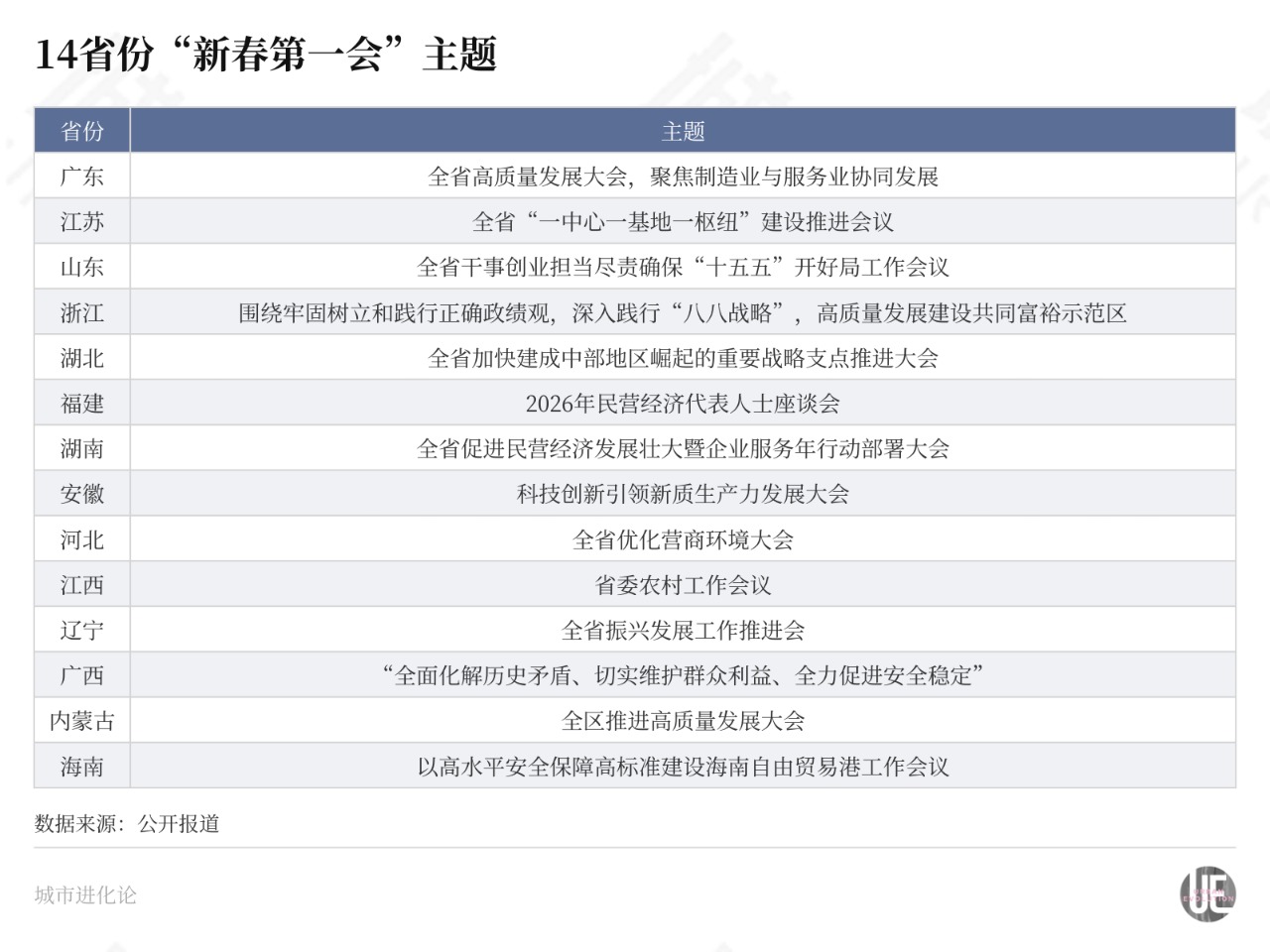
Core Insights - The "New Spring First Meeting" held across various provinces serves as a significant indicator for observing development trends and setting strategic directions for the year, particularly at the start of the "14th Five-Year Plan" [1] Group 1: Industry Upgrades - Guangdong's focus on the synergy between manufacturing and service industries highlights the importance of a modern industrial system as a foundation for China's modernization, with a GDP of 14.58 trillion yuan, maintaining the top economic position for 37 consecutive years [3][4] - The need for Guangdong to ascend the "smile curve" of industry, emphasizing advanced R&D and precise brand marketing, is crucial for overcoming current challenges in high-quality development [4][5] - Other provinces like Anhui and Hubei are also prioritizing technological innovation and new industries, with Anhui targeting quantum technology and biomanufacturing as future growth points [6][7] Group 2: Strategic Implementation - Hubei's strategic focus on becoming a key support point for central region development emphasizes specific goals such as increasing the number of large enterprises and enhancing infrastructure [7][8] - Liaoning's emphasis on project-driven growth aims to address investment declines and stimulate economic activity through effective project management and collaboration across industries [9] Group 3: Private Economy - The importance of a favorable business environment is underscored as a core competitive advantage for regional high-quality development, particularly in older industrial bases [10] - Provinces like Hebei and Hunan are actively working to improve their business environments, with Hebei aiming for a significant increase in private sector contributions to GDP by 2025 [12][13] - Fujian's initiatives to enhance the business environment have led to substantial growth in private enterprises, contributing significantly to innovation and economic activity [14]

积极布局未来产业,各地有何“密码”?
Xin Lang Cai Jing· 2026-02-06 06:35
Group 1 - The concept of "future industries" has gained significant attention in 2026, with a focus on development during the "14th Five-Year Plan" period, emphasizing the importance of strategic planning and innovation in emerging sectors [1][2] - Future industries are defined as emerging sectors driven by cutting-edge technologies, currently in the early stages of development, characterized by strategic significance and potential for disruptive innovation [1][2] - China is transitioning from a phase of technological catch-up to proactive layout in future industries, with a mix of leading, parallel, and following positions in various sectors such as quantum technology and 6G [1][2] Group 2 - Shanghai is leveraging its comprehensive advantages to develop future industries, with specific plans to cultivate sectors like brain-computer interfaces and fourth-generation semiconductors by 2026 [1][2] - Anhui province has established itself as a leader in quantum technology, with a significant concentration of quantum enterprises and a complete industrial chain in both quantum and nuclear fusion energy sectors [2] - Other provinces like Beijing, Guangdong, and Jiangsu are also making strides in future industries, focusing on their unique strengths and aligning with national strategic goals [2] Group 3 - The Chinese government is implementing various measures to support future industry development, including the establishment of investment funds and the promotion of innovative ecosystems [2] - The emphasis is on creating a supportive environment for potential disruptive technologies, ensuring that local policies align with national strategies while fostering regional characteristics [2]
10亿,复旦科创旗下投资基金完成备案
FOFWEEKLY· 2026-01-06 10:05
Group 1 - The core viewpoint of the article is the successful launch of the Fudan Innovation Investment Fund, which has completed its private fund product filing and is now operational [1] - The total scale of the Fudan Innovation Investment Fund is 1 billion yuan, co-founded by Fudan Innovation Mother Fund, Shanghai Future Industry Fund, and Jing'an Capital, with additional investors including Zhejiang Longsheng Group and Anhui Jinbiandan Equity Investment [1] - The fund will focus on strategic emerging industries such as life health, artificial intelligence, integrated circuits, new energy, and new materials, as well as future industries like quantum technology, biomanufacturing, hydrogen energy, nuclear fusion energy, brain-computer interfaces, embodied intelligence, and sixth-generation mobile communication [1]
把握未来五年中国经济蕴藏的新机遇
Jing Ji Ri Bao· 2025-12-30 23:58
Core Viewpoint - The "14th Five-Year Plan" outlines strategic opportunities and challenges for China's economic and social development, emphasizing high-quality growth and a focus on various key sectors [2][3]. Economic Opportunities - The plan identifies numerous new opportunities, including the development of a modern industrial system and the strengthening of the real economy, with specific mentions of sectors such as mining, metallurgy, chemicals, and advanced technologies [3]. - The goal is to achieve significant results in high-quality development, with economic growth maintained within a reasonable range and an increase in domestic consumption driving economic growth [2][3]. Economic Challenges - Challenges include unbalanced development, insufficient effective demand, and pressures on employment and income growth, which need to be addressed to convert challenges into opportunities [4]. - The plan sets a target for per capita GDP to reach the level of moderately developed countries by 2035, requiring an average annual GDP growth of approximately 4.17% from 2025 to 2035 [4]. Consumer Income and Spending - The plan aims to increase residents' income through various channels, including wage, operational, property, and transfer income, with a focus on enhancing the share of labor remuneration in national income distribution [7][11]. - There is an emphasis on improving the structure of income distribution to promote a more reasonable allocation of income among residents [7]. Investment and Consumption - The plan suggests that increasing government spending on social welfare and implementing direct consumer support policies will enhance residents' consumption capacity [8][11]. - The importance of stabilizing the stock market to increase residents' property income and subsequently boost consumption is highlighted [14]. Capital Market Development - The stability of the capital market is crucial for enhancing investor confidence and ensuring sustainable income growth, which in turn affects consumer behavior [14][15]. - Encouraging long-term funding sources for technological innovation is essential for fostering a robust capital market and supporting economic growth [15][18]. Technological Innovation and Global Competitiveness - The plan emphasizes the need for China to cultivate high-quality listed companies with international competitiveness, particularly in the technology sector, to participate in global competition [18]. - The focus is on creating a favorable investment environment for companies to grow and attract long-term capital into the market [18].
七大未来产业吸金近700亿,筑基“十五五”新增长极
Huan Qiu Wang· 2025-12-29 08:59
Group 1 - The global technology competition is intensifying, with disruptive technologies at the core of the "future industries" becoming a prominent part of China's economic landscape, as highlighted in the "14th Five-Year Plan" [1][2] - The total financing in related fields has approached 70 billion yuan this year, with specific sectors like nuclear fusion and 6G seeing index increases of over 80% [1][4] - The future industries are transitioning from "concept validation" to "commercialization," becoming a leading force in driving economic and social transformation [1] Group 2 - The "14th Five-Year Plan" outlines a clear blueprint for future industries, focusing on seven key areas including quantum technology, biomanufacturing, hydrogen energy, nuclear fusion, brain-computer interfaces, embodied intelligence, and 6G [2] - Local governments are actively responding with supportive policies, such as Beijing's "Create the Future" initiative, which has supported 83 potential enterprises and facilitated over 2 billion yuan in financing [2] - Various cities like Shenzhen and Shanghai are implementing financial measures to support high-quality development in future industries, establishing a solid foundation for growth [2] Group 3 - The capital market's enthusiasm for future industries is evident, with IPOs and refinancing processes accelerating significantly, totaling nearly 70 billion yuan as of December 26, 2025 [4] - Notable fundraising includes 14 billion yuan from China Nuclear Power in the nuclear fusion sector and over 8 billion yuan from companies in the embodied intelligence sector [4] - The overall profitability of future industries is expected to improve, with a median net profit forecast of over 650 billion yuan for 381 companies in 2025, reflecting a year-on-year increase of over 20% [5] Group 4 - Market funds are actively seeking undervalued potential stocks, with over 40 companies showing a decrease in shareholder numbers, indicating a concentration of shares [6] - Companies like Fuzhijun Technology and Zhongyuan Neipei have seen significant reductions in shareholder numbers, suggesting increased market attention [6] - Some companies, despite underperforming in the market, are positioned in sectors like embodied intelligence and quantum technology, presenting potential investment opportunities [6]



我国加速布局未来产业抢占发展先机
Yang Shi Wang· 2025-12-18 12:32
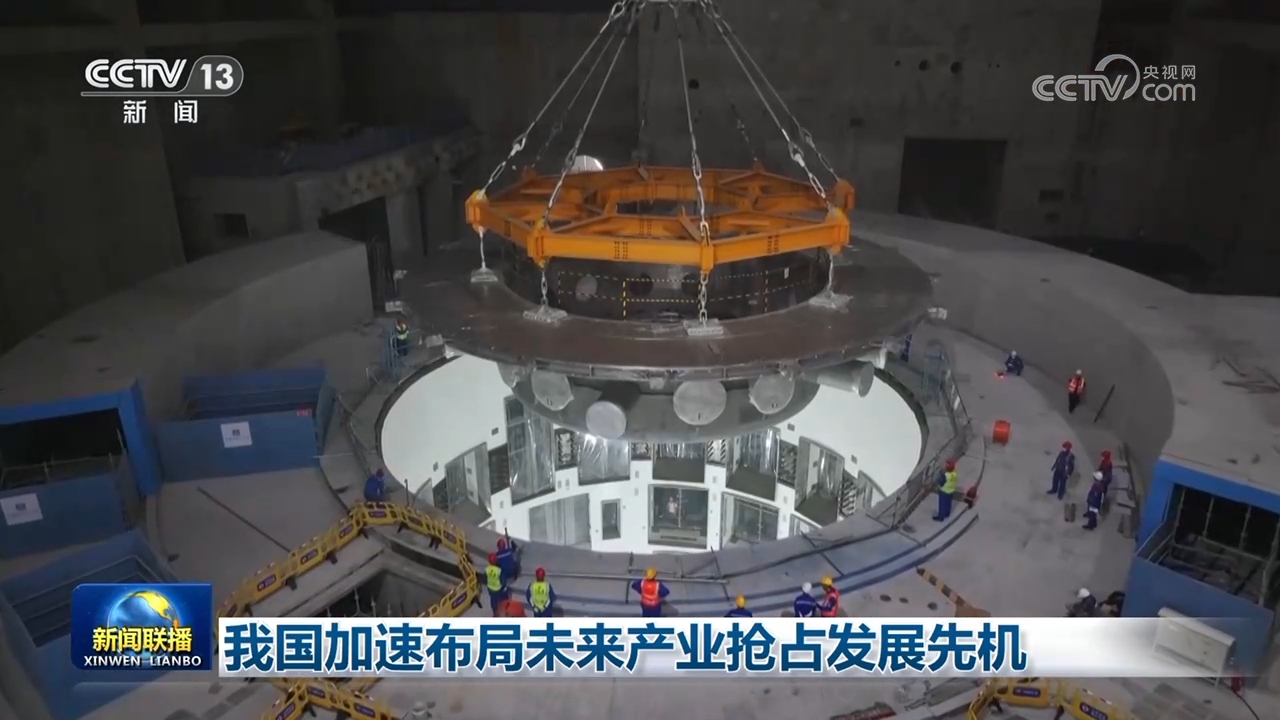
Core Insights - The "14th Five-Year Plan" emphasizes the strategic development of six future industries, including quantum technology, biomanufacturing, hydrogen energy, and nuclear fusion energy, with a focus on transitioning from laboratory research to real-world applications [1][3] Group 1: Industry Development - A compact fusion energy experimental device (BEST) has entered the assembly phase, aiming for commercial application of fusion energy during the "14th Five-Year Plan" [3] - Significant breakthroughs in core technologies have been achieved, with several quantum sensors developed and applied in precision equipment across various fields [5] - The "artificial ocean carbon cycle system" in Shenzhen has operated stably for over 500 hours in real seawater, achieving over 70% CO2 capture efficiency, converting seawater CO2 into green raw materials for plastic production [7] Group 2: Market Potential - The market for embodied intelligence is expected to exceed 5 billion yuan by 2025, while the brain-computer interface market is projected to surpass 3.8 billion yuan, and the biomanufacturing industry is anticipated to approach 1 trillion yuan in total scale [11] Group 3: Policy and Support - The government will continue to strengthen policy support, focusing on the core tracks of the six future industries, creating development clusters, and nurturing specialized and innovative enterprises to form new trillion-yuan industry tracks [12]
中央经济工作会议后,市场如何表现?
Soochow Securities· 2025-12-13 11:08
Core Insights - The report indicates that the 2025 Central Economic Work Conference is more focused on "structural adjustment," suggesting a potential for a structural market trend in the upcoming year [4][6][26] - Historical patterns show that years emphasizing "stabilizing growth" typically lead to stronger market performance, favoring large-cap stocks over small-cap and value stocks over growth stocks [2][10] - Conversely, years focused on "structural adjustment" tend to exhibit market volatility, with large-cap stocks remaining flat while small-cap stocks weaken [2][10] Summary by Sections Historical Performance Post-Central Economic Work Conference - The report categorizes past conferences into two themes: "stabilizing growth" and "structural adjustment," with specific years identified for each theme [1][2] - Years with a "stabilizing growth" focus include 2014, 2018, 2019, 2021, 2022, and 2024, characterized by economic slowdowns and policies aimed at maintaining stability [1][2] - Years emphasizing "structural adjustment" include 2013, 2015, 2016, 2017, 2020, and 2023, where the focus was on addressing structural issues and risks [2] Market Behavior and Style Preferences - In "stabilizing growth" years, the market index typically strengthens, with large-cap stocks outperforming small-cap stocks and value stocks outperforming growth stocks [2][10] - In "structural adjustment" years, the market tends to be more volatile, with large-cap stocks showing flat performance and small-cap stocks declining [2][10] Industry Performance Insights - The report notes that the focus of the Central Economic Work Conference influences the following year's market trends, with specific industry policies guiding investment directions [3][4] - For instance, the emphasis on "innovation-driven" policies in 2012 led to a TMT boom in 2013, while the focus on "new consumption" and "new infrastructure" in 2018 shaped market trends in 2019 [3] 2025 Conference Insights - The 2025 conference highlights a "supply strong, demand weak" scenario, indicating a need to balance supply and demand dynamics [4][6] - The report suggests that monetary policy will prioritize economic stability and reasonable price recovery, which could lead to improved corporate profitability if inflation expectations rise [6] - Expanding domestic demand is a key focus, with policies aimed at increasing consumer income and stabilizing investment to counteract previous declines in fixed asset investment growth [6] Market Outlook and Sector Allocation - The report anticipates a structural market trend in 2025, with specific sectors recommended for investment, including AI applications, semiconductor, and renewable energy sectors [7] - The report emphasizes the importance of monitoring macroeconomic conditions and policy developments to inform investment strategies in the upcoming year [7]
明年经济工作怎么干?中央政治局会议释放六大信号
2 1 Shi Ji Jing Ji Bao Dao· 2025-12-08 11:59
Group 1 - The core viewpoint of the meeting is to maintain a stable yet progressive economic approach, emphasizing the need for proactive fiscal and monetary policies to enhance macroeconomic governance and address current economic challenges [1][5][9] - The meeting highlighted the importance of expanding domestic demand and optimizing supply, with a focus on developing new productive forces tailored to local conditions and advancing the construction of a unified national market [6][7][8] - The meeting underscored the necessity of innovation-driven growth, aiming to cultivate new economic drivers and enhance the quality of development through increased investment in technology and manufacturing [8][9] Group 2 - The meeting called for the implementation of more proactive fiscal policies and moderately loose monetary policies, continuing the approach established in previous meetings [5][6] - It was noted that the macroeconomic policy environment for 2026 is expected to maintain a "wide fiscal, wide monetary" framework, with fiscal policy playing a crucial role in stabilizing growth and structural adjustments [6][7] - The meeting emphasized the need to address key risks in specific sectors, including real estate and local government debt, while ensuring the stability of employment, enterprises, markets, and expectations [9][10]

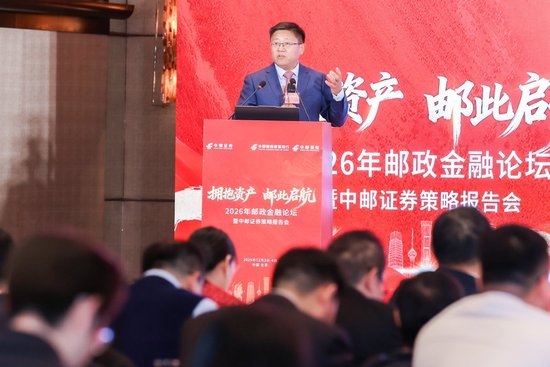
中邮证券黄付生:制造业“K”型分化,居民财富将迎修复
Xin Lang Cai Jing· 2025-12-03 12:25
Core Insights - The report presented by Huang Fusheng at the "2026 Postal Financial Forum" highlights China's economic recovery, driven by the "14th Five-Year Plan" focusing on modern industrial systems and high-tech sectors [3][8]. Group 1: Economic Recovery and Industrial Policy - China is building a modern industrial system under the "14th Five-Year Plan," with a focus on high-tech sectors showing significant performance [3][8]. - The plan prioritizes the construction of a modern industrial system and strengthening the real economy, aiming to "recreate a Chinese high-tech industry" over the next decade [3][8]. - Key strategies include enhancing traditional industries, addressing core technology challenges, and fostering strategic emerging industries like new materials and quantum technology [3][8]. Group 2: Manufacturing Sector Performance - The manufacturing sector exhibits a K-shaped recovery, with high-tech product exports growing faster than the overall export growth rate of 5.3% in the first ten months of 2025 [4][9]. - Profit growth in upstream manufacturing sectors like transportation equipment and non-ferrous metal smelting significantly outpaces that of downstream industries such as furniture and apparel [4][9]. - A-share non-financial companies reported a revenue increase of 0.9% year-on-year in Q3 2025, with net profits rising by 3.29% [4][10]. Group 3: Consumer Wealth and Spending Trends - Recovery of resident wealth is projected to take 3-5 years, with service consumption identified as a future growth area [5][10]. - In 2025, there remains a significant gap in resident wealth compared to the peak in 2021, but optimistic scenarios suggest recovery to previous levels by 2028 [5][10]. - The consumption structure indicates a saturation in goods consumption (15% of GDP) compared to major Western countries, while service consumption in healthcare and education is below global averages, indicating substantial growth potential [5][10].
奋楫“十五五”,资本与国策共创
Sou Hu Cai Jing· 2025-12-03 01:52
Core Insights - The focus of national development is shifting from "quantitative recovery" post-pandemic to "qualitative leap" in the "15th Five-Year Plan" [1] - The "15th Five-Year Plan" emphasizes "high-level technological self-reliance" and aims for a dual goal of "effective qualitative improvement and reasonable quantitative growth" [5][11] Group 1: Economic and Industrial Strategy - The national strategy is entering a new cycle centered on innovation efficiency, industrial structure, and regional collaboration, marking a shift from "policy following" to "system co-creation" [4] - The plan aims to build a modern industrial system with advanced manufacturing as the backbone, focusing on future industries like quantum technology, biomanufacturing, and hydrogen energy [11] - The transition from "incremental manufacturing" to "efficiency manufacturing" indicates a shift in focus from merely increasing production to optimizing resource allocation [12] Group 2: Investment Opportunities - Hard technology investment, including semiconductors and advanced materials, is positioned as a foundational logic for "systematic breakthroughs" [10] - Investment institutions are encouraged to engage in pre-financing and result transformation for national technology tasks, fostering capital co-creation [10] - The emphasis on "entrepreneurial investment + risk-sharing mechanisms" presents opportunities for investment firms to participate in national innovation initiatives [10] Group 3: Green Development - The "15th Five-Year Plan" elevates green development from a secondary goal to a structural institution, influencing all industrial allocations [17] - The integration of green issues into financial and market mechanisms signifies a shift in perspective, making green development a capital issue [17] - Sustainable investment opportunities in green infrastructure and carbon asset management are expected to grow [20] Group 4: Consumer and Market Dynamics - The plan positions consumption upgrade as a core driver of economic structural transformation, moving from recovery to quality enhancement [22] - The "silver economy" is recognized as a significant industrial opportunity, transforming aging issues into growth engines [22][25] - Investment opportunities in healthcare, elder care, and technology-assisted living are anticipated to rise due to demographic shifts [25] Group 5: Regional Development - The focus of regional policy is shifting from "development gradient" to "structural coordination," promoting a unified market and efficient resource allocation [27] - Investment institutions are encouraged to collaborate with local guiding funds to strengthen project foundations and facilitate new industry development in less developed regions [30] Group 6: Financial Market Reforms - The "15th Five-Year Plan" emphasizes structural improvements in capital markets, transitioning from a focus on financing to a comprehensive investment-funding-exit cycle [32] - Direct investment institutions are identified as key players in building a strong financial nation, with multiple exit pathways being developed [35] - The plan aims to enhance the inclusivity and adaptability of capital market systems, promoting direct financing methods [31] Strategic Summary - The "15th Five-Year Plan" outlines new engines for China's economic growth, including technological innovation and green transformation, while establishing a more inclusive capital market system [36] - Investment institutions are encouraged to align their strategies with national planning, leveraging professional judgment to identify promising sectors and companies for investment [36]