
240小时过境免签政策

Search documents
2026新春走基层|免签240小时的跨境冰雪之约
Sou Hu Cai Jing· 2026-02-10 01:08
Core Viewpoint - The implementation of the 240-hour visa-free transit policy at Harbin Taiping International Airport has significantly boosted tourism, allowing foreign visitors to experience the local culture and attractions during the Chinese New Year period [1][3][4]. Group 1: Policy Implementation - The 240-hour visa-free transit policy was effectively launched, welcoming foreign tourists to experience Harbin's winter charm [1]. - The policy allows a maximum stay of 10 days, facilitating spontaneous travel decisions for visitors [1]. - Customized services, including multilingual assistance and simplified entry procedures, have been established to enhance the travel experience [1][3]. Group 2: Tourism Impact - There has been a 107% year-on-year increase in Russian tourists arriving in Harbin, with a 59.3% rise in visa-free entrants [3]. - Many travelers are extending their stay by 5 to 7 days, transforming short layovers into immersive experiences [3]. - Popular attractions like the Ice and Snow World have seen a surge in foreign visitors, with over 90,000 guests in just 40 days [3]. Group 3: Service Quality - The border inspection station has implemented various measures to ensure a warm welcome for tourists, including dedicated entry channels and policy consultation windows [1][4]. - Officers are providing personalized assistance, helping visitors navigate entry processes and local attractions [1][3]. - The overall service quality at the border has been highlighted as a key factor in enhancing the visitor experience and promoting Harbin as a tourist destination [4].


广州边检总站免签外国人同比增长超136%
Zhong Guo Xin Wen Wang· 2025-12-17 05:45
Group 1 - The Guangzhou Entry-Exit Border Inspection Station reported a significant increase of 136.15% in the number of foreign individuals enjoying the 240-hour visa-free transit policy compared to the same period last year, with approximately 24,000 eligible foreigners benefiting from this policy as of December 17 [1] - Among the visa-free travelers, a high proportion comes from countries such as Russia, the United States, and the United Kingdom, with nearly half of the travelers visiting for tourism purposes, indicating strong demand during peak business travel seasons [1] - The implementation of the 240-hour visa-free transit policy has made Guangzhou a strong magnet for foreign individuals engaging in trade and tourism, with a record high of 521,000 foreign merchants entering to participate in the China Import and Export Fair, marking a 33.6% increase compared to previous sessions [1] Group 2 - Data from the Guangzhou Municipal Bureau of Culture, Radio, Television, and Tourism indicates that the number of overnight inbound tourists reached 3.9983 million in the first three quarters of 2025, reflecting a year-on-year growth of 13.02% [2] - Inbound cultural and tourism consumption amounted to $2.87 billion, representing a year-on-year increase of 15.35%, showcasing the significant impact of the visa-free policy on consumer spending [2]
视频丨横琴口岸可以“刷脸”通关啦!多项新举措落地助力大湾区建设
Yang Shi Xin Wen Ke Hu Duan· 2025-11-05 07:14
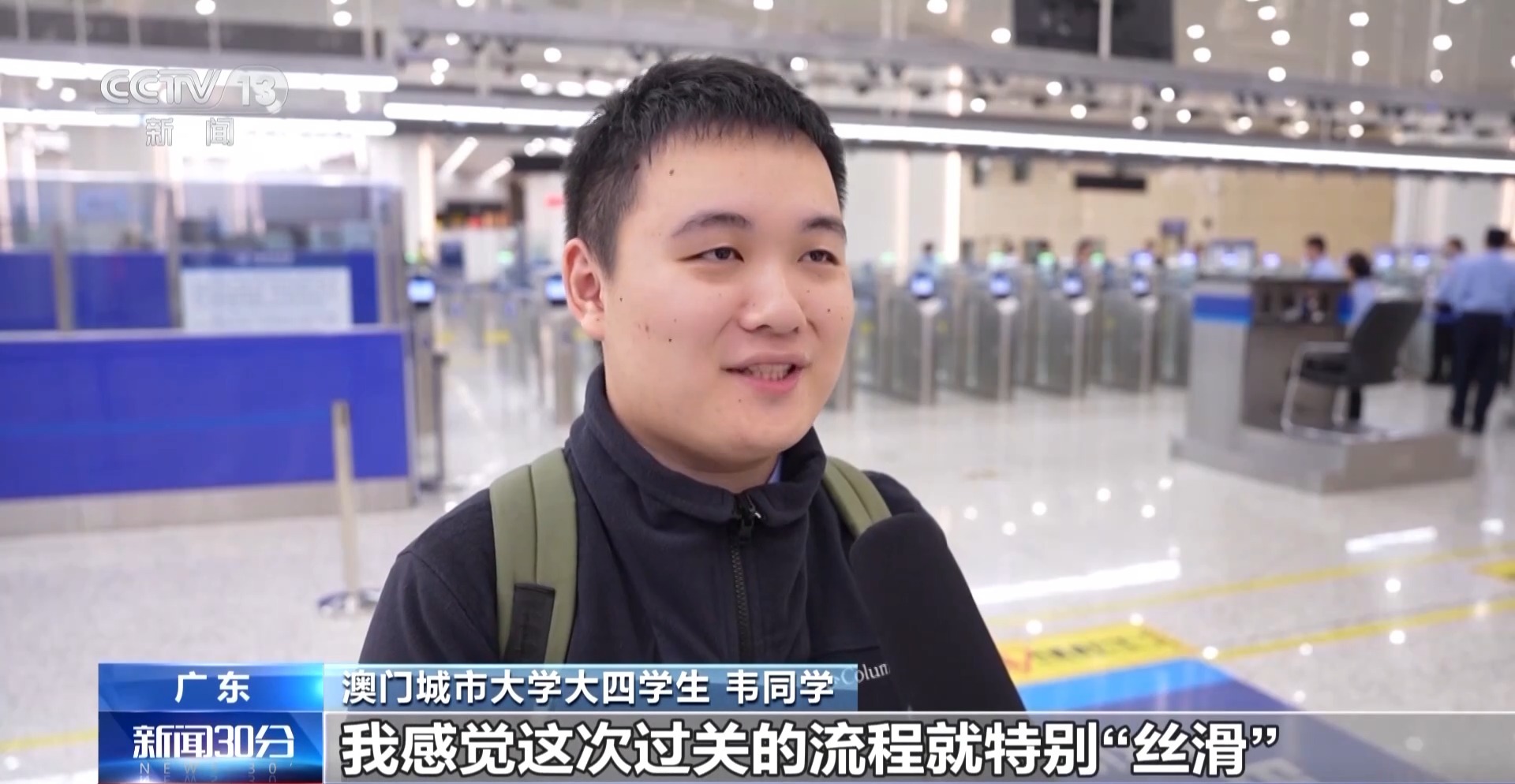
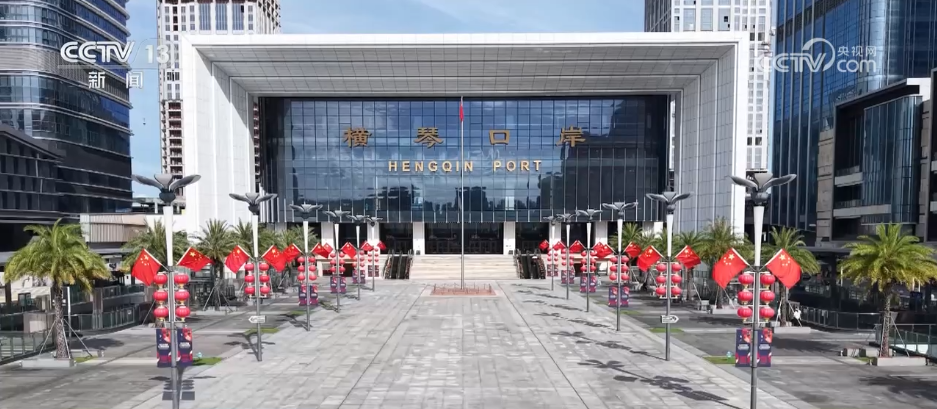
Group 1 - The National Immigration Administration has introduced 10 innovative measures to support expansion and high-quality development, with several implemented in the Hengqin Guangdong-Macao Deep Cooperation Zone [1] - New policies include a "face recognition" fast track for passage and a 240-hour visa-free transit for citizens from 55 countries, effective from November 5 [9] - The implementation of these measures aims to facilitate integration between Hengqin and Macao, as well as contribute to the Greater Bay Area development [9] Group 2 - The first batch of travelers passed through the Hengqin port shortly after the new measures were enacted, experiencing a smooth passage process [3] - A student from Macao expressed satisfaction with the new "face recognition" process, which took approximately ten seconds to complete [5] - The Hengqin border inspection station collaborated with Macao's security agencies to conduct multiple technical adjustments and pressure tests, with over 6,000 participants since early October [7]
刷脸通关+240小时过境免签 横琴口岸创新举措助力琴澳融合与大湾区建设
Yang Shi Wang· 2025-11-05 07:01
Core Points - The National Immigration Administration has introduced 10 innovative measures to support expansion and high-quality development, with several implemented in the Hengqin Guangdong-Macao Deep Cooperation Zone [1] - The measures include a smart fast track for "face recognition" passage and a new 240-hour visa-free transit policy for citizens from 55 countries [5] Group 1 - The Hengqin port welcomed its first batch of travelers shortly after the new measures were implemented, with users reporting a smooth experience using the "face recognition" system [3] - The implementation of the "face recognition" passage involved multiple rounds of technical adjustments and crowd pressure tests, with over 6,000 participants in total and a peak of 2,600 in a single day [5] - Starting from November 5, the Hengqin port has also introduced a 240-hour visa-free transit policy for citizens from 55 countries, enhancing connectivity and integration between Macao and the Greater Bay Area [5]
政策红利释放,便利服务吸引海外客流
Ren Min Ri Bao Hai Wai Ban· 2025-05-15 22:21
Core Insights - The implementation of the 240-hour visa-free transit policy has significantly boosted China's inbound tourism market during the recent "May Day" holiday, with a 130% year-on-year increase in inbound travel orders reported by Ctrip [6][5][12] - Various regions in China are actively promoting their unique cultural and tourism offerings to attract foreign visitors, leading to a notable rise in inbound tourist numbers across multiple destinations [10][11][14] Group 1: Inbound Tourism Growth - The inbound tourism market in China has seen a strong recovery, with a reported 1,089.6 million people entering and exiting the country during the "May Day" holiday, marking a 28.7% increase compared to the previous year [7] - The peak day for inbound and outbound travel was May 3, with 2.297 million people crossing borders on that day [7] - The demand for cultural experiences among foreign tourists is evolving towards deeper and higher-quality engagements, with local culinary experiences seeing a 6.8-fold increase in orders [10] Group 2: Policy Support and Infrastructure - A series of facilitative policies, including the 30-day visa-free entry for South Korean passport holders, have contributed to the influx of tourists, with efficient border control processes reported [7][9] - The introduction of optimized tax refund policies for departing tourists is expected to further stimulate inbound consumption [8][9] - Enhanced transportation networks, such as direct train services from Vietnam to Yunnan, have made it easier for foreign tourists to enter China [9] Group 3: Regional Highlights - Various regions, including Sichuan and Shaanxi, have reported significant increases in inbound tourist numbers, with Sichuan seeing a 114% rise in inbound travel orders during the holiday [14] - The Shanghai cruise port experienced a record high of nearly 30,000 inbound and outbound passengers on May 5, showcasing the popularity of cruise tourism [11] - Cultural events and local experiences, such as the "Long River Night Tour" in Wuhan, have attracted international visitors, contributing to a 70% increase in inbound travel orders [12][13]
五一“China Travel”强势输出,政策、消费、社媒共筑旅游"超级周期"
3 6 Ke· 2025-05-06 11:28
Core Insights - The "China Travel" phenomenon has seen significant growth, particularly during the recent May Day holiday, with inbound tourism orders surging by 130% year-on-year [4][6][9] - The implementation of policies such as the 240-hour visa-free transit and the new "buy and refund" tax refund policy has stimulated this growth [2][8] - The tourism market in China is projected to enter a "super cycle" by 2025, with domestic travel expected to reach 314 million trips during the May Day holiday, a 6.4% increase from the previous year [3][10] Policy Impact - The 240-hour visa-free transit policy has led to 9.215 million inbound visitors, a 40.2% increase compared to the previous year, with 71.3% of these being visa-free entries [1][8] - The "buy and refund" tax refund policy has lowered the threshold for refunds, further encouraging spending among foreign tourists [8][9] Market Trends - The tourism and hotel indices have shown positive momentum in the stock market, with significant increases following the holiday [6][9] - The influx of high-spending tourists is expected to enhance the contribution of inbound tourism to China's GDP, which currently stands at 0.5% compared to 1%-2% in developed countries [9][10] Future Projections - Morgan Stanley and other international research institutions predict that China's inbound tourism market could grow by 4 to 8 times over the next decade [7][9] - The Asia-Pacific region is expected to be a key growth area for global tourism, with China's role being crucial in this expansion [11][12] Consumer Behavior - The rise of social media has significantly influenced travel trends, with platforms driving a 200% increase in hotel search indices during the holiday [6] - The appeal of cultural experiences and diverse activities has attracted a large number of foreign tourists, particularly in cities like Shenzhen and Beijing [4][5][9]