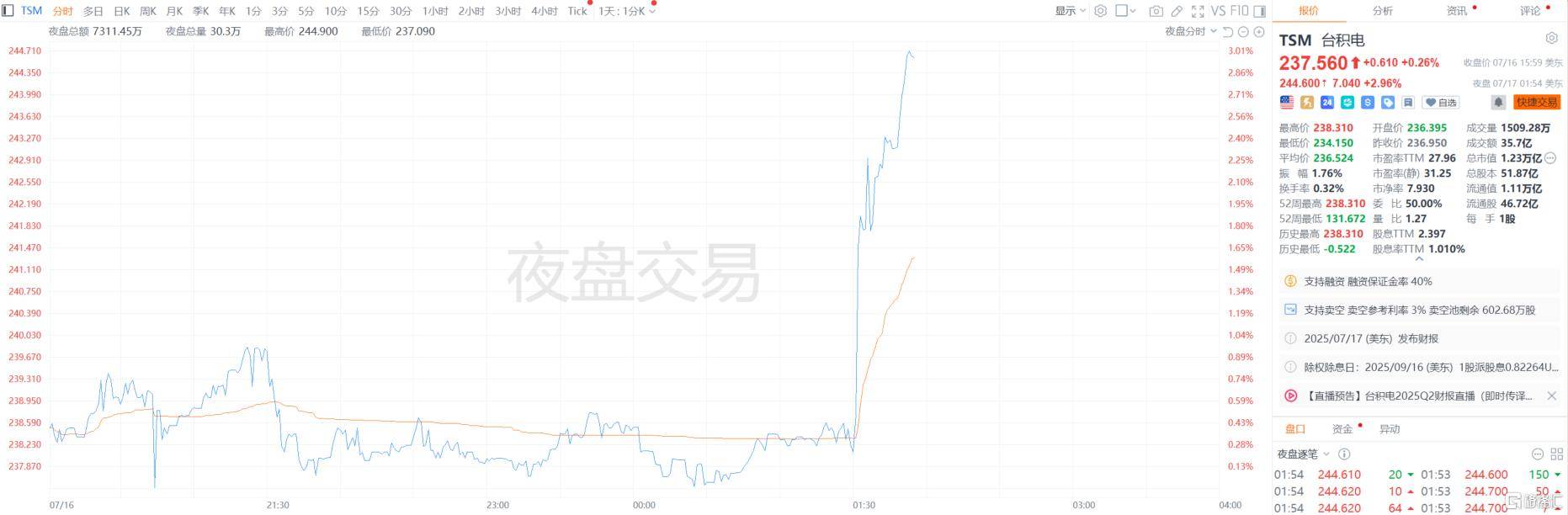
5nm制程芯片

Search documents
台积电Capex与业绩双超预期,先进制程 封装加速增长
CAITONG SECURITIES· 2026-01-21 07:35
Investment Rating - The industry investment rating is "Positive" (maintained) [1] Core Insights - AI computing demand is surging, with advanced processes solidifying growth foundations. TSMC's revenue is projected to exceed $33.7 billion in Q4 2025, driven by AI chip demand, with advanced process revenue share rising to 77% [6][7] - Strong profitability resilience is noted, with gross margin reaching 62.3% and net profit margin at 48.3% in Q4 2025, significantly exceeding guidance [10][11] - Global capacity layout and technology/resource allocation are strengthening long-term barriers, with TSMC's overseas capacity expansion and advanced packaging facilities progressing [6][12] - Investment recommendations focus on companies with competitive advantages in advanced manufacturing and those benefiting from domestic advanced packaging capacity [6] Summary by Sections TSMC Q4 2025 Performance - TSMC's Q4 2025 revenue reached NT$1.04609 trillion (approximately $33.7 billion), a year-on-year increase of 20.5% and a quarter-on-quarter increase of 5.7%, driven by AI-related high-performance computing chip demand [7][10] - The advanced process (7nm and below) revenue share increased to 77%, with 3nm process contributing 28% of revenue, highlighting the importance of AI chip demand [12][14] Capital Expenditure and Future Outlook - TSMC raised its 2026 capital expenditure guidance to $52-56 billion, reflecting a nearly 40% increase from previous plans, focusing on advanced process capacity expansion and semiconductor equipment procurement [17][21] - The company aims for a long-term revenue compound annual growth rate (CAGR) of 25%, with AI accelerator revenue CAGR adjusted upwards for 2024-2029 [21]

台积电:预计今年资本支出将升至520亿美元至560亿美元
Zheng Quan Shi Bao Wang· 2026-01-15 13:00
Core Insights - TSMC reported a consolidated revenue of approximately NT$1,460.9 billion for Q4 2025, representing a year-on-year increase of 20.5% and a quarter-on-quarter increase of 1.9% [1] - The net profit after tax for the same quarter was approximately NT$505.7 billion, with earnings per share of NT$19.5, both showing a year-on-year increase of 35.0% and a quarter-on-quarter increase of 11.8% [1] - The gross margin was 62.3%, and the net profit margin was 48.3% [1] Revenue Breakdown - In Q4 2025, TSMC's revenue from advanced processes (including 7nm and more advanced processes) accounted for 77% of the total wafer sales revenue, with 3nm process shipments contributing 28%, 5nm contributing 35%, and 7nm contributing 14% [1] - High-performance computing (HPC) and smartphones accounted for 55% and 32% of revenue, respectively, while IoT, automotive, data communication equipment (DCE), and others contributed 5%, 5%, 1%, and 2% [2] Future Outlook - TSMC expects capital expenditures to rise to a record high of between $52 billion and $56 billion in 2026, following a total of $40.9 billion in capital expenditures for 2025 [2] - The company maintains over 90% market share in the AI chip market, which is expected to drive revenue growth [2] - According to Morgan Stanley, TSMC's revenue in 2026 is projected to grow by 30% year-on-year when measured in USD [3]
台积电2025年营收同比增长逾三成
Zheng Quan Shi Bao Wang· 2026-01-11 09:47
Core Insights - TSMC reported a consolidated revenue of approximately NT$335 billion for December 2025, reflecting a month-over-month decline of 2.5% but a year-over-year increase of 20.4%, marking a record high for the month [1] - The revenue for the entire year of 2025 is projected to be around NT$3.81 trillion, representing a year-over-year growth of 31.6%, setting a new historical record [1] - The strong performance is attributed to the booming demand in the artificial intelligence sector, which has significantly increased the demand for TSMC's products [1] Company Performance - TSMC's Q4 2025 revenue is estimated to reach NT$1.05 trillion, a year-over-year increase of approximately 20%, surpassing market expectations [1] - The revenue forecast provided in TSMC's October earnings call aligns closely with the actual figures, indicating a strong performance [1] - TSMC is set to release its complete Q4 earnings report on January 15, which will include updated guidance for the current quarter and the full year [1] Industry Outlook - TSMC maintains over 90% market share in the AI chip market, driving its revenue to new heights [2] - Projections indicate that TSMC's 2nm revenue may surpass the combined revenue of its 3nm and 5nm processes by Q3 2026, highlighting the rapid pace of technological transition [2] - J.P. Morgan forecasts a 30% year-over-year revenue growth for TSMC in 2026, while Aletheia predicts a 40%-50% growth rate in 2027, marking a significant year for capacity expansion [2] - Despite TSMC's advanced manufacturing capabilities, there are reports that Apple may consider using Intel's foundry services for some of its M-series chips, focusing on entry-level Mac models [2]
“AI时代以来首次长期涨价行动”!台积电启动“连续4年涨价”
美股IPO· 2025-11-03 11:38
Core Viewpoint - TSMC has initiated a four-year price increase plan for advanced processes below 5nm, with expected price hikes of 3% to 10% starting in 2026, driven by rising production costs and ongoing capacity shortages [2][3]. Group 1: Price Increase and Market Dynamics - TSMC's price adjustments reflect a return to regular annual pricing after a freeze during the pandemic, with the 2023 increase being modest, primarily due to supply-demand imbalances and inflation [3]. - The price hikes are expected to trigger a new wave of chip price increases across the industry, as TSMC's actions align with comments from other industry players like MediaTek regarding cost adjustments [2][4]. - The advanced process nodes, particularly 5nm and 3nm, are crucial for TSMC's growth, contributing to 60% of revenue in Q2, with 3nm accounting for 23% and 5nm for 37% [6]. Group 2: Customer Relations and Pricing Strategy - TSMC will consider factors such as customer purchasing scale and cooperation depth when determining specific price increases, aiming to balance cost reflection with stable customer relationships [5]. - The company emphasizes close collaboration with clients to plan capacity and invest in advanced technologies, ensuring appropriate compensation while meeting customer demands [6]. Group 3: Future Outlook and AI Demand - The demand for AI applications is expected to drive TSMC's revenue growth, with forecasts suggesting that AI-related revenue could reach 35% of total income by 2028, potentially being achieved earlier [6]. - TrendForce anticipates that wafer foundries will raise foundry prices by 2026 due to increased demand for power management chips driven by AI, indicating a broader market trend towards price increases [6].

“AI时代以来首次长期涨价行动”!台积电启动“连续4年涨价”
华尔街见闻· 2025-11-03 11:01
Core Viewpoint - TSMC will continue to raise prices for advanced processes (below 7nm) in 2024, with an expected increase of 3% to 10%, marking the fourth consecutive year of price hikes for the world's largest foundry [1][2]. Group 1: Price Increase and Market Dynamics - TSMC has initiated annual price negotiations with clients due to rising production costs and persistent capacity shortages, with price increases expected to reach 3% to 10% for advanced processes by 2026 [2][4]. - The company has informed clients that starting from September, it will implement a continuous four-year price increase plan for processes below 5nm, with the most sought-after 3nm process expected to rise by at least a single-digit percentage [2][4]. - The price hikes are seen as a response to inflation and increased production costs, with the overall increase expected to be better than this year's modest single-digit percentage [4][8]. Group 2: Impact on Production Capacity - The price adjustments may lead to a gradual reduction in production capacity for mature processes above 7nm, with AI, servers, and high-performance computing (HPC) applications being the main beneficiaries [5][8]. - TSMC will consider factors such as client purchasing scale and cooperation depth to determine specific price increases, ensuring cost reflection while maintaining stable client relationships [6][8]. Group 3: Revenue Growth Drivers - Advanced processes have become the main growth driver for TSMC, with 5nm and 3nm families accounting for 60% of revenue in Q2 and maintaining this ratio in Q3, with 3nm at 23% and 5nm at 37% [8]. - The demand for AI applications is expected to drive continuous revenue and profit growth for TSMC, with foreign investors revising the company's mid-to-long-term revenue forecasts for AI applications [8]. - TrendForce predicts that wafer fabs will raise foundry prices by 2026 due to AI-driven demand for power management chips, with TSMC's leading position in advanced processes and tight capacity supporting its ongoing price adjustments [8].

刚刚,直线猛拉!芯片,重大利好!
券商中国· 2025-11-03 10:34
Core Viewpoint - The global chip price surge is intensifying, with TSMC planning to raise prices for advanced processes (below 7nm) by 3% to 10% in 2026, marking the fourth consecutive year of price increases [2][3]. Group 1: TSMC Price Increases - TSMC has initiated annual negotiations with clients, expecting price hikes for advanced processes due to rising production costs and persistent capacity shortages [3]. - The price increase will vary based on individual client procurement levels and cooperation, with the most sought-after 3nm process expected to rise by at least a single-digit percentage [3][4]. - TSMC's advanced processes, particularly 5nm and 3nm, accounted for 60% of its revenue in Q2, with 3nm making up 23% and 5nm 37% [4]. Group 2: Market Reactions - Following the announcement, stocks of SK Hynix and Samsung Electronics surged, with SK Hynix rising nearly 11% and Samsung over 3%, reaching new historical highs [2]. - A-share storage chip concept stocks also saw significant gains, with companies like Taiji Industry and Xiangnong Chip rising sharply [2]. Group 3: Memory Chip Market Dynamics - Samsung has paused October DDR5 DRAM contract pricing, leading other manufacturers like SK Hynix and Micron to follow suit, with expectations for price recovery delayed until mid-November [6]. - The memory market is shifting to a seller's market, with major suppliers only providing quotes to top-tier clients, causing spot market prices for DDR5 to spike by 25% in a week [6]. - Predictions indicate that DDR5 prices could see a sequential increase of 30% to 50% from Q4 this year to the first half of next year, potentially reaching $30 for 16Gb by mid-2026 [6]. Group 4: AI Demand and Future Outlook - The current price surge is viewed as the start of a "super cycle," driven by the increasing demand for high-bandwidth memory (HBM) due to AI applications [7]. - Analysts predict that DRAM prices will rise by 18% to 23% in Q4, with HBM contributing to an overall increase of 23% to 28% [7]. - The DRAM and NAND Flash markets are experiencing shortages, with expectations for further price increases in Q4 and 2026 [7].

台积电美国新厂揭密 川流不息“银色高速公路”曝光
Jing Ji Ri Bao· 2025-10-20 23:07
Core Insights - TSMC has released a video showcasing the internal operations of its new factory in Arizona, highlighting it as North America's most advanced wafer manufacturing facility [1] - The video features the expensive ASML Twinscan NXE extreme ultraviolet (EUV) lithography equipment, which is crucial for producing complex circuits in high-end processors like NVIDIA's Blackwell B300 [1] - The factory, named Fab 21, is gradually enhancing its chip manufacturing capabilities for 4nm and 5nm processes [1] Group 1 - The video reveals a path through a cleanroom illuminated with yellow lighting to prevent unintended exposure of lithography machines [1] - TSMC's automated logistics system, referred to as the "silver highway," consists of an overhead hoist transfer (OHT) system that efficiently utilizes vertical space in the factory [2] - The OHT system allows for high-efficiency logistics operations, crucial for maintaining process timing in a high-capacity manufacturing environment [1][2] Group 2 - In 2021, TSMC disclosed that the OHT system could travel a distance equivalent to circling the Earth 20 times in a single day, illustrating its extensive operational capacity [2] - The number of OHT systems has significantly increased with the production launch of new factories in the US and Japan [2]
AI相关需求强劲驱动 台积电预估营收全年增长34%—36%
Zheng Quan Shi Bao Wang· 2025-10-17 12:00
Core Insights - TSMC reported strong financial results for Q3 2025, driven by robust AI demand, with advanced process revenue accounting for over 70% of total wafer revenue [1][2] - The company achieved a record net profit of NT$452.3 billion, a year-on-year increase of 39.1% [1] - TSMC's advanced process revenue breakdown shows 3nm at 23%, 5nm at 37%, and 7nm at 14%, with advanced processes (7nm and below) making up 74% of total revenue [1] Financial Performance - TSMC's consolidated revenue for Q3 was NT$989.92 billion, a 30.3% year-on-year increase and a 6% quarter-on-quarter growth, translating to US$33.1 billion [1] - Gross margin improved to 59.5%, exceeding analyst expectations of 57.1%, while operating margin reached 50.6%, also surpassing market forecasts [1] - For Q4, TSMC forecasts revenue between US$32.2 billion and US$33.4 billion, with a gross margin of 59% to 61% and an operating margin of 49% to 51% [2] Market Segmentation - The HPC platform remains TSMC's largest revenue source, contributing 57% of total revenue, while smartphone revenue grew by 19% to account for 30% [2] - IoT and automotive sectors also saw revenue growth of 20% and 18%, respectively, each representing 5% of total revenue [2] - Declines were noted in the DEC sector, down 20% to 1%, and other sectors down 8% to 2% [2] Advanced Process Development - TSMC is making progress on its 2nm process, expected to enter trial production this quarter, with mass production anticipated in 2026 [3] - The company is also launching the N2P process for enhanced performance and efficiency, alongside the A16 process designed for high-performance computing applications [3] - TSMC's leadership in advanced processes is reinforced by strong demand for AI-related applications, with ongoing efforts to address supply constraints in AI chip manufacturing [3] Capacity Expansion - TSMC is accelerating capacity expansion at its Arizona facility and preparing to upgrade technology for advanced processes [4] - A second plot of land near the existing Arizona plant is being acquired to support expansion plans, while a second wafer fab in Japan is under construction [4] - The company estimates capital expenditures for 2025 to be between US$40 billion and US$42 billion, with approximately 70% allocated to advanced processes [4]
“AI需求比三个月前更强!”,台积电Q3净利润创新高
Di Yi Cai Jing· 2025-10-16 08:49
Core Insights - TSMC reported significant growth in revenue and net profit for Q3 2025, with advanced process revenue accounting for over 70% of total wafer revenue, driven by strong AI demand [1][3][4] Financial Performance - TSMC's consolidated revenue for Q3 reached NT$989.92 billion, a year-on-year increase of 30.3%, equivalent to approximately $33.1 billion [3] - Net profit for the quarter was NT$452.3 billion, marking a 39.1% year-on-year growth and setting a historical record [3] - Gross margin improved to 59.5%, up 0.9 percentage points quarter-on-quarter [3] Product Composition - In terms of product composition, 3nm process accounted for 23% of total wafer revenue, 5nm for 37%, and 7nm for 14%, with advanced processes (7nm and below) collectively making up 74% of total wafer revenue [3] - High-Performance Computing (HPC) revenue represented 57% of total revenue, surpassing smartphones at 30%, IoT at 5%, automotive at 5%, and digital consumer electronics at 1% [3] Future Outlook - TSMC forecasts Q4 sales between $32.2 billion and $33.4 billion, exceeding market expectations of $31.23 billion, with a gross margin projected between 59% and 61% [3] - The company anticipates a revenue growth of approximately 30% for the year 2025 [3] Management Insights - TSMC's CEO emphasized the strong and increasing demand for AI, noting that the company will continue to invest to support customer growth [4] - The company is working to close the supply-demand gap for advanced packaging and plans to ramp up capacity for 2nm process production later this quarter [4] - TSMC is accelerating capacity expansion at its Arizona facility and preparing to upgrade technology for advanced processes [4] Capital Expenditure - TSMC raised its capital expenditure guidance for the year, with $29.39 billion spent in the first nine months, and plans to allocate $40 billion to $42 billion for 2025, up from a previous range of $38 billion to $42 billion [5][6] - Approximately 70% of capital expenditure will be directed towards advanced processes, with 10% to 20% allocated for advanced packaging, testing, and manufacturing [6] Market Dynamics - TSMC's management addressed inquiries regarding data center construction costs, indicating that building a 1GW data center requires an investment of around $50 billion [6] - The company supports various chip types, including GPUs and ASICs, which utilize TSMC's advanced technologies [6]
AI需求强劲!台积电Q2净利润暴增近61%,创下历史新高
Sou Hu Cai Jing· 2025-07-17 06:53
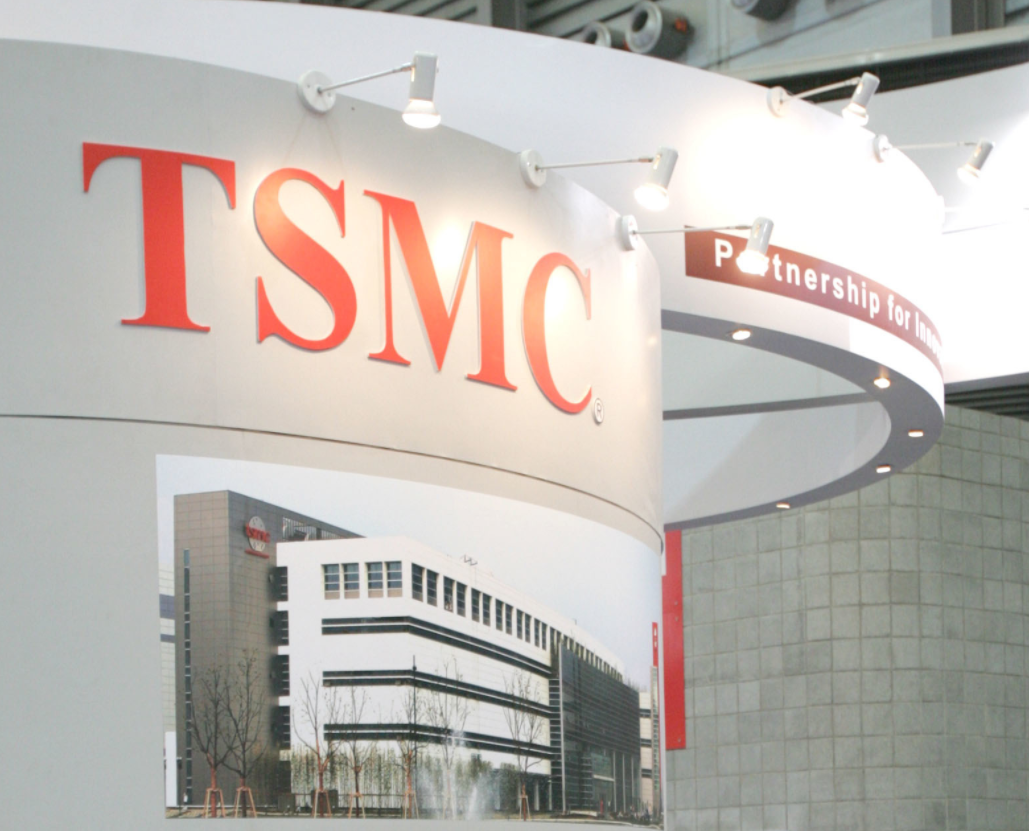
Core Insights - TSMC reported a record net profit of NT$398.3 billion in Q2, driven by surging AI demand [1][2][6] - The net profit increased by nearly 61% year-on-year, exceeding market expectations of NT$376.4 billion [2][6] - Following the earnings announcement, TSMC's stock rose by 2.9% in after-hours trading, reaching US$244.5 [3] Financial Performance - TSMC's Q2 revenue was NT$933.79 billion, a year-on-year increase of 38.6%, surpassing analyst expectations of NT$931.24 billion [5][8] - The diluted earnings per share (EPS) for the quarter was NT$15.36 [7] - Gross margin stood at 58.6%, while operating margin was 49.6% [8] Segment Performance - Revenue from high-performance computing (HPC) related to AI accounted for 60% of total revenue, with a quarter-on-quarter growth of 14% [11] - Mobile chip revenue represented 27% of total revenue, increasing by 7% quarter-on-quarter [11] - Revenue from IoT chips and automotive chips each accounted for 5% of total revenue, with IoT chips growing by 14% [11] Future Guidance - TSMC expects Q3 sales to be between US$31.8 billion and US$33 billion, with an operating margin forecast of 45.5% to 47.5% [14] - The company anticipates full-year capital expenditures to reach between US$38 billion and US$42 billion [14] Market Dynamics - The growth of TSMC is primarily driven by strong demand for AI-related chips, particularly those with process nodes smaller than 7nm, which accounted for 74% of total wafer revenue [14] - The AI demand is expected to remain sustainable in the short term as the technology continues to expand across various industries [14] - However, TSMC may face challenges in the second half of the year due to the appreciation of the New Taiwan Dollar and potential declines in orders from smartphone and PC customers [14]