
A321

Search documents
Airbus Completes Acquisition of Spirit AeroSystems' Industrial Assets
ZACKS· 2025-12-10 15:41
Core Insights - Airbus SE has completed the acquisition of industrial assets from Spirit AeroSystems, enhancing its control over essential components for its commercial aircraft programs [1][3][10] - The company received $439 million in compensation as part of the transaction, which includes adjustments and liability settlements [2] - The acquisition aims to improve supply-chain resilience, production efficiency, and quality control, positioning Airbus to meet rising global aircraft demand [3][4][10] Company Overview - The acquisition includes former Spirit AeroSystems sites in Kinston, NC; Saint-Nazaire, France; and Casablanca, Morocco, which are dedicated to A350, A220, and A321 components [1][10] - Airbus projects a demand for 43,420 new aircraft deliveries over the next 20 years, driven by rising air passenger traffic and the need for modern, fuel-efficient aircraft [5][6] Industry Context - Other aerospace companies, such as Boeing and TransDigm Group, are also engaging in acquisitions to strengthen their aircraft programs, indicating a trend in the industry [7][9] - Boeing's acquisition of Spirit AeroSystems covers operations related to its commercial programs, while TransDigm's acquisition aligns with its strategy of acquiring proprietary aerospace components [7][9] Financial Performance - Airbus shares have increased by 20.6% over the past six months, outperforming the industry growth of 6.7% [12] - The Zacks Consensus Estimate for Airbus indicates strong long-term revenue growth potential, supported by the projected demand for new aircraft [6]

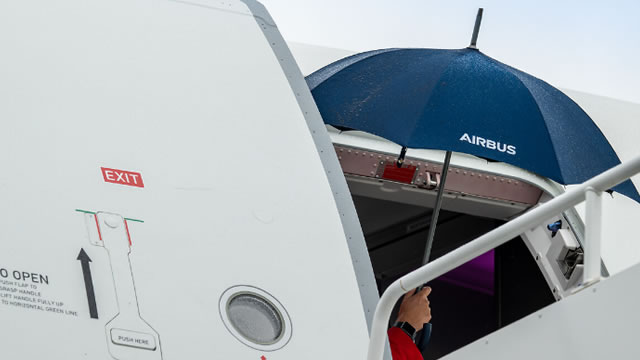
Airbus Lowers Delivery Targets Due to Slew of Issues
Youtube· 2025-12-03 17:41
Core Insights - Airbus is currently facing significant challenges, particularly with software upgrades and discrepancies in aircraft panels, which have led to a reduction in delivery targets for the year [2][5][9] - Despite these issues, Airbus has maintained its financial targets, which has helped stabilize its stock performance compared to Boeing [6][5] - The A320 aircraft, a key product for Airbus, remains a dominant player in the commercial aviation market, although it faces scrutiny due to recent problems [7][9] Summary by Category Company Performance - Airbus announced that 6,000 A320 aircraft required software upgrades, which were completed unexpectedly quickly over the weekend [3] - The company has revised its delivery target from 820 aircraft to 790 for the year due to ongoing checks on aircraft panels [5] - Despite the delivery target reduction, Airbus has kept its financial targets intact, which has contributed to a more stable stock performance [6] Industry Context - The A320 is recognized as the world's most flown commercial aircraft, significantly impacting Airbus's market position against Boeing [7][9] - Boeing has historically been a dominant player in the aviation industry, but Airbus has gained substantial market share with the A320 and its derivatives [8] - The competitive landscape remains tight, with both companies vying for market share, but Airbus's recent challenges have raised concerns among investors [9][10]


南航进博会签约额创六年新高 全方位保障助力高水平开放
Zhong Guo Min Hang Wang· 2025-11-07 03:07
Core Insights - China Southern Airlines Group achieved a record signing amount of over $2 billion at the 8th China International Import Expo, marking a six-year high, with agreements signed with 20 global aviation service providers from 9 countries [1][3] Group 1: Supply Chain Security - The group focused on enhancing international supply chain security and efficiency, securing multiple procurement collaborations in key areas such as technology equipment, service trade, and agricultural products [3] - The procurement agreements cover 4 major categories and 19 types of critical goods and services, involving 7 subsidiaries including the Engineering Technology Company and Zhuhai Motianyu Aviation Engine Maintenance Company [3] - These collaborations aim to strengthen the supply chain security, ensuring safe flight operations and improved passenger service quality [3] Group 2: Innovation in Cabin Products - China Southern Airlines is leveraging the expo as a platform to integrate global advanced manufacturing and trade resources, transitioning from equipment procurement to technology collaboration and co-creation of solutions [5] - The airline prioritizes passenger experience, working closely with over ten companies in the cabin industry to complete new cabin designs and key equipment customization [5] - This initiative aims to establish a core capability for providing customized cabin solutions, laying a solid foundation for creating world-class aircraft cabins [5] Group 3: Logistics and Service Enhancements - To address the concentrated cargo arrival pressure during the expo, China Southern Airlines Logistics deployed multiple Boeing 777F freighters, executing over 180 flights weekly [6] - The logistics team implemented a "green guarantee channel" for exhibition goods, enhancing the efficiency of the entire delivery process by over 30% [6] - The airline optimized the "airport-exhibition" short-haul link to ensure efficient entry of medical equipment and precision electronic products [6] Group 4: Comprehensive Service Support - During the expo, China Southern Airlines operated 34 round-trip routes from Shanghai Hongqiao and Pudong airports to 30 domestic and international cities, with an expected daily capacity of approximately 39,000 seats [8] - The airline increased flight frequencies to popular destinations and planned to operate the domestically produced C919 aircraft on the Shanghai-Hongqiao to Guangzhou route [8] - Special services were introduced, including themed flights with crew in traditional attire, priority luggage handling, and dedicated service counters at airports to enhance the travel experience for attendees [8]


国泰飞行训练中心新接收一台空客A320neo全动飞行模拟器
Zhong Guo Min Hang Wang· 2025-11-03 05:09
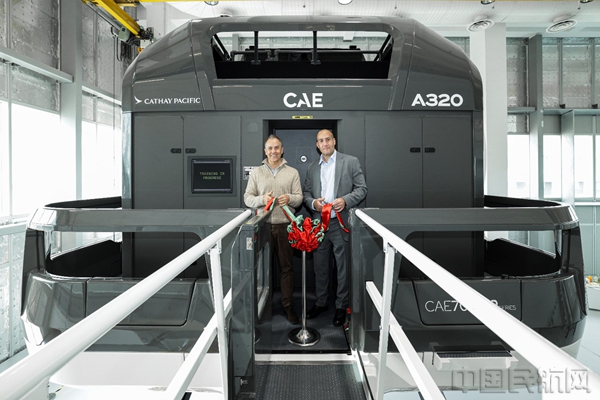
Core Insights - Cathay Pacific Group has officially received and launched a new Airbus A320neo full-flight simulator manufactured by CAE, enhancing its pilot training facilities and supporting fleet modernization and safety commitments [1][3] - The new simulator features CAE's advanced Prodigy visual system, significantly improving training efficiency and realism, addressing the growing demand for pilot training [1] - Cathay Pacific is implementing a comprehensive investment plan exceeding HKD 100 billion, which includes fleet renewal, cabin product upgrades, lounge renovations, and digital innovations, with orders for over 100 new aircraft [3] Group 1 - The new Airbus A320neo CAE 7000XR full-flight simulator will primarily be used to meet the increasing pilot training needs of Cathay Pacific Group [1] - Cathay Pacific has a long-standing partnership with CAE, focusing on safety and operations, and has continuously introduced CAE-manufactured training equipment at its Hong Kong training center [1] - The investment plan includes the acquisition of over 30 A320neo and A321neo aircraft, contributing to a fleet of more than 230 passenger and cargo aircraft [3] Group 2 - The ceremony for the simulator's unveiling was attended by key figures from Cathay Pacific and CAE, marking an important milestone in their collaboration [1] - Cathay Pacific currently operates 16 A321neo aircraft, while Hong Kong Express Airlines has a fleet of over 40 aircraft, all consisting of Airbus models [3] - The investment plan encompasses various areas, including fleet updates and digital innovations, indicating a strategic focus on modernization and enhanced customer experience [3]

变更飞机机型风波追踪:航司“合同”免责,补偿规则缺位
Bei Jing Shang Bao· 2025-08-07 14:10
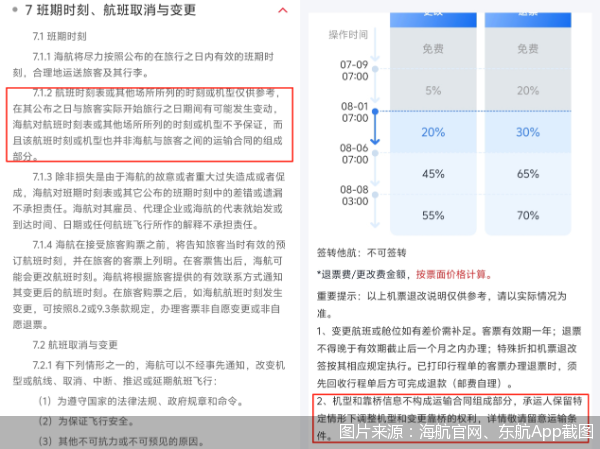
Core Viewpoint - The issue of airlines changing aircraft types leading to consumer disputes is prevalent, with a lack of clear compensation rules for affected passengers [1][4][7] Group 1: Consumer Complaints - There are 531 complaints related to "aircraft type change" on the Black Cat Complaints platform, with significant discussions on social media [2] - Consumers express dissatisfaction when wide-body aircraft are replaced with narrow-body ones, citing better comfort and experience with wide-body planes [2][3] - Specific cases highlight consumers' expectations for certain aircraft types, such as the C919, leading to demands for refunds when changes occur [3][4] Group 2: Airline Policies - Airlines often state that the aircraft type is not part of the transportation contract, allowing them to change aircraft without offering compensation [4][8] - Many airlines have disclaimers indicating that the listed aircraft type is for reference only and not guaranteed [4][5] - Airlines may change aircraft for various reasons, including delays, operational adjustments, or safety concerns [5][6] Group 3: Recommendations for Airlines - Experts suggest that airlines should establish clear compensation standards for aircraft changes, such as allowing free transfers to nearby flights or waiving change fees [7][13] - Airlines are encouraged to inform consumers about the risks of aircraft type changes during the ticket purchasing process [7][13] - The industry lacks standardized compensation measures for changes that affect consumer experience, making it difficult for airlines to implement uniform policies [10][11]
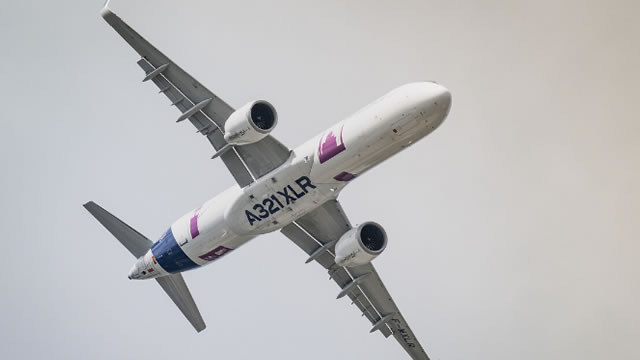
Here's Why Airbus Shares Took Off Today
The Motley Fool· 2025-06-20 19:33
Group 1 - Airbus shares rose by up to 3.1% following the Paris Air Show, where the company announced $21 billion in orders [1][3] - Boeing scaled down its participation at the air show and did not announce new orders due to a recent crash involving a Boeing 787 Dreamliner [2] - Airbus announced $14.2 billion in firm orders and an additional $6.7 billion under memoranda of understanding (MoUs) [3] Group 2 - Among the firm orders, LOT Polish Airlines made its first-ever order for 40 A220 aircraft, while All Nippon Airways ordered 27 A321 airplanes [4] - Riyadh Air ordered 25 A350 wide-body aircraft, marking it as the first Saudi airline to operate the A350 [4] - VietJet signed an MoU for 100 Airbus A321neo aircraft, indicating strong demand for Airbus products [4] Group 3 - The strength in A350 and A321 orders reflects a positive trend for Airbus, especially as it competes with Boeing [6] - The 40 A220 orders signify a recovery for a model that had seen limited deals in the past year [6] - Overall, the air show was a success for Airbus, positively impacting its stock price [6]
Air Lease (AL) - 2025 Q1 - Earnings Call Transcript
2025-05-05 21:32
Financial Data and Key Metrics Changes - In Q1 2025, the company generated revenues of $738 million and diluted earnings per share of $3.26, benefiting from fleet expansion and insurance settlements [7][8] - The company received $329 million in insurance proceeds during the quarter, with an additional $227 million received shortly after, contributing to record levels in revenue, fleet net book value, and book value per common share [8][30] - Interest expense increased by approximately $28 million year over year, driven by a rise in the composite cost of funds to 4.26% [28][29] Business Line Data and Key Metrics Changes - The company purchased 14 new aircraft, adding roughly $800 million in flight equipment, and sold 16 aircraft for $521 million in proceeds [9][26] - Rental revenue rose 5% year over year, totaling approximately $645 million, while lease yields remained flat compared to the previous year [26] - Sales proceeds from aircraft sales totaled $521 million, generating a gain on sale margin of approximately 13% [27] Market Data and Key Metrics Changes - Airlines in Asia reported strong passenger traffic and forward bookings, while North American airlines experienced softer traffic due to tariff announcements [11][12] - European airlines continued to show robust demand for aircraft, with positive earnings reported by major carriers like Lufthansa and Ryanair [13][14] - The global airline fleet remains behind in replacing older aircraft, with supply constraints expected to continue for the next three to four years [16][17] Company Strategy and Development Direction - The company aims to consider a wide range of capital allocation options, including organic and inorganic growth, as well as returning capital to shareholders [23] - The management emphasized the importance of maintaining flexibility in capital allocation decisions, particularly in light of ongoing insurance recoveries and market conditions [31][34] - The company is focused on driving shareholder value over the long term, despite geopolitical and macroeconomic uncertainties [23][34] Management's Comments on Operating Environment and Future Outlook - Management expressed optimism about the company's prospects for 2025 and beyond, citing strong demand in Asia, Europe, and the Middle East [20][23] - The impact of tariffs on the airline industry remains uncertain, but management believes that the situation will be resolved without significant long-term disruptions [21][22] - The company is closely monitoring the debt capital markets and remains cautious in its approach to capital allocation [23][34] Other Important Information - The company highlighted that 87% of its business is outside North America, indicating a diversified market presence [15] - The management team acknowledged the retirement of Steve Hazy, recognizing his significant impact on the aircraft leasing industry [24][25] Q&A Session Summary Question: Can you provide examples of lease extensions or order book placements post-tariffs? - Management shared a recent lease extension with a major airline in Asia, with rates significantly higher than previous COVID-era rates [39] Question: What are the priorities for capital allocation? - Management indicated that all options, including buybacks, M&A, and increased dividends, are under consideration, with decisions expected in the coming quarters [46][48] Question: How do you view the potential for organic growth opportunities? - Management expressed flexibility in pursuing organic growth, including potential acquisitions of used aircraft, while maintaining discipline in new aircraft orders [58][60] Question: What are the expectations for net margins and profitability? - Management reaffirmed that there are no changes to profitability expectations for the year, with Q1 tracking positively against internal targets [75][76]

Air Lease (AL) - 2025 Q1 - Earnings Call Transcript
2025-05-05 20:30
Financial Data and Key Metrics Changes - In Q1 2025, the company generated revenues of $738 million and diluted earnings per share of $3.26, benefiting from fleet expansion and insurance settlements [5][6] - The company received $329 million in insurance proceeds during the quarter, with an additional $227 million received shortly after [6][30] - Interest expense increased by approximately $28 million year over year, driven by a 23 basis point rise in the composite cost of funds to 4.26% [28][29] - Book value per share increased to $62.32 due to significant insurance recoveries [30] Business Line Data and Key Metrics Changes - Rental revenue rose 5% year over year to approximately $645 million, while lease yields remained flat compared to the previous year [25] - The company sold 16 aircraft for $521 million, generating $61 million in gains, representing a 13% gain on sale margin [27] - Fleet utilization remained at 100%, with the weighted average age of the fleet slightly increasing to 4.7 years [7] Market Data and Key Metrics Changes - Airlines in Asia reported strong passenger traffic and forward bookings, while North American airlines experienced softer traffic due to tariff announcements [10][11] - European airlines continued to show robust demand for aircraft, with positive earnings reported by major carriers [12][13] - The global airline fleet is expected to remain behind in replacing older aircraft due to supply constraints from manufacturers [15] Company Strategy and Development Direction - The company aims to consider a wide range of capital allocation options, including organic and inorganic growth, as well as returning capital to shareholders [22] - The company is focused on maintaining a strong liquidity position and is awaiting further insurance recoveries to enhance capital flexibility [32] - The management emphasized the importance of patience and careful capital allocation to drive long-term shareholder value [22] Management's Comments on Operating Environment and Future Outlook - Management expressed optimism about the company's prospects for 2025 and beyond, despite geopolitical and macroeconomic uncertainties [22] - The company highlighted that tariffs are the responsibility of the airline customers, and there are currently no aircraft deliveries scheduled to countries with applicable tariffs [16][50] - Management noted that the demand for aircraft remains strong globally, with no significant changes in the overall aircraft demand picture [14] Other Important Information - The company has reached its target debt-to-equity ratio, allowing for more flexibility in capital allocation [32] - The company is closely monitoring the debt capital markets during periods of volatility [22] Q&A Session Summary Question: Any real-time examples of lease extensions or order book placements post tariffs? - Management provided an example of a recent lease extension with a major airline in Asia, with rates significantly higher than previous COVID-era rates [38] Question: Should we assume the 82% recovery from Russia claims is not final? - Management stated that they are in ongoing litigation and cannot comment further on the total additional capital expected [41] Question: What are the priorities for capital allocation? - Management indicated that they are considering various options, including buybacks, M&A, and increased dividends, but no specific direction was provided [45][46] Question: Will airlines reach out for assistance regarding tariffs? - Management reiterated that airlines are responsible for tariffs and currently, there are no deliveries scheduled to countries with applicable tariffs [50] Question: Can you elaborate on organic growth opportunities? - Management expressed flexibility in considering various growth opportunities, including potential used aircraft acquisitions [58] Question: What are the expectations for net margins? - Management confirmed that there are no changes to profitability expectations for the year [72]