
AI作曲

Search documents
推动文化和科技融合 发展新型文化业态
Ren Min Ri Bao· 2026-01-20 22:43
Group 1 - The core viewpoint emphasizes the deep integration of culture and technology, which is seen as a promising industry with significant potential for development [1][3]. - The new cultural formats are characterized by technology empowerment, cross-border integration, and experience orientation, reshaping the entire chain of cultural production, dissemination, and consumption [2][3]. - The integration of culture and technology is crucial for high-quality economic development, meeting the diverse cultural needs of the people, protecting and inheriting traditional Chinese culture, and enhancing national cultural soft power [3][4]. Group 2 - The exploration of effective mechanisms for the integration of culture and technology is essential for accelerating the development of new cultural formats and creating new growth points in the cultural industry [4][5]. - The relationship between culture and technology is reciprocal, where cultural demands drive technological innovations, and new technologies in turn elevate cultural needs and product offerings [5][6]. - The transformation of the cultural industry through the integration of technology and culture requires the establishment of a robust institutional framework to support innovation and development [7][8]. Group 3 - The development of new cultural formats is vital for cultural prosperity and the construction of a strong cultural nation, providing strategic significance for fulfilling cultural missions in the new era [3][6]. - The application of digital technologies in the protection and inheritance of traditional culture can revitalize cultural elements, ensuring their longevity and relevance [3][6]. - The promotion of cultural and technological integration necessitates the reform of production relations and the establishment of a scientific and effective system for the free flow and efficient allocation of innovative elements [4][7].
推进文化和科技融合 发展新型文化业态 加快建设全国重要的文化创意中心和数字文创产业集聚地
Xin Lang Cai Jing· 2026-01-14 18:39
Group 1 - The city aims to promote the integration of culture and technology, developing new cultural formats and accelerating the establishment of a national cultural creative center and digital cultural industry hub [1] - The digital cultural industry is recognized as a crucial component of Chengdu's modern industrial system, with a focus on enhancing service consumption, cultural creativity, and esports [4] - The city plans to strengthen industrial parks like Tianfu Changdao and Dongjiao Memory, enhancing their capacity to attract quality enterprises and teams [4] Group 2 - Chengdu Haiyi Interactive Entertainment Technology Co., Ltd. focuses on image and video generation, with an emphasis on AI applications and expanding its ecosystem [2] - Migu Music Co., Ltd. is transitioning from content services to media, aiming to create a leading streaming music platform while integrating music with cultural, tourism, and technology sectors [2] - Chengdu Digital Sky Technology Co., Ltd. is developing a platform for hyper-realistic digital human modeling and animation, focusing on virtual reality and interactive technologies [3] Group 3 - The city encourages the cultivation of high-quality projects in esports, aiming to enhance event operations and extend the industry chain [3] - There is a strong emphasis on exploring effective mechanisms for the digitalization of cultural construction and transforming cultural resource advantages into development advantages [4] - The city seeks to build a multi-level collaborative model for the digital cultural industry, aiming to establish national-level platforms for incubation and overseas services [4]
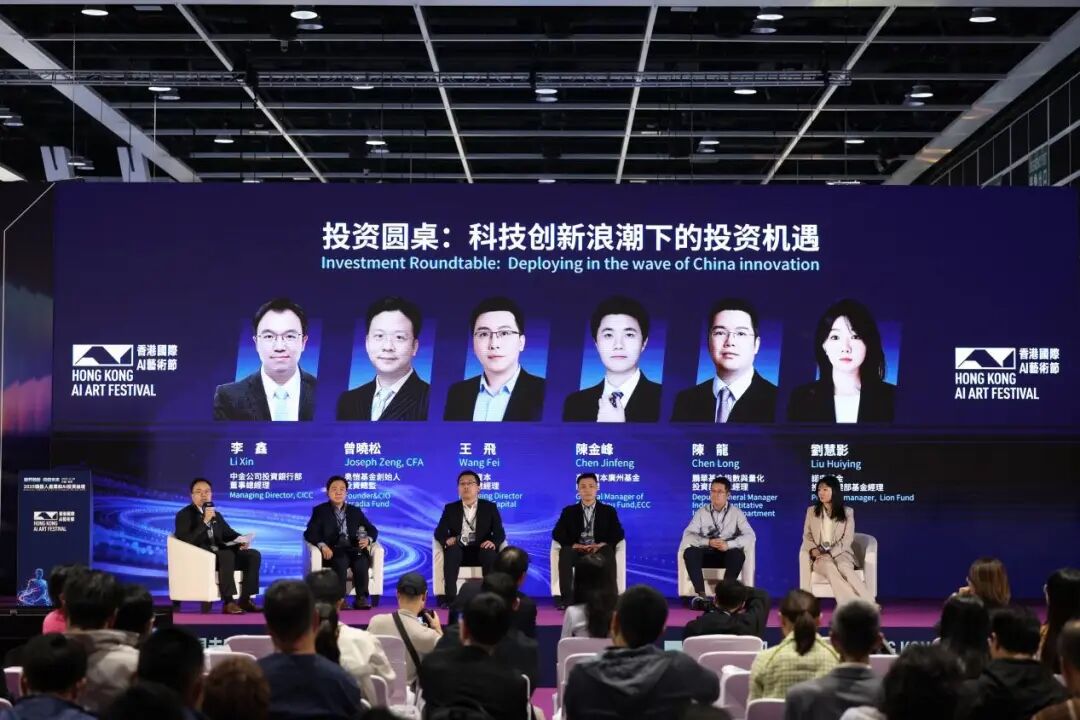
六位投资大咖激辩
Zhong Guo Ji Jin Bao· 2025-12-28 02:33
Core Insights - The forum discussed investment opportunities in AI and robotics, emphasizing the importance of real-world applications and market demand in these sectors [1][3][5]. Group 1: Investment Opportunities - Key areas of focus include AI applications in autonomous driving, AI integration with biomedicine, and productivity-enhancing robots [3][5]. - The investment community anticipates significant advancements in AI software applications and hardware integration by 2026, particularly in the context of China's manufacturing advantages [6][12]. - The emergence of humanoid robots and space computing is highlighted as a promising investment direction, with expectations for substantial growth in these sectors [4][11]. Group 2: Market Trends and Valuation - The discussion noted that secondary market trends often lag behind primary market dynamics, suggesting that current high valuations in the AI and robotics sectors may not reflect underlying fundamentals [10][19]. - The panelists emphasized the need for companies to demonstrate real market demand and solve industry pain points to justify their valuations, especially in a potentially bubble-like environment [15][17]. - The importance of investing in companies with strong customer bases and technological differentiation was underscored as a strategy to mitigate risks associated with high valuations [16][18]. Group 3: Future Projections - The consensus is that 2026 will be a pivotal year for AI and robotics, with a wide array of entrepreneurial and investment opportunities expected to emerge [8][23]. - The potential for breakthroughs in China's semiconductor industry is seen as a critical investment opportunity, with expectations for significant advancements in chip technology [14][22]. - The panelists believe that the next decade will witness a shift towards greater global competitiveness for Chinese technology, creating numerous investment prospects [23].

人工智能将深度重塑高净值人群养老
Guo Ji Jin Rong Bao· 2025-12-15 09:41
Group 1 - The report highlights the growing demand for quality elderly care among high-net-worth families in China, driven by demographic changes such as an aging population and declining birth rates [1] - The elderly population in China is projected to exceed 290 million by 2024, marking a significant shift from a theoretical trend to a pressing reality [1] - The elderly care industry is identified as a stable and promising sector, with four main modes of elderly living: health care, medical care, nursing care, and comfort care [1] Group 2 - The report indicates that artificial intelligence will significantly reshape the elderly care experience for high-net-worth individuals, with nearly half expressing interest in telemedicine and smart wearable devices [2] - There is a notable preference for public hospital health check centers among high-net-worth individuals, reflecting a strong demand for professional medical services [2] - Traditional Chinese medicine is gaining traction in preventive health care, with a higher selection rate compared to Western nutritional products, indicating a preference for comprehensive health management solutions [2]