
科技产业

Search documents
创新科技金融服务的三重深远意义
Zheng Quan Ri Bao· 2026-03-04 17:12
Core Viewpoint - The ongoing National People's Congress is focusing on how to innovate service models and enhance the role of technology finance in China, indicating a significant shift towards improving the technology finance service system [1] Group 1: Economic Structure Optimization - Financial resources are crucial for modern economic development, and the flow of funds is closely linked to industrial growth. Traditional economic drivers are being replaced by emerging technology industries that require innovative financial services [2] - Innovative technology finance services aim to reallocate funds from traditional low-efficiency sectors to high-tech, high-value strategic emerging industries, facilitating a shift from factor-driven to innovation-driven economic growth [2] Group 2: Financial System Efficiency - The core of finance lies in risk pricing and resource allocation, and traditional financial service models have limited the efficiency of resource allocation for technology enterprises [3] - Deepening technology finance innovation will reshape financial logic, improving risk assessment models and enabling the quantification of intangible assets, thus enhancing the pricing of "technological content" [3] - A multi-tiered capital market will be better coordinated, linking various financial tools from angel investments to mergers and acquisitions, thereby improving overall financial resource allocation efficiency [3] Group 3: Global Competitiveness and Resilience - The focus on self-sufficiency in key technologies has become a priority in global industrial competition, necessitating high-intensity independent innovation [4] - Innovative technology finance services will attract "patient capital" and "long-term capital" to support critical sectors in the industrial chain, helping core enterprises overcome technological challenges [4] - Financial innovations like supply chain finance can effectively connect specialized small and medium-sized enterprises, promoting the integration of innovation, industry, finance, and talent [4] Group 4: Systemic Transformation - The innovation in technology finance services represents a systemic transformation involving institutional design, product supply, risk sharing, and ecosystem development [4] - There is an expectation for more targeted and inclusive technology finance policies to take root, making finance a core engine driving innovation [4]
国务院批复同意雄安高新区升级为国家高新区
Xin Hua She· 2026-02-13 16:39
Core Viewpoint - The State Council of China has approved the upgrade of the Hebei Xiong'an High-tech Industrial Development Zone to a National High-tech Industrial Development Zone, aiming to enhance technological and industrial innovation while supporting the development of the Xiong'an New Area and the Beijing-Tianjin-Hebei coordinated development strategy [1][2]. Group 1 - The upgraded Hebei Xiong'an High-tech Industrial Development Zone will cover an area of 20.84 square kilometers and consist of two blocks [1]. - The development zone is expected to integrate technological innovation and industrial innovation, attract high-end innovation resources, and promote major scientific project collaborations [1]. - The zone aims to become a significant source of independent and original innovation, as well as an international high-end high-tech industrial cluster [1]. Group 2 - The approval emphasizes strict adherence to land use planning and environmental regulations, including the implementation of a unified land space planning system [1]. - There will be a prohibition on commercial real estate development, with a focus on balanced residential and commercial space, and the construction will prioritize efficient land use [1]. - The management of the development zone will be enhanced through reforms, aiming for a clear and efficient management mechanism, while also promoting smart and green park development [2].
以重大项目为引擎,充分释放发展动能
Xin Lang Cai Jing· 2026-02-03 18:42
Core Viewpoint - The key to expanding investment lies in increasing effective investment and improving investment efficiency, which can meet current demands and create new ones, thus promoting economic growth from both demand and supply sides [1][2]. Group 1: Investment Strategy - Beijing aims to optimize the layout of major projects, adjust investment structure precisely, and expand investment space to enhance effective investment [1][5]. - The city plans to focus on 300 major projects in 2026, including 100 in technology innovation, 100 in infrastructure, and 100 in improving people's livelihoods, with total investments exceeding 300 billion [1][3]. - Effective investment is crucial for economic growth, as blind or ineffective investments can lead to financial risks and waste [2]. Group 2: Project Focus - The 2023 project list emphasizes effective investment and targeted actions, aligning with the goals set in the 15th Five-Year Plan and government reports [3]. - Major technology innovation projects will receive the highest investment share, with planned funding of 142.8 billion, while infrastructure projects will receive 67.4 billion [4]. - The focus on improving public services and enhancing living conditions through 100 major livelihood projects aims to meet diverse community needs [5]. Group 3: Investment Impact - The investment quality, efficiency, and structure significantly influence the overall economic development quality [2]. - The projects are designed to address key industry chain needs, enhance urban livability, and improve public service systems [3]. - The government aims to ensure that social investment projects account for no less than 70% of total investment, enhancing the effectiveness of public funding [3].
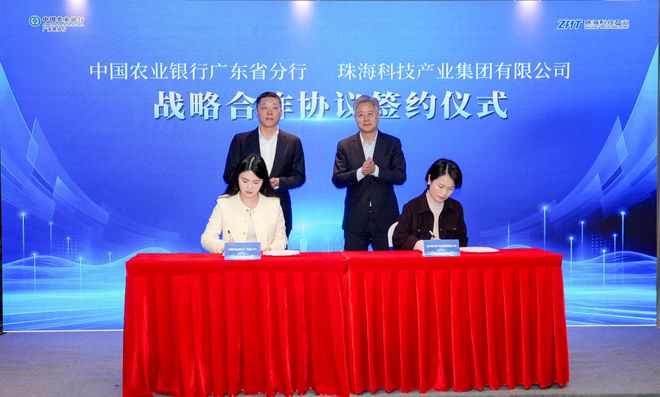
重磅!珠海科技产业集团与农行广东省分行达成全面战略合作
Nan Fang Du Shi Bao· 2026-01-31 05:57
Core Viewpoint - The strategic cooperation agreement between Zhuhai Technology Industry Group and Agricultural Bank of China Guangdong Branch marks a significant milestone in enhancing collaboration to support national strategies and empower the development of new productivity in the Guangdong-Hong Kong-Macao Greater Bay Area [1][3]. Group 1 - The Agricultural Bank of China has previously provided financing support to various member enterprises of Zhuhai Technology Industry Group and has actively participated in the underwriting of the group's medium-term notes [3]. - The cooperation will focus on key areas such as credit cooperation, mergers and acquisitions, fund establishment, bond underwriting, and the linkage of investment and loans, aiming to create a replicable and scalable model for technology finance cooperation [3][5]. - The agreement aligns with the strategic needs of the group and emphasizes the bank's role in supporting the real economy, particularly in the technology finance sector [5]. Group 2 - The partnership aims to provide tailored financial solutions for small and medium-sized enterprises in the park, ensuring precise support for startups and growing companies [5]. - Both parties will deepen resource sharing and complementary advantages, continuously expanding the breadth and depth of cooperation to contribute to technological innovation and industrial upgrading in the Greater Bay Area [7]. - The collaboration is expected to inject strong synergistic momentum into the high-quality development during the 14th Five-Year Plan period [7].

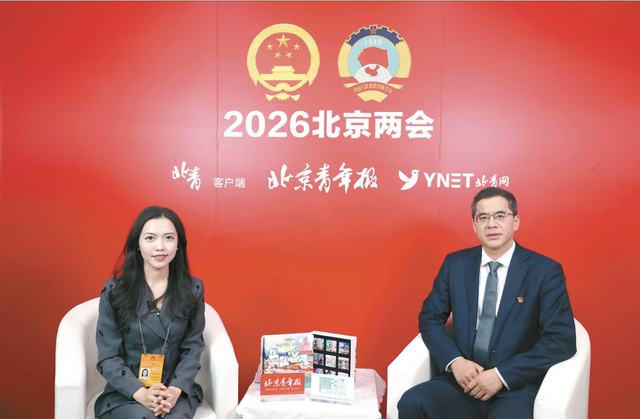
朝阳区委常委、常务副区长赵海东:锚定国际消费主承载区提质增效
Bei Jing Qing Nian Bao· 2026-01-29 00:53
Core Insights - Chaoyang District has showcased significant achievements in economic, technological innovation, and public welfare during the "14th Five-Year Plan" period, characterized by three key themes: "stabilizing force," "international style," and "vibrant atmosphere" [1][3][4] Economic Performance - The GDP of Chaoyang District is approaching 1 trillion, with a projected growth rate of 5.2% by 2025. Public budget revenues are expected to reach 113.71 billion and 56.9 billion respectively, maintaining a leading position in the city [3] - Fixed asset investment is anticipated to complete 130 billion, consistently exceeding 100 billion for several years. The total retail sales of consumer goods are projected at 260.03 billion, accounting for one-fifth of the city's total [3] - The financial sector's added value is expected to grow by 14.3%, surpassing the city's average growth of 5.6%, contributing to 50.6% of the overall growth [3] International Engagement - Chaoyang District aims to enhance its international presence by creating a multi-dimensional platform for foreign exchanges, with actual foreign investment reaching 2.13 billion, a growth of 34%, accounting for 31% of the city's total [4] Consumer Landscape - The district is recognized as a major consumption hub, with plans to launch seven commercial facilities, including the North Area of Sanlitun and JD Mall, to enhance the consumer experience [4] - The third Chaoyang International Light Consumption Season is expected to attract over 20 million visitors and generate sales exceeding 4 billion [4] Technological Innovation - By 2026, Chaoyang District plans to increase the number of specialized technology parks from 23 to 100, focusing on creating a complete industrial ecosystem that includes policies, funds, and services to attract more tech companies [6] - The district currently hosts 3,649 national high-tech enterprises and aims to leverage these resources to foster technological innovation [5] Consumer Ecosystem Development - The district will develop a "24-hour vibrant city" by integrating new demands with new supplies, enhancing the consumer experience across various demographics and timeframes [7] - Plans include the establishment of high-energy consumption landmarks and the promotion of unique commercial areas, such as the CBD × Sanlitun International Consumption Experience Zone [7] Public Welfare and Governance - Chaoyang District is committed to improving public services, with plans to enhance educational resources and healthcare facilities, including the construction of nine new schools and ten healthcare projects [9] - The district will also focus on ecological improvements, aiming to create beautiful neighborhoods and enhance green spaces [10]
江苏发布“十四五”金融“成绩单”:新增259家上市公司,居全国第一
Yang Zi Wan Bao Wang· 2026-01-21 13:30
Core Insights - Jiangsu Province has achieved significant financial development during the "14th Five-Year Plan" period, with notable increases in new loans, listed companies, and direct financing [1][2][7] Group 1: Financial Achievements - Jiangsu Province ranked first in the nation for new loans for four consecutive years, with a total of 2,295 billion yuan raised from 259 newly listed companies [1][2] - The total number of domestic listed companies in Jiangsu reached 722, with a significant increase in the quality of these companies [3][6] - The province's social financing scale has remained among the top in the country, with an average annual increase of 3.35 trillion yuan from 2021 to 2024 [4] Group 2: Risk Management and Financial Stability - Jiangsu has maintained a low non-performing loan rate of 0.84%, significantly below the national average, and has successfully cleared 575 non-compliant financial institutions [2][3][7] - The province has implemented measures to reduce financial risks, including a crackdown on illegal fundraising activities and the restructuring of high-risk companies [3][6] Group 3: Support for the Real Economy - Financing guarantees in Jiangsu exceeded 1.16 trillion yuan, with a focus on supporting the manufacturing, technology, and green sectors [2][4] - The average interest rate for new corporate loans decreased by 149 basis points compared to 2020, contributing to a favorable lending environment [4] Group 4: Digital Currency and Innovation - Jiangsu has led the nation in the promotion of digital currency, with a total transaction volume of 15 trillion yuan and 7.805 million digital wallets opened [5] - The province has seen the emergence of innovative financial products, including various first-of-their-kind projects in the country [7] Group 5: Capital Market Development - Direct financing in Jiangsu reached 6.97 trillion yuan during the "14th Five-Year Plan," marking a 61.95% increase from the previous five-year period [7] - The province has established 11 companies with a market capitalization exceeding 100 billion yuan, reflecting the growth of strategic emerging industries [6]
推动文化和科技融合 发展新型文化业态
Ren Min Ri Bao· 2026-01-20 22:43
Group 1 - The core viewpoint emphasizes the deep integration of culture and technology, which is seen as a promising industry with significant potential for development [1][3]. - The new cultural formats are characterized by technology empowerment, cross-border integration, and experience orientation, reshaping the entire chain of cultural production, dissemination, and consumption [2][3]. - The integration of culture and technology is crucial for high-quality economic development, meeting the diverse cultural needs of the people, protecting and inheriting traditional Chinese culture, and enhancing national cultural soft power [3][4]. Group 2 - The exploration of effective mechanisms for the integration of culture and technology is essential for accelerating the development of new cultural formats and creating new growth points in the cultural industry [4][5]. - The relationship between culture and technology is reciprocal, where cultural demands drive technological innovations, and new technologies in turn elevate cultural needs and product offerings [5][6]. - The transformation of the cultural industry through the integration of technology and culture requires the establishment of a robust institutional framework to support innovation and development [7][8]. Group 3 - The development of new cultural formats is vital for cultural prosperity and the construction of a strong cultural nation, providing strategic significance for fulfilling cultural missions in the new era [3][6]. - The application of digital technologies in the protection and inheritance of traditional culture can revitalize cultural elements, ensuring their longevity and relevance [3][6]. - The promotion of cultural and technological integration necessitates the reform of production relations and the establishment of a scientific and effective system for the free flow and efficient allocation of innovative elements [4][7].
“春季躁动”行情仍在延续 市场主线有望回归业绩基本面
Shang Hai Zheng Quan Bao· 2026-01-18 18:15
Group 1 - The current "spring rally" in the A-share market is ongoing, with a focus on the collaboration of fiscal policy, monetary policy, and industrial capital providing a solid foundation for market growth [2][4] - Recent adjustments in financing margin ratios are expected to impact market structure, leading to intensified capital competition in thematic sectors, while the reliance on narrative-driven single-sided rallies may diminish [3][5] - The upcoming earnings forecast period is anticipated to shift market focus back to performance metrics, with high-growth sectors expected to yield excess returns for companies with solid fundamentals [4][5] Group 2 - Institutions suggest that the market's main focus may shift from thematic concepts lacking fundamental support to sectors with sustainable growth potential [4][5] - Investment strategies are recommended to include a combination of resources and traditional manufacturing, with attention to sectors such as chemicals, non-ferrous metals, power equipment, and new energy [5][6] - There is a suggestion to monitor the expansion of technology industries, particularly in AI computing, AI applications, and robotics [6]

经观季度调查 |2025年四季度经济学人问卷调查:扩内需、反内卷,激活市场活力成为关键路径
Sou Hu Cai Jing· 2026-01-17 14:05
Economic Outlook - China's economy is currently facing a critical period of adjustment, with old problems and new challenges intertwining, necessitating more proactive fiscal policies and moderately loose monetary policies to stabilize and promote economic growth [1][7][8] - Economists predict that GDP growth for Q4 2025 will likely be between 4.7% and 4.9%, with a consensus for 2026 growth around 4.8% to 5.0% [2][7] Real Estate Market - The real estate market shows signs of stabilization but remains in a deep adjustment phase, with 79% of economists believing that the market will slow its decline in 2026 but has not yet bottomed out [2][17] - Economists suggest that the focus should not be on a trend reversal but rather on whether the rate of decline can be reduced [17] Investment Trends - Investment is seen as a key support for economic recovery, with 47% of economists forecasting a decline in fixed asset investment growth for Q4 2025, while 31% expect a modest increase in 2026 [17] - The primary sectors attracting investment include technology (42%), large infrastructure (33%), and energy (16%) [17] Debt and Financial Risks - Local government debt remains a significant concern, exacerbated by declining land revenues due to the ongoing downturn in the real estate market [8][10] - Economists emphasize the need for macroeconomic management to address the debt risks faced by real estate companies, which are currently in a "non-normal" state due to cash flow issues and declining sales [10][11] Consumer Demand and Employment - There is a pressing need to stimulate consumer demand, with suggestions including increasing residents' income and improving the social security system [26][27] - Employment remains a critical issue, particularly for recent graduates, with the urban unemployment rate averaging 5.2% in 2025, indicating a stable but concerning job market [28] Policy Recommendations - Economists recommend a combination of fiscal and monetary policies to stimulate demand and reduce costs for businesses and residents [30] - Long-term strategies should focus on stabilizing the macro tax burden and reforming the fiscal system to ensure sustainable economic growth [11][30]

高盛:预测今年MSCI新兴市场指数总回报可达17%
Zhi Tong Cai Jing· 2026-01-09 02:09
Group 1: Emerging Market Outlook - Goldman Sachs reports that emerging market assets are expected to achieve strong returns in 2025, with a projected 14% return in USD terms and a 17% total return for the MSCI Emerging Markets Index in 2026, supported by a favorable global macro environment and strong AI demand [1] - The report highlights that markets sensitive to the technology sector, such as China, South Korea, and Taiwan, are particularly promising due to friendly market policies and AI-driven growth [1] - Investors are advised to allocate some funds to domestic consumption-driven markets like South Africa, India, and Brazil, with South Africa benefiting from economic recovery and interest rate cuts, India from consumer recovery, and Brazil from declining policy rates despite potential election uncertainties in Q4 2026 [1] Group 2: Currency Market Insights - The global outlook for 2026 presents a favorable environment for emerging market currencies, particularly those sensitive to economic cycles, such as the South African Rand, Chilean Peso, and Korean Won [2] - In Asia, technology-related currencies like the Korean Won, New Taiwan Dollar, and Malaysian Ringgit are expected to outperform, while high-yield currencies may lag [2] - Frontier market currencies, such as the Egyptian Pound, are considered attractive due to low correlation with other assets and improving fundamentals, including accumulated foreign exchange reserves [2] Group 3: Fixed Income Performance - 2025 is anticipated to be another resilient year for emerging market sovereign debt, leading to a narrowing of credit spreads compared to early last year, making risk-return asymmetry less attractive entering 2026 [3] - Goldman Sachs recommends a defensive strategy to capture yield while mitigating risks from potential U.S. equity and interest rate fluctuations, favoring investment-grade bonds in Hungary and Peru, and high-yield bonds in Egypt, Kenya, Pakistan, and South Africa [3] - The strategy should be combined with hedging, particularly in Brazil and Colombia, to protect against U.S. market and interest rate shocks, as well as in Angola, Bahrain, and Oman to hedge against predicted oil price declines [3]