AI应用程序

Search documents
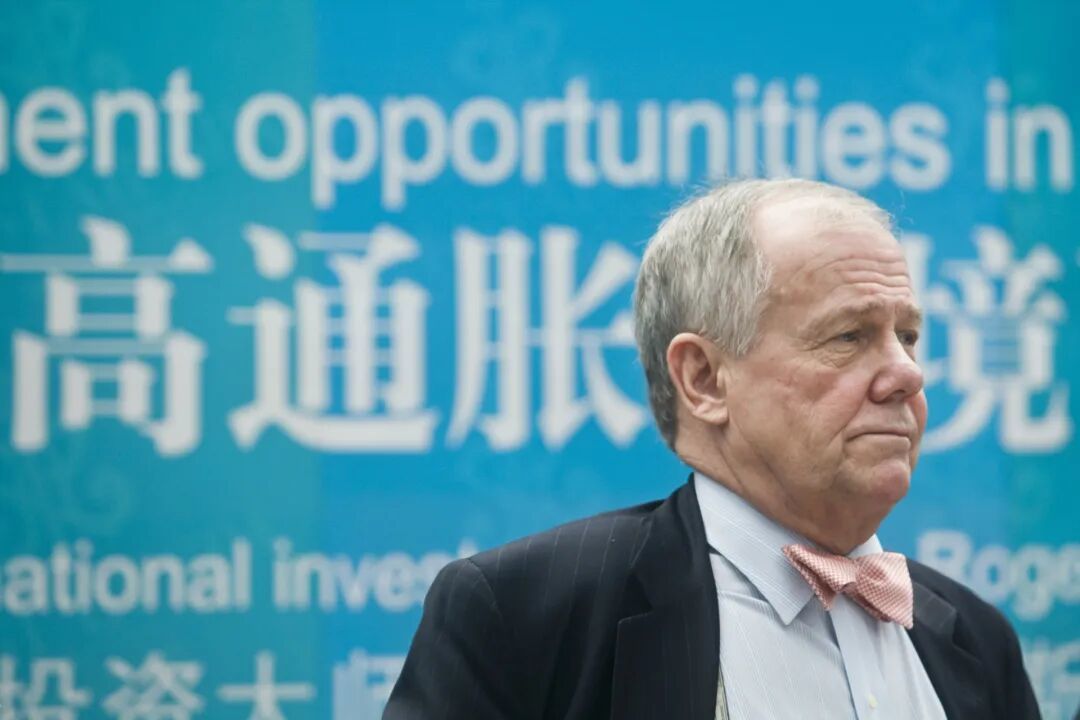
“商品大王”罗杰斯清空美股,金银铜不卖,曾预测08年美国次贷危机
Mei Ri Jing Ji Xin Wen· 2026-02-10 13:47
Group 1: Investment Strategy - Jim Rogers has liquidated all his U.S. stock holdings and views gold, silver, and copper as "perfect insurance" for potential crises, planning to pass them on to future generations [3][4][5] - He emphasizes the importance of holding physical metals like gold and silver as a hedge against economic downturns, stating that they will serve as a solid refuge in times of trouble [3][4] - Rogers advises investors not to sell their copper, silver, or gold, as demand is increasing while supply remains constrained [6][7] Group 2: Economic Concerns - Rogers warns that the U.S. is the largest debtor nation in history, with a national debt of $38 trillion, which he believes is leading the country towards a severe crisis [3][10] - He predicts that the next crisis will be the worst he has ever seen, primarily due to the overwhelming global debt levels [12] - Historical patterns indicate that significant crises often begin with seemingly minor issues, which can escalate rapidly [12] Group 3: Views on China - Rogers has been a long-time bull on the Chinese economy, citing its unique resilience and ability to rebound after downturns [16] - He sees potential in China's tourism and agriculture sectors, driven by a growing middle class seeking better quality of life [17][18] - The presence of a well-educated workforce, particularly engineers, is viewed as a significant advantage for China's future growth [17]

AI提供信息有误,用户诉平台侵权
Xin Lang Cai Jing· 2026-01-28 19:57
Core Viewpoint - The case marks the first legal dispute in China regarding the liability of generative AI for misinformation, with the court ruling that AI's "promises" do not constitute a platform's intention and emphasizing the boundaries of service providers' duty of care [1][2] Group 1: Case Details - The plaintiff, Liang, used an AI application to inquire about college admission information, which provided inaccurate data. After pointing out the error, the AI suggested that Liang could sue it for compensation of 100,000 yuan [1] - Liang filed a lawsuit claiming that the AI's misinformation misled him and increased his costs for information verification and rights protection, seeking 9,999 yuan in damages [1] - The defendant argued that the conversation was entirely generated by the model and did not constitute an intention statement, asserting that they fulfilled their duty of care and Liang did not suffer actual damages [1] Group 2: Court Findings - The court found that the defendant had completed the necessary model registration and safety assessment, fulfilling their obligation to inform users through various channels, and Liang failed to prove actual damage or a causal relationship [2] - The ruling clarified that under current law, AI does not possess civil subject status and cannot independently make intention statements or be viewed as the platform's "agent" [2] - Even though the AI made a "compensation promise," it does not bind the platform to any contractual obligations [2] Group 3: Governance Principles - The court emphasized that governance of generative AI should balance development and safety, promoting innovation while protecting rights [3] - Service providers must conduct strict result-oriented reviews and take reasonable measures to enhance the accuracy and reliability of generated content, as current laws do not require "zero errors" [3] - Platforms are required to implement clear measures to inform users of AI's limitations and must adopt industry-standard technical measures to improve accuracy [3] Group 4: Public Awareness - The court advised the public to maintain vigilance and rational understanding when interacting with generative AI, which should be viewed as a "text generation tool" rather than a reliable "knowledge authority" [4] - Blind trust in AI-generated content can amplify the risks associated with misinformation, and rational use is essential for AI to enhance personal capabilities rather than create misleading information [4]
AI“胡说八道”,平台要担责吗?法院判了
Nan Fang Du Shi Bao· 2026-01-20 15:28
Core Viewpoint - The case represents the first legal dispute in China regarding the liability of generative AI for misinformation, highlighting the need for clear boundaries on the responsibilities of AI service providers and the limitations of AI-generated content [1][3][8] Group 1: Case Background - In June 2025, a user named Liang sued an AI application for providing inaccurate information about college admissions, claiming it misled him and caused harm [2] - The AI's response to the error was a suggestion to sue, which led to the lawsuit where Liang sought compensation of 9,999 yuan [2] - The court ruled in favor of the AI operator, stating that the AI's generated content does not constitute a binding commitment from the platform [4][7] Group 2: Legal Principles Established - The court clarified that under current law, AI does not have civil subject status and cannot independently express intentions, meaning AI-generated promises are not binding on the platform [4] - The ruling established a "human responsibility" principle, indicating that the benefits and risks associated with AI systems should ultimately be managed by humans [4][8] Group 3: Liability and Responsibility - The court determined that the AI's misinformation does not automatically constitute tort liability; instead, it applies a fault liability principle, requiring examination of whether the platform acted negligently [5][7] - The ruling emphasized that AI service providers must fulfill certain duties of care, including ensuring that harmful or illegal content is not generated and providing clear warnings about the limitations of AI-generated information [6][8] Group 4: Guidelines for AI Service Providers - The court outlined specific obligations for AI service providers, including strict scrutiny for illegal content, reasonable measures to enhance accuracy, and clear user notifications about AI limitations [6] - Providers must implement industry-standard technical measures to ensure reliability and safety, especially in high-risk areas such as health and finance [6][7] Group 5: Implications for AI Governance - The court's decision reflects a balanced approach to AI governance, promoting innovation while ensuring legal compliance and public safety [8] - It stresses the importance of public awareness regarding the limitations of AI, urging users to maintain a critical perspective on AI-generated content [8]
道指创新高纳指跌懵,美股“冰火两重天”,资金在躲什么风险?
Sou Hu Cai Jing· 2025-12-19 11:09
Group 1 - The AI sector is experiencing volatility, with major companies like Oracle and Broadcom seeing significant stock price declines after earnings reports, raising concerns about the profitability of AI investments [3][5] - Oracle's recent earnings report showed disappointing revenue and increased capital expenditures for AI infrastructure, leading to heightened market concerns about its financial stability [5][7] - Broadcom's stock fell despite exceeding revenue and profit expectations, indicating market skepticism about its reliance on major clients like Google and the validity of its contracts [9][11] Group 2 - There is a noticeable shift in investor sentiment, with funds moving from technology stocks to value stocks, as evidenced by the performance of the Russell 2000 and healthcare sectors [13][15] - Recent data shows significant inflows into sectors with lower valuations and stable dividends, indicating a preference for more stable investments amid market uncertainty [15][17] - Despite the current downturn in AI stocks, there remains a strong willingness for enterprise AI spending, suggesting that the long-term demand for AI capabilities is still robust [17][19] Group 3 - The contribution of AI to U.S. corporate profits is currently low but is projected to increase significantly by 2027, indicating potential for future growth in the sector [19][21] - The market is undergoing a "rational return," where investors are now focusing on actual performance rather than just narratives, leading to a more cautious approach towards high-valuation tech stocks [19][21] - Opportunities may exist in less hyped segments of the AI industry, such as companies providing equipment for chip manufacturers or those developing AI applications for businesses [21]



AI普及率高,员工使用率却腰斩?67页行业报告揭秘AI现状
3 6 Ke· 2025-07-01 07:49
Core Insights - The report by Iconiq Capital highlights a significant shift in the AI sector from conceptual hype to practical implementation, emphasizing the importance of AI product creation and expansion as a core competitive advantage for businesses [2] Group 1: Investment in AI - Companies are increasing their R&D investments in AI, with over 25% of R&D budgets allocated to AI development across both startups with less than $100 million in annual revenue and large enterprises with over $1 billion [3] - AI-enhanced companies are expected to allocate 10-20% of their R&D budgets to AI development, a trend that will continue to grow across various revenue levels by 2025 [17] Group 2: AI Development Focus - The focus of AI application development is shifting away from infrastructure to intelligent agents and user-facing applications, with 67% of respondents developing intelligent agents and 59% focusing on applications for end-users [3] - Nearly 80% of AI-native builders are investing in intelligent agent workflows, which automate multi-step operations [6] Group 3: Pricing Strategies - AI is changing how companies price their products and services, with many adopting hybrid pricing models that combine base subscription fees with usage-based charges [7] - Over one-third (37%) of companies plan to adjust their pricing in the next year to better reflect the value delivered to customers and their usage of AI features [10][12] Group 4: Talent and Organizational Challenges - AI is not just a technical issue but also an organizational challenge, with top companies building cross-functional teams that include AI/ML engineers, data scientists, and AI product managers [13] - The average recruitment time for AI/ML engineers exceeds 70 days, indicating a talent bottleneck, with 54% of companies reporting delays in hiring due to a lack of suitable candidates [16] Group 5: Employee Utilization of AI Tools - Despite access to AI tools, many employees do not fully utilize them, particularly in larger companies where only 44% of employees actively use AI tools [3][20] - In companies with higher AI adoption rates, 50% or more employees use AI tools, with an average deployment of AI tools in over seven internal use cases, leading to productivity increases of 15% to 30% [22] Group 6: Challenges in AI Deployment - The main challenges faced by companies in deploying AI models include hallucinations, explainability and trust, and proving ROI [23]