AIGC内容

Search documents
“AI魔改”,必须改
Bei Jing Shang Bao· 2026-01-04 15:44
Core Viewpoint - The rise of "AI modification" in classic film and television works has led to absurd and distorted narratives, prompting significant concern and a nationwide regulatory initiative starting January 1, 2026, to address the issue [1][2]. Group 1: Regulatory Actions - The National Radio and Television Administration will implement a one-month special governance initiative targeting harmful videos that modify classic works, particularly focusing on the Four Great Classical Novels, historical themes, revolutionary themes, and heroic figures [1]. - The initiative aims to clarify red lines and clean up content that undermines traditional cultural understanding, especially among youth, and addresses potential copyright infringement [1][3]. Group 2: Impact of AI Modification - "AI modification" involves using AI tools to disrupt and deconstruct classic works, resulting in lowbrow content that significantly deviates from the original spirit and narrative [1][2]. - The proliferation of "AI modified" videos, particularly of works like "Journey to the West" and "The Legend of Zhen Huan," has led to high traffic but poses a threat to the artistic value and creative ecosystem of original works [2][3]. Group 3: Challenges and Future Directions - The emergence of multi-modal large models has facilitated the rapid production of "AI modified" videos, which not only impact original works but also crowd out quality original content [2][3]. - There is a need for clearer standards and regulations to manage the vast amount of AI-generated content and address copyright issues, ensuring a balanced content ecosystem and healthy internet engagement for the public [3][4]. - Future governance will require ongoing efforts to establish clear boundaries for complex audio-visual content and adaptations, with platforms playing a crucial role in enforcement [4].
10位新锐博主逆势走红,2026年创作者还有哪些机会?
3 6 Ke· 2026-01-04 06:18
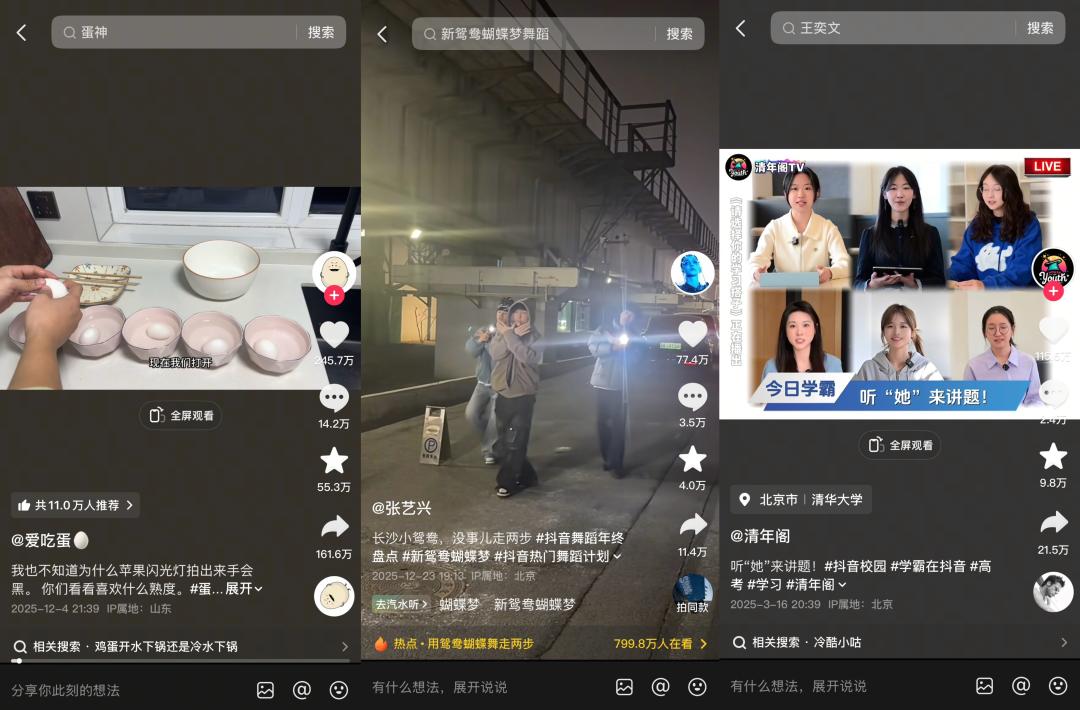
Group 1 - The core idea of the article is that the content creation landscape is evolving, with new creators emerging in niche areas, demonstrating that even in saturated markets, unique and authentic content can capture attention and drive engagement [1][3][12] - The article highlights the rise of niche creators, such as @爱吃蛋, who gained 3.56 million followers in just eight days by focusing on a specific cooking technique, showcasing the potential of "super niche" content [7][9][12] - The content ecosystem is shifting from a focus on mass appeal to a more diversified approach, where creators can thrive by being genuine and catering to specific interests, as evidenced by the growth of short video creators [3][41] Group 2 - The article discusses the phenomenon of abstract creators like 那艺娜, who have successfully engaged audiences through interactive and humorous content, indicating a trend where abstract culture serves as an emotional outlet for the public [14][18] - The success of creators like Tim, who combines technology with lifestyle content, illustrates a systematic approach to expanding IP and engaging broader audiences, emphasizing the importance of connecting core strengths with public interests [19][21][24] - The emergence of video podcasts as a new content format reflects a shift in user preferences towards deeper, more coherent narratives, with platforms like Bilibili and Douyin seeing significant growth in long-form content consumption [31][33][36] Group 3 - The rise of @清年阁, a platform created by young scholars, highlights a movement towards knowledge democratization and the importance of authenticity in content creation, appealing to the needs of their peers [37][41][43] - The article notes the success of creators like 李富贵, who have leveraged emotional storytelling and authenticity in the agricultural sector, indicating a growing demand for genuine narratives in content creation [44][49] - The discussion on entrepreneur IPs, such as 杨天真 and 雷军, reveals the dual nature of personal branding, where high visibility can lead to both opportunities and risks, emphasizing the need for authenticity in maintaining public trust [50][52] Group 4 - The article emphasizes the impact of AI-generated content (AIGC) on the industry, showcasing how AI is reshaping content creation and providing new opportunities for creators to engage audiences through innovative formats [53][55] - The rise of团播 (group broadcasting) as a new interactive entertainment format illustrates a shift in audience engagement, where viewers become active participants, reflecting a broader trend towards community-driven content [56][58] - The overall narrative suggests that the content creation landscape is diversifying, with a focus on authenticity, emotional connection, and niche specialization, indicating a move away from traditional mass-market strategies [1][3][12]

我们正在被“AI屎”喂饱?
虎嗅APP· 2025-09-18 13:21
Core Viewpoint - The rise of AIGC (AI-Generated Content) has significantly transformed the content creation landscape, particularly in the self-media sector, leading to an influx of creators and a surge in content volume, but not necessarily in quality [6][7][10]. Group 1: Impact of AIGC on Content Creation - AIGC represents a shift from professional content generation (PGC) to user-generated content (UGC), and now to AI-generated content, lowering the barriers for content creation [7]. - The self-media industry has become increasingly competitive, with AIGC contributing to a saturation of low-quality, homogeneous content, making it harder for users to find valuable information [9][10]. - AIGC content is characterized by a lack of creativity and originality, primarily serving to aggregate existing knowledge rather than generate new insights [14]. Group 2: Practical Value of AIGC - AIGC has practical applications in various content types, including media dissemination, formal documents, and academic/literary works, particularly in generating routine or template-based articles [16][18]. - While AIGC can enhance efficiency in producing standard content, it often requires significant post-processing to meet quality standards, especially for high-stakes media articles [18][19]. Group 3: Drawbacks of AIGC in Content Creation - A significant drawback of using AIGC is the potential for cognitive dependency, which may diminish creative thinking and writing skills over time [21][23]. - AIGC-generated content can lead to a homogenization of writing styles, resulting in a loss of individual voice and originality among creators [23]. Group 4: Competitive Strategies Against AIGC - To compete with AIGC, content creators should focus on providing unique insights, simplifying complex topics, ensuring comprehensive coverage, maintaining accuracy, and delivering timely information [27][28][29]. - The ability to present technical information in an accessible manner is highlighted as a key competitive advantage over AIGC-generated content [27]. Group 5: Concerns Regarding AIGC - There are concerns that AIGC may undermine human creativity and originality, as it often relies on existing human-created content for training without compensating the original creators [30]. - The efficiency of AIGC poses a threat to human creators, potentially leading to a decline in the quality and diversity of original content available to audiences [30]. Group 6: AIGC's Influence on Video Content - AIGC is also impacting video content creation by lowering production barriers, although high-quality AIGC video content remains scarce [33][34]. - The prevalence of AIGC in video production may lead to a decline in societal appreciation for original storytelling and artistic expression, raising ethical concerns regarding intellectual property [34].

一帮人All in AI,让搞体育的先赚到钱了
量子位· 2025-08-28 07:29
Core Viewpoint - Keep has successfully transitioned to profitability by fully embracing AI, marking a significant shift in its business model and positioning in the market [2][4][12]. Financial Performance - In the first half of the year, Keep reported total revenue of 820 million RMB, with a gross profit of 429 million RMB and a gross margin of 52.2%, reflecting a year-on-year increase of approximately 6.2 percentage points [5]. - The adjusted net profit reached 10.35 million RMB, indicating a turnaround from previous losses attributed to heavy investments in AI and new strategic initiatives [2][8][9]. Strategic Transformation - Keep's pivot to AI is not merely a trend but a strategic necessity that has led to structural improvements in its operations and financials [21]. - The introduction of AI Coach, a personalized training assistant, has significantly enhanced user engagement, with over 150,000 daily active users reported in July [13][14]. - Keep's business model has shifted from content subscription to service subscription, where users pay for results and experiences [31]. User Engagement and Retention - The AI features have led to higher user retention rates, with a 50% retention rate for the AI diet tracking function and an overall daily active user retention rate of 79% [14]. - Keep's monthly active users reached 22.49 million, with 2.8 million monthly subscription members, indicating a robust user base [30]. Market Positioning and Future Outlook - Keep's long-standing infrastructure and user base provide a competitive advantage in the AI space, allowing for rapid product development and market adaptation [25][26]. - The company is positioned to leverage AI to create a comprehensive ecosystem that integrates training plans, nutritional analysis, and behavioral guidance, enhancing user experience and loyalty [40][42]. - The shift towards an "AI SaaS" or "AI application platform" model reflects a broader trend in the market, where traditional applications are redefined through AI capabilities [44].