BC电池及组件

Search documents
16.5亿专利费换行业清净: 光伏"反内卷"进入深水区,龙头企业带头付费和解
Di Yi Cai Jing· 2026-02-11 04:21
Core Viewpoint - The photovoltaic industry is moving towards a "deeper water zone" as companies are ending patent disputes, signaling a shift away from internal competition and towards healthier industry practices [1][5]. Group 1: Patent Agreements - Longi Green Energy and Jinko Solar ended all global patent disputes in September 2022, marking a significant shift in the industry [5]. - Aiko Solar and TCL Zhonghuan recently signed a patent licensing agreement, resolving over two years of patent disputes, with a total licensing fee of 1.65 billion yuan, to be paid in installments from 2026 to 2030 [3][4]. - The licensing agreement allows Aiko Solar access to approximately 1,000 Maxeon patents, with no restrictions on production volumes, thus avoiding lengthy legal processes and focusing on development and innovation [3][4]. Group 2: Industry Implications - The resolution of patent disputes is expected to eliminate uncertainties for overseas clients, leading to price increases for Aiko Solar's products and the introduction of a 0.02 yuan per watt patent fee for downstream customers [4]. - TCL Zhonghuan views the agreement as a means to collaborate with industry partners to build a healthy competitive environment and enhance its market position in the BC battery component sector [4]. - The trend of major companies ending patent disputes is seen as a positive response to the "anti-involution" movement, promoting a more orderly and healthy development of the photovoltaic industry [5]. Group 3: Regulatory Environment - The Ministry of Industry and Information Technology emphasizes that 2026 will be a critical year for addressing internal competition in the photovoltaic industry, focusing on strengthening intellectual property protection and curbing infringement [6]. - The ministry plans to implement measures such as capacity regulation, quality supervision, and price enforcement to achieve a dynamic balance of supply and demand in the industry [6].



16.5亿专利费换行业清净:光伏“反内卷”进入深水区
Di Yi Cai Jing· 2026-02-10 13:58
Core Viewpoint - The photovoltaic industry is moving towards a healthier competitive environment as companies are ending patent disputes, signaling a shift away from "internal competition" and towards collaboration for innovation and market stability [3][5][6]. Group 1: Patent Agreements - Longi Green Energy and JinkoSolar ended all global patent disputes in September 2022, marking a significant shift in the industry [5]. - Aiko Solar and TCL Zhonghuan recently signed a patent licensing agreement worth a total of 1.65 billion yuan, with payments scheduled from 2026 to 2030 [4]. - Aiko Solar will gain access to approximately 1,000 Maxeon patents, allowing for greater focus on development and innovation without the burden of ongoing legal disputes [4][5]. Group 2: Industry Response and Future Outlook - The resolution of patent disputes is seen as a positive response to the "anti-involution" movement within the photovoltaic sector, promoting healthy competition and innovation [5][6]. - Industry leaders have publicly opposed "patent wars," emphasizing the need to focus on technological advancement rather than legal conflicts [6]. - The Ministry of Industry and Information Technology has identified 2026 as a critical year for addressing internal competition in the photovoltaic industry, with a focus on strengthening intellectual property protection [7]. Group 3: Market Dynamics - The ongoing patent disputes had previously caused uncertainty among overseas clients regarding the procurement of ABC components, which is expected to improve following the licensing agreements [5]. - The agreements are anticipated to allow companies to raise prices on battery and component products, with Aiko Solar planning to charge a royalty fee of 0.02 yuan per watt [5]. - The industry is currently facing challenges related to supply-demand mismatches, and the Ministry plans to implement measures to achieve dynamic balance in the market [7].
16.5亿专利费换行业清净:光伏“反内卷”进入深水区,龙头企业带头付费和解
Di Yi Cai Jing· 2026-02-10 11:49
Core Viewpoint - The patent disputes between Aiko Solar and TCL Zhonghuan's subsidiary Maxeon have concluded, signaling a shift in the photovoltaic industry towards ending internal competition and fostering healthy development [1][3]. Group 1: Patent Licensing Agreement - Aiko Solar and Maxeon signed a patent licensing agreement worth a total of 1.65 billion yuan, with 250 million yuan to be paid in 2026 and the remainder to be paid in installments from 2027 to 2030 [2]. - Aiko Solar will receive approximately 1,000 past and future patents related to BC batteries and components, with no sales limits imposed on Aiko's BC components and batteries by Maxeon [2][3]. - The agreement allows both companies to terminate all pending or potential patent disputes, enabling Aiko Solar to focus on business development and technological innovation [2]. Group 2: Industry Implications - The resolution of patent disputes is expected to eliminate uncertainties that previously affected overseas customers' purchasing decisions regarding ABC components [3]. - Following the agreement, Aiko Solar plans to increase prices for its battery and component products and will charge downstream customers a royalty fee of 0.02 yuan per watt [3]. - The collaboration is seen as a way to promote healthy competition in the photovoltaic industry and to shift the market dynamics towards a more regulated and law-abiding environment [2][3]. Group 3: Industry Trends - The trend of major companies ending patent disputes is viewed as a positive response to the industry's "anti-involution" movement, indicating a shift towards healthier and more orderly development [3][4]. - The Ministry of Industry and Information Technology has emphasized the importance of strengthening intellectual property protection and curbing infringement behaviors as part of the industry's governance efforts [5]. - The industry is currently undergoing a deep adjustment period, with significant challenges remaining in balancing supply and demand, necessitating coordinated efforts to improve market conditions [5].
马斯克宣布干法电极技术突破,BC头部企业完成专利许可
Ping An Securities· 2026-02-10 06:11
Investment Rating - The report maintains an "Outperform" rating for the industry [1] Core Insights - The report highlights significant developments in the wind and solar sectors, including a breakthrough in dry electrode technology by Elon Musk, which is crucial for reducing costs in liquid batteries and mass production of solid-state batteries [6] - The report notes that the wind power index decreased by 1.04%, outperforming the CSI 300 index by 0.30 percentage points, with a current PE_TTM valuation of approximately 27.71 times [4][11] - The solar sector saw a 3.36% increase in the photovoltaic equipment index, with the photovoltaic battery component index rising by 8.10% [4] Summary by Sections Wind Power - The European Commission has initiated an in-depth investigation into Goldwind Technology under the Foreign Subsidies Regulation (FSR), focusing on whether the company benefits from foreign subsidies in the EU market [5][10] - The report indicates that the impact of this investigation on China's wind turbine exports to Europe is limited in the short term, but it introduces uncertainty for future market entries [10] - The report maintains a positive outlook on China's competitive advantage in the wind power industry and its opportunities for international expansion [5][10] Solar Power - A major BC company, Aiko Solar, has signed a patent licensing agreement with Maxeon Solar, allowing Aiko to access all BC battery and component patents outside the U.S. for the next five years [5] - The total patent licensing fee amounts to RMB 1.65 billion, with the first-year payment set at RMB 250 million [5] - This agreement is expected to eliminate a significant barrier to Aiko's overseas sales and indicates high technical barriers in the BC technology sector [5] Energy Storage & Hydrogen - The report emphasizes the high demand for new energy storage solutions, recommending investments in domestic and international large-scale storage companies such as Sungrow Power, Haibo Shichuang, and Shuneng Electric [6] - In the lithium battery sector, the report suggests that the industry is emerging from a price decline cycle, with strong demand driving both volume and profit growth [6] - The report highlights the potential of dry electrode technology to significantly reduce costs and improve battery performance, which could create new opportunities in related equipment and materials [6]
31省市披露去年财政收入,最严虚拟货币监管落地 | 财经日日评
吴晓波频道· 2026-02-10 00:29
Group 1: Fiscal Revenue Insights - In 2025, Guangdong's fiscal revenue is expected to approach 1.4 trillion yuan, maintaining the top position for 35 consecutive years, while Jiangsu's revenue surpasses 1 trillion yuan, ranking second nationally [2] - The overall growth of local fiscal revenue in China is 2.4% compared to the previous year, with regions like Tibet, Jilin, and Xinjiang showing double-digit growth rates [2][3] - The fiscal revenue growth reflects the resilience of economic development despite challenges such as insufficient domestic demand and ongoing adjustments in the real estate market [3] Group 2: Virtual Currency Regulation - The People's Bank of China, along with eight departments, has issued strict regulations on virtual currencies, declaring related activities as illegal financial activities and prohibiting the issuance of stablecoins linked to the yuan abroad [4] - A significant incident occurred in South Korea where a trading platform mistakenly distributed over $44 billion worth of Bitcoin, highlighting the risks associated with virtual currencies [4][5] - The regulatory stance from China indicates a commitment to maintaining financial stability while recognizing the need for balanced development and oversight of the virtual currency industry [5] Group 3: Semiconductor Market Forecast - The global semiconductor sales are projected to reach $791.7 billion in 2025, with a growth rate of 25.6% from 2024, and expected to approach $1 trillion by 2026 [8] - The fastest-growing segment within the semiconductor market is logic chips produced by companies like Nvidia and Intel, with a projected sales increase of 39.9% in 2025 [8] - The demand for semiconductors is being driven by strong growth in AI and data center sectors, indicating a shift in the traditional market cycles [8][9] Group 4: Solar Industry Developments - Aixin Co. and TCL Zhonghuan have signed a patent licensing agreement worth 1.65 billion yuan, marking the highest record for patent licensing fees in China's solar industry [10] - The agreement comes after a series of patent disputes, indicating a trend towards resolving conflicts through financial settlements rather than prolonged litigation [10][11] Group 5: AI Video Generation Technology - ByteDance has launched a new AI video generation model, Seedance 2.0, capable of creating high-quality videos from text or images in under 60 seconds [12] - The model significantly enhances the usability of AI-generated videos, addressing previous limitations in handling complex scenes and maintaining consistency [12][13] Group 6: SpaceX's Strategic Shift - SpaceX has shifted its focus from Mars to building a self-sustaining city on the Moon, aiming to achieve this goal within the next decade [14] - This strategic pivot aligns with NASA's plans for lunar exploration and reflects a pragmatic approach to securing funding and demonstrating viability in space projects [14][15] Group 7: Stock Market Performance - On February 9, the stock market saw significant gains, with the Shanghai Composite Index rising over 1% and the Shenzhen Component Index increasing by over 2% [16] - The market's performance was driven by strong interest in AI applications, chemical sectors, and solar concepts, indicating a recovery in investor sentiment [16][17]
两大光伏龙头盘中涨停,16.5亿天价专利纠纷达成和解
2 1 Shi Ji Jing Ji Bao Dao· 2026-02-09 06:48
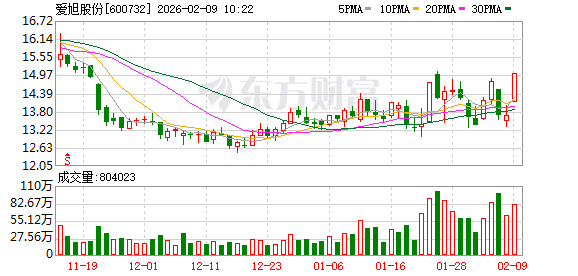
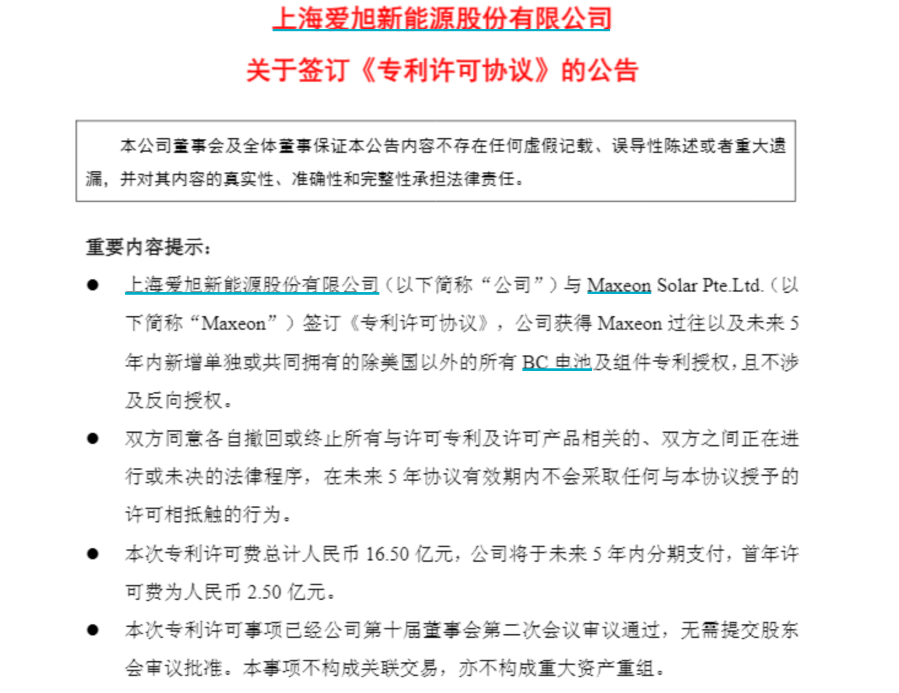
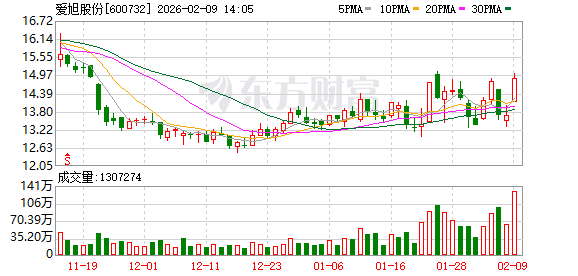
Core Viewpoint - The A-share photovoltaic sector experienced a surge in stock prices, with multiple companies reaching their daily limit, driven by a significant patent licensing agreement between Aiko Solar and TCL Zhonghuan's subsidiary Maxeon, involving a total licensing fee of 1.65 billion yuan [1][3]. Group 1: Patent Licensing Agreement - Aiko Solar and TCL Zhonghuan signed a patent licensing agreement allowing Aiko to access all BC battery and component patents owned by Maxeon, excluding reverse licensing [1][3]. - The total licensing fee is 1.65 billion yuan, with the first-year payment set at 250 million yuan, marking the largest publicly disclosed patent licensing fee in China's photovoltaic industry to date [1][3]. - The agreement resolves ongoing patent disputes between Aiko and Maxeon, including previous lawsuits in Germany and the Netherlands regarding BC technology [3]. Group 2: Market Impact and Company Performance - Following the announcement, Aiko Solar's stock price reached 14.92 yuan per share, with a market capitalization of 31.6 billion yuan, while TCL Zhonghuan's stock was at 11.68 yuan per share, with a market cap of 47.2 billion yuan [4]. - Aiko Solar anticipates that the licensing fees will be covered by projected sales exceeding 165 GW over the next five years, with an average cost of less than 0.01 yuan per watt for licensing [4]. - The licensing model based on BC technology is expected to become a new profit growth point for Aiko Solar [4]. Group 3: Industry Context - Patent disputes are common in the photovoltaic industry, with many leading manufacturers involved in ongoing legal battles over technology rights [3][4]. - The emphasis on intellectual property protection is increasingly recognized within the photovoltaic sector, as highlighted by recent discussions on industry governance and the need for coordinated efforts to balance supply and demand [8].
两大光伏龙头盘中涨停,16.5亿天价专利纠纷达成和解
21世纪经济报道· 2026-02-09 06:45
Core Viewpoint - The article discusses the recent surge in stock prices of A-share photovoltaic companies following a significant patent licensing agreement between Aiko Solar and TCL Zhonghuan, highlighting the importance of intellectual property in the photovoltaic industry [1][3]. Group 1: Patent Licensing Agreement - Aiko Solar and TCL Zhonghuan signed a patent licensing agreement with a total fee of 1.65 billion yuan, marking the largest publicly disclosed patent licensing fee in China's photovoltaic industry to date [1][3]. - The agreement allows Aiko Solar to access all BC battery and component patents owned by Maxeon for the next five years, excluding reverse licensing [1][3]. - Both companies agreed to withdraw or terminate all ongoing legal proceedings related to the licensed patents, indicating a resolution to previous patent disputes [3]. Group 2: Market Impact and Financial Projections - Following the announcement, multiple A-share photovoltaic companies, including Aiko Solar and TCL Zhonghuan, experienced stock price surges, with Aiko Solar's stock reaching 14.92 yuan per share and a market capitalization of 31.6 billion yuan [1][6]. - Aiko Solar anticipates sales exceeding 165 GW over the next five years, projecting an average licensing cost of less than 0.01 yuan per watt, while charging customers a royalty fee of 0.02 yuan per watt [6]. - The licensing fee is expected to become a new profit growth point for Aiko Solar, emphasizing the shift towards a business model focused on patent collaboration and licensing [6]. Group 3: Industry Context and Trends - The article notes that patent disputes are common in the photovoltaic industry, with many leading manufacturers involved in ongoing legal battles [5][6]. - The focus on intellectual property has become a consensus in the photovoltaic sector, with industry leaders recognizing its importance for future growth and innovation [9]. - The Ministry of Industry and Information Technology has highlighted the need for enhanced intellectual property protection and risk management in the face of global energy transitions and trade protectionism [9].

一笔16.5亿元的专利“和解” 让两大光伏龙头盘中涨停
2 1 Shi Ji Jing Ji Bao Dao· 2026-02-09 06:04
Core Viewpoint - Shanghai Aiyu New Energy Co., Ltd. has signed a patent licensing agreement with Maxeon Solar Pte. Ltd., acquiring all BC battery and component patents outside the U.S. for the next five years, with a total licensing fee of RMB 1.65 billion [3][4]. Group 1: Patent Licensing Agreement - The agreement allows Aiyu to obtain past and future patents from Maxeon, excluding reverse licensing [3][4]. - The total licensing fee is RMB 1.65 billion, to be paid in installments over five years, with the first-year fee set at RMB 250 million [3][4]. - Both parties have agreed to withdraw or terminate all ongoing or pending legal proceedings related to the licensed patents and products [3][4]. Group 2: Market Impact - Following the announcement, the A-share photovoltaic sector experienced a surge, with multiple companies, including Aiyu and TCL Zhonghuan, hitting the daily limit [4]. - The licensing agreement is seen as a resolution to previous patent disputes between Aiyu and Maxeon, which had involved litigation in Europe [5][6]. Group 3: Industry Context - Patent disputes are common in the photovoltaic industry, with many leading companies involved in such conflicts [7]. - Aiyu anticipates that the licensing fees will be covered by projected sales exceeding 165 GW over the next five years, with an average cost of less than 1 cent per watt for the licensing [7]. - The focus on intellectual property rights is becoming a consensus in the photovoltaic industry, with calls for enhanced protection and risk management [8].
暴力拉升,大面积涨停!
天天基金网· 2026-02-09 05:18
Market Overview - A-shares experienced a collective surge, with the Shanghai Composite Index rising by 1.17%, the Shenzhen Component Index by 2.07%, and the ChiNext Index by 3.11% as of the morning close. Over 4,400 stocks in the market rose, with a half-day trading volume exceeding 1.5 trillion yuan [2]. Overseas Market Influence - The overseas stock market saw significant gains, boosting market sentiment. On February 6, U.S. stock indices collectively rose, with the Dow Jones increasing by 2.47%, surpassing the 50,000-point mark for the first time. Chinese concept stocks also surged, with the Nasdaq Golden Dragon China Index rising by 3.71%. Additionally, the Nikkei 225 and KOSPI indices both saw substantial increases, with the Nikkei 225 reaching a new historical high [4]. Solar Energy Sector - The solar energy sector saw explosive growth, with over ten component stocks hitting the daily limit. GCL-Poly Energy achieved a "four consecutive limit-up" with a stock price of 5.04 yuan. As of the midday close, there were over 1.97 million hands of sealed orders on the limit-up board [4][12]. - GCL-Poly announced that its stock price had deviated significantly over two consecutive trading days, indicating abnormal trading activity. The company is currently exploring "space photovoltaic" technology, which remains in the exploratory phase, and has not yet secured relevant orders in this field [4]. CPO Concept Stocks - CPO concept stocks collectively surged, with leading stocks such as Zhongji Xuchuang, Xinyi Sheng, and Tianfu Communication experiencing significant increases. Tianfu Communication's stock price reached a historical high of 303.56 yuan, with a total market value exceeding 230 billion yuan [6][8]. - The rise in CPO stocks is attributed to several factors, including a recent surge in overseas computing power stocks, with Nvidia's stock rising by 7.87%. Major tech companies like Microsoft, Meta, Amazon, and Google have announced plans to continue expanding investments in AI, with projected capital expenditures reaching approximately 650 billion dollars by 2026 [11]. Patent Licensing Agreement - Two major photovoltaic BC technology companies recently signed a patent licensing agreement, authorizing nearly a thousand patents in the BC technology field. TCL Zhonghuan's subsidiary signed a five-year agreement worth 1.65 billion yuan with Aiko Solar, which includes an initial payment of 250 million yuan [15]. - This agreement is expected to enhance the competitive position of domestic photovoltaic equipment manufacturers, potentially allowing them to enter the supply chains of companies like Tesla and SpaceX, thereby opening new growth opportunities [15].


光伏专利大和解 爱旭股份16.5亿元“史上最贵专利费”买到什么
Xin Lang Cai Jing· 2026-02-09 05:02
Core Viewpoint - The long-standing BC patent litigation between Aiko Solar (爱旭股份) and TCL Zhonghuan (TCL中环) has concluded with a settlement, allowing Aiko to obtain a comprehensive patent license from Maxeon for BC battery and component technologies outside the U.S. for the next five years [2][8]. Group 1: Settlement Details - Aiko Solar and Maxeon signed a patent licensing agreement worth 1.65 billion yuan, with Aiko to pay in installments over five years, starting with 250 million yuan in the first year [9]. - The total licensing fee is fixed and will not be adjusted based on Aiko's sales volume or market changes [9]. - Both parties agreed to withdraw or terminate all ongoing or pending legal proceedings related to the licensed patents during the five-year agreement [2][8]. Group 2: Financial Implications - The licensing fee is the highest publicly disclosed in China's solar industry, posing a financial challenge for Aiko, which is projected to incur losses of 1.2 to 1.9 billion yuan in 2025 [9][11]. - Aiko's ABC technology, which is among the highest efficiency solutions globally, is seen as a critical asset that necessitates this licensing agreement to access international markets [11]. Group 3: Market Context and Competition - Maxeon has actively pursued legal actions against Aiko and other companies in the solar industry, indicating a competitive landscape where patent disputes can disrupt market dynamics [3][10]. - The settlement allows Aiko to mitigate risks associated with ongoing patent disputes, which could deter customers from placing large orders due to compliance concerns [10]. - The agreement may shift the competitive balance within the BC technology sector, particularly affecting other players like LONGi Green Energy (隆基绿能), which may face increased pressure regarding patent issues [13][14]. Group 4: Future Considerations - The agreement is set to last for five years, after which the renewal terms will need to be negotiated, leaving uncertainty about future licensing arrangements [12]. - Aiko plans to differentiate its patent licensing strategy by region and product, aiming to establish a comprehensive patent ecosystem in the BC industry [11].