
CMBS(商业房地产抵押贷款支持证券)

Search documents
地方三资改革探路:湖北唤醒21万亿沉睡资产
Jing Ji Guan Cha Wang· 2025-10-28 11:31
Core Insights - Local governments are attempting to revitalize dormant state-owned resources, assets, and funds through market-oriented operations, aiming to unlock new value from these "three assets" [2][3] - The reform is driven by the dual pressures of debt risk management and the decline of traditional land finance models, prompting local governments to seek new fiscal sustainability paths [4][5][8] Group 1: Reform Initiatives - Hubei and Anhui provinces are leading the charge in state-owned asset management reform, with Hubei's state-owned assets reaching 21.5 trillion yuan by the end of 2024, while Anhui's state-owned assets total 16.48 trillion yuan [2][11] - The reform is characterized by the principle of transforming dormant state resources into active assets, capitalizing on them, and leveraging funds for greater effect [3][12] Group 2: Financial Mechanisms - The reform includes innovative financial strategies, such as asset securitization and resource pledge financing, to convert static assets into dynamic capital [14][28] - A case study of the Hongshan Artificial Intelligence Building illustrates successful asset securitization, where the building's value was enhanced through strategic repositioning and financial instruments, resulting in a financing scale of 301 million yuan at a low interest rate of 2.5% [20][26] Group 3: Broader Implications - The reform model initiated in Hubei is gaining traction across other provinces, with similar strategies being adopted in Anhui and Hunan, focusing on market-oriented methods to activate dormant assets and improve resource allocation efficiency [34][36] - The success of Hubei's model suggests its potential for replication in other regions, provided that local governments understand their asset base and have the necessary expertise to implement financial operations effectively [39][41]

国际不动产市场周期修复与中国市场的均衡重塑
Feng Huang Wang Cai Jing· 2025-10-16 10:31
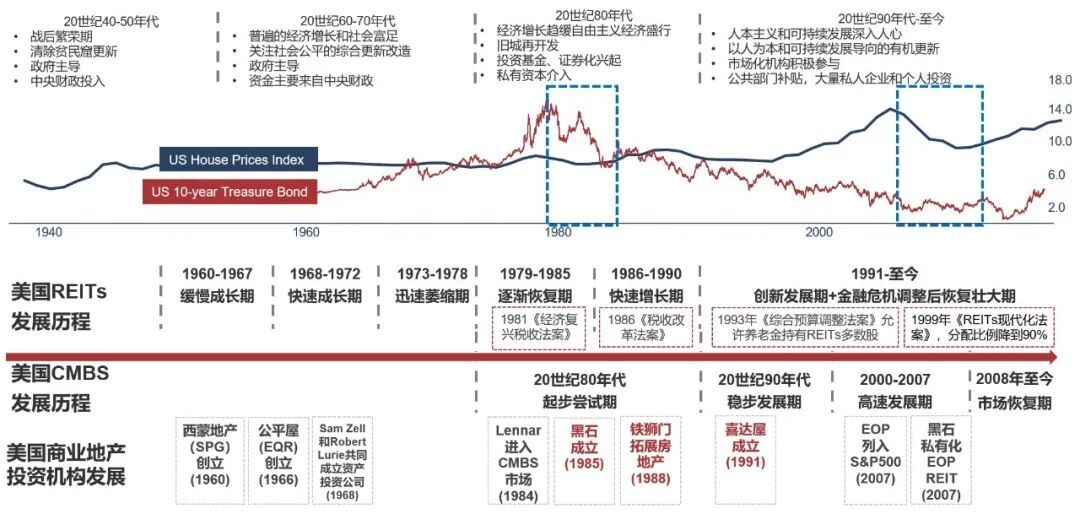
Core Insights - The current real estate market in China is at a cyclical low, facing severe challenges, with a lack of consensus on the core pricing benchmarks for real estate assets [1] - The restructuring of the real estate cycle is fundamentally achieved through the price formation mechanism, which is driven by the micro-level interactions between supply and demand [1] International Insights - Asset management institutions play a crucial role in market restructuring, as evidenced by the cyclical nature of real estate prices in mature economies [2] - The U.S. has experienced significant crises that led to the emergence of new financial instruments like CMBS and REITs, which reshaped the market landscape [4][5] - The shift from "subject credit" to "asset credit" in the U.S. real estate market highlights the importance of institutions that can efficiently connect physical assets with financial markets [5][6] Implications for China's Real Estate Market - The current inventory pressure in China is substantial, with an estimated 4 billion square meters of inventory and a potential de-stocking period of up to 5 years [13] - The rental yield in major Chinese cities is approximately 1.8%, which is significantly lower than historical levels in the U.S. and Japan during their respective crises [14][15] - A new pricing anchor based on rental yield rather than price-to-income ratios is suggested to better reflect asset value [12][13] Future Price Evolution - A sensitivity analysis indicates that a 0.5% reduction in expected price growth could lead to a 22% decline in property prices, while a 1% reduction could result in a 36% decline [16] - The need for a balanced market is emphasized, requiring measures to lower interest rates, reduce risks, and enhance rental yields [16] Commercial Real Estate Market Dynamics - There is a significant gap between primary and secondary market valuations in China's commercial real estate, indicating a disconnect in asset pricing [17] - Historical examples from the U.S. suggest that innovative risk-sharing mechanisms can help restore market confidence during downturns [17] Asset Price Cycle Reconstruction - The restructuring of the real estate cycle necessitates a shift from traditional developer-led models to a new financial ecosystem involving specialized asset management institutions [18][19] - The creation of a new type of real estate asset management institution is essential for developing a complete ecosystem that includes private equity funds, REITs, and effective exit strategies [19] Policy Recommendations - The core objective should be to convert excess inventory into new demand through market mechanisms, addressing the mismatch between supply structure and diverse demand [20] - A market-oriented approach to asset acquisition and transformation is recommended, leveraging professional asset management institutions to mitigate risks [20][21] - Financial innovations and exit mechanisms must be synchronized to ensure sustainable participation from market entities [21][22]

金融活水点绿成金
Jing Ji Ri Bao· 2025-09-23 22:10
Core Viewpoint - The concept of "green finance" is essential for transforming ecological value into economic value, facilitating the transition from "green mountains and clear waters" to "golden mountains and silver mountains" in economic development [1][7]. Group 1: Green Finance and Economic Transformation - Financial institutions are optimizing products and services to direct resources towards energy conservation, environmental protection, and ecological restoration, supporting corporate transformation and achieving a win-win situation between ecological protection and economic development [1]. - The "Big Yucun" development model in Zhejiang Anji integrates resources from surrounding villages, enhancing financing capabilities and risk control through collective development [2][3]. - The total financing amount for the "Big Yucun" project is 1 billion yuan, with a loan term of 18 years, utilizing a syndicate loan model to meet the financing needs of borrowers [2]. Group 2: Innovative Financing Methods - Zhejiang Anji Yucun Construction Holding Group is exploring various financing methods, including PPN (Private Placement Notes) and CMBS (Commercial Mortgage-Backed Securities), to support its projects [2]. - The green financing balance of Industrial Bank's Hangzhou branch reached 221.9 billion yuan, with green loans amounting to 139.9 billion yuan as of June this year [3]. Group 3: Case Studies of Green Transformation - Huafeng Group utilizes recycled plastic bottles to produce sustainable fibers for sportswear, supported by timely financial assistance from Industrial Bank [4][5]. - The bank has provided over 14 billion yuan in financing support to 129 shoe and clothing enterprises in Putian, facilitating their transition from OEM production to brand development [5]. Group 4: Climate-Friendly Financial Mechanisms - Industrial Bank has established a scoring system for climate-ecological friendly projects, linking loan interest rates to project performance in climate resilience and ecological value [6][7]. - The bank has issued 245 million yuan in loans for the Moganshan tourism project, promoting its development as an international rural tourism model [7]. Group 5: Bridging Environmental and Economic Value - Various financial institutions are innovating to quantify ecological value, such as ESG-linked loans and carbon credit-based financing, to address the challenges of financing ecological projects [8].

重庆国企上半年交出亮眼成绩单
Sou Hu Cai Jing· 2025-08-06 00:50
Group 1 - The core viewpoint of the articles highlights the significant progress made by Chongqing's state-owned enterprises (SOEs) in asset revitalization and operational efficiency through restructuring and innovative financing methods [1][4][6] - Chongqing's real estate group successfully issued a commercial mortgage-backed security (CMBS) worth 2.06 billion yuan at a record low interest rate of 2.08%, marking a breakthrough in the region's financing methods [1] - The city's SOEs reported a total profit growth of 10% year-on-year, with a total asset revitalization value of 62.77 billion yuan, showcasing the effectiveness of the "three attacks and one revitalization" reform initiative [1][4] Group 2 - The Agricultural Investment Group achieved a revenue of 3.471 billion yuan, a year-on-year increase of 11.58%, and a profit of 104 million yuan, reflecting a substantial growth of 346.02% due to restructuring efforts [2] - The restructuring led to a reduction in the number of entities from 43 to 32, and the loss-making enterprises decreased from 4 to 0.16 billion yuan, a reduction of 94.16% compared to the previous year [2] - The number of key SOEs was reduced from 51 to 33, and the total number of legal entities decreased from 2260 to 679, achieving a reduction rate of 70% [3] Group 3 - The goal for asset revitalization in 2023 is set at 100 billion yuan, with a target of recovering 35 billion yuan, supported by enhanced mechanisms and digital empowerment [4][5] - By the end of June, the SOEs had revitalized 62.77 billion yuan in assets and recovered 21 billion yuan, achieving 62.8% and 60% of their annual targets, respectively [5] - The collaboration between state-owned, private, and foreign enterprises has led to the signing of 39 projects worth 128.46 billion yuan in the first half of the year, demonstrating effective cooperation and resource integration [6][7] Group 4 - The cooperation between state-owned and private enterprises resulted in over 400 signed projects worth 46.5 billion yuan, while collaborations with foreign enterprises accounted for 15 projects worth approximately 10.37 billion yuan [7] - The digital platform for collaborative development has attracted 702 enterprises and published over 400 cooperation opportunities, aggregating opportunities worth over 160 billion yuan [7]