房地产资产管理

Search documents
中金:中国房企发展与转型——迈向资产管理
中金点睛· 2026-01-08 23:59
Core Viewpoint - The article emphasizes the ongoing transformation of the real estate industry towards a new model, focusing on asset management as a key capability for high-quality development in housing and operational real estate businesses [2][5]. Group 1: Historical Context and Trends - The transition of real estate companies to asset management firms has been primarily driven by financial deepening over the past 40 years, with significant progress observed in Western economies during the 2010s, while Asian markets are still in the early stages of this transformation [4][5]. - The level of securitization and liquidity in the real estate sector has evolved in tandem with the overall development of capital markets, indicating a crucial part of global capital market development [4]. Group 2: China's Market Dynamics - China is at a dual turning point of urbanization and financial market development, making the exploration of asset management by real estate companies an inevitable direction, with the 14th Five-Year Plan potentially being a critical period for institutional development [5][41]. - The market has begun to recognize the transition path from "traditional development" to "development + holding" and then to "asset management," with leading companies starting to implement this model [5][41]. - The transformation of real estate companies in China faces challenges, including reliance on policy support to address various bottlenecks and the need for organizational and capability adjustments [5][42]. Group 3: Financial Deepening and Structural Changes - The financial deepening over the past four decades has led to a more stable housing ownership rate in developed economies, with cyclical fluctuations in supply and demand being increasingly influenced by capital flows and asset prices [9][10]. - The rise of asset management companies has been facilitated by the development of securitization and the increasing liquidity of real estate assets, which has allowed for a shift from direct asset accumulation to managing larger portfolios [13][25]. Group 4: International Comparisons - The evolution of real estate companies in Western markets, particularly the U.S., showcases a more market-oriented and financialized approach, leading to a more competitive landscape compared to East Asian markets, where companies often maintain a mixed business model [16][21]. - Japanese real estate firms have undergone significant structural adjustments post-1990s, focusing on diversification and service-oriented business models, although they have not fully transitioned to asset management firms [27][30]. - Singaporean firms exemplify an outward-looking asset management model, leveraging their REITs market to facilitate international investments and capital expansion [33][35]. Group 5: Future Outlook for China's Real Estate Industry - The future of China's real estate market is expected to focus on managing existing assets and optimizing new developments, with a shift towards a sales model based on completed properties rather than pre-sales [41][48]. - The ongoing process of destocking and deleveraging in the real estate sector is anticipated to continue, with a significant reduction in the scale of many companies as they adapt to new market conditions [42][46]. - The development of a robust REITs market is seen as essential for promoting the securitization of operational real estate and enhancing liquidity, which will support the transition to a new business model in the industry [47][50].


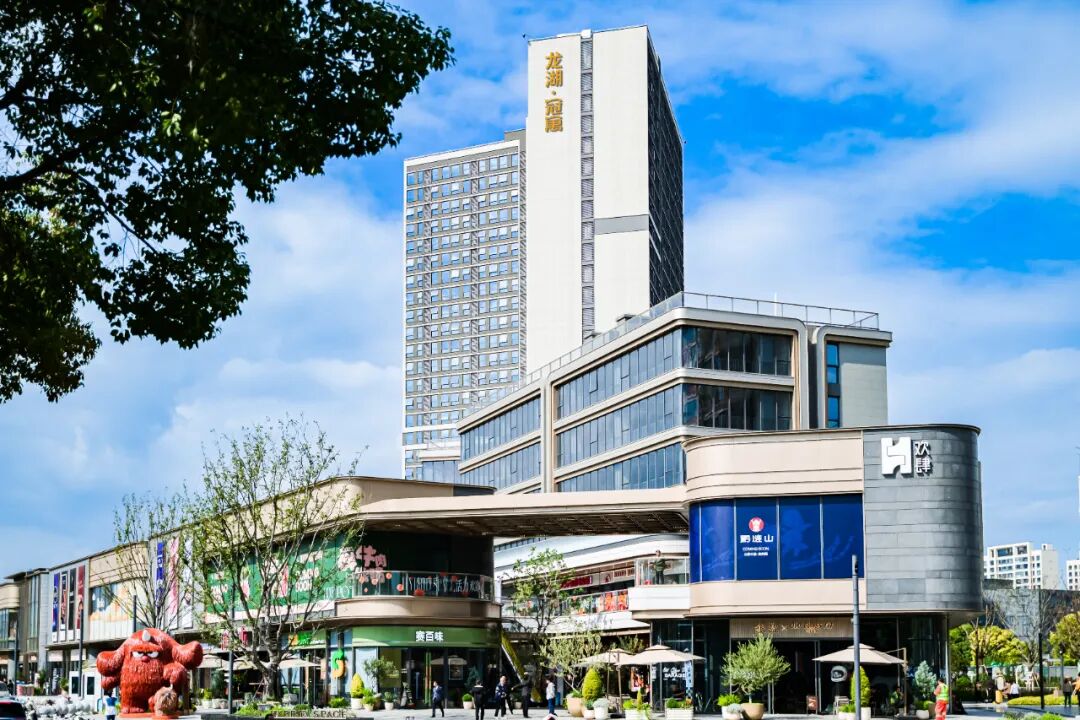
龙湖资产管理:以欢肆为钥,解锁存量时代资产价值新密码
Mei Ri Jing Ji Xin Wen· 2025-12-29 13:57
Core Insights - The Chinese real estate industry is transitioning from a growth phase to a focus on the existing stock market, with asset management becoming crucial for sustainable development [1][4] - The average rental price for commercial real estate in eight key cities has decreased by 11.9% year-on-year, indicating challenges for smaller projects [1] - Policies promoting urban renewal and affordable rental housing are pushing the industry to shift from "building houses" to "managing assets" [1] Group 1: Market Dynamics - By May 2025, the total area of retail commercial projects over 30,000 square meters in China will reach 590 million square meters, with five major city clusters accounting for 60% of the existing stock [1] - Many small to medium-sized projects are facing low occupancy rates and poor efficiency, necessitating innovative asset management strategies [1][5] Group 2: Company Strategy - Longfor Group's asset management division has developed a comprehensive asset management capability system, focusing on mixed-use developments to enhance value [3][4] - The company has expanded its asset management operations to include various sectors such as long-term rentals, vibrant street areas, serviced apartments, and healthcare facilities, managing nearly 30 billion yuan in assets by the end of 2024 [4][12] Group 3: Innovative Solutions - Longfor's mixed-use model combines residential and commercial spaces, creating a symbiotic relationship that enhances both sectors' performance [5][8] - The "Coral Pearl Points" system allows tenants to redeem points for discounts in commercial areas, fostering customer loyalty and increasing foot traffic [8][11] Group 4: Operational Excellence - The company employs a data-driven approach to optimize tenant experiences and operational efficiency, achieving a rental rate increase from 85% to 98% within six months in some projects [11] - Longfor's asset management strategy includes a closed-loop system of investment, construction, management, and exit, ensuring sustainable value realization [12][13] Group 5: Future Outlook - The successful implementation of mixed-use projects across major cities demonstrates Longfor's ability to adapt to the evolving real estate landscape, positioning it as a leader in asset management [13] - The company aims to continue expanding its innovative asset management solutions, injecting new vitality into existing assets and setting a benchmark for the industry [13]

南京壹城集团多措并举提升资产安全管理能级
Yang Zi Wan Bao Wang· 2025-12-17 12:25
Core Viewpoint - Nanjing Yicheng Group has established a solid foundation of over 100,000 square meters of operational assets primarily focused on affordable housing, emphasizing safety and stability as essential for both the group's development and public welfare [1] Group Asset Management Initiatives - The asset management team has shifted from a "passive response" to a "proactive prevention" approach to ensure the safety of leased assets and tenants, implementing a comprehensive safety production initiative for the autumn and winter seasons [3] - A special leadership group was formed to address seasonal risks, translating institutional requirements into actionable plans with clear responsibilities and deadlines [3] Safety Measures and Training - The company has adopted a "zero tolerance" policy for safety hazards, conducting thorough inspections of fire safety, electrical systems, gas equipment, and evacuation routes, achieving a 100% rectification rate for identified hazards [5] - Practical training sessions have been organized, covering fire prevention, electrical and gas safety, and emergency response, with over 400 participants trained and safety management manuals distributed to enhance awareness among tenants [5] Ongoing Commitment to Safety - Nanjing Yicheng Group recognizes that safety production is a continuous effort, committing to maintain vigilance and implement systematic actions to create a secure operating environment for tenants [7]

星巴克出售中国业务控股权;广告业规模最大收购案尘埃落定 | 2025年11月全球企业并购
Sou Hu Cai Jing· 2025-12-05 03:20
Major Mergers and Acquisitions - Kimberly-Clark is set to acquire Kenvue for approximately $48.7 billion, creating a large consumer health products company with projected annual net revenue of about $32 billion by 2025 [1] - Abbott Laboratories has agreed to acquire Exact Sciences for $23 billion, marking its largest acquisition in nearly a decade, focusing on rapid cancer detection [2] - Pfizer has successfully acquired Metsera for over $10 billion after winning a bidding war against Novo Nordisk [3] - AkzoNobel plans to merge with Axalta Coating Systems, resulting in a combined company valued at $25 billion, with expected annual revenue of $17 billion [5] - Parker Hannifin will acquire Filtration Group for $9.25 billion, enhancing its industrial business portfolio [5] - Macquarie Asset Management proposed to acquire Qube Holdings, valuing the Australian logistics company at approximately $7.5 billion [6] - Omnicom Group's acquisition of Interpublic Group has been finalized, creating the largest marketing communications group globally with revenues exceeding $25 billion [8] Chinese Market Developments - Starbucks announced the sale of a controlling stake in its China business to Boyu Capital for $4 billion, aiming to double its store count in China [11][12] - CPE Yuanfeng is forming a joint venture with Burger King to establish "Burger King China," with an initial investment of $350 million [12] - China International Capital Corporation plans to acquire Xinda Securities and Dongxing Securities, potentially creating a leading brokerage firm in the market [12] Other Notable Transactions - GlobalFoundries has acquired Advanced Micro Foundry to expand its presence in the emerging silicon photonics industry [13] - Panasonic Holdings is selling its subsidiary Panasonic Housing Solutions to YKK Group, which focuses on residential equipment [13] - Posco Holdings will acquire a 30% stake in Mineral Resources' lithium business for approximately AUD 1.2 billion (USD 765 million) [14]

房地产资产管理的价值逻辑
Cushman & Wakefield· 2025-11-18 14:12
Core Insights - The report emphasizes the transformation of the real estate industry from a development-driven model to an asset management-focused approach, highlighting the need for value preservation and enhancement in a changing market environment [4][10][26] - It identifies significant shifts in supply and demand dynamics within the real estate market, indicating a transition from rapid urbanization and expansion to a focus on optimizing existing assets and improving quality [11][14][23] - The report outlines the importance of adopting a comprehensive asset management strategy that spans the entire lifecycle of real estate assets, from acquisition to operation and eventual exit [39][41][67] Market Dynamics - The real estate market in China has experienced profound changes, with a notable decline in new housing sales and development investments since 2022, leading to an oversupply situation [10][11][14] - Major cities have seen a significant increase in the stock of Grade A office buildings, with total stock growing by 85.9% from 2016 to 2024, resulting in rising vacancy rates and downward pressure on rental prices [17][18] - The retail property market has also expanded, with high-quality shopping center stock increasing by 158.3% from 2016 to 2024, intensifying competition among commercial properties [21][22] Demand Evolution - The report highlights a shift in consumer preferences, with an increasing focus on quality and experience in housing and commercial spaces, driven by demographic changes and economic conditions [23][24] - The demand for rental housing is expanding, alongside a growing emphasis on sustainable and smart living environments, reflecting changing societal values [24][26] Asset Management Strategies - The report advocates for a strategic shift towards asset management that prioritizes long-term value creation through operational enhancements and financial optimization [32][34] - It emphasizes the necessity of a structured approach to managing existing assets, including categorizing and evaluating properties to maximize their operational efficiency and value [72][78] - The importance of dynamic adjustments in management strategies to respond to market fluctuations and tenant needs is underscored, ensuring that assets remain competitive and profitable [81] Value Tracking and Exit Strategies - Continuous tracking of asset values and market feedback is essential for understanding the factors influencing property valuations [51][52] - The report outlines various exit strategies, including asset securitization and equity transfers, as critical for realizing the value of real estate investments [59][60][64] - It stresses the significance of identifying optimal exit timing and methods to maximize asset value realization [59][60]
凯德投资被曝拟合并丰树集团 资产管理规模有望超万亿元
Zhong Guo Jing Ying Bao· 2025-11-05 00:14
Core Viewpoint - The two largest real estate asset management firms in Singapore, Mapletree Investments and CapitaLand Investment, are exploring a merger that could create a new entity with an asset management scale exceeding $150 billion (approximately 1.0688 trillion RMB) [1]. Group 1: Company Overview - CapitaLand Investment is a leading global real estate asset management company based in Asia, listed in Singapore in 2021, with an asset management scale of 117 billion SGD (approximately 638.4 billion RMB) as of August 2025 [1]. - CapitaLand Investment manages a diversified portfolio across seven listed REITs and business trusts, covering various asset classes including commercial, retail, hospitality, industrial logistics, data centers, healthcare, and private credit [1]. - Mapletree Investments has an asset management scale of 80.3 billion SGD (approximately 438.1 billion RMB) as of March 2025, managing three listed REITs and nine overseas private real estate funds [2]. Group 2: Merger Details - The merger discussions between Mapletree Investments and CapitaLand Investment are in the early stages, and it remains uncertain whether the plan will be finalized [1]. - Temasek Holdings, a wholly-owned investment holding company of the Singapore government, owns 100% of Mapletree Investments and 54% of CapitaLand Investment [1].
国际不动产市场周期修复与中国市场的均衡重塑
Feng Huang Wang Cai Jing· 2025-10-16 10:31
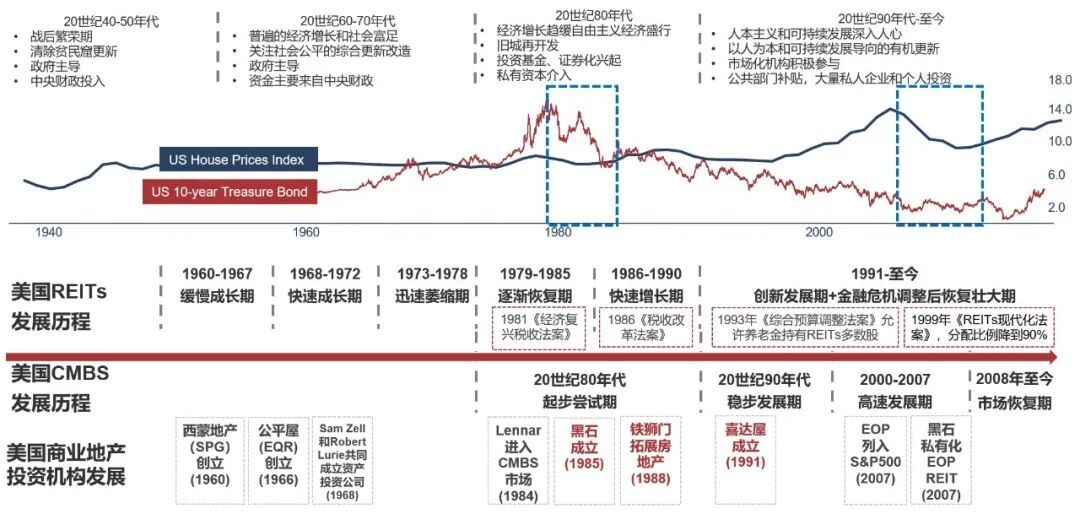
Core Insights - The current real estate market in China is at a cyclical low, facing severe challenges, with a lack of consensus on the core pricing benchmarks for real estate assets [1] - The restructuring of the real estate cycle is fundamentally achieved through the price formation mechanism, which is driven by the micro-level interactions between supply and demand [1] International Insights - Asset management institutions play a crucial role in market restructuring, as evidenced by the cyclical nature of real estate prices in mature economies [2] - The U.S. has experienced significant crises that led to the emergence of new financial instruments like CMBS and REITs, which reshaped the market landscape [4][5] - The shift from "subject credit" to "asset credit" in the U.S. real estate market highlights the importance of institutions that can efficiently connect physical assets with financial markets [5][6] Implications for China's Real Estate Market - The current inventory pressure in China is substantial, with an estimated 4 billion square meters of inventory and a potential de-stocking period of up to 5 years [13] - The rental yield in major Chinese cities is approximately 1.8%, which is significantly lower than historical levels in the U.S. and Japan during their respective crises [14][15] - A new pricing anchor based on rental yield rather than price-to-income ratios is suggested to better reflect asset value [12][13] Future Price Evolution - A sensitivity analysis indicates that a 0.5% reduction in expected price growth could lead to a 22% decline in property prices, while a 1% reduction could result in a 36% decline [16] - The need for a balanced market is emphasized, requiring measures to lower interest rates, reduce risks, and enhance rental yields [16] Commercial Real Estate Market Dynamics - There is a significant gap between primary and secondary market valuations in China's commercial real estate, indicating a disconnect in asset pricing [17] - Historical examples from the U.S. suggest that innovative risk-sharing mechanisms can help restore market confidence during downturns [17] Asset Price Cycle Reconstruction - The restructuring of the real estate cycle necessitates a shift from traditional developer-led models to a new financial ecosystem involving specialized asset management institutions [18][19] - The creation of a new type of real estate asset management institution is essential for developing a complete ecosystem that includes private equity funds, REITs, and effective exit strategies [19] Policy Recommendations - The core objective should be to convert excess inventory into new demand through market mechanisms, addressing the mismatch between supply structure and diverse demand [20] - A market-oriented approach to asset acquisition and transformation is recommended, leveraging professional asset management institutions to mitigate risks [20][21] - Financial innovations and exit mechanisms must be synchronized to ensure sustainable participation from market entities [21][22]

Caliber 批准数字资产国库策略,计划分配部分国库资金购买 LINK 代币
Xin Lang Cai Jing· 2025-08-28 12:19
Core Insights - Caliber, a Nasdaq-listed real estate asset management company, has officially approved its Digital Asset Treasury Strategy (DAT Strategy) and related policies [1] - The company plans to allocate part of its treasury funds to purchase LINK tokens from the Chainlink protocol for long-term appreciation and staking yield generation [1] - Caliber aims to enhance shareholder value and company liquidity through the acquisition of LINK via existing financing and equity securities issuance [1]