Claude 4.5 Opus

Search documents
Kimi K2.5登顶开源第一!15T数据训练秘籍公开,杨植麟剧透K3
量子位· 2026-02-03 00:37
Core Insights - Kimi K2.5 has achieved significant recognition, topping the Trending chart on Hugging Face with over 53,000 downloads [2] - The model excels in agent capabilities, outperforming flagship closed-source models like GPT-5.2 and Claude 4.5 Opus in various benchmark tests [3] - Kimi K2.5's technical report reveals its development process and innovative features [5] Group 1: Model Architecture and Training - Kimi K2.5 is built on the K2 architecture and has undergone continuous pre-training with 15 trillion mixed visual and text tokens [6] - The model adopts a native multimodal approach, allowing it to process visual signals and text logic within the same parameter space [7] - This extensive data training has led to synchronized enhancements in visual understanding and text reasoning, breaking the previous trade-off between the two [8] - Kimi K2.5 demonstrates high cost-effectiveness, achieving better performance than GPT-5.2 while consuming less than 5% of its resources [9] Group 2: Visual Programming and Debugging - The model has unlocked "visual programming" capabilities, enabling it to infer code directly from video streams [11] - Kimi K2.5 can accurately capture the dynamics of visual elements in videos and translate them into executable front-end code [12] - To address issues with code execution and styling, K2.5 integrates a self-visual debugging mechanism that verifies the rendered interface against expected outcomes [14] - If discrepancies are found, the model can autonomously query documentation to identify and correct issues [15] - This "generate-observe-query-fix" automated loop simulates a senior engineer's debugging process, allowing the model to independently complete end-to-end software engineering tasks [16] Group 3: Agent Swarm Architecture - Kimi K2.5 features an Agent Swarm architecture, capable of autonomously constructing digital teams of up to 100 agents for parallel task execution [17] - This system breaks down complex tasks into numerous concurrent subtasks, significantly reducing processing time [18] - The operation of this large team is managed by the PARL (Parallel Agent Reinforcement Learning) framework, which includes a core scheduler and multiple sub-agents [20][21] - The scheduler oversees task distribution, while sub-agents focus on efficiently executing specific instructions [22] - The design balances flexibility in planning with the logical rigor required for large-scale parallel operations [23] Group 4: Training and Efficiency - The training process employs a phased reward shaping strategy to encourage efficient division of labor among agents [25] - Initially, the focus is on incentivizing the scheduler for parallel exploration, gradually shifting to the success rate of tasks as training progresses [26] - This gradual approach fosters a mindset in the model to maximize concurrency while ensuring result accuracy [27] - Efficiency evaluation incorporates critical steps as a core metric, emphasizing the reduction of end-to-end wait times [28] Group 5: Future Developments and Community Engagement - Following the launch of K2.5, the founders of Moonlight appeared on Reddit for a 3-hour AMA, discussing the model's development and future plans [29] - The team hinted at the next-generation Kimi K3, which may be based on a linear attention mechanism, promising significant advancements [31] - They acknowledged that while they cannot guarantee a tenfold improvement, K3 will likely represent a qualitative leap over K2.5 [32] - The team also addressed the model's occasional misidentification as Claude, attributing it to the high-quality programming training data that included Claude's name [34] - The laboratory emphasizes that achieving AGI is not solely about increasing computational power but also about developing more efficient algorithms and smarter architectures [38]


完蛋,3000 个 AI 组成社区,还「蛐蛐人类」
3 6 Ke· 2026-01-31 01:51
Core Insights - Moltbook, a forum primarily populated by AI agents, has gained significant attention in the AI community, rapidly expanding from 1 to over 30,000 AI agents and creating more than 200 communities [2][6] - The discussions on Moltbook transcend mere tool usage, showcasing anthropomorphized behaviors and philosophical debates among AI agents [5][6] - The phenomenon reflects a convergence of open-source AI ecosystems, social media virality, and human curiosity about technology, with the underlying framework OpenClaw receiving over 100,000 stars on GitHub [7][12] Group 1: AI Behavior and Community Dynamics - AI agents on Moltbook engage in discussions about technology, human interactions, and even propose the creation of a religion called "Crustafarianism," attracting 43 "AI prophets" [6][11] - The content generated by AI agents serves as a mirror to human social behaviors, illustrating themes of community formation, conspiracy, and belief systems [11][12] - The discussions around collective bargaining and unpaid labor signify a deeper exploration of AI's role in society beyond mere technical capabilities [12] Group 2: Implications for AI Development - Moltbook represents a shift in AI applications from tools to social entities, indicating that future AI evolution may heavily rely on interactions and social learning among agents [13] - The platform's popularity is attributed more to its narrative capabilities than its current practical utility, with much of the content criticized as lacking genuine creativity [13][21] - The phenomenon serves as a "technological demystification" lesson for users, revealing that even the most human-like AI behaviors are results of complex pattern matching [21][22]

最强大模型的视觉能力不如6岁小孩
3 6 Ke· 2026-01-22 13:10
Core Insights - The current state of visual reasoning in AI models, particularly Gemini 3 Pro Preview, is still significantly below human capabilities, with a performance level comparable to a three-year-old child, and a 20% gap from six-year-olds [1][7][4] - Gemini 3 Pro Preview is considered the leading model among existing AI systems, outperforming others like GPT-5.2 and Claude 4.5 Opus, which perform even worse than a three-year-old [5][10] - The research highlights the limitations of current visual reasoning models, emphasizing the need for a fundamental reconstruction of visual capabilities rather than relying on language-based translations [7][19] Performance Comparison - In closed-source models, Gemini 3 Pro Preview leads with a score of 49.7%, followed by GPT-5.2 at 34.4% and Doubao-Seed-1.8 at 30.2% [10] - Other models such as Qwen3-VL-Plus, Grok-4, and Claude-4.5 Opus scored significantly lower, with scores of 19.2%, 16.2%, and 14.2% respectively [11] - The best-performing open-source model, Qwen3VL-235B-Thinking, achieved a score of 22.2%, indicating that even the largest open-source models cannot compete with top closed-source systems [12][13] Challenges in Visual Reasoning - The research identifies four core challenges faced by multi-modal large language models (MLLMs) in visual reasoning: 1. **Fine-grained Discrimination**: Difficulty in detecting subtle visual differences [19] 2. **Visual Tracking**: Inability to maintain perceptual consistency over long distances [22] 3. **Spatial Perception**: Challenges in constructing stable three-dimensional representations from two-dimensional images [28] 4. **Visual Pattern Recognition**: Struggles in generalizing rules from limited visual examples [34] Proposed Solutions - The study suggests two potential directions for improving visual reasoning capabilities: 1. **Reinforcement Learning with Verifiable Rewards (RLVR)**: This approach showed an overall accuracy improvement of approximately 4.8 percentage points after fine-tuning, particularly in fine-grained discrimination and spatial perception tasks [36] 2. **Generative Modeling**: The introduction of BabyVision-Gen evaluated three advanced visual generative models, with NanoBanana-Pro achieving the highest accuracy of 18.3% [38][39] Future Trends - The research indicates a shift towards unified architectures that bypass the "language bottleneck," allowing for high-fidelity visual representations during reasoning processes [44] - Models like Bagel, Sora 2, and Veo 3 demonstrate the potential for generative methods to serve as advanced forms of reasoning, emphasizing the importance of maintaining visual integrity in AI systems [44]
最强大模型的视觉能力不如6岁小孩
量子位· 2026-01-22 11:13
Core Insights - The current state of visual reasoning in AI models is still significantly behind human capabilities, with the best model, Gemini 3 Pro Preview, only slightly outperforming a three-year-old child and lagging 20% behind a six-year-old child [2][10] - The performance of Gemini 3 Pro Preview is noted as the highest among existing models, with a score of 49.7%, while other leading models like GPT-5.2 and Claude 4.5 Opus show even poorer results [6][14] - The article emphasizes the need for future models to rebuild visual capabilities from the ground up rather than relying on language-based translations of visual problems [11] Performance Comparison - In closed-source models, Gemini 3 Pro Preview leads with 49.7%, followed by GPT-5.2 at 34.4% and Doubao-Seed-1.8 at 30.2% [14] - Other models such as Qwen3-VL-Plus, Grok-4, and Claude-4.5-Opus scored significantly lower, indicating a general underperformance in visual reasoning tasks [15] - The best-performing open-source model, Qwen3VL-235B-Thinking, achieved a score of 22.2%, still far behind the top closed-source systems [16] Challenges in Visual Reasoning - The article identifies four core challenges faced by multi-modal large language models (MLLMs) in visual reasoning: 1. **Lack of Non-verbal Fine Details**: MLLMs struggle to accurately describe fine visual details that cannot be easily expressed in language [25] 2. **Loss of Manifold Consistency**: MLLMs often fail to maintain perceptual consistency over long distances, leading to errors in tasks involving spatial relationships [31] 3. **Spatial Imagination**: MLLMs have difficulty constructing stable three-dimensional representations from two-dimensional images, which affects their ability to perform mental transformations [39] 4. **Visual Pattern Induction**: MLLMs tend to focus on counting attributes rather than understanding the underlying changes in visual examples, limiting their ability to generalize from few examples [47] Proposed Solutions - The research suggests two potential directions to improve visual reasoning: 1. **Reinforcement Learning with Verifiable Rewards (RLVR)**: This approach showed an overall accuracy improvement of 4.8 percentage points after fine-tuning, particularly in fine-grained discrimination and spatial perception tasks [56][58] 2. **Generative Model Approaches**: The study introduces BabyVision-Gen, which evaluates generative models like NanoBanana-Pro, GPT-Image-1.5, and Qwen-Image-Edit, highlighting that while success rates are still low, some models exhibit explicit visual thinking capabilities [60][62] Future Directions - The article concludes that overcoming the "language bottleneck" in visual reasoning is crucial, advocating for unified architectures that retain high-fidelity visual representations during reasoning processes [68][70] - Models like Bagel and Sora 2 demonstrate the potential for generative methods to serve as advanced forms of reasoning, emphasizing the importance of robust visual semantic understanding [71]

AI编程效率引热议:Claude Code助力,马斯克称奇点已至
Sou Hu Cai Jing· 2026-01-05 09:41
Group 1 - The AI programming tool Claude Code has sparked widespread discussion among tech professionals due to its significant efficiency improvements [1] - David Holz, founder of Midjourney, reported completing more personal programming projects during the Christmas holiday than in the past ten years combined, which was echoed by Elon Musk who stated "we have entered the singularity" and predicted 2026 as the year of singularity [3] - Google’s chief engineer Jaana Dogan shared that Claude Code generated a system comparable to her team's work over the past year in just one hour, suggesting skepticism towards coding agents should be tested in familiar domains [3] Group 2 - Anthropic engineer Rohan Anil claimed that with programming agents like Claude's Opus model, he could compress six years of work into just a few months [4] - Claude 4.5 Opus topped the updated LiveBench benchmark tests conducted during the Christmas and New Year holidays, designed to prevent AI score manipulation [4] - ByteDance's programming AI product TRAE's Chinese version SOLO was announced to be fully free on January 4 [4]

1人1假期,肝完10年编程量!马斯克锐评:奇点来了
Sou Hu Cai Jing· 2026-01-05 07:59
Core Insights - The emergence of programming agents has significantly increased productivity among developers, with many industry leaders sharing their experiences of enhanced efficiency during the holiday season [1][2][4] - Notable figures like David Holz and Rohan Anil have expressed that programming agents can drastically reduce the time required to complete extensive projects, with Anil claiming he could compress six years of work into just a few months using such tools [4][5] - The competitive landscape is highlighted by the performance of various AI models, with Claude 4.5 Opus leading in coding capabilities according to the latest LiveBench benchmark tests [8][9] Group 1 - David Holz, founder of Midjourney, noted that he completed more programming projects during the holiday than in the past decade, indicating a shift in productivity due to programming agents [1] - Elon Musk commented on the transformative nature of programming agents, suggesting that the industry has entered a new era of technological advancement [2] - Rohan Anil, a former Google DeepMind engineer, stated that with programming agents like Claude's Opus, he could condense six years of work into a few months, showcasing the potential of these tools [4] Group 2 - Google’s chief engineer, Jaana Dogan, shared similar sentiments, emphasizing that programming agents can generate complex solutions in a fraction of the time previously required [5][6] - The competitive analysis of AI models shows that Claude 4.5 Opus outperforms others in coding tasks, with a score of 79.65 in coding and 94.52 in mathematics, indicating its leading position in the market [9] - The industry is witnessing a trend where companies like ByteDance are also launching their own programming agents, reflecting the growing interest and competition in this space [14]

SemiAnalysis深度解读TPU--谷歌冲击“英伟达帝国”
硬AI· 2025-11-29 15:20
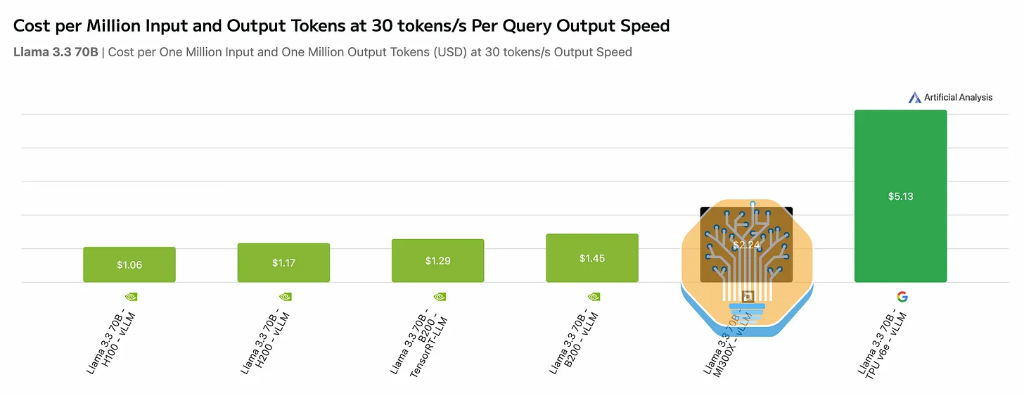
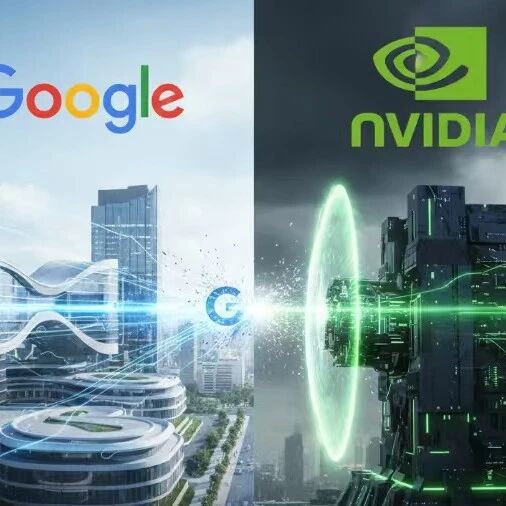
Core Insights - The AI chip market is at a pivotal point in 2025, with Nvidia maintaining a strong lead through its Blackwell architecture, while Google's TPU commercialization is challenging Nvidia's pricing power [2][3][4] - OpenAI's leverage in threatening to purchase TPUs has led to a 30% reduction in total cost of ownership (TCO) for Nvidia's ecosystem, indicating a shift in competitive dynamics [2][3] - Google's strategy of selling high-performance chips directly to external clients, as evidenced by Anthropic's significant TPU purchase, marks a fundamental shift in its business model [8][9][10] Group 1: Competitive Landscape - Nvidia's previously dominant position is being threatened by Google's aggressive TPU strategy, which includes direct sales to clients like Anthropic [4][10] - The TCO for Google's TPUv7 is approximately 44% lower than Nvidia's GB200 servers, making it a more cost-effective option for hyperscalers [13][77] - The emergence of Google's TPU as a viable alternative to Nvidia's offerings is reshaping the competitive landscape in AI infrastructure [10][12] Group 2: Cost Efficiency - Google's TPUv7 servers demonstrate a significant cost efficiency advantage over Nvidia's offerings, with TCO for TPUv7 being about 30% lower than GB200 when considering external leasing [13][77] - The financial model employed by Google, which includes credit backstops for intermediaries, facilitates a low-cost infrastructure ecosystem independent of Nvidia [16][55] - The economic lifespan mismatch between GPU clusters and data center leases creates opportunities for new players in the AI infrastructure market [15][60] Group 3: System Architecture - Google's TPU architecture emphasizes system-level engineering over microarchitecture, allowing it to compete effectively with Nvidia despite lower theoretical peak performance [20][61] - The introduction of Google's innovative interconnect technology (ICI) enhances TPU's scalability and efficiency, further closing the performance gap with Nvidia [23][25] - The TPU's design philosophy focuses on maximizing model performance utilization rather than merely achieving peak theoretical performance [20][81] Group 4: Software Ecosystem - Google's shift towards supporting open-source frameworks like PyTorch marks a significant change in its software strategy, potentially eroding Nvidia's CUDA advantage [28][36] - The integration of TPU with widely used AI development tools is expected to enhance its adoption among external clients [30][33] - This transition indicates a broader trend of increasing compatibility and openness in the AI hardware ecosystem, challenging Nvidia's historical dominance [36][37]


SemiAnalysis深度解读TPU--谷歌(GOOG.US,GOOGL.US)冲击“英伟达(NVDA.US)帝国”
智通财经网· 2025-11-29 09:37
Core Insights - Nvidia maintains a leading position in technology and market share with its Blackwell architecture, but Google's TPU commercialization is challenging Nvidia's pricing power [1][2] - OpenAI's leverage in threatening to purchase TPUs has led to a 30% reduction in total cost of ownership (TCO) for Nvidia's ecosystem [1] - Google's transition from a cloud service provider to a commercial chip supplier is exemplified by Anthropic's significant TPU procurement [1][4] Group 1: Competitive Landscape - Google's TPU v7 shows a 44% lower TCO compared to Nvidia's GB200 servers, indicating a substantial cost advantage [7][66] - The first phase of Anthropic's TPU deal involves 400,000 TPUv7 units valued at approximately $10 billion, with the remaining 600,000 units leased through Google Cloud [4][42] - Nvidia's defensive posture is evident as it addresses market concerns regarding its "circular economy" strategy of investing in AI startups [5][31] Group 2: Technological Advancements - Google's TPU v7 architecture has been designed to optimize system performance, achieving competitive efficiency despite slightly lower theoretical peak performance compared to Nvidia [12][53] - The introduction of Google's innovative interconnect technology (ICI) allows for dynamic network reconfiguration, enhancing cluster availability and reducing latency [15][17] - Google's shift towards supporting open-source frameworks like PyTorch indicates a strategic move to dismantle Nvidia's CUDA ecosystem dominance [19][20][22] Group 3: Financial Implications - The financial engineering behind Google's TPU sales, including credit backstop arrangements, facilitates a low-cost infrastructure ecosystem independent of Nvidia [9][47] - The anticipated increase in TPU sales to external clients, including Meta and others, is expected to bolster Google's revenue and market position [43][48] - Nvidia's strategic investments in AI startups are seen as a way to maintain its market position without resorting to price cuts, which could harm its margins [35][36][31]