
ClaudeCode

Search documents
高盛闭门会-软件能否在AI时代生存
Goldman Sachs· 2026-03-13 04:46
Investment Rating - The report indicates a cautious optimism towards the software industry, suggesting a potential recovery phase as key performance indicators show signs of stabilization [5][6]. Core Insights - The software industry is undergoing a valuation logic reconstruction driven by AI applications transitioning from consumer to enterprise ecosystems, with tools like ClaudeCode lowering the barrier for non-developers [1]. - Existing software companies maintain their competitive edge through accumulated industry data and business scenario understanding, exemplified by CrowdStrike's decade-long data collection efforts [2][3]. - The median growth rate in the software industry has decreased from over 20% to around 10%, attracting value-focused investors who are now emphasizing GAAP profitability and free cash flow margins [6][7]. - Key industry metrics such as Annual Recurring Revenue (ARR) growth and Customer Lifetime Value to Customer Acquisition Cost (LTV/CAC) ratios have shown signs of stabilization after four years of deterioration, indicating a potential recovery phase [5][6]. Summary by Sections Industry Investment Rating - The report suggests a cautious optimism towards the software industry, indicating a potential recovery as key performance indicators stabilize [5][6]. Key Industry Trends - AI applications are shifting from consumer to enterprise, with tools like ClaudeCode enabling broader access for non-developers [1]. - The competitive landscape is intensifying with new entrants like Anthropic and OpenAI, prompting a reevaluation of existing software companies [2]. Competitive Advantages - The "moat" for software companies lies in their long-term data accumulation and industry expertise, as demonstrated by CrowdStrike's data-driven defense capabilities [2][3]. - Companies must leverage their existing strengths to provide superior AI experiences to maintain competitive advantages [3]. Performance Indicators - Investors should focus on traditional metrics like booking volume and billing revenue, alongside AI-specific metrics such as the proportion of paid AI seats [3]. - Recent financial reports show positive market reactions to strong performance, indicating a potential recovery in the sector [5]. Strategic Recommendations - Software companies should modernize their technology stacks, develop clear organic growth roadmaps, and implement effective commercialization strategies to maintain competitiveness [4][5]. - A balanced approach between internal R&D and external acquisitions is recommended, with successful examples from companies like Salesforce and CrowdStrike [8].


宋雪涛:叙事回归理性的序幕已拉开
雪涛宏观笔记· 2026-02-26 02:09
市场波动主要源于流动性与风险偏好变化,而非AI产业方向逆转。未来美股对业绩兑现要 求将更严苛,资本开支容忍度持续下降,波动大概率加剧,但科技股是否已经走到右侧仍 需观察。 文:国金宏观宋雪涛/联系人陈瀚学 欢迎扫码收听本期宏观七日谈,每 周一早上八点,把宏观讲明白。 近期金银市场反复巨震引发的跨市场连锁反应,一个核心诱因是资产内生逻辑异化。由于前期涨速过 快、交易高度集中,叠加大量原本活跃于加密货币领域的杠杆资金涌入,金银已从传统的避险资产转化 为一种叙事类资产。这种"Meme化"趋势引发的剧烈波动并未止步于贵金属,而是演变成了一场波及 全球的去杠杆连锁反应。跨资产的抛售最终也传回美股,形成了一个完整的闭环:资金从过度拥挤的趋 势类资产中撤离,触发了从商品到权益类资产的系统性调整。 当前全球市场已进入一个波动率彻底释放的新阶段。即便在显著调整后,金银的隐含波动率仍处于历史 的绝对高位。伴随比特币年初至今25%的跌幅,这种极端的双向波动预示着市场已从非理性繁荣转向 情绪化博弈。 AI产业在持续进步并制造惊喜,但投资端可能存在过度定价,对长期回报过于乐观。 实际上,产业进 步对投资并不总是好事。然而,投资泡沫过大 ...


关于这波软件股崩塌我的看法
佩妮Penny的世界· 2026-02-25 11:14
大家好,我是佩妮。 最近的鬼故事特别多,一二级市场的朋友肯定也都关注到了。比如: 1)首先是软件行业受到冲击,美股软件股近万亿美元的市值蒸发,被称为 "软件行业的 DeepSeek 时刻" 。 2)接着又来了一篇" 从 2028 年穿越回来" 的全球 AI 危机小作文,把美股都带崩了一点。 虽然那篇小作文我看着感觉也是 AI 生产的,那属实是 AI 做空 AI,感觉这 AI 还挺有正义感的,哈哈哈。 所以,坏消息:美股软件saas股都崩了。 好消息: 中国的软件股没有真正的saas。。。 作为之前看过一段时间软件的一级投资人,咱们不能纯吃瓜群众,还是要深入分析一下。 今天就先说软件了,如果全部一起说了,篇幅太 长。 我们先来总结一下海外关于这波软件股大抛售的核心观点,然后再看看这次崩塌到底是机会,还是真正危机的前兆。 首先,关于国内广为传播的那两篇"小作文",我觉得咱们尽量不要去管它背后是什么,主要讨论观点。因为我看到有人把那篇"2028 年穿越回 来"的宏观文章当成是研报,那显然不是,毕竟那个机构成立也没多久,其实并没有多大名气。 首先,关于软件股崩塌那篇,核心观点是: AI让软件从卖铲子到直接卖结果。以前 ...

千亿资金需求下 OpenAI本周在ChatGPT上线广告
Xin Lang Cai Jing· 2026-02-13 00:34
Core Insights - OpenAI has begun displaying advertisements in ChatGPT, despite CEO Sam Altman's previous opposition to this idea, citing concerns over user trust [2][3][10] - The company faces significant financial pressure, having generated approximately $13 billion in revenue last year while anticipating an additional investment of around $100 billion over the next four years [3][10] - OpenAI aims to triple its revenue this year, necessitating the exploration of new business avenues, including advertising, which it has no prior experience in [3][11] Financial Performance - OpenAI's revenue composition is approximately 60% from consumer products and 40% from enterprise technology, with a significant portion of consumer revenue derived from subscriptions [5][12] - The company has 800 million users, with about 6% paying for premium subscriptions at $20 per month [5][12] - OpenAI's revenue growth strategy includes generating additional income from the free version of ChatGPT through advertising [5][12] Competitive Landscape - OpenAI faces competition from established companies like Google and Microsoft, as well as emerging startups like Anthropic, which is gaining traction in the AI programming sector [4][11][15] - The company is building an advertising sales team, but this effort is still in its early stages, and it lacks a fully developed sales infrastructure [14] - Analysts suggest that OpenAI must aggressively pursue the enterprise software market to remain competitive, especially against rivals like Anthropic [15] New Business Models - OpenAI is exploring a "value-sharing" model, where it may share profits from scientific discoveries made using its technology, although this has raised concerns among independent researchers [7][16] - The company has launched a product called Prism aimed at scientists, which has led to questions about potential profit-sharing arrangements [7][16] - OpenAI's leadership has publicly clarified that it will not take a cut from individual scientists' results using Prism, but it has not ruled out profit-sharing with large pharmaceutical companies [8][16]

OpenAI首席执行官:ChatGPT的月增长率恢复到10%以上
Xin Lang Cai Jing· 2026-02-09 14:53
Core Insights - OpenAI's CEO Altman reported that the monthly growth rate of the AI chatbot ChatGPT has recovered to over 10% [2][5] - The company has over 800 million weekly active users and is set to launch an "updated chat mode" this week [2][5] - AI startups, including OpenAI and Anthropic, are intensifying competition to gain new customers and market share [2][5] User Metrics - As of the end of December, Google's Gemini application has surpassed 750 million monthly active users [2][5] - OpenAI's coding product Codex has seen approximately a 50% growth compared to the previous week [2][5] Product Developments - OpenAI recently launched a new coding model named GPT-5.3-Codex [2][5] - Anthropic is recognized as a disruptor in the software industry, with its AI coding technology being adopted by software developers [2][5] Revenue Generation - OpenAI plans to start displaying ads in ChatGPT for some U.S. users as part of its efforts to monetize the chatbot and fund the high costs of technology development [2][5]

为什么 ClawdBot 能带火 Mac mini?叶天奇聊 Agent 电脑丨100 个 AI 创业者
晚点LatePost· 2026-02-05 14:35
Core Viewpoint - The article discusses the emergence of Pamir AI, a hardware product designed to serve as a dedicated computer for AI agents, emphasizing its potential to revolutionize the interaction between users and AI technology [5][12]. Group 1: Product Overview - Pamir AI is a micro-sized hardware device priced at $250, designed to operate 24/7 and handle repetitive tasks, allowing users to interact with AI agents through a dedicated application rather than traditional messaging platforms [7][10]. - The device is built on a micro Linux operating system and can execute 95% of tasks locally, providing a significant advantage over cloud-based solutions that incur ongoing costs [11][14]. - The product's unique capability includes physical connectivity to external devices, enabling users to modify hardware functionalities, such as programming printers to perform complex tasks [11][12]. Group 2: Market Positioning and Target Audience - Pamir AI targets various user groups, including developers who require continuous background coding support, electronic enthusiasts who need to program hardware, and knowledge workers who utilize the device as a smart storage solution [12][13]. - The product aims to redefine the concept of a computer, positioning itself as a "relentless work machine" that can replace traditional laptops and cater to a broader audience beyond just programmers and hardware enthusiasts [13][14]. Group 3: Development and Future Plans - The company, currently with a team of four, has raised $2.6 million in funding and plans to begin mass production of the next generation of Pamir AI by June 2026, focusing on hardware sales as the primary business model [15][16]. - The founder emphasizes the importance of long-term commitment to a promising direction, indicating that the company is on an upward trajectory after overcoming initial challenges [16][21].

AI的瓶颈不是算力,而是…
3 6 Ke· 2026-01-17 08:18
Core Insights - The discussion around AI has established a narrative framework where computing power determines limits, models dictate capabilities, and data defines intelligence levels. However, the real challenge lies in organizational adaptation to AI, which is often linear compared to the exponential growth of AI capabilities [1] Group 1: AI Implementation and Organizational Change - A seemingly reasonable figure, such as 30% of code being generated by AI, may mask a more conservative reality. If the potential was close to 100%, then 30% indicates organizational restraint rather than efficiency issues [2] - A practical experiment revealed that when organizational boundaries were removed, nearly all code could be generated by AI, highlighting the importance of organizational willingness to change [2][12] - Traditional organizational structures, rooted in the industrial era, create high collaboration costs that can hinder AI's potential [3][4] Group 2: New Collaborative Models - The shift towards AI-native workflows resembles 3D printing rather than traditional bricklaying, allowing for more integrated and efficient collaboration [4] - As AI raises the baseline for delivery standards, the value of human input shifts from execution to defining what excellence looks like and taking responsibility for it [5][12] Group 3: Organizational Transformation Initiatives - The company transformed management meetings into "AI promotion meetings," focusing on how AI can create value rather than merely reviewing performance metrics [6] - A training and certification program named "ABC+" was introduced to empower non-technical staff to utilize AI tools, identifying potential future leaders within the organization [7][8] - A hackathon for non-technical employees resulted in a project that streamlined communication between sales and development, reducing organizational friction and enhancing efficiency [9][10] Group 4: Leadership and Organizational Structure - As AI capabilities are integrated into workflows, the minimum deliverable unit within the organization shrinks, leading to a reduced need for coordination and a shift in the role of middle management [10][11] - AI serves as a consensus tool for driving long-term organizational change, making it a compelling reason for CEOs to advocate for transformation [11] Group 5: The Bottleneck of AI Adoption - The true bottleneck for AI is not technological but rather the readiness of people and organizations to embrace change and redesign themselves [12][13]
【大涨解读】AI应用:科技巨头新模型再度点燃AI应用上涨潮,GEO+AI编程成重点,AI重塑流量入口有望打开千亿市场
Xuan Gu Bao· 2026-01-12 03:19
Group 1: AI Application Stocks Performance - On January 12, AI application concept stocks experienced a collective surge, with companies like Liou Co., BoRui ChuanBo, and others achieving significant gains, including multiple stocks hitting the 20% limit up [1] - Notable performers included BlueFocus, Kunlun Wanwei, and others, all rising over 10% [1] Group 2: AI Marketing and Programming Developments - Elon Musk announced the open-sourcing of X platform's content recommendation algorithm, interpreted as a move into GEO (Generative AI Optimization) [3] - DeepSeek plans to release its next-generation V4 model in mid-February, focusing on enhanced programming capabilities, with initial tests showing superior performance compared to mainstream models [3] - AI programming is becoming a core application area, with leading model companies emphasizing code capabilities, as seen in the advancements of models like Claude and GPT [4][5] Group 3: Market Insights and Future Projections - The global GEO market is projected to reach $11.2 billion by 2025 and potentially $100 billion by 2030, indicating a significant growth trajectory [6] - The rise of GEO as a new paradigm in marketing, evolving from SEO, is expected to transform advertising agencies' business models towards subscription or performance-based payment structures, enhancing profitability [6]
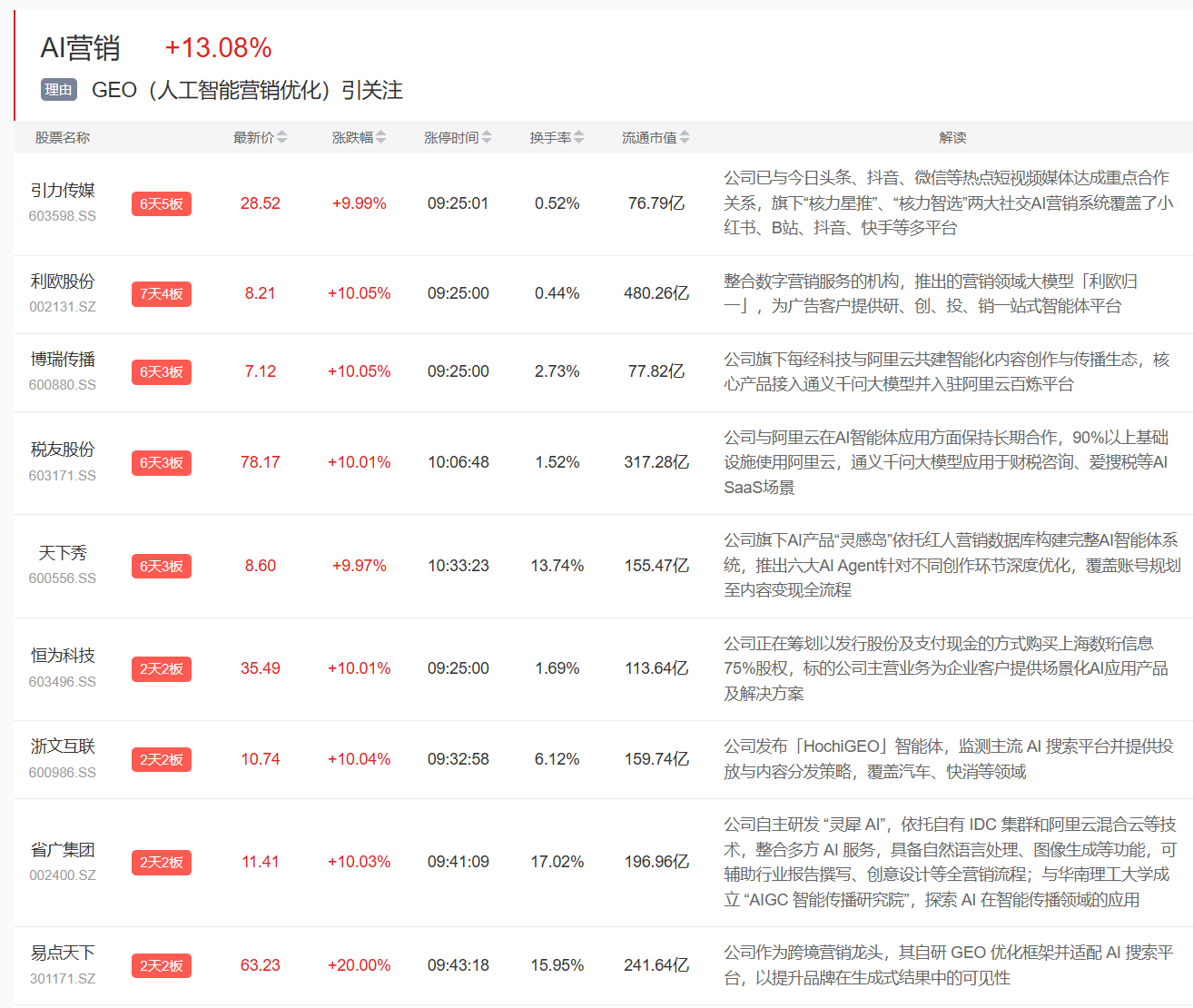
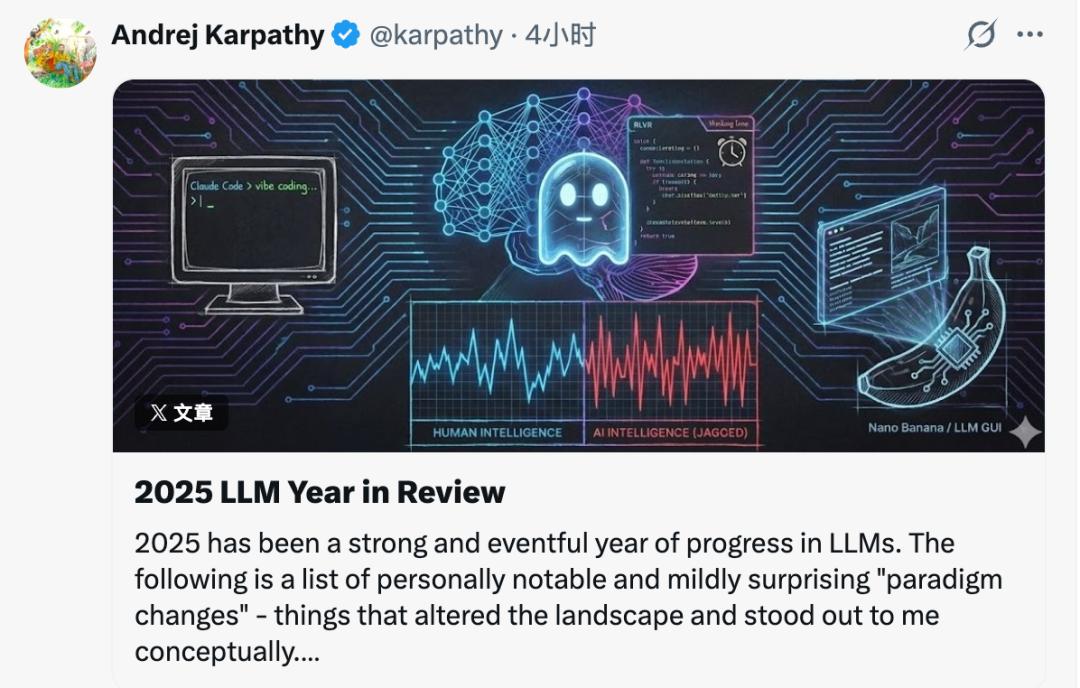
Karpathy 2025年AI终极觉醒:我们还没发挥出LLM潜力的10%
3 6 Ke· 2025-12-22 00:29
Core Insights - 2025 is anticipated to be a pivotal year in the history of artificial intelligence, marking a transition from "impressive" in 2023 to "confusion" in 2024, and finally to "awakening" in 2025 [1][3] Group 1: RLVR Revolution - The traditional training process for large language models (LLMs) involves three stages: pre-training, supervised fine-tuning, and human feedback reinforcement learning (RLHF) [4][6] - RLHF has been criticized for training models to "appear to reason" rather than genuinely reasoning, leading to issues like "sycophancy" where models produce plausible but incorrect outputs [6][7] - The emergence of RLVR (Reinforcement Learning from Verifiable Rewards) represents a new phase where models are trained based on objective results rather than human feedback, allowing for a more robust learning process [7][12] - RLVR enables models to explore multiple reasoning paths and self-verify their outputs, leading to the development of reasoning capabilities without explicit instruction [18][19] - The shift in focus from training to inference time allows models to enhance their intelligence by spending more time on complex problems, akin to a student taking longer to solve difficult questions [21][23] Group 2: Philosophical Divide - A philosophical debate is presented regarding whether AI is creating new "animals" or "ghosts," with the latter referring to LLMs that lack continuous consciousness and are instead statistical constructs of human language [24][32] - Rich Sutton's "Bitter Lesson" suggests that methods leveraging unlimited computational power will ultimately outperform those relying on human knowledge, emphasizing the supremacy of computational approaches [27][28] - The current AI models are seen as "ghosts" that lack a continuous self and are instead reflections of human language, leading to a "uncanny valley" effect in interactions [33][35] Group 3: Vibe Coding - Vibe Coding represents a shift in programming paradigms where developers focus on intent rather than code details, allowing AI to generate code based on natural language descriptions [40][44] - The emergence of tools like MenuGen demonstrates the potential of Vibe Coding, where even experienced programmers can create applications without writing traditional code [44][45] - The competition between AI programming tools, such as Cursor and ClaudeCode, highlights the evolving landscape of AI-assisted development, with each offering different levels of integration and autonomy [45][46] Group 4: Paradigm Shift - The introduction of Google's Gemini Nano Banana signifies a major paradigm shift in computing, suggesting that LLMs will redefine user interface experiences beyond traditional text-based interactions [47][49] - The preference for visual and spatial information over text indicates a need for LLMs to evolve in how they communicate with users, moving towards more engaging formats [49][50] - The "jagged" intelligence of AI, where it excels in certain areas while failing in others, reflects the uneven distribution of training data and highlights the complexities of AI capabilities [51][52] Group 5: Future Outlook - The year 2025 is positioned as an exciting yet unpredictable time for LLMs, with the potential for significant advancements and untapped capabilities still remaining [53][55] - The belief in rapid development alongside the need for further work suggests a dynamic and evolving landscape in AI research and application [57][58]
X @𝘁𝗮𝗿𝗲𝘀𝗸𝘆
𝘁𝗮𝗿𝗲𝘀𝗸𝘆· 2025-10-12 09:00
AI Model Performance - CodeX outperforms ClaudeCode in specific data retrieval tasks [1] - CodeX successfully retrieved pure contract data that ClaudeCode failed to obtain [1] Cost Optimization - The company is reducing costs by unsubscribing from ClaudeCode (200U) [1] - The company is subscribing to CodeX (20U), potentially indicating a cost-effective alternative [1]