
DRAM chips

Search documents
Micron Just Did Something Even Nvidia Hasn't Done. Is the AI Stock a Buy?
Yahoo Finance· 2026-03-19 17:35
Core Insights - Micron reported a significant earnings increase, with revenue nearly tripling to $23.9 billion, surpassing expectations of $19.2 billion [1] - The growth was primarily driven by high demand for memory chips in AI applications and a supply shortage that has increased prices [2] Financial Performance - Revenue increased by 196%, while net income surged by 771% to $13.8 billion, translating to $12.07 per share, with adjusted EPS at $12.20, exceeding the consensus estimate of $8.65 [3] - Gross margin more than doubled from 36.8% to 74.4%, and operating margin tripled to 67.6%, a level not previously reached by Nvidia [3][4] Market Dynamics - Despite strong earnings, Micron's stock fell by 3% after the announcement, indicating market skepticism about the sustainability of its margins [7] - The memory chip market is cyclical, with potential for shortages and inventory gluts, raising concerns about the longevity of Micron's current profit levels [8] Future Outlook - Micron's fiscal third-quarter guidance anticipates revenue of approximately $33.5 billion, a 260% increase, with gross margin projected to rise to 81% and adjusted EPS between $18.75 and $19.55 [9] - The CEO indicated that demand for DRAM and NAND chips is expected to remain tight beyond 2026, with bit shipments projected to grow by around 20% [10]

Samsung CEO seeks multi-year chip contracts with major customers
Yahoo Finance· 2026-03-18 01:11
By Hyunjoo Jin and Heekyong Yang SUWON, South Korea, March 18 (Reuters) - Samsung Electronics co-CEO said the chipmaker is working with major customers to shift to multi-year contracts of three-to-five years to shield them from potential demand fluctuations. Co-CEO Jun Young-hyun said the chip industry is entering an "unprecedented supercycle" driven by growing investment in AI data centres, and Samsung must prepare for "various scenarios". "There are concerns regarding overheating in investment in ...
Micron Is the Best-Performing Artificial Intelligence (AI) Stock of the Past Year -- Up 318%. Can It Keep Going in 2026?
The Motley Fool· 2026-03-14 14:45
Core Viewpoint - Micron Technology has experienced a remarkable 318% increase in share price over the past year, outperforming other AI companies like Nvidia and Palantir Technologies [1] Group 1: Company Performance - Micron's revenue and earnings have significantly benefited from a surge in memory prices, primarily driven by demand from AI data centers [2] - The company sells both DRAM and NAND flash chips, with DRAM accounting for nearly 80% of its revenue [6] - Micron's stock has already gained 36% in 2026 and is currently trading at a premium earnings multiple of 38, justified by an expected 322% increase in earnings to $35 per share this year [12] Group 2: Market Dynamics - A favorable pricing environment is expected to persist, with DRAM prices projected to increase by 62% in Q1 2026 and NAND flash prices by 40% in the current quarter [5] - The DRAM chip shortage is anticipated to last for the next 12 to 18 months, with prices expected to surge by 70% in Q2 2026 due to strong AI-driven demand [7] - The high-bandwidth memory (HBM) market is undersupplied, consuming three times the semiconductor wafer capacity of standard memory chips, which contributes to the overall memory chip shortage [10] Group 3: Future Outlook - The HBM market's revenue is expected to nearly triple from 2025 to 2028, reaching $100 billion, indicating sustained demand for Micron's products [11] - If Micron achieves earnings of $46.63 per share in the next fiscal year, its stock price could potentially rise to $1,189, suggesting further upside potential [14][15]


KLA Jumps 22% in 3 Months: Is There More Room for the Stock to Grow?
ZACKS· 2026-03-11 17:50
Key Takeaways KLAC rose 21.7% in 3 months but lagged MKSI, LRCX and ENTG after weaker 3Q'26 guidance and cost pressures. KLAC expects third-quarter fiscal 2026 revenues of about $3.35 billion (plus/minus $150 million).KLA sees strong demand for leading-edge logic, HBM and advanced packaging. KLA Corporation (KLAC) shares have jumped 21.7% in the trailing three-month period, outperforming the Zacks Computer and Technology sector’s drop of 2% and the Zacks Electronics-Miscellaneous Products industry’s appreci ...

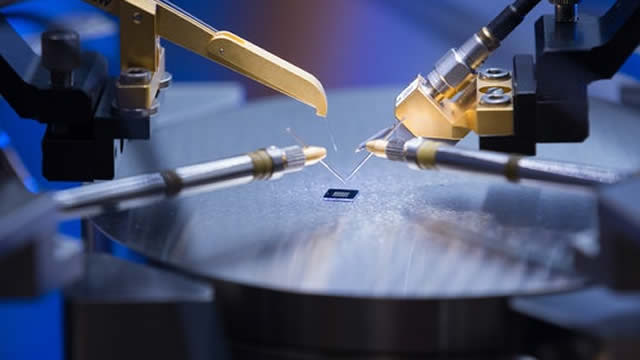
Micron stock falls as weakness hits global memory sector
Invezz· 2026-03-06 20:46
Group 1 - Micron Technology shares fell 2% to $389.12 amid weakness in South Korean memory stocks, with Samsung Electronics and SK Hynix also declining [1][1][1] - Micron has a 12-month gain of 344.77% but is currently trading 4% below its 20-day simple moving average of $406.13 and 29.8% above its 100-day SMA of $300.60 [1][1][1] - The company is set to report earnings on March 18, with estimates for EPS at $8.56 and revenue at $19.10 billion, both significantly up year over year [1][1][1] Group 2 - Western Digital has seen a 60% year-to-date increase in stock price, driven by improved business conditions and demand related to AI and cloud computing [1][1][1] - The company has diversified its supply chain and expanded capacity to navigate supply challenges, with expectations for continued revenue growth [1][1][1] - Customer concentration poses a risk, as three clients account for 46% of H1 FY26 revenue, which could impact results during hyperscaler deployment cycles [1][1][1] Group 3 - The dip in Micron's stock highlights the influence of South Korean memory market movements on US trading, especially with an important earnings report approaching [1][1][1] - Western Digital's rebound reflects an improving sector cycle and AI-driven demand, but elevated valuations and customer concentration may limit potential for disappointment [1][1][1]
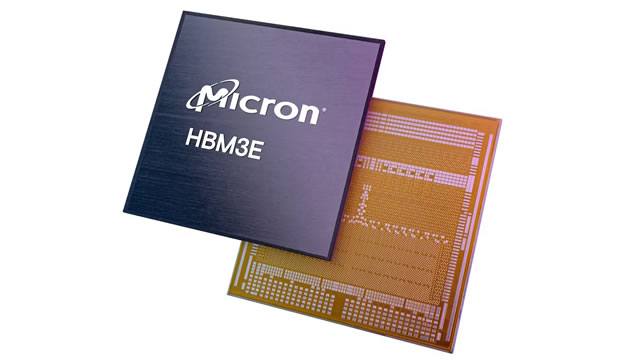
Analysts Mixed on Dell Technologies (DELL) Amid Rising Memory Costs
Yahoo Finance· 2026-03-02 20:37
Group 1 - Dell Technologies Inc. is considered one of the most undervalued AI stocks currently available for investment, supported by positive analyst and hedge fund sentiment, as well as a low forward price-to-earnings (PE) ratio [1] - Analysts at BofA expect strong performance in the upcoming fourth-quarter earnings release on February 26, 2026, despite rising costs, and have adjusted their target price from $150 to $135, while also reducing the FY27 EPS estimate by $0.86 to $10.00 [3] - BofA maintains a 'Buy' rating on Dell Technologies, expressing confidence in the company's ability to manage memory headwinds effectively [4] Group 2 - Rising memory costs are a significant concern, with analysts expressing mixed opinions on Dell Technologies; however, BofA believes the company's supply chain discipline and structural cost controls will provide a competitive advantage [2] - Dell Technologies is engaging with China's ChangXin Memory Technologies to test and approve DRAM chips, which is crucial for diversifying suppliers amid a global memory shortage and high prices [5] - The company focuses on delivering end-to-end IT infrastructure and client computing solutions, serving both enterprise and consumer markets globally [6]

Should You Forget Micron and Buy This Other Artificial Intelligence (AI) Chip Stock Instead?
Yahoo Finance· 2026-02-27 18:40
Core Insights - The memory and storage sector within artificial intelligence (AI) is emerging as a significant investment opportunity, particularly for companies like Micron Technology and Sandisk [1][2] Group 1: Market Dynamics - The ongoing AI data center buildout has led to increased capital expenditures from major tech companies such as Microsoft, Amazon, Alphabet, and Meta Platforms, creating a demand for high-performance memory chips and storage solutions [5] - A supply-demand imbalance in the memory and storage markets is anticipated, with prices for DRAM and NAND chips expected to rise by up to 60% and 38% respectively in the first quarter [6] - This memory supercycle is driving unprecedented revenue and profit growth for companies like Sandisk and Micron, prompting investors to shift capital from hyperscalers to these beneficiaries [7] Group 2: Company Profiles - Micron Technology specializes in dynamic random access memory (DRAM) and NAND solutions, positioning itself as a key player in the memory market [1] - Sandisk, following its spinoff from Western Digital, has become a significant player in NAND flash storage, particularly in enterprise solid state drives (SSDs) that are essential for scaling AI workloads [8][9] - Sandisk's innovation in high bandwidth flash (HBF) technology offers a more energy-efficient memory capacity solution compared to traditional high bandwidth memory (HBM) products [9]
Prediction: The Artificial Intelligence (AI) "Pick and Shovel" Trade Isn't Over. Here Are 2 Stocks to Buy for 2026.
Yahoo Finance· 2026-02-27 10:51
Group 1: AI Infrastructure Spending - AI infrastructure spending is expected to rise significantly in 2026, with the five largest U.S. hyperscalers and cloud computing companies projected to spend between $660 billion and $690 billion on AI infrastructure, compared to $380 billion last year [1] - Pure-play AI companies and ambitious infrastructure projects will contribute to this spending, highlighting the importance of hardware providers like Micron Technology and Jabil [2] Group 2: Micron Technology's Role - Micron Technology's DRAM chips are essential for AI data centers, particularly high-bandwidth memory (HBM), which enables AI accelerator chips to efficiently access large datasets for training and inference [4] - AI servers require six times the amount of DRAM compared to standard servers, a prediction made by Micron in 2019 that has proven accurate as demand for DRAM chips has surged [5] - Nvidia's new AI processors are expected to utilize nearly 300 GB of HBM, up from 200 GB in previous models, contributing to a significant shortage of memory chips and driving prices up by 75% from December 2025 to January 2026 [6] - The trend of rising memory prices is anticipated to continue due to ongoing investments in AI infrastructure and supply constraints, leading to positive earnings growth prospects for Micron Technology [7]

Prediction: The Artificial Intelligence (AI) "Picks and Shovels" Trade Isn't Over. Here Are 2 Stocks to Buy for 2026.
The Motley Fool· 2026-02-27 10:31
Industry Overview - Artificial intelligence (AI) infrastructure spending is expected to increase significantly, with the five largest hyperscalers and cloud computing companies in the U.S. projected to spend between $660 billion and $690 billion in 2026, up from $380 billion last year [1][2] - The demand for AI infrastructure is driven by both established companies and new entrants in the AI space, indicating a robust growth trajectory for the sector [2] Company Analysis: Micron Technology - Micron Technology's dynamic random-access memory (DRAM) chips, particularly high-bandwidth memory (HBM), are essential for AI data centers, enabling faster data processing for AI models [5][8] - The company has noted that AI servers require six times the amount of DRAM compared to standard servers, leading to a significant increase in demand and a shortage of memory chips [7][9] - Analysts predict a substantial increase in Micron's earnings, with expectations of more than a fivefold increase in earnings per share over two fiscal years, making it an attractive investment opportunity [11] - Micron's current trading multiples are favorable compared to the tech-focused Nasdaq-100 index, suggesting potential for price appreciation [12] Company Analysis: Jabil - Jabil is positioning itself as a key player in AI infrastructure, providing manufacturing and engineering services for AI server racks and related technologies [13][15] - The company plans to invest $500 million to expand its AI data center infrastructure manufacturing capacity, reflecting its commitment to capturing the growing demand in this sector [15] - Jabil is forecasting a 35% increase in AI revenue for fiscal 2026, indicating strong growth potential, and has raised its operating margin guidance due to improved contributions from its AI business [16] - The stock is currently trading at a discount compared to the Nasdaq-100's earnings multiple, suggesting it may still have significant upside potential [18][19]
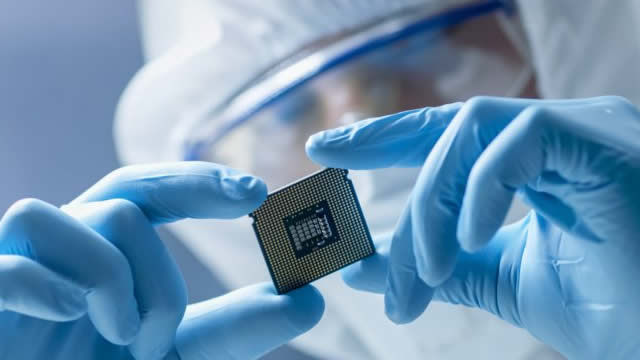
Why Did Micron Stock Pop Today?
Yahoo Finance· 2026-02-18 17:26
Core Viewpoint - Micron Technology is investing $50 billion to expand its manufacturing capacity in Boise, Idaho, amid a significant increase in global DRAM prices, which is driving demand for semiconductor chips [1][2][3]. Group 1: Investment Plans - Micron plans to double its 450-acre Boise campus by constructing two new factories, each covering 600,000 square feet, with the first factory expected to open in mid-2027 and the second by the end of 2028 [3]. - In addition to the Boise expansion, Micron is also building a $100 billion factory near Syracuse, NY, and a $9.6 billion factory in Hiroshima, Japan, contributing to a total investment of $200 billion aimed at addressing the AI memory bottleneck [4]. Group 2: Financial Position - Despite the ambitious $200 billion investment plan, Micron's cash reserves are only around $10 billion, raising concerns about its ability to fund such extensive projects [4]. - Currently, Micron is generating substantial cash flow, exceeding $22 billion before accounting for capital expenditures, which could be beneficial if DRAM prices remain high [5]. Group 3: Market Reaction - Following the announcement of the $50 billion investment, Micron's stock initially dropped by 3% but rebounded with a 6.9% increase the following day, recovering all losses [1].