内存短缺

Search documents
存储芯片巨头,表示担忧
半导体行业观察· 2026-03-16 01:11
Core Viewpoint - Samsung and SK Hynix are adopting a cautious approach towards their DRAM production plans due to concerns over potential supply surplus, despite currently benefiting from unprecedented demand and soaring contract prices [2][4]. Group 1: Market Conditions - The DRAM chip shortage is intensifying each quarter, with contract prices experiencing shocking increases of up to three digits [2]. - Major DRAM suppliers, including Samsung and SK Hynix, anticipate that the memory shortage will persist for several quarters, driven by historically high demand [4]. - The suppliers are concerned about a potential downturn in DRAM demand, particularly as the PC industry shows weak procurement momentum [2][4]. Group 2: Production Strategy - Samsung and SK Hynix control over 70% of global DRAM production and are focusing on profitability rather than rapid capacity expansion [4]. - Both companies are adjusting their production capacity based on market demand forecasts to avoid over-investment in expansion plans [2][4]. - The suppliers are expected to maintain a cautious stance on capacity expansion, as any overcommitment could lead to significant issues if demand stabilizes or declines [3][4]. Group 3: Future Outlook - The DRAM shortage is projected to last until 2028, with manufacturers signing short-term contracts to ensure that price increases are quickly reflected in customer quotes [5]. - The current pricing trends for DRAM and consumer products are expected to become the "new normal," with no specific timeline for price normalization [3][5]. - Consumers should be aware that the DRAM supply situation is unlikely to improve in the next couple of quarters, indicating continued supply constraints for products like RAM and GPUs [5].

三星为存储崩盘做好准备
半导体行业观察· 2026-03-13 01:53
Core Viewpoint - Samsung Electronics' semiconductor division (DS) is expected to achieve record performance this year, but there are concerns about a potential downturn starting in 2028 due to uncertainties in demand forecasts driven by the AI investment boom [2] Group 1: Market Dynamics - The demand for HBM (High Bandwidth Memory) is expected to continue into next year, with major tech companies like NVIDIA, AMD, and Broadcom driving this demand [3] - Samsung and SK Hynix dominate the DRAM market, with over half of their total DRAM sales coming from HBM, leading to a supply shortage in DRAM for smartphones, PCs, and servers [3] - The transition to next-generation DRAM processes is underway, with Samsung moving towards 10nm fifth-generation DRAM and expanding production lines [3] Group 2: Production Expansion - The government-led Yongin semiconductor industrial cluster project is anticipated to be a turning point for capacity expansion for both Samsung and SK Hynix [4] - Micron Technology is also expanding its DRAM production lines, while competitors like Kioxia and Yangtze Memory Technologies are advancing their NAND flash production [4] - By 2028, all major memory manufacturers, including Samsung, SK Hynix, and Micron, are expected to increase their production capacity significantly [4] Group 3: NAND Flash Market - The NAND flash market is projected to experience a faster oversupply than DRAM, with increased competition among more players, leading to price pressures [5] - Samsung and SK Hynix are facing challenges in predicting market conditions and making investment plans, highlighting the difficulty in forecasting the semiconductor market [5] - Memory prices surged significantly during the Spring Festival, with DRAM and NAND flash prices increasing by nearly three times [6] Group 4: Future Projections - Counterpoint Research predicts that memory shortages will persist for at least another year and a half, with significant production increases expected from major suppliers [6] - The competition among HBM suppliers is shifting from market share to profit margins, with SK Hynix currently holding a significant share of HBM shipments [6][7] - Geopolitical risks, such as the Middle East conflict, are not expected to have a major short-term impact on memory prices, although rising operational costs could lead to "chip inflation" [7]

内存短缺,英伟达AI工作站涨价了
Sou Hu Cai Jing· 2026-02-27 08:50
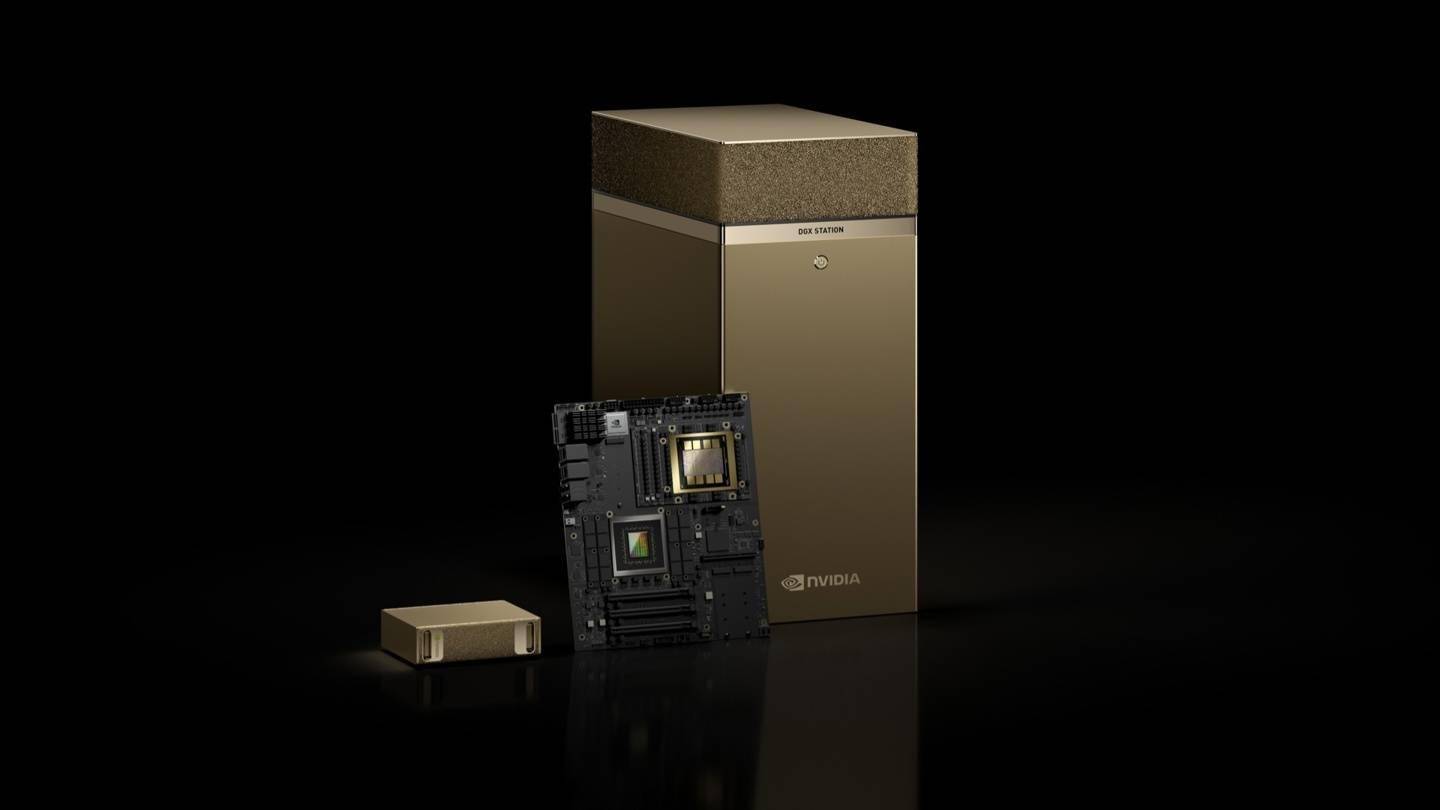
Core Insights - NVIDIA announced a price increase of $700 for the DGX Spark AI workstation, bringing the new suggested retail price to $4,699 [1][3] Pricing Changes - The suggested retail price for the DGX Spark (Founders Edition) has been raised from $3,999 to $4,699 due to limited memory supply [3] - The new pricing has been officially implemented this week [3] - This price adjustment reflects a broader industry trend of memory shortages [3] - The new suggested retail price applies globally [4] Impact on Existing Customers - The price increase does not affect existing customers; orders will be fulfilled at the original price at the time of purchase [5] Product Specifications - The DGX Spark features the GB10 "Grace Blackwell" chip, providing 1P FLOPS of FP4 AI computing power, 128GB LPDDR5X unified memory, and a 4TB NVMe M.2 solid-state drive, with compact dimensions of 150 × 150 × 50 mm [6] - Other manufacturers such as MSI, ASUS, GIGABYTE, and Dell will also offer DGX Spark workstations equipped with the same chip [6]

2026年全球智能手机出货量预创历史新低
日经中文网· 2026-02-27 08:00
Core Viewpoint - The global smartphone shipment is expected to decline significantly due to memory shortages, with a projected decrease of 12.9% in 2026 compared to 2025, reaching a historical low of 1.12 billion units, marking the largest drop in over a decade [2][4]. Group 1: Market Impact - The decline in smartphone shipments is primarily driven by shortages in memory, which is expected to severely impact the shipment of low-cost smartphones [4]. - The Middle East and Africa markets are projected to see a shipment decline of 20.6%, while China is expected to decrease by 10.5%, and the Asia-Pacific region (excluding Japan) is forecasted to drop by 13.1% [5]. Group 2: Structural Changes - IDC indicates that the era of low-cost smartphones is coming to an end, leading to a structural reset in the market, as these devices are likely to remain unprofitable due to ongoing supply constraints and rising component prices [4]. - The impact of memory shortages on low-cost smartphones running Google's Android operating system is particularly severe, leading to squeezed profit margins and necessitating price increases, which may result in a sharp decline in demand [4].

OPPO、vivo、小米等多个手机品牌,将全面涨价!
Xin Lang Cai Jing· 2026-02-27 01:13
Core Viewpoint - The Chinese smartphone industry is set to experience a comprehensive price increase in 2026, marking the first time all categories and brands will see synchronized price hikes, with new models potentially increasing by over 1000 yuan [1][3]. Group 1: Price Increase Details - Starting in March, the price increase will accelerate, affecting both new and existing models from major brands such as OPPO, OnePlus, vivo, iQOO, Xiaomi, and Honor [1][3]. - Counterpoint Research predicts that the average price increase for smartphones in China will exceed the global average of 6.9%, with new models expected to rise by 15% to 25% compared to 2025 [3]. - IDC data indicates that flagship smartphones in China will see price increases surpassing 30%, with price differences for similar models compared to 2025 ranging from 300 to 1000 yuan, and larger storage versions potentially increasing by up to 2000 yuan [3][4]. Group 2: Underlying Factors for Price Increase - The primary driver behind this price surge is the unavoidable rise in memory costs and the volatility of component prices, particularly due to significant increases in upstream memory prices [2][4]. - Since the beginning of 2026, the global memory chip market has experienced rapid price increases, driven by the explosive growth of AI servers, which have taken away memory production capacity originally allocated for smartphones [4]. - Current procurement costs for smartphone storage chips have risen by over 80% compared to the same period last year, with no signs of slowing down [4].

联想提醒客户:赶紧下单,电脑手机即将涨价
Guan Cha Zhe Wang· 2026-02-24 08:59
Core Insights - Lenovo has issued a warning to its North American partners about impending price increases on certain commercial products due to shortages in DRAM and NAND flash memory, effective from March [1] - The price adjustments will affect specific products and configurations within Lenovo's Intelligent Devices Group (IDG) and the Infrastructure Solutions Group (ISG) [1][2] - Lenovo has urged partners to place orders by February 25 to secure current pricing, with a strict deadline for order delivery by February 28 [2] Group 1: Price Increases and Impact - The price increase is primarily driven by memory shortages, with the exact increase yet to be determined [1] - The ISG division will shorten the validity period for price quotes, with internal bids now valid for 14 days and external platform quotes for 30 days [1] - Lenovo has begun re-pricing large backlog orders and has suspended discounts for partners helping to acquire new customers [1] Group 2: Partner Reactions and Market Conditions - Some North American partners have expressed dissatisfaction, viewing the price increase as a way for suppliers to evade responsibility for delayed shipments [2] - Lenovo's North America President confirmed the necessity of adjusting terms and policies regarding order acceptance, pricing, and delivery schedules [2] - The overall cost pressures faced by Lenovo are reflective of broader industry trends, with major OEMs like Dell and HP also expected to raise prices significantly [2] Group 3: Market Forecasts - According to TrendForce, the demand for AI and data centers is exacerbating the global supply-demand imbalance for memory, with DRAM contract prices expected to rise by 90-95% and NAND Flash by 55-60% in Q1 2026 [3] - The increase in component prices is projected to lead to a 14.8% decline in global laptop shipments in Q1 2026, with an annual decrease of 9.4% anticipated for the entire year [3]


电脑硬件股盘前下跌 戴尔科技(DELL.US)跌逾4%
Zhi Tong Cai Jing· 2026-02-12 14:32
Core Viewpoint - The computer hardware sector is experiencing a downturn, with significant declines in stock prices for major companies like Dell and HP due to rising memory and storage costs, which have increased by approximately 40% to 70% from Q1 to Q4 of 2025, impacting consumer prices [1] Group 1: Industry Challenges - Memory manufacturers are prioritizing higher-margin products such as server-grade DRAM and high-bandwidth memory (HBM) for AI infrastructure, leading to a shortage of standard DDR memory for personal computers [1] - PC manufacturers are warning of potential difficulties for consumers in 2026, not due to shortages of CPUs or GPUs, but because of a memory shortage crisis that will increase material costs and force manufacturers to make difficult configuration choices [1] Group 2: Market Projections - IDC research manager Jitesh Ubrani forecasts a potential 9% decline in PC shipments in 2026, bringing total shipments down to approximately 260 million units, slightly below the 263.3 million units expected in 2024 and close to the levels seen in 2023, which was one of the worst years in PC history [1]


高通财报超预期但指引不及预期,股价盘后暴跌近10%
Jing Ji Guan Cha Wang· 2026-02-11 14:31
Core Viewpoint - Qualcomm's Q1 FY2026 earnings report revealed record revenue but disappointing guidance for Q2 due to global memory chip shortages, leading to a significant drop in stock price [1] Group 1: Earnings Report - Qualcomm reported Q1 FY2026 revenue of $12.25 billion, a 5% year-over-year increase, and adjusted earnings per share of $3.50, both exceeding market expectations [3] - The Q2 revenue guidance was set at $10.2 billion to $11 billion (midpoint $10.6 billion), below analyst expectations of $11.11 billion, with adjusted EPS guidance of $2.45 to $2.65 also falling short of the anticipated $2.89 [3] - The management attributed the lowered guidance to global memory shortages, which have led to data center demand crowding out smartphone memory capacity, prompting clients to adjust their inventory strategies [3] Group 2: Stock Performance - Following the earnings report, Qualcomm's stock price dropped significantly, falling 8.46% to $136.30 on February 5, with trading volume surging to $4.125 billion [2] - The stock price stabilized in the following days, closing at $140.09 on February 10, but still reflecting a cumulative decline of 4.82% over the past five days [2] - The semiconductor sector experienced a slight decline of 0.78% during the same period, indicating overall industry pressure [2] Group 3: Business Segments - Revenue from the mobile segment was $7.82 billion, a 3% year-over-year increase, while the automotive segment generated $1.1 billion, up 15%, and the IoT segment brought in $1.69 billion, a 9% increase [3] - The diversified business segments helped to partially offset the pressures faced in the mobile business [3]
索尼发布2025年第三季度财报
WitsView睿智显示· 2026-02-06 05:41
Core Viewpoint - Sony Group reported strong financial results for the third quarter of fiscal year 2025, with operating profit and net profit exceeding analyst expectations, indicating robust performance despite challenges in hardware costs and supply chain issues [1][2]. Financial Performance - Operating profit for the third quarter reached 515 billion yen (approximately 22.84 billion RMB), a year-on-year increase of 22% [1]. - Net profit was 377.3 billion yen (approximately 16.73 billion RMB), reflecting an 11% year-on-year growth [1]. - Sales increased by 1% to 3.71 trillion yen (approximately 164.5 billion RMB) [1]. - The company revised its full-year operating profit forecast to 1.54 trillion yen from a previous estimate of 1.43 trillion yen [1]. Gaming and Network Services - The PlayStation 5 sales reached 8 million units during the quarter, driven by multiple game releases [2]. - However, the gaming and network services division faced profitability challenges due to hardware cost pressures [2]. Image Sensor Division - Revenue from the image sensor division surged by approximately 20% year-on-year, supported by increased sales in mobile products [2]. - The division is experiencing challenges due to a global memory shortage, which is affecting smartphone manufacturers' sales forecasts and product specifications [2]. Business Strategy and Partnerships - Sony is focusing on reducing reliance on low-margin hardware businesses and may consider further restructuring its business portfolio [2]. - A strategic partnership with TCL Electronics was initiated on January 20, aiming to establish a joint venture for Sony's home entertainment business, with TCL holding 51% and Sony 49% [2]. - The new company will cover television and home audio equipment, with operations planned for the global market, targeting completion of the final agreement by the end of March this year [2][4].

芯片竞赛,转向存储
半导体芯闻· 2026-02-05 10:19
Core Viewpoint - Intel is preparing to challenge Nvidia's dominance in the AI accelerator market, but the CEO emphasizes that the most critical constraint in the industry is related to memory supply, which favors Korean memory giants like Samsung and SK Hynix [1] Group 1: Memory Supply Constraints - The global shortage of advanced memory is expected to last at least two more years, driven by the rapid expansion of AI systems and the increasing demand for memory that outpaces supplier capacity [1] - Nvidia's next-generation AI platform, Vera Rubin, is anticipated to significantly increase memory consumption per system, exacerbating the supply-demand imbalance [1] Group 2: Market Dynamics - Samsung and SK Hynix dominate the high-bandwidth memory (HBM) market, which has become a critical component in AI computing [1][2] - Despite increasing competition among GPU manufacturers and custom chip designers, the trend in memory development is moving towards centralization, benefiting established players like Samsung and SK Hynix [1] Group 3: Importance of HBM - As AI models grow in scale and complexity, performance bottlenecks are shifting from raw computing power to memory throughput, making HBM a fundamental requirement for AI chips [2] - HBM has transitioned from a niche component to an essential part of AI systems, embedded in chips from major companies like Google, Microsoft, and Meta [2] Group 4: Competitive Landscape - SK Hynix is a primary HBM supplier for Nvidia, with long-term supply contracts already locked in, indicating that their HBM, DRAM, and NAND flash capacities are sold out until 2026 [3] - Samsung is actively expanding its HBM3E capacity and developing next-generation memory, leveraging its ability to integrate memory, wafer fabrication, and advanced packaging [3] - The increasing unit HBM consumption in AI servers and ongoing infrastructure investments suggest that supply will likely not keep pace with demand in the short term, allowing Samsung and SK Hynix to maintain pricing power and strategic advantages in the AI ecosystem [3]