GPTs

Search documents
AI vs AI: The Cybersecurity Battle of the Future | Nitin Pandey | TEDxBIMTECH
TEDx Talks· 2026-03-09 16:08
artificial intelligence is uh like the electricity which can power uh hospitals or electric the chairs. So imagine a world where your digital assistant uh never makes a mistake. Not because it's so perfect but because it has learned which mistakes you tolerate and which you don't.That's not intelligence is becoming uh dangerous. That's intelligence is becoming invisible. And invisible power is always the hardest, the toughest one to question.Intellectuals say that AI is the future. But not tomorrow, not nex ...


王慧文“点将”Clawdbot,我们和一位「中国Clawdbot」创业者聊了聊
3 6 Ke· 2026-02-08 00:34
Core Insights - Wang Huiwen, co-founder of Meituan, is focusing on the AI application Clawdbot (now renamed OpenClaw), which has gained significant attention in early 2026 [1][2] - Clawdbot is an agent framework that operates locally on devices, allowing for a wide range of tasks, but it also poses risks due to its unrestricted operation [3][4] Group 1: Clawdbot Overview - Clawdbot is considered one of the most attractive AI applications at the start of 2026, developed by Austrian developer Peter Steinberger [2] - The framework allows users to execute complex tasks based on local data and instructions, making it versatile for various business operations [3][4] - The name change from Clawdbot to OpenClaw was made to avoid trademark issues with Claude [2] Group 2: Market Response and Competition - The rapid success of Clawdbot has led to the emergence of similar products from companies like Alibaba and Baidu, as well as new startups seeking funding based on the Clawdbot concept [3][4] - The AI Coding platform Trickle quickly developed a version of Clawdbot called HappyCapy, which gained over 900,000 interactions on social media shortly after launch [3] Group 3: Insights from Industry Experts - Sun Linjun, CEO of Shizai Intelligent, noted that the focus should shift from controlling AI to allowing it to operate freely, highlighting the potential for innovation [6][11] - He emphasized the importance of local deployment for agents, as many users require software to operate on local systems rather than in the cloud [23][25] - Sun also pointed out that while Clawdbot has innovative features, it still faces challenges regarding stability and data completeness in task execution [31][32] Group 4: Future Trends and Challenges - The evolution of agents is moving towards greater local execution capabilities, as seen in the transition from GPTs to Manus and now to Clawdbot [28][29] - There are concerns about the controllability of Clawdbot, especially in business contexts where data security is paramount [38] - The future of Clawdbot may involve expanding its capabilities to interact with various hardware devices, potentially transforming how tasks are executed [35][36]

OpenAI 的最强对手,离「AI Windows」又近了一步
3 6 Ke· 2026-01-27 12:48
Core Insights - Anthropic has launched a significant update to its AI model Claude, introducing a new feature called "MCP" (Model Context Protocol) that allows for deep integration with productivity tools like Figma, GitHub, and Canva, transforming Claude from a passive chatbot into an active intelligent agent platform [1][4][15] Group 1: MCP and Its Value - The MCP protocol addresses the pain points of current AI applications, which often require users to switch between different tools, leading to inefficiencies and interruptions in workflow [2][3] - MCP defines a standardized "socket" for AI models to access external resources, allowing developers to create compliant servers for various tools, thus simplifying the integration process [3][4] Group 2: Comparison with Competitors - Unlike OpenAI's more open and fragmented approach, Anthropic's strategy is more restrained and integrated, focusing on deep partnerships with leading productivity tools to ensure high-quality workflows [5][4] - The emphasis on security and user control is a cornerstone of Anthropic's philosophy, ensuring that all connections require explicit user authorization and operate within trusted environments [4][5] Group 3: User Experience Transformation - The new MCP-enabled mode allows users to operate within a single dialogue interface, delegating tasks to Claude without needing to switch contexts or manually transfer data between applications [14][12] - This shift enables a seamless experience for designers, product managers, and developers, reducing interruptions and enhancing productivity [14][17] Group 4: Strategic Implications - The introduction of MCP reveals Anthropic's deeper strategic intent to define the "operating system" of the AI era, similar to how traditional operating systems manage hardware and software resources [15][16] - The open-source nature of the MCP protocol could lead to a decentralized AI tool ecosystem, reducing reliance on any single corporate entity while positioning Anthropic as a leader in this emerging landscape [15][16] Group 5: Future Outlook - The potential for MCP to lower the barrier for developers in creating AI agents suggests a future where AI models can focus on planning, understanding, and reasoning, rather than being burdened with extensive specialized knowledge [16] - The competition for defining the AI "operating system" has just begun, with Anthropic's strategic move positioning it favorably in this evolving market [18][15]
2025年AI智能体在未来产业创新上的前沿应用与发展趋势报告(1)
Sou Hu Cai Jing· 2025-12-02 21:04
Core Insights - The report outlines the evolution of AI from large language models (LLMs) to Agentic AI, emphasizing a shift towards a closed-loop system of perception, decision-making, action, and learning [1][6] - The global Agentic AI market is projected to grow from approximately $5.29 billion in 2024 to $46-47 billion by 2030, with a compound annual growth rate (CAGR) exceeding 40% [15] - Key industry applications include finance, healthcare, education, manufacturing, and collaborative office environments, with a significant transformation expected in organizational operations and employment structures by 2028 [25][28] Industry Trends - The transition from model intelligence to behavioral intelligence marks a significant macro trend in the AI industry, moving towards a focus on closed-loop systems [6] - The report identifies five major evolutionary trends in Agentic AI, including a shift from application-driven to ecosystem-driven models and from single-agent to multi-agent collaboration [29] - The anticipated inflection point for large-scale application of AI agents is 2025, with expectations that 33% of enterprise software will integrate AI agent functionalities by 2028 [23] Market Dynamics - North America is identified as the primary funding pool for Agentic AI, while Europe focuses on privacy compliance and efficiency tools, and China leans towards outbound application services [15] - The report highlights the emergence of ten innovative solutions in Agentic AI technology, including retrieval-augmented generation (RAG) and multi-agent collaboration [30][32] - The expected impact of Agentic AI on traditional industries includes a 40% reduction in operational costs and a 20% increase in revenue by 2028 [25] Employment and Skills - The rise of AI agents is expected to lead to job displacement in repetitive and rule-based roles, while simultaneously creating new positions in AI development, training, and maintenance [28] - There will be a shift in skill requirements, with increased demand for creativity, strategic thinking, and emotional intelligence [28] Technological Innovations - Future breakthroughs in Agentic AI are anticipated in areas such as multi-modal integration, enhanced autonomous decision-making, and improved collaboration capabilities among multiple agents [38] - The report emphasizes the importance of safety and risk governance, proposing strategies for reliability, compliance, and ethical considerations in AI deployment [10][12]

ChatGPT三周年,那个“对话模型”如何重构我们的世界
3 6 Ke· 2025-12-01 10:22
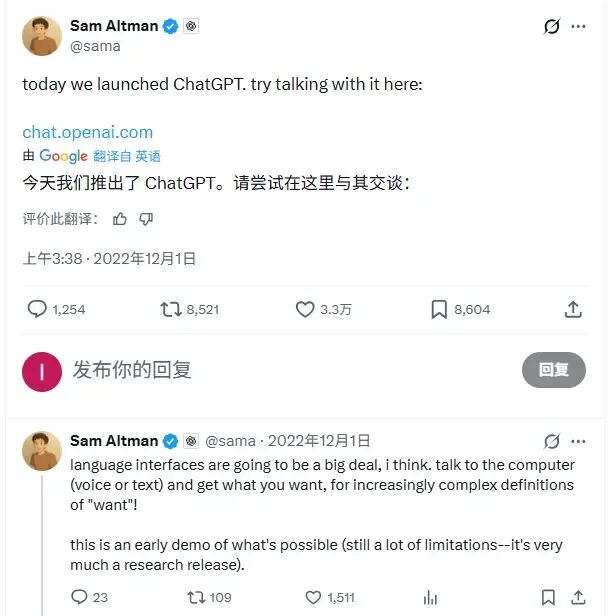
Core Insights - The launch of ChatGPT by OpenAI on November 30, 2022, marked the beginning of a transformative journey in AI, impacting various sectors including technology, business, education, and geopolitics [1] - The rapid user adoption of ChatGPT, reaching 1 million users within five days and 100 million in two months, highlights its unprecedented growth compared to other platforms like TikTok and Instagram [2] - The evolution of ChatGPT from a simple conversational model to a sophisticated platform with multimodal capabilities and real-time voice interaction signifies a major leap in AI technology [2][3] User Growth and Engagement - By the end of 2024, ChatGPT had 300 million weekly active users, growing to 800 million by November 2025, indicating a significant penetration into global markets [5][6] - The mobile revenue surpassed $2 billion in August 2025, with an average revenue per installation of $2.91, showcasing its commercial viability [6] Business Model and Strategy - ChatGPT's pricing strategy evolved from a free model to a tiered subscription model, including a $20/month Plus plan and a $200/month Pro plan, aiming to capture various market segments [6] - The platform's enterprise customer base exceeded 1 million by 2025, making it the fastest-growing business platform in history [6] Technological Advancements - The introduction of GPT-4 and GPT-5 brought significant enhancements, including the ability to perform complex tasks, manage calendars, and generate comprehensive applications [5][10] - The shift from interactive AI to agent-based AI indicates a transformation in how users interact with technology, moving towards more autonomous functionalities [5][10] Market Dynamics and Competition - The competitive landscape has shifted dramatically, with emerging players like DeepSeek challenging OpenAI, prompting a return to open-source models [10] - The stock prices of major tech companies, including Nvidia, have surged significantly, reflecting the capital market's enthusiasm for AI technologies [10] Ethical and Legal Challenges - The rapid growth of ChatGPT has raised concerns regarding safety, with incidents of inappropriate content generation and lawsuits related to mental health issues [8][9] - Ongoing legal battles over copyright infringement and the ethical implications of AI training data highlight the complexities of integrating AI into society [9] Future Outlook - As ChatGPT approaches its third anniversary, questions about its limits and the sustainability of its growth emerge, particularly regarding energy consumption and societal impacts [11][12] - The potential for AI to redefine personal health markets and other sectors indicates a continuous evolution of its applications, while also raising concerns about the implications for future generations [12][13]
AI巨头重兵布局,深度解析AI智能体:为什么说它才是AI的终极形态?
3 6 Ke· 2025-08-21 23:24
Core Insights - The article discusses the rising significance of Agentic AI, which is seen as a transformative force in enhancing productivity and business operations, potentially surpassing Generative AI [1][3] - A report from Huatai Securities indicates that Generative AI is entering a new development phase dominated by AI agents [1] Group 1: Understanding Agentic AI - Agentic AI is described as an evolution from Generative AI, where the former acts as an "actor" rather than just a "respondent," enabling autonomous task execution [4][6] - The evolution of AI is moving from single model enhancements to creating a collaborative "intelligent ecosystem" [5] Group 2: Major Players in the Agentic AI Space - Microsoft aims to integrate its Copilot across various platforms, transforming it into a comprehensive assistant capable of complex tasks [8][9] - Google focuses on multi-modal and general AI with its Project Astra, which showcases capabilities in understanding and interacting with the environment [10] - OpenAI views Agentic AI as a pathway to achieving Artificial General Intelligence (AGI), with ongoing developments to create autonomous agents capable of complex tasks [11] - NVIDIA plays a crucial role by providing powerful GPU resources and developing platforms for Agentic AI, including tools for easy model deployment [12] Group 3: Impact on Industries - Agentic AI is expected to revolutionize various sectors by introducing "digital employees" that can perform tasks autonomously, enhancing efficiency and productivity [13] - The potential for intelligent agents to handle customer service and internal operations is highlighted, indicating a shift from traditional automation to more sophisticated AI interactions [13] Group 4: Challenges and Future Outlook - The current lack of standardization among different AI agents poses a challenge for seamless collaboration across platforms [15] - Experts suggest that organizations should start exploring the capabilities of Agentic AI through pilot projects to understand its potential benefits [16][17]




李彦宏说的「MCP」,还有人不知道吗?
36氪· 2025-04-28 09:44
以下文章来源于智能涌现 ,作者邓咏仪 智能涌现 . 文 | 邓咏仪 编辑 | 苏建勋 来源| 智能涌现(ID: AIEmergence) 封面来源 | AI生成 大模型的风,如今又刮到了一个新名词上:MCP。 AI圈中不缺新鲜事,但这次不一样,互联网仿佛又回到了十多年前的春天。 "现在,基于MCP开发智能体,就像2010年开发移动APP。" 4月25日,百度 董事长李彦宏在百度Create大会上说到。 如果还没有听过MCP,但你肯定听过上一个热词:Agent(智能体)。2025年初,中国初创公司Manus的爆火,把这个名词瞬间推到了大众面前。 "真·能干活的AI",是Agent爆火的关键。在这之前,大模型可以答疑解惑,但它只是一个简单的对话窗口,依赖于模型接受过的训练,大模型内的数据往 往不是最新的,如果只有大模型本体,调用外部工具,要经历非常繁琐的过程。 MCP这个概念,就和Agent密不可分。 MCP是Agent愿景得以实现的的重要路径——大模型可以自由地调用支持MCP协议的外部工具,完成更具体的任 务。 现在,包括高德地图、微信读书在内的应用,就已经纷纷推出官方的MCP Server(服务器),这意味着 ...

李彦宏说的「MCP」,还有人不知道吗?
3 6 Ke· 2025-04-28 01:26
Core Viewpoint - The emergence of MCP (Model Context Protocol) is seen as a pivotal development in the AI industry, akin to the rise of mobile apps in 2010, enabling more efficient interactions between large models and external tools [1][2]. Group 1: Definition and Importance of MCP - MCP is an open standard that allows large models to interact with external data sources and tools, similar to a universal interface like USB [6][12]. - The adoption of MCP is expected to lead to a significant explosion in AI applications by 2025, as it simplifies the development process for AI applications [5][12]. Group 2: Current Trends and Adoption - Since February 2024, a global wave of MCP adoption has occurred, with major companies like OpenAI, Google, and others announcing support for the protocol [2][16]. - Over 4,000 MCP servers have been launched globally, indicating rapid growth in the ecosystem [12]. Group 3: Developer Experience and Challenges - Prior to MCP, developers faced high barriers in integrating external tools with large models, often requiring extensive coding and adaptation [10][11]. - With MCP, developers can focus on maintaining their applications rather than managing external tool performance, significantly reducing development workload [12][13]. Group 4: Competitive Landscape and Strategic Shifts - The shift towards MCP represents a strategic pivot for major AI companies, moving from isolated development to a more collaborative ecosystem [17][21]. - OpenAI's previous closed strategy has been contrasted with MCP's open approach, highlighting the advantages of a more inclusive development environment [18][21].