Gemini3 AI应用生态

Search documents
AI算力与存储需求爆表, 半导体设备迎接超级周期!应用材料业绩展望碾压预期!
美股IPO· 2026-02-13 03:27
截至1月25日的2026财年第一季度业绩方面,尽管第一季度营收同比小幅下滑2%至70.1亿美元,但降幅远小于该公司此前预期,并且 显著强于华尔街分析师们平均预期的约68.6亿美元。Non-GAAP 准则下的第一季度每股收益为2.38美元,高于2.21美元的华尔街平均 预期,与上年同期基本持平;第一季度该公司毛利率来到49%,上年同期约48%,第一季度的Non-GAAP自由现金流高达10.4亿美元, 意味着实现大幅增长91%。 应用材料股价在美股盘后交易中一度暴涨超14%,主要因该公司给出了出人意料的极度强劲营收预测区间,表明人工智能与存储类半导 体需求正在大幅推动台积电等芯片制造领军者们加速推进半导体高端制造设备采购。 市场最为聚焦的业绩展望方面,这家美国最大规模的半导体制造设备与先进封装设备供应商预计, 其2026财年第二季度营收约为76.5 亿美元,上下浮动范围约5亿美元,相比之下,华尔街分析师们对于应用材料该财季(截至今年4月)的平均营收预期为70.3亿美元——要 知道,随着3nm及以下先进制程AI芯片扩产与CoWoS/3D先进封装产能、DRAM/NAND存储芯片产能扩张大举加速,应用材料这一营 收预期 ...


AI算力与存储需求爆表 半导体设备迎接超级周期! 应用材料(AMAT.US)业绩展望碾压预期
智通财经网· 2026-02-13 00:01
Core Viewpoint - Applied Materials (AMAT.US), one of the largest semiconductor equipment manufacturers globally, reported stronger-than-expected quarterly results and provided a robust future outlook, highlighting the significant growth cycle in the semiconductor equipment sector driven by the AI computing infrastructure and a "super cycle" in memory chips [1][2]. Financial Performance - For the second quarter of fiscal year 2026, Applied Materials expects revenue of approximately $7.65 billion, with a fluctuation range of about $500 million, surpassing Wall Street's average estimate of $7.03 billion [2]. - The company's management provided a Non-GAAP earnings per share forecast of $2.44 to $2.84, significantly above the analyst average expectation of $2.29 [2]. - In the first quarter of fiscal year 2026, revenue slightly declined by 2% year-over-year to $7.01 billion, but this was better than the expected $6.86 billion, with Non-GAAP earnings per share at $2.38, exceeding the $2.21 average forecast [3]. Market Dynamics - The demand for semiconductor equipment is being driven by the expansion of DRAM/NAND memory chip production, as major clients like Samsung and Micron accelerate capacity expansion to address market shortages [4]. - The market for high-bandwidth memory (HBM), crucial for AI computing systems, is experiencing unprecedented demand, with expectations of over 20% growth in the semiconductor equipment business this year [4][6]. - Micron's CEO indicated that all HBM capacity for fiscal year 2026 is sold out, with the total addressable market for HBM projected to reach $100 billion by 2028, up from $35 billion in 2025 [6]. Technological Advancements - HBM technology, which utilizes 3D stacking and Through-Silicon Vias (TSVs) for high-speed data transfer, is becoming essential for AI applications, enhancing the urgency for industry-wide capacity expansion [5]. - The shift towards hybrid bonding technology in advanced packaging is accelerating, which improves performance and energy efficiency, aligning with the demands of AI training and inference [9][10]. - Applied Materials is enhancing its capabilities in advanced packaging and HBM manufacturing processes, which are expected to be significant growth drivers for the company [11]. Regulatory Environment - The company is facing challenges due to U.S. government export restrictions, which are projected to result in a revenue loss of approximately $600 million for fiscal year 2026 [7]. - Recently, Applied Materials announced a settlement of $252.5 million to resolve an investigation regarding improper exports to China, concluding a long-standing inquiry [6]. Industry Outlook - The semiconductor equipment sector is positioned as a major beneficiary of the explosive growth in AI computing and memory chip demand, with a long-term bullish outlook supported by the ongoing expansion of advanced manufacturing processes [8]. - The recent performance of TSMC, with a projected revenue growth rate of nearly 30% for 2026, further validates the strong demand for semiconductor equipment [10].
AI尽头是电力! 核电资产迎来狂飙时刻 Meta(META.US)锁定创纪录的6.6GW核电
Zhi Tong Cai Jing· 2026-01-09 14:05
Core Insights - Meta Platforms has announced three significant agreements to secure up to 6.6 gigawatts (GW) of nuclear power supply for its AI data centers by 2035, marking one of the most ambitious collaborations between a major tech company and nuclear suppliers in the U.S. [1] - The increasing demand for electricity, particularly from nuclear sources, is highlighted as essential for the expansion of AI data centers, emphasizing the investment theme that "the end of AI is electricity" [1][6] Group 1: Agreements and Collaborations - Meta has reached a deal with Vistra to purchase electricity from three existing nuclear power plants in Ohio and Pennsylvania, totaling over 2,600 megawatts (MW) of nuclear energy [2][3] - The agreements include support for new small modular reactor (SMR) projects by Oklo and TerraPower, with Meta committing to significant investments to enhance the certainty of these projects [2][4] - The 20-year power purchase agreement with Vistra will provide Meta with a substantial nuclear power supply, contributing to the largest corporate-supported nuclear capacity expansion project in the U.S. [3] Group 2: Market Implications and Trends - The demand for electricity driven by AI data centers is projected to increase dramatically, with Goldman Sachs predicting a 175% rise in electricity consumption by 2030 due to AI [7] - The International Energy Agency (IEA) forecasts that global data center electricity demand will more than double by 2030, with AI applications being the primary driver of this growth [8] - The shift towards nuclear energy is becoming increasingly favorable among tech giants like Amazon, Google, and Microsoft, as they seek stable and clean energy sources for their data centers [8] Group 3: Political and Economic Context - The U.S. government's attitude towards nuclear reactors has shifted positively, particularly with recent administrative actions aimed at revitalizing the nuclear energy sector [9] - The stock prices of companies related to nuclear energy, such as Oklo, have surged in response to these developments and the growing interest in nuclear power as a clean energy source [9]

“英伟达亲儿子”CoreWeave(CRWV.US)把违约红线往后挪 竭尽全力为AI云算力交付争取时间
Zhi Tong Cai Jing· 2026-01-05 14:13
Core Viewpoint - CoreWeave, a leader in cloud AI computing power leasing, has revised a significant credit agreement to ease liquidity testing requirements, which has garnered attention in the stock market and resulted in a stock price increase of over 5% in pre-market trading [1] Group 1: Credit Agreement Revision - The revision of the DDTL 3.0 credit agreement aligns financing arrangements with the delivery timeline described by the parent company for the quarter ending September 30, 2025 [1] - Key changes in the First Amendment include lowering the minimum liquidity requirement to $100 million for payment dates between March 1, 2026, and May 1, 2026, and delaying the first testing dates for debt service coverage and contract achievement ratios to October 31, 2027, and February 28, 2026, respectively [1] - The amendment allows for unlimited equity cures for failing to meet financial covenants until October 28, 2026, after which it limits the use of equity cures to three months within any four-calendar-month period [1] Group 2: Market Implications - Analysts suggest that the revision signals short-term benefits by reducing liquidity thresholds and delaying key financial metric tests, which alleviates concerns about potential technical defaults or forced refinancing in early 2026 [2] - However, the need for more flexible covenants indicates that CoreWeave requires additional leeway during a period of high capital expenditure and delivery ramp-up in the AI infrastructure sector [2] Group 3: Company Background - CoreWeave is recognized as an early adopter of NVIDIA GPU cloud leasing, gaining favor from NVIDIA's venture capital arm and securing access to high-demand AI GPUs like the H100 and H200 [3] - The company became the first to deploy NVIDIA H200 Tensor Core GPUs in August 2023, enhancing its ability to provide powerful computing capabilities amid rising AI demand [3] Group 4: Service Offerings - CoreWeave specializes in providing high-end AI GPU clusters on a large scale, allowing users to access cloud-based AI computing resources for machine learning, deep learning, and inference workloads [4] - The global demand for AI computing resources is experiencing explosive growth, pushing the capacity of underlying infrastructure to its limits, despite ongoing expansions of large AI data centers [4] Group 5: Industry Trends - The recent launch of Google's Gemini3 AI application ecosystem has significantly increased AI computing demand, highlighting the ongoing supply-demand imbalance in AI infrastructure [5] - Strong demand for HBM storage systems and enterprise SSDs further confirms that the AI boom is still in the early stages of infrastructure development [5]


AI基建浪潮点燃绿电需求猛增之势 大摩勾勒出“可再生能源超级周期”
智通财经网· 2025-12-31 07:03
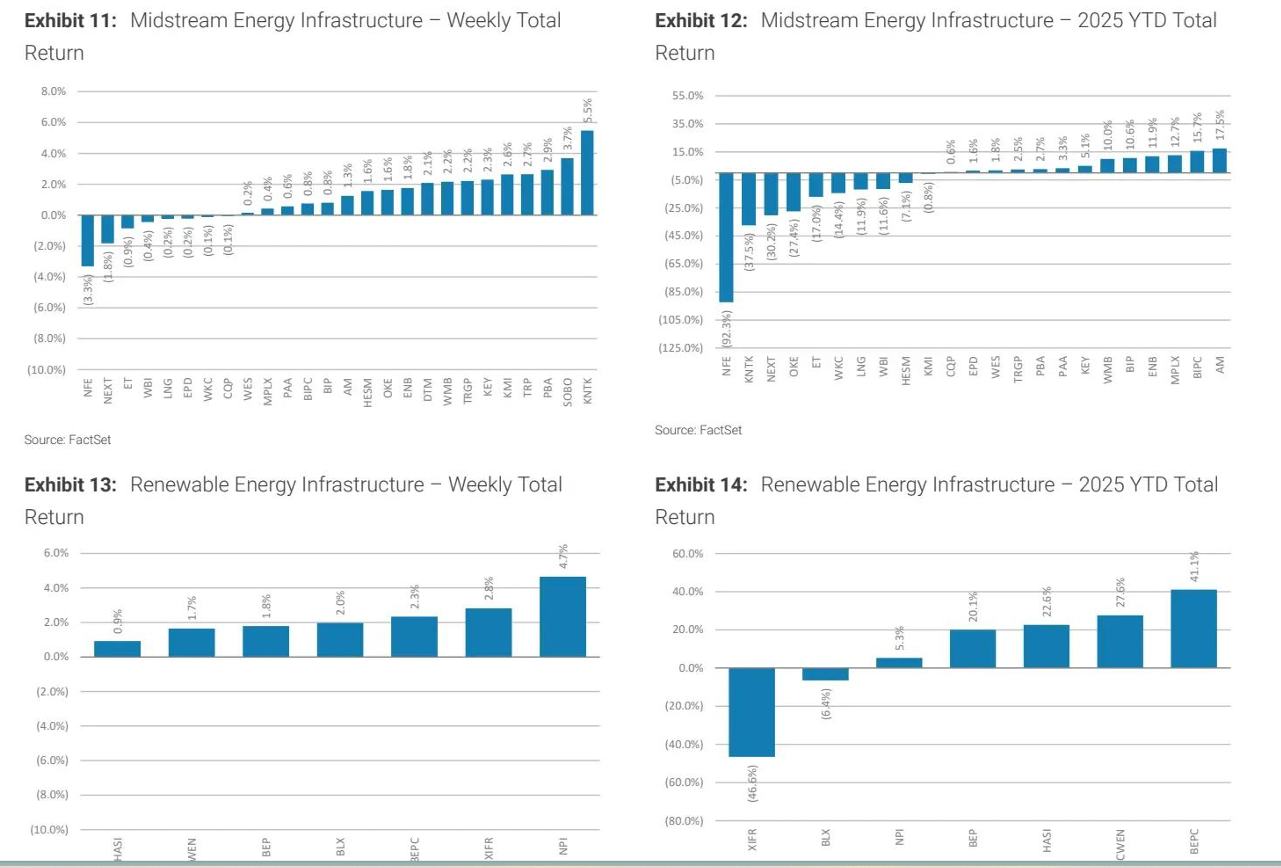
Core Viewpoint - Morgan Stanley highlights an unprecedented expansion cycle in AI data centers, emphasizing the integration of renewable energy supply and infrastructure, as exemplified by Alphabet's acquisition of Intersect Power, which focuses on securing clean energy before attracting major clients [1][6]. Group 1: Investment Opportunities - Morgan Stanley sets mid-term investment targets for data centers at $20 billion and $40 billion, indicating strong capital expenditure in this sector [1]. - The stock market shows a significant increase in the iShares Global Clean Energy ETF, with a 47% rise in 2025, driven by strong performances from companies like Bloom Energy and First Solar [2]. - Morgan Stanley identifies structural growth opportunities in renewable energy infrastructure, suggesting that high-quality, cash-flow-visible assets are now attractive for investment [6][7]. Group 2: Market Dynamics - The demand for clean energy is expected to surge due to the increasing power needs of AI training and inference systems, alongside global climate change pressures [3]. - The report notes that the demand for renewable energy is being driven by the AI data center's electricity needs, which are projected to grow significantly [11]. - Morgan Stanley emphasizes that the modernization of the grid, energy storage, and co-location models will be critical breakthroughs for renewable energy systems [6]. Group 3: Company Strategies - Google plans to mobilize $20 billion for renewable energy investments by 2030 and aims to invest approximately $40 billion in Texas for new AI data center campuses [6]. - Companies like Amazon and Microsoft are also pursuing similar renewable energy investment strategies to meet their clean power requirements [6]. - Morgan Stanley recommends overweight positions in leading renewable energy infrastructure stocks such as Brookfield Renewable and Clearway Energy, which are expected to benefit from the growing demand for clean energy [9][7]. Group 4: Cost Competitiveness - The International Renewable Energy Agency (IRENA) reports that the majority of new renewable projects in 2024 will be cheaper than fossil fuel alternatives, making renewables the preferred choice for expanding AI-related power needs [12]. - The cost of solar and wind energy continues to decline, positioning these sources as primary options for meeting the electricity demands of AI data centers [12]. - UBS analysts note that the demand for utility-scale solar projects in the U.S. is outpacing supply, driven by the construction of AI data centers aiming for 100% clean energy [12].

韩国监管两年来首放行新反应堆! AI尽头是电力 核电正在成为算力时代的“硬底座”
Zhi Tong Cai Jing· 2025-12-30 07:15
Group 1 - The South Korean nuclear regulatory agency has approved the operation of the new Saeul No. 3 reactor, marking the first such approval in nearly two years, despite the current government's reevaluation of nuclear energy's long-term role in the economy [1][2] - The new reactor is expected to significantly reduce South Korea's reliance on imported coal and natural gas, aligning with the global trend of increasing nuclear power demand driven by the needs of AI data centers [2][3] - The approval of the Saeul No. 3 reactor is seen as a strong endorsement of nuclear energy's role in supporting the growing electricity demands of AI applications, which require high efficiency, reliability, low carbon compliance, and stable pricing [2][3] Group 2 - The global electricity demand driven by AI data centers is projected to increase dramatically, with Goldman Sachs revising its forecast for electricity consumption by data centers to grow by 175% by 2030, indicating a significant surge in power needs [3][4] - The International Energy Agency (IEA) predicts that global data center electricity demand will more than double by 2030, reaching approximately 945 TWh, with AI applications being the primary driver of this growth [4][5] - Major tech companies like Amazon, Google, and Microsoft are increasingly favoring nuclear energy for their data centers due to its clean, stable, and efficient characteristics, which are essential for meeting the continuous power demands of AI workloads [5][6]


AI热潮下的“新主线”! 电网科技股引领AI基础设施投资新狂潮
智通财经网· 2025-12-08 13:03
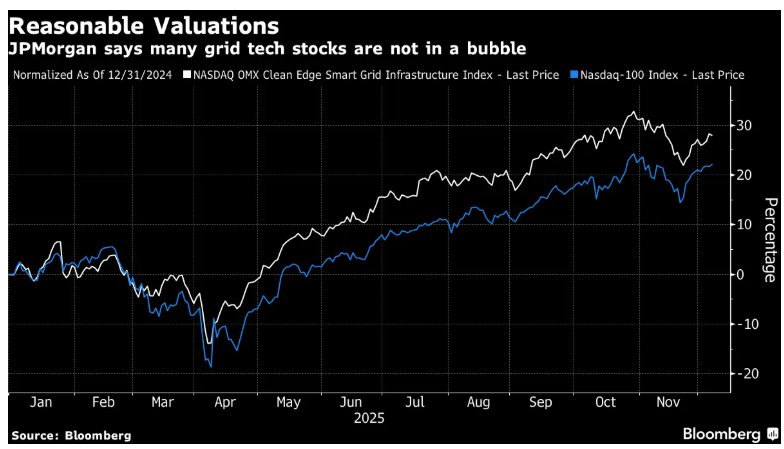
Core Insights - The article emphasizes the bullish outlook for Grid Tech Stocks, driven by the expansion of AI data centers and the acceleration of global electrification, with major Wall Street analysts predicting a long-term continuation of this trend [1][2] - Despite concerns about an "AI bubble," analysts argue that the current market dynamics are favorable for investors, with AI infrastructure investment expected to reach $3 trillion to $4 trillion by 2030 [1][2] Grid Tech Stocks Overview - Grid Tech Stocks are defined as companies providing equipment, software, and engineering services for the power grid, benefiting from trends in AI, electrification, and energy transition [4][6] - The sector has seen a significant increase, with overall stock prices rising approximately 30% this year, indicating strong investment attractiveness [2][3] Investment Opportunities - Analysts suggest that any price pullbacks in Grid Tech Stocks should be viewed as buying opportunities, as the sector is not in a bubble [3][5] - Companies like Vertiv Holdings, which provide solutions for major AI data centers, have seen stock prices increase by about 60% this year, justifying their premium valuations [6] Market Dynamics - The demand for electricity is expected to surge due to AI data centers, electric vehicles, and renewable energy integration, with global grid spending projected to grow by 16% this year to $479 billion [8][11] - The Nasdaq OMX Clean Edge Smart Grid Infrastructure Index has outperformed major U.S. stock indices, rising about 30% this year, reflecting strong investor interest in the sector [11] Future Projections - The International Energy Agency (IEA) forecasts that global data center electricity demand will more than double by 2030, with AI applications being the primary driver of this growth [17] - The ongoing structural transformation in energy demand, driven by electrification and the need for grid upgrades, is expected to create significant investment opportunities over the coming decades [15][12]