
HBOMax

Search documents
5700亿,奈飞嘴边的「肉」还是飞了
36氪· 2026-03-08 02:13
Core Viewpoint - The article discusses the dramatic conclusion of the Warner Bros. Discovery acquisition saga, highlighting Netflix's strategic withdrawal from the bidding process and the implications for its future in the streaming industry [2][3][4]. Group 1: Acquisition Dynamics - Warner Bros. Discovery's board notified Netflix of a superior cash offer from Paramount Global at $31 per share, totaling approximately $111 billion, leading to Netflix's exit from the bidding [2][5]. - Netflix initially proposed to acquire Warner's assets for about $827 billion, focusing on high-potential IPs while shedding traditional cable networks [3][5]. - Paramount's aggressive bid included significant breakup fees, including $2.8 billion to Netflix and $7 billion for antitrust issues, complicating the acquisition landscape [5][7]. Group 2: Financial Implications - Following its exit, Netflix's stock surged over 18% in the subsequent days, contrasting with a nearly 30% decline since announcing its acquisition intentions [2][7]. - Netflix's decision to withdraw was framed as a disciplined financial move, with CEO Ted Sarandos emphasizing the need for financial attractiveness in any deal [7]. - Analysts noted that the breakup fee from Paramount represented a significant portion of Netflix's future cash flow, equating to nearly 30% of its projected $9.5 billion free cash flow for the year [7][8]. Group 3: Market Position and Future Outlook - Netflix's narrative as a disruptor is challenged as it faces growth concerns and a need for compelling content to maintain user engagement and revenue growth [9][10]. - The company has shifted focus to increasing its content budget to $20 billion by 2026, while also resuming stock buybacks, indicating a return to financial stability [7][8]. - Despite a strong user base of over 325 million and projected revenues exceeding $45.2 billion in 2025, Netflix's growth rate is expected to slow, with guidance for 2026 revenue growth set between 12% and 14% [11][14]. Group 4: Content Strategy and IP Challenges - Netflix's struggle to develop original IPs is highlighted, with the company needing to create compelling content to build a sustainable competitive advantage [15][16]. - The article notes that while Netflix has invested heavily in content, few projects have achieved significant cultural impact, leading to a cycle of short-lived series [16][17]. - The need for strong IPs is emphasized, as traditional customer acquisition methods reach saturation, shifting the focus to user retention and monetization [16][17]. Group 5: AI and Industry Disruption - The emergence of AI in content creation poses a potential threat to traditional production methods, with predictions of significant cost reductions in the industry [19][21]. - Netflix's cautious approach to AI adoption, focusing on commercial applications rather than content creation, raises concerns about its competitive position in an evolving landscape [23][24]. - The article concludes that while Netflix remains a strong player in streaming, its defensive strategies may not suffice to secure future victories in an increasingly competitive environment [24][25].


5700亿,奈飞嘴边的“肉”还是飞了
创业邦· 2026-03-06 10:32
Core Viewpoint - The article discusses the dramatic conclusion of the Warner Bros. Discovery acquisition saga, highlighting Netflix's strategic decision to withdraw from the bidding war against Paramount Global, which offered a superior cash deal of $111 billion for Warner's assets. This decision reflects Netflix's focus on maintaining financial discipline amidst concerns over debt burdens and regulatory risks associated with the acquisition [6][7][8]. Summary by Sections Acquisition Dynamics - Netflix initially agreed to acquire Warner's production assets and streaming services for approximately $82.7 billion, aiming to enhance its content portfolio with valuable IPs like Harry Potter and DC Universe [7]. - Paramount Global's entry complicated the situation, ultimately leading to a higher bid of $31 per share, prompting Netflix to withdraw from the competition [8]. Financial Implications - Following Netflix's exit, its stock surged over 18% in the subsequent trading days, contrasting with a nearly 30% decline since the acquisition announcement [6]. - The $2.8 billion breakup fee from Paramount represents a significant portion of Netflix's future cash flow, equating to about 30% of its projected $9.5 billion free cash flow for the year [8]. Market Reactions - Analysts reacted positively to Netflix's decision, with some upgrading its stock rating due to its strong content pipeline and cost control measures, projecting a free cash flow of approximately $11 billion by 2026 [9]. - However, concerns linger regarding Netflix's long-term user engagement and revenue growth, especially after the company faced its first subscriber loss in 2022 [9][10]. Content Strategy and Challenges - Netflix's historical success as a disruptor in the entertainment industry is now challenged by a plateau in subscriber growth, necessitating a shift in focus towards content retention and monetization [10][12]. - The company has increased its content budget to $20 billion for 2026, yet struggles to develop universally appealing IPs, which are crucial for sustaining user engagement [12][13]. AI and Industry Disruption - The rise of AI in content creation poses a significant threat to traditional production models, with predictions of substantial job losses in the entertainment sector due to automation [18][19]. - Netflix's cautious approach to AI adoption, focusing on enhancing existing services rather than pioneering new content creation, raises concerns about its competitive position in an evolving industry landscape [20]. Future Outlook - Despite the challenges, Netflix's core streaming business remains robust, and its stock market performance post-acquisition withdrawal indicates investor confidence in its financial prudence [20][21]. - The company's leadership expresses optimism about its future, emphasizing a commitment to navigating industry changes while maintaining financial stability [21].
Netflix Backs Out of the Warner Bros. Deal. 5 Reasons It's a Smart Move
The Motley Fool· 2026-02-28 04:30
Core Insights - Netflix has withdrawn from the bidding for Warner Bros. Discovery, which was initially accepted but ultimately won by Paramount Skydance with a bid of $111 billion, including debt, or $31 per share for the entire company [1][2] Group 1: Strategic Rationale - Netflix does not require Warner Bros. as it already leads the streaming market, while Warner Bros. comprises struggling streaming and studio operations [4] - The management's interest in Warner Bros. brands does not justify the high price, as Netflix has successfully built its own content library without significant acquisitions [5] - Netflix's uncertainty regarding Warner Bros.' theatrical business conflicts with its strategy of limited theatrical releases [6] Group 2: Historical Context of Media Mergers - Media mergers often fail, with notable examples including the Time Warner and AOL merger, and AT&T's acquisition of Time Warner, which resulted in significant losses [7] - Disney's acquisition of Fox's assets is also viewed as unsuccessful, indicating that the Netflix-Warner Bros. merger lacked a solid strategic foundation [8] Group 3: Financial Considerations - Paramount's acquisition of Warner Bros. is seen as overpaying, given that Warner Bros. shares were trading below $13 prior to the sale discussions and had dropped to as low as $7.52 [9][10] - Warner Bros. carries a substantial debt of $33.5 billion, which would have limited Netflix's financial flexibility if the acquisition proceeded [10] Group 4: Competitive Landscape - The consolidation of Paramount and Warner Bros. may benefit Netflix by reducing competition for content and potentially leading to fewer streaming services in the market [11] - Given the financial struggles of both companies, Netflix might have the opportunity to acquire the combined entity in the future at a lower price [12] Group 5: Regulatory Challenges - The merger would have faced significant regulatory scrutiny, with potential antitrust issues raised by the Trump administration and opposition from Hollywood [13][15] - With the deal abandoned, Netflix will receive a $2.8 billion termination fee from Warner Bros. and Paramount, which is viewed as a favorable outcome for the company [16]


奈飞黯然退场!派拉蒙1100亿美元拿下华纳兄弟
Ge Long Hui· 2026-02-28 04:05
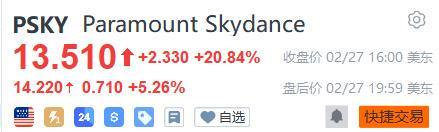
Core Viewpoint - Paramount has successfully acquired Warner Bros. for approximately $110 billion, marking one of the largest mergers in Hollywood history, while Netflix has opted out of the bidding process [2][3][4]. Group 1: Acquisition Details - The acquisition price for Warner Bros. includes about $29 billion in debt, making it a significant financial transaction in the entertainment industry [3]. - Paramount's last-minute bid increase from $30 to $31 per share was pivotal in changing the outcome of the bidding war [4]. - Paramount's proposal included various protective clauses, such as a quarterly compensation of $0.25 per share if the deal is not completed by September 30, and a commitment to cover up to $2.8 billion in termination fees if Warner Bros. needs to pay Netflix [5]. Group 2: Market Reactions - Following the announcement of the merger, Paramount's stock surged over 20%, closing at $13.51, with further gains in after-hours trading [9]. - Netflix's stock rose over 13% to $96.24, as the company avoided taking on significant debt from the acquisition [10]. - Warner Bros.' stock experienced a decline of 2.19%, closing at $28.17, reflecting investor concerns over the upcoming antitrust review [10]. Group 3: Regulatory Challenges - The merger will face antitrust scrutiny from both U.S. and EU regulators, with the U.S. Department of Justice already initiating a review [6][7]. - California's Attorney General has indicated a strict examination of the merger, adding uncertainty to the transaction's approval process [8]. - Analysts suggest that while federal approval may be likely, state-level challenges, particularly from California, could complicate the merger [8].
业绩缩水仍“抢手”:华纳兄弟(WBD.US)Q4营收利润双降,派拉蒙和奈飞竞购角力持续升温
智通财经网· 2026-02-26 13:07
Group 1 - Warner Bros. Discovery (WBD) reported a 5.6% year-over-year decline in Q4 revenue to $9.46 billion, with adjusted EBITDA decreasing to $2.22 billion, although both figures exceeded Wall Street expectations [1] - The television networks segment, including CNN, TNT, and HGTV, saw a 12% revenue drop to $4.2 billion, with adjusted EBITDA down 27% to $1.41 billion, impacted by declines in advertising sales and distribution revenue [1] - The film studio segment reported a 13% revenue decline to $3.18 billion, falling short of Wall Street's $3.37 billion estimate, with revenues from movies, TV shows, and video games all decreasing [1] Group 2 - A bidding war for Warner Bros. is intensifying, with Paramount Global raising its offer to $31 per share to counter a deal with Netflix, which is priced at $27.75 per share [2] - Warner Bros. lost NBA media rights to Disney, Comcast, and Amazon, negatively affecting its TV ratings, and plans to spin off its cable network into a separate entity by Q3 [2] - The company, formed from a merger four years ago, is struggling to compete with streaming rivals like Netflix while managing over $32 billion in debt, although its stock has risen 130% since Paramount expressed acquisition interest [2]
Is Netflix's Warner Bros. Acquisition a Mistake?
The Motley Fool· 2026-01-21 07:30
Group 1 - Netflix's stock has declined 20% since the announcement of its acquisition of Warner Bros. Discovery (WBD) on December 5, including a drop of approximately 5% after hours following the earnings report [1][2] - The acquisition is expected to overshadow Netflix's stock performance for the remainder of the year, particularly due to uncertainties regarding regulatory approval and competition from Paramount Skydance [2] - Netflix's management initially did not plan to pursue WBD but changed their stance after evaluating the opportunity, indicating a shift in strategy [3] Group 2 - WBD possesses an attractive content library and theatrical business, but has struggled as a business due to a significant debt burden and the competitive nature of the entertainment industry [4] - Netflix's engagement report indicated only a 2% increase in hours watched on the platform in the second half of the year, raising questions about the motivations behind the acquisition [5] - Historically, Netflix has avoided acquisitions, focusing on original programming, and the WBD deal raises questions about the management of the HBOMax platform and the financial implications of a $72 billion cash payment and $10.7 billion in net debt [6][7] Group 3 - The cash offer for WBD represents nearly six times Netflix's current net income and over four years of its content spending, highlighting the financial risk involved [7] - While WBD is considered an attractive asset, there is skepticism about whether the acquisition price is justified, and Netflix must demonstrate the value of this deal to investors [10]
行业专家Rayburn点评华纳兄弟(WBD.US)世纪并购战:流媒体无“战争” 数据与盈利才是关键
智通财经网· 2025-12-26 13:39
Core Insights - The podcast discusses the ongoing competition among major streaming companies, particularly focusing on potential deals involving Warner Bros. Discovery, Netflix, and Paramount, emphasizing the importance of financial data over speculative narratives [1][2][3] Group 1: Industry Trends - Sports streaming is a significant topic, with recent partnerships like the NFL's collaboration with Apple and the finalization of F1 streaming rights highlighting the evolving landscape [2][3] - The NFL is leveraging streaming platforms to expand its reach, moving away from traditional broadcasting, especially during high-viewership periods like Christmas [3][10] - The fragmentation of sports broadcasting across multiple platforms is creating challenges for consumers, complicating the viewing experience [27][28] Group 2: Investment Considerations - Investors should focus on completed transactions rather than speculative discussions about potential deals, as the market is rife with unverified claims [4][6] - The potential acquisition of Warner Bros. by Netflix could provide significant assets, including sports broadcasting rights, but the impact on market competition and consumer choice remains uncertain [5][6] - The political environment is increasingly influencing large merger transactions, making regulatory approval a critical factor in deal outcomes [6][8] Group 3: Financial Metrics - Key financial metrics for investors include Average Revenue Per User (ARPU), which many companies have stopped disclosing, complicating the assessment of profitability [15][16] - The shift in focus from growth to profitability in the streaming industry is evident, with companies like Warner Bros. and Disney achieving profitability in their direct-to-consumer segments [15][16] - The lack of standardized metrics in the streaming industry makes it difficult to evaluate the actual value of sports content and its impact on user acquisition and retention [11][12][14] Group 4: Competitive Landscape - The narrative of a "streaming war" is misleading, as competition among companies is healthy and leads to diverse offerings rather than a zero-sum game [32][33] - Companies like Apple and Amazon have different core business models that influence their approach to streaming, focusing on brand enhancement rather than direct revenue from content [20][21] - The streaming market is characterized by a variety of strategies, with companies prioritizing unique content and user engagement over sheer volume [22][23]
截胡失败!华纳兄弟正式拒绝派拉蒙,与奈飞的“世纪联姻”将驶向何方?
Ge Long Hui· 2025-12-17 15:41
Core Viewpoint - The acquisition of Warner Bros. by Netflix is entering a critical phase, with Warner Bros. rejecting Paramount's hostile takeover bid, citing significant risks and costs associated with the offer [1][2]. Group 1: Warner Bros. and Paramount Acquisition - Warner Bros. board rejected Paramount's offer of $30 per share, valuing the bid at $108.4 billion, due to concerns over risks and costs [1][2]. - The board expressed doubts about the stability and transparency of the overseas financing proposed by Oracle founder Larry Ellison's trust [2]. - The board concluded that Netflix's proposal would create higher and more certain value for shareholders, anticipating significant benefits from the merger [2]. Group 2: Netflix's Response and Strategy - Netflix's co-CEO Ted Sarandos emphasized that the merger is the right deal at the right time with the right partner, promising to continue traditional theatrical releases for Warner's films [3]. - Netflix is engaging with regulatory bodies, including the U.S. Department of Justice and the EU, to ensure a smooth transaction and has submitted antitrust filings [3]. Group 3: Financial Details of the Acquisition - Netflix's agreement with Warner Bros. involves a cash and stock deal valued at $82.7 billion, with $27.75 per share (including $23.25 in cash and $4.50 in Netflix stock) [4]. - The acquisition will enhance Netflix's content library significantly, including major IPs like Harry Potter and DC superheroes [4]. Group 4: Challenges and Regulatory Concerns - The acquisition poses challenges, including significant debt for Netflix and the integration of Warner's extensive production system [6]. - A major regulatory hurdle is the potential market share exceeding 30% in the U.S. streaming market, which could trigger antitrust concerns [6]. - Netflix has prepared a breakup fee of up to $5.8 billion to compensate Warner if the deal fails due to regulatory issues, with the entire process expected to take 12 to 18 months [6].
华金证券:国内长剧内容供给创新 微短剧市场多元发展
智通财经网· 2025-12-11 06:56
Group 1 - The domestic long drama market in Q3 2025 shows significant "head effect, frequent high-quality content, enhanced platform dominance, and diversified business models," despite a slight decline in total market volume [4] - The top 20 long dramas in Q3 2025 achieved 14.5 billion effective views, a 10% year-on-year decrease, while the number of new long dramas with effective views between 10 million and 20 million increased by 7 [4] - The proportion of exclusive domestic new dramas reached 79%, up 6 percentage points year-on-year, with platforms like Youku and Mango TV deepening their exclusive distribution strategies [4] Group 2 - The micro-short drama market in China is projected to reach 67.79 billion yuan in 2025, a year-on-year increase of 34.40%, with expectations to exceed 150 billion yuan by 2030 [5] - The industry is moving beyond single-genre "爽剧" (refreshing dramas) as diverse and innovative themes emerge, with brand IP customization becoming mainstream [5] - Major online literature platforms are expanding their IP libraries, with Tomato Novel's IP adaptations increasing 17 times compared to the previous year [5] Group 3 - The global drama series market is expected to reach 108 billion dollars by 2025, with a compound annual growth rate of 5.4% from 2025 to 2033 [3] - Subscription-based streaming platforms are anticipated to become the largest contributors to the global television economy, generating 190 billion dollars annually by 2029 [3] - The demand for high-quality scripted content is driving the production of long dramas, aligning with audience preferences for binge-watching and complex narratives [3] Group 4 - Investment recommendations include companies such as Mango Super Media, Huanrui Century, Huace Film & TV, Beijing Culture, and Damai Entertainment, as long drama content quality and IP ecosystem development are expected to enhance industry value [6]
今日A股市场重要快讯汇总|2025年12月9日
Xin Lang Cai Jing· 2025-12-09 00:23
Group 1: Market Overview - The three major US stock indices closed lower on Monday, with the Dow Jones down 0.45%, the Nasdaq down 0.14%, and the S&P 500 down 0.35% [1][7] - Large tech stocks showed mixed performance, with Broadcom rising over 2%, while Tesla and Netflix fell over 3% [1][7] Group 2: Commodity and Currency Dynamics - WTI crude oil fell below $59 per barrel, down 1.84% [3][9] - Gold futures briefly surpassed $4220 per ounce before retreating, closing down 0.79% [4][9] - Spot gold fell below $4180 per ounce, down 0.39% [5][9] - US natural gas futures dropped over 9% due to narrowing temperature drop forecasts and high production levels, currently at $3.849 per million British thermal units [5][9] - A 7.5 magnitude earthquake near eastern Honshu, Japan, caused short-term fluctuations in the USD/JPY exchange rate, which rose by 0.5% to 155.81 yen [5][9] Group 3: International Market Developments - Paramount launched a hostile takeover bid for Warner Bros. Discovery, offering $30 per share in cash, an 8% premium over Netflix's previous $720 billion acquisition offer of $27.75 per share, potentially providing shareholders with an additional $18 billion in cash benefits [10] - Warner Bros. owns several major networks including CNN, TBS, HGTV, and the HBO Max streaming platform, with Paramount claiming the proposal is more likely to pass regulatory scrutiny [10] - Former President Trump plans to sign an executive order this week to simplify AI industry regulatory approval processes, aiming to prevent individual states from creating conflicting regulations that could undermine the US's competitive edge in AI [10]


